Home · Getting Here
Where each arrival puts you
Every way in
By airBilbao Airport, Loiu
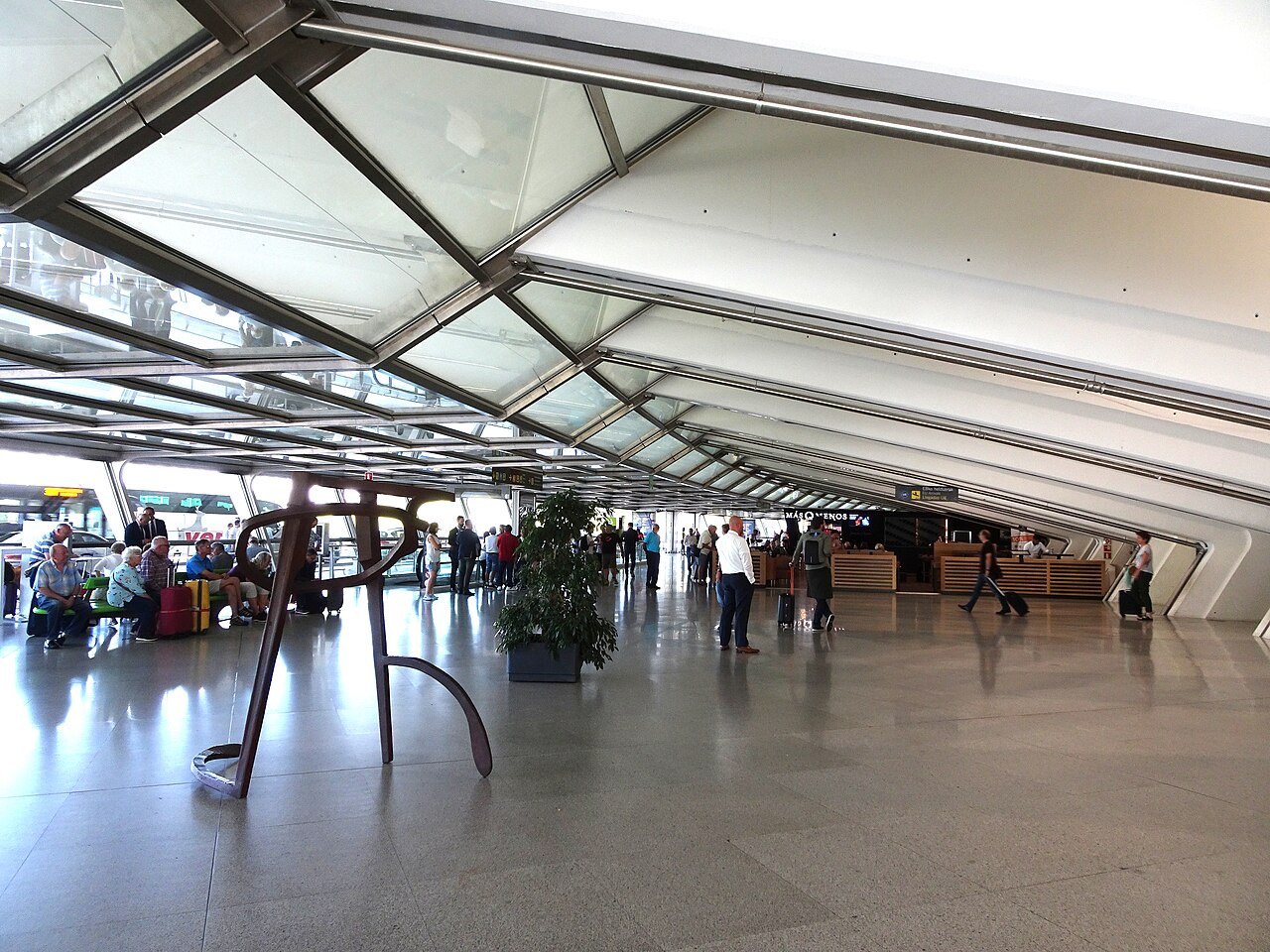
The largest airport in the Basque Country, about 9 kilometers north of the city over the Artxanda hills, in a white terminal by Santiago Calatrava. A bus runs to the center and the bus station.
By roadBilbao Intermodal
The main bus station, rebuilt underground beside San Mamés stadium and reopened in 2019, with coaches from across Spain and abroad and Metro, tram and train connections on its doorstep.
By railAbando Indalecio Prieto
The main railway terminus in the center, with long-distance trains to Madrid and Barcelona and the commuter lines, linked directly to the Metro and the tram.
By railConcordia
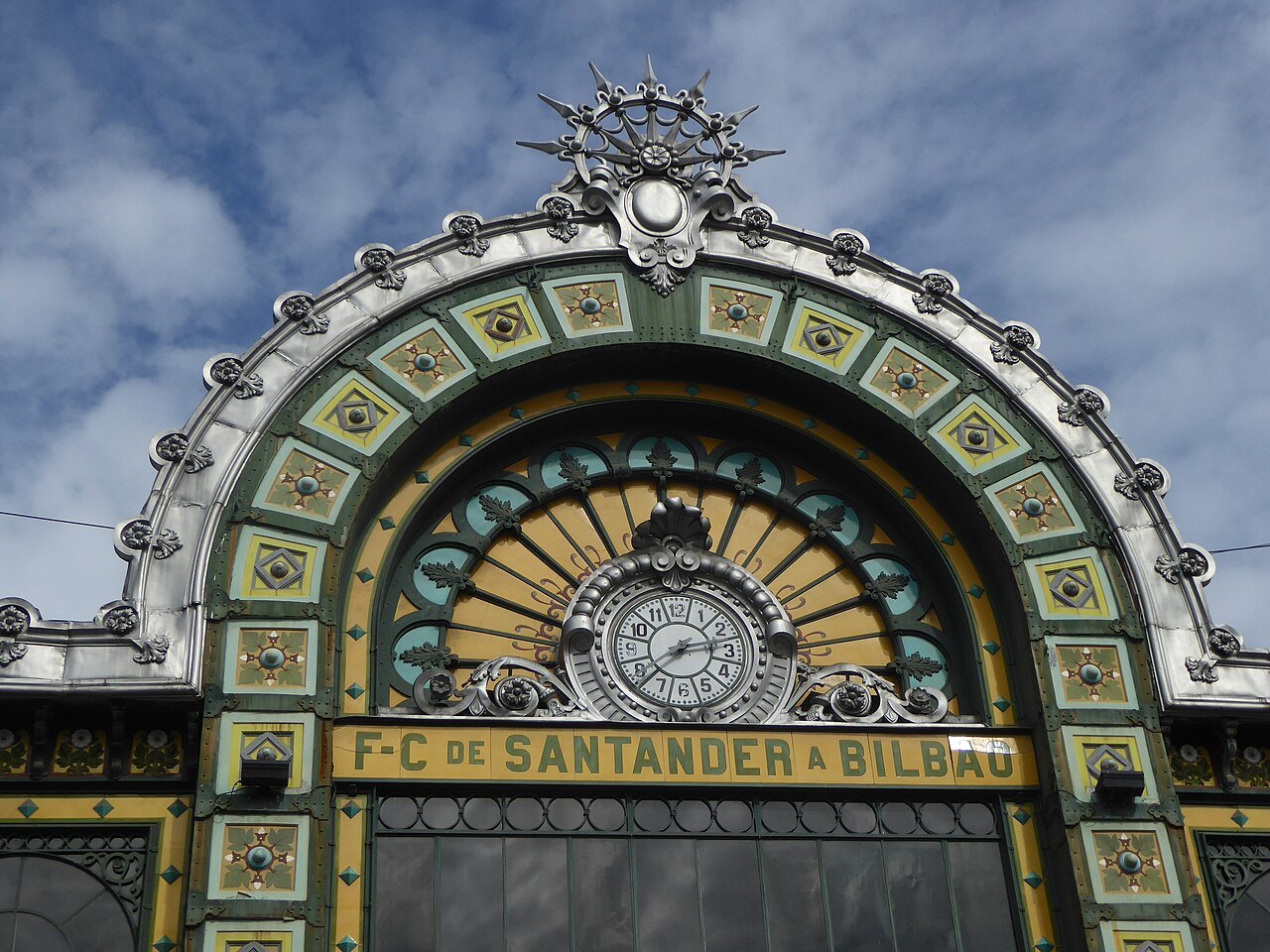
The Modernizt station beside Abando on the river, for the narrow-gauge regional trains to Santander and León and the commuter line to Balmaseda.
By railZazpikaleak / Casco Viejo
The Basque railway's station in the old town, terminus of the Euskotren lines from San Sebastián, Bermeo and Durango, and the meeting point of all three Metro lines.
By seaThe ferry port at Santurtzi
Brittany Ferries sails from the outer port at Santurtzi, about 15 kilometers from the center, to Portsmouth and to Rosslare in Ireland.
Getting Here
In full
A city in a valley
Bilbao lies in a narrow valley along its Ría, with hills on both sides, and that shapes every arrival. The airport is over the hills to the north, the ferry port is out at the mouth of the river, and the trains and coaches come down the valley into the center. Once you are in, almost everything a visitor wants is within walking distance of the river or a few stops on the Metro.
Public transport across the city and the province is run by the Biscay Transport Consortium, and one rechargeable card, the Barik, works on nearly all of it: the Metro, the tram, the city and provincial buses, the commuter trains and the funicular, so buy one at the first machine you meet. The getting around page explains how each works once you are here.
By air
Bilbao Airport is at Loiu, about 9 kilometers north of the city, and is the largest airport in the Basque Country and northern Spain, with more than six million passengers a year. Its terminal, opened in 2000, was designed by Santiago Calatrava, the architect of the city's Zubizuri footbridge; its two symmetrical wings and sharp central point earned it the nickname La Paloma, the Dove.
The simplest way into town is the Bizkaibus airport bus, which stops in the city center at the Plaza Elíptica, on the Gran Vía (named Plaza Moyúa until July 2026, so older maps still call it that), and ends at the Intermodal bus station. It runs every fifteen minutes for most of the year, and more often in July and August, and the ride into the center takes about a quarter of an hour. Taxis wait outside the terminal.
From the airport there are also direct coaches to San Sebastián and to Vitoria-Gasteiz, useful if Bilbao is only your gateway. A plan to bring Metro line 3 to the airport has no timetable yet, so the bus remains the way in.
By train
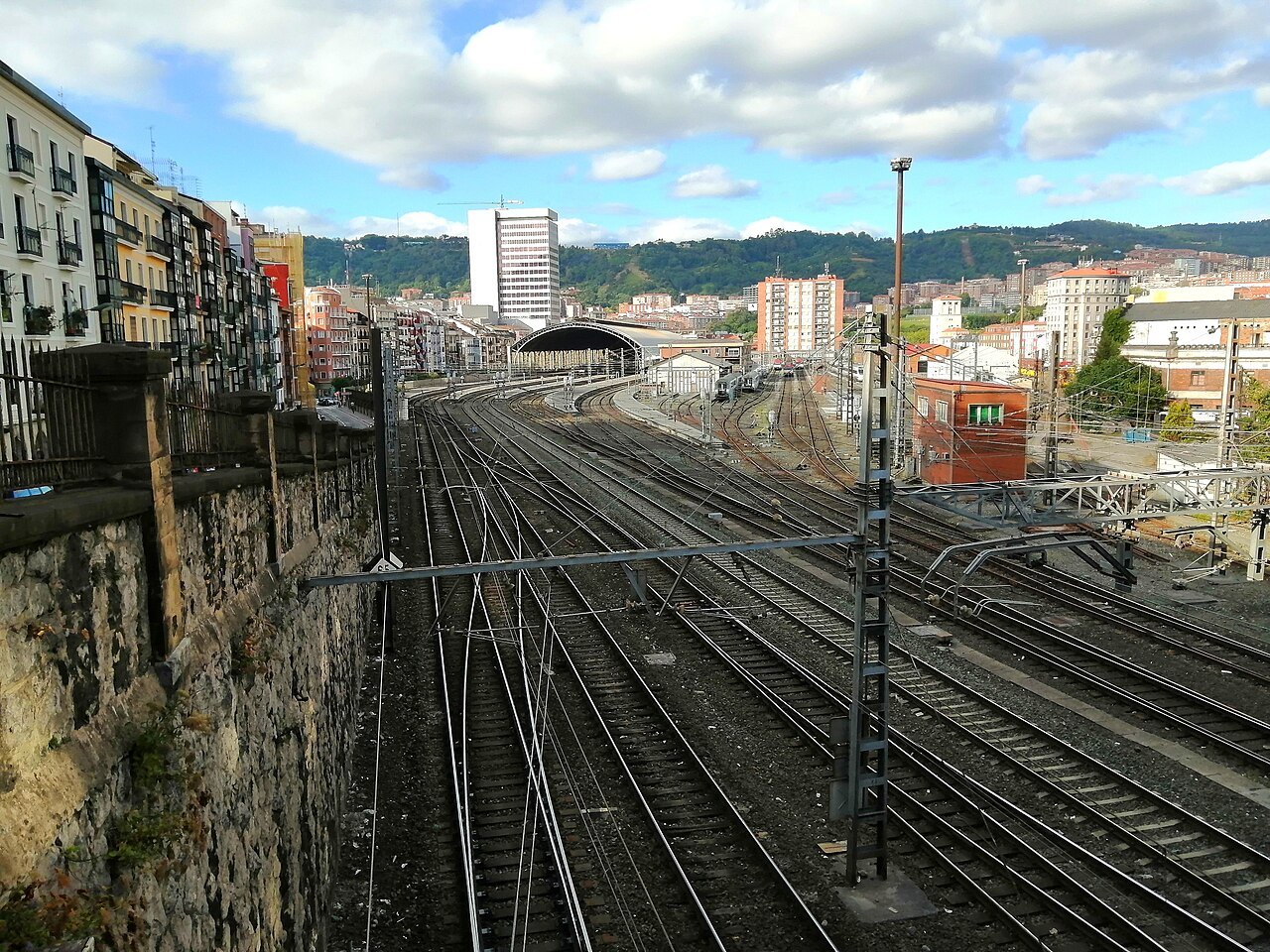
Bilbao has three main railway stations, two of them side by side on the left bank of the river opposite the old town. Abando Indalecio Prieto, usually called simply Abando, is the main one: Renfe's long-distance trains to Madrid and Barcelona arrive here, along with three of the four commuter lines. It first opened in 1863, when Abando was still a separate town, and was rebuilt in 1948; look for the huge stained-glass window of 301 pieces above the platforms, and the sculptures by Agustín Ibarrola added when the station was renovated after the 1983 flood. The Metro and the tram stop at its door.
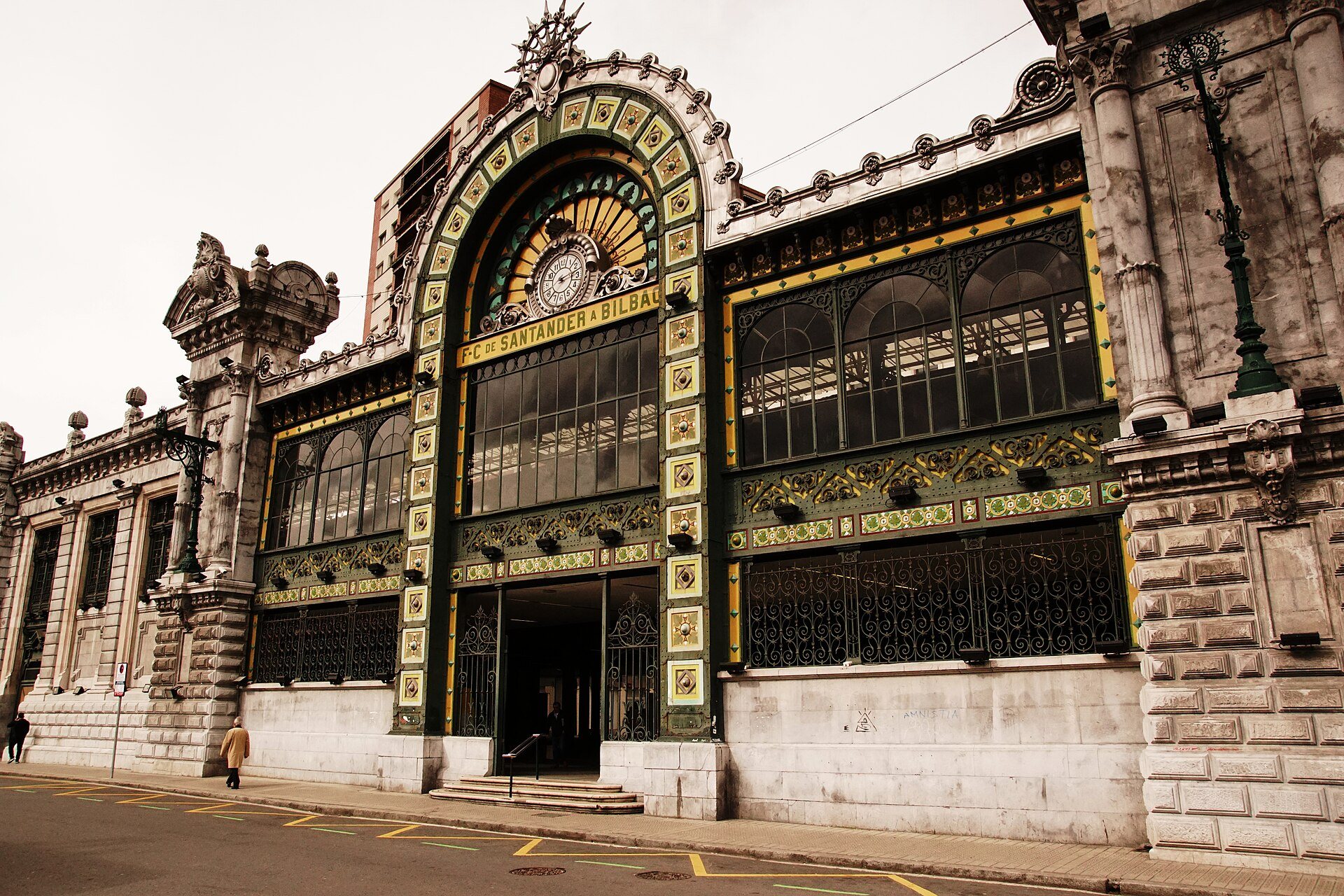
Next door, Concordia, also known as the Santander station, opened in 1898 and is one of the jewels of the Belle Époque city, its Modernizt façade and rose window facing the Arenal beside the Teatro Arriaga. It was built raised above the river on the edge of the Ensanche, like a balcony looking across to the old town. It serves Renfe's narrow-gauge trains: the regional lines to Santander and León and the commuter line to Balmaseda.
The third, Zazpikaleak / Casco Viejo in the old town, belongs to the Basque railways. Euskotren trains from San Sebastián, Durango, Eibar and Bermeo end here, and all three Metro lines meet underneath. A new high-speed line linking the three Basque capitals, known as the Basque Y, is being built; when it arrives, a new underground station will replace Abando and Concordia.
By coach
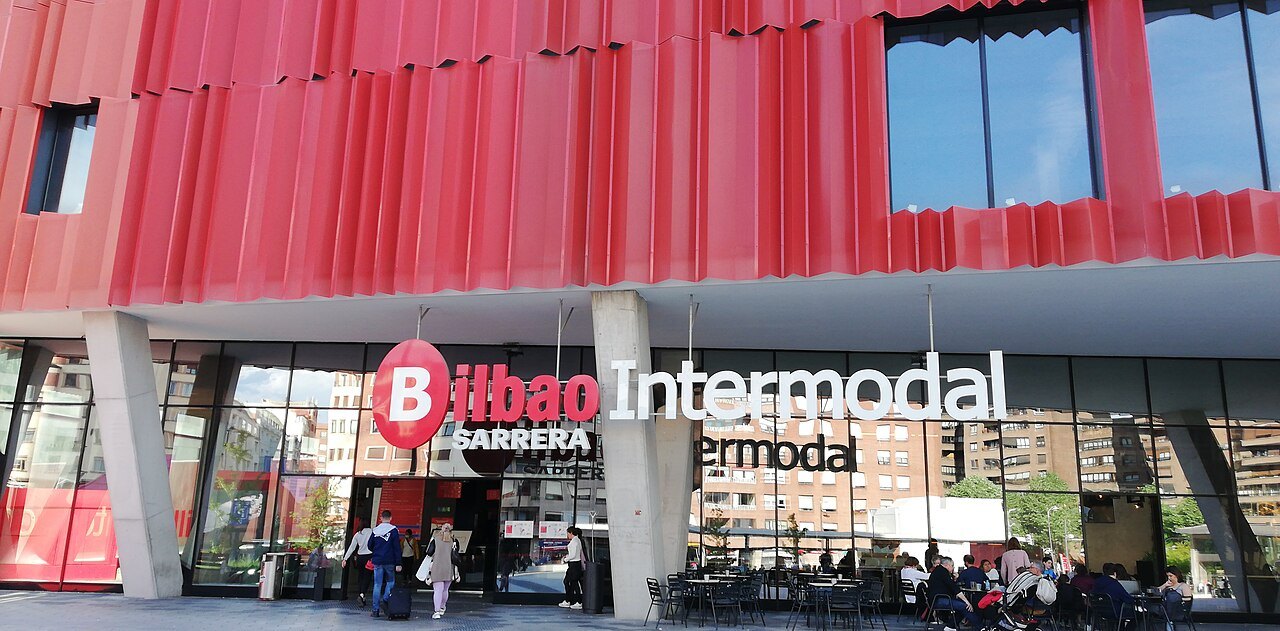
Long-distance coaches use Bilbao Intermodal, the main bus station, beside San Mamés stadium on the west side of the center. It began in the mid-1990s as a temporary terminal on an old football pitch, under the name Termibus, and grew because the site proved so convenient; it was rebuilt underground and reopened on 27 November 2019 under its new name.
There are national and international lines to San Sebastián, Vitoria-Gasteiz, Pamplona, Santander, Oviedo, Madrid, Barcelona and as far as Paris and Brussels. The San Mamés Metro, tram and commuter station is attached to it, so the center is a few minutes away; on foot, the Guggenheim is about half an hour along the river.
By sea
Bilbao is one of the few Spanish cities you can reach by ferry from Britain and Ireland. Brittany Ferries took over the Portsmouth route in 2011, after P&O Ferries had sailed it since 1993, and since 2020 it has also run a service from Rosslare in Ireland. The ships dock at the passenger terminal of the outer port, at Santurtzi near the mouth of the river, about 15 kilometers from the center.
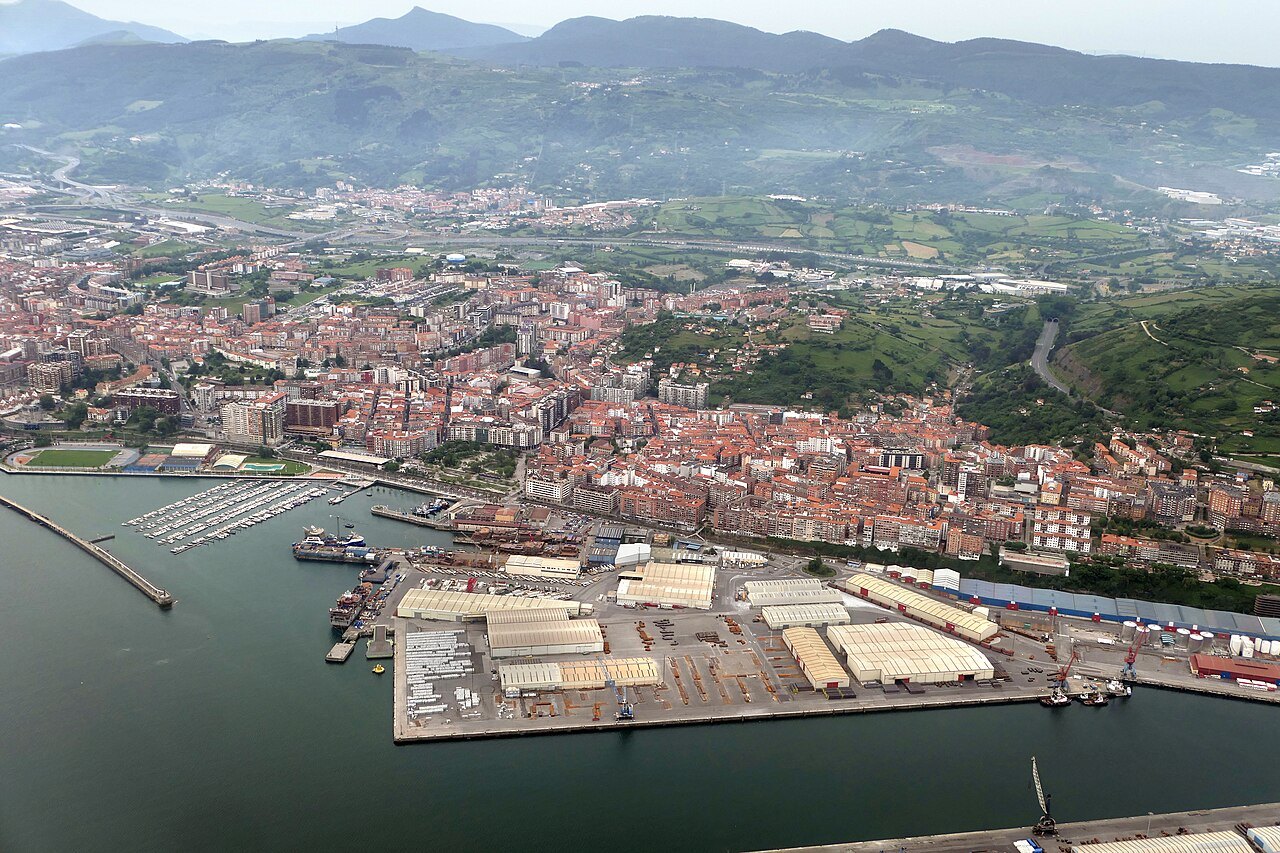
From Santurtzi the commuter train on line C-1 runs along the left bank into Abando. Cruise ships use a separate terminal on the other side of the bay at Getxo, built as the Guggenheim brought more visitors and put the city on the cruise routes; the Metro runs from Getxo into the center.
By road
Bilbao is a road hub for northern Spain, connected to three motorways and lying on two European routes, so it is easy to reach by car from France, the rest of the Basque Country, Cantabria and the Castilian plateau. The ring roads keep through traffic out of the center, but the center itself is compact and congested.
If you arrive by car, the easiest plan is to leave it in your hotel's garage or a public car park and use the Metro and your feet. A car is useful only for the coast and the Basque towns described on the day trips page.
The last stretch
Whichever way you arrive, the last stretch is short. From Abando, Concordia or Zazpikaleak the old town and the riverside walk are a few minutes on foot. From the bus station or the airport bus, the Metro or the tram takes you on to wherever you are staying. The where to stay page shows which areas are closest to each station.
Bilbao is hilly beyond the river flats, so if your hotel is up a slope in Indautxu or Begoña, a taxi from the station is worth it with heavy luggage. Ask your hotel which Metro or tram stop is nearest before you travel; it will save a walk.
Some links on this page are affiliate links. If you book through one we may earn a commission, at no extra cost to you. It does not affect what is recommended here, and no sight page on this site carries one.
Arranged before you land:
More photographs
Seen on the way
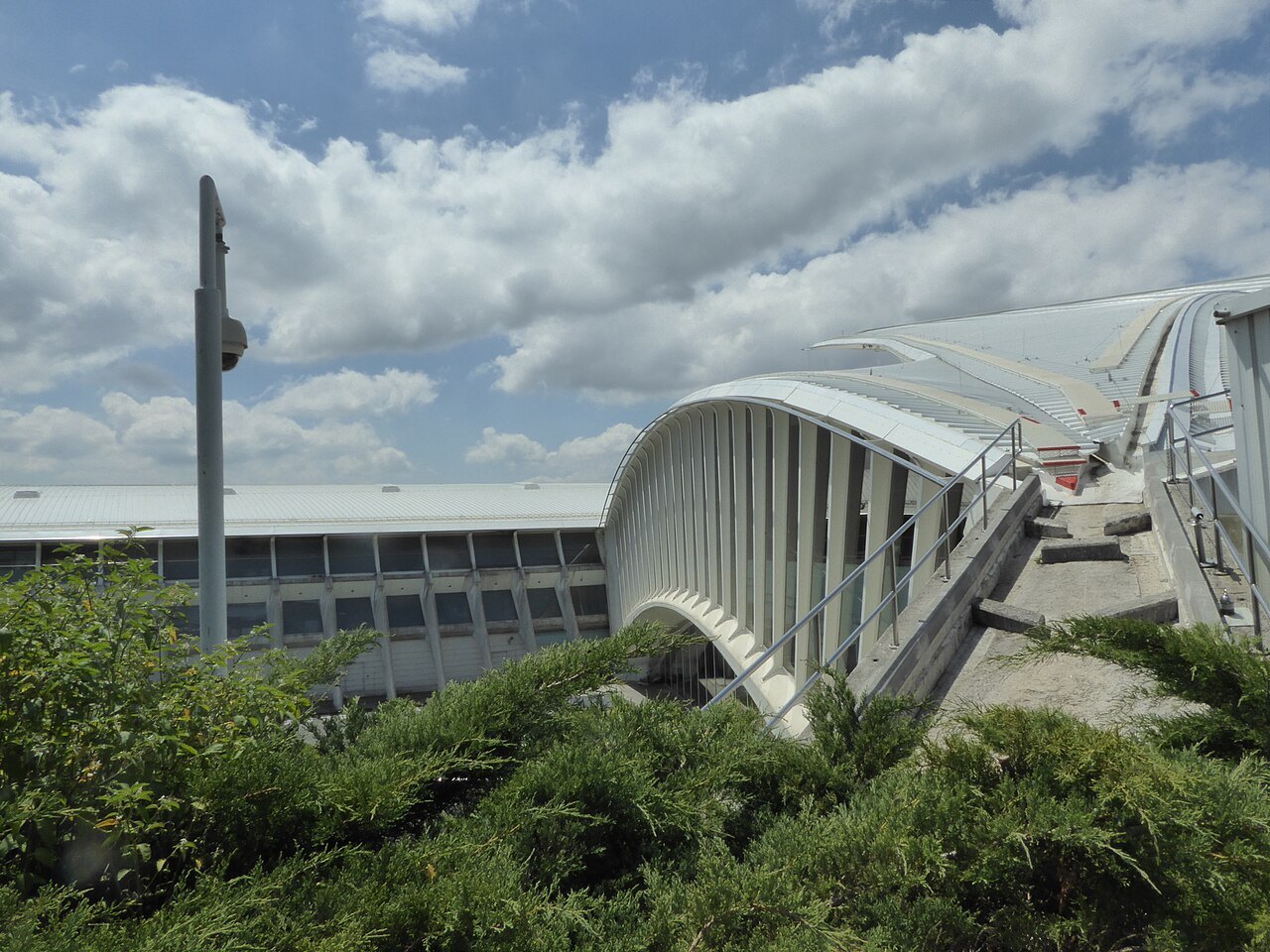
The white, wing-like roof of Calatrava's terminal at Bilbao AirportArdfern, Wikimedia Commons, CC BY-SA 4.0 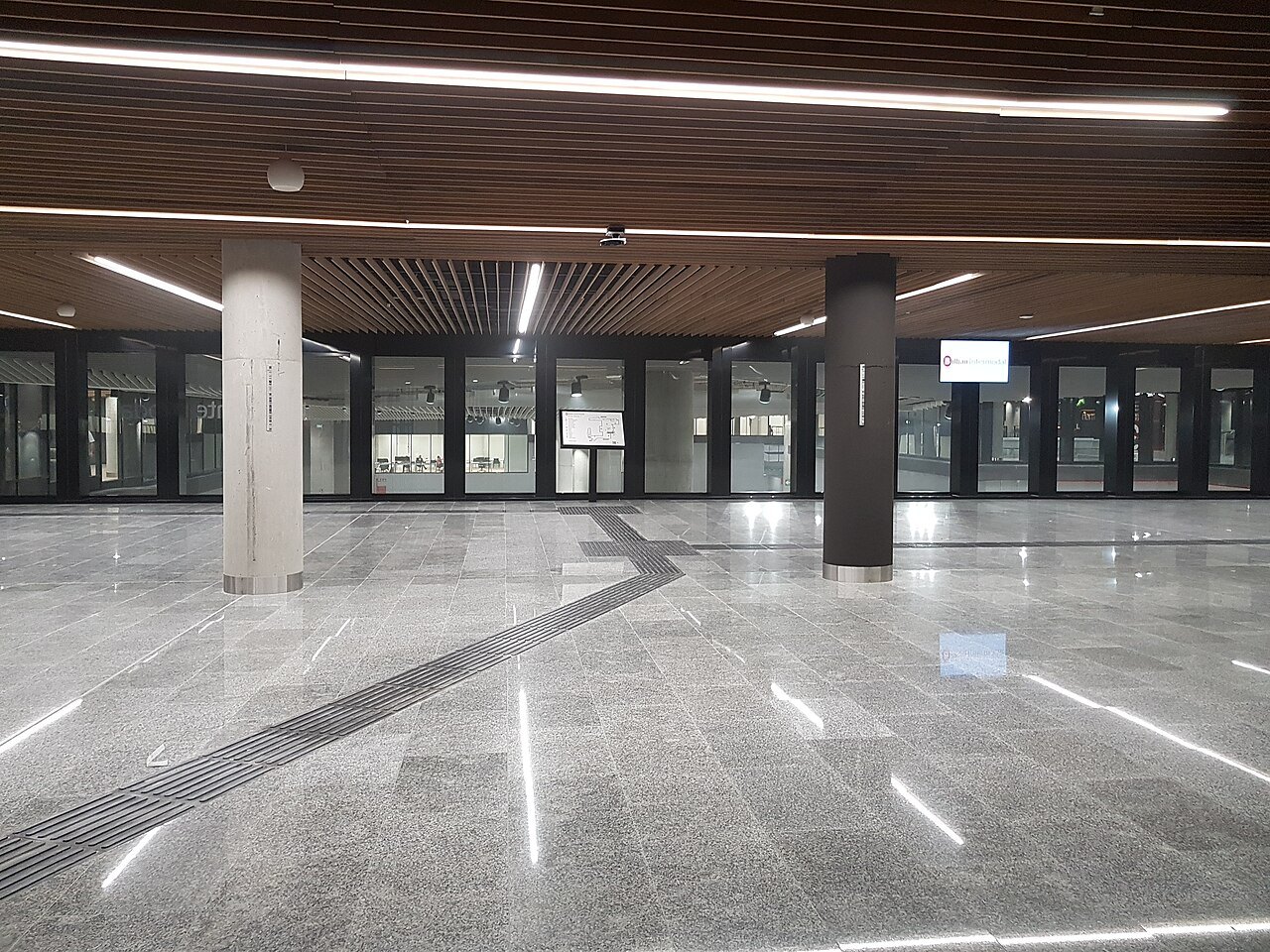
The bright underground concourse of the Intermodal bus stationXabier, Wikimedia Commons, CC BY-SA 4.0 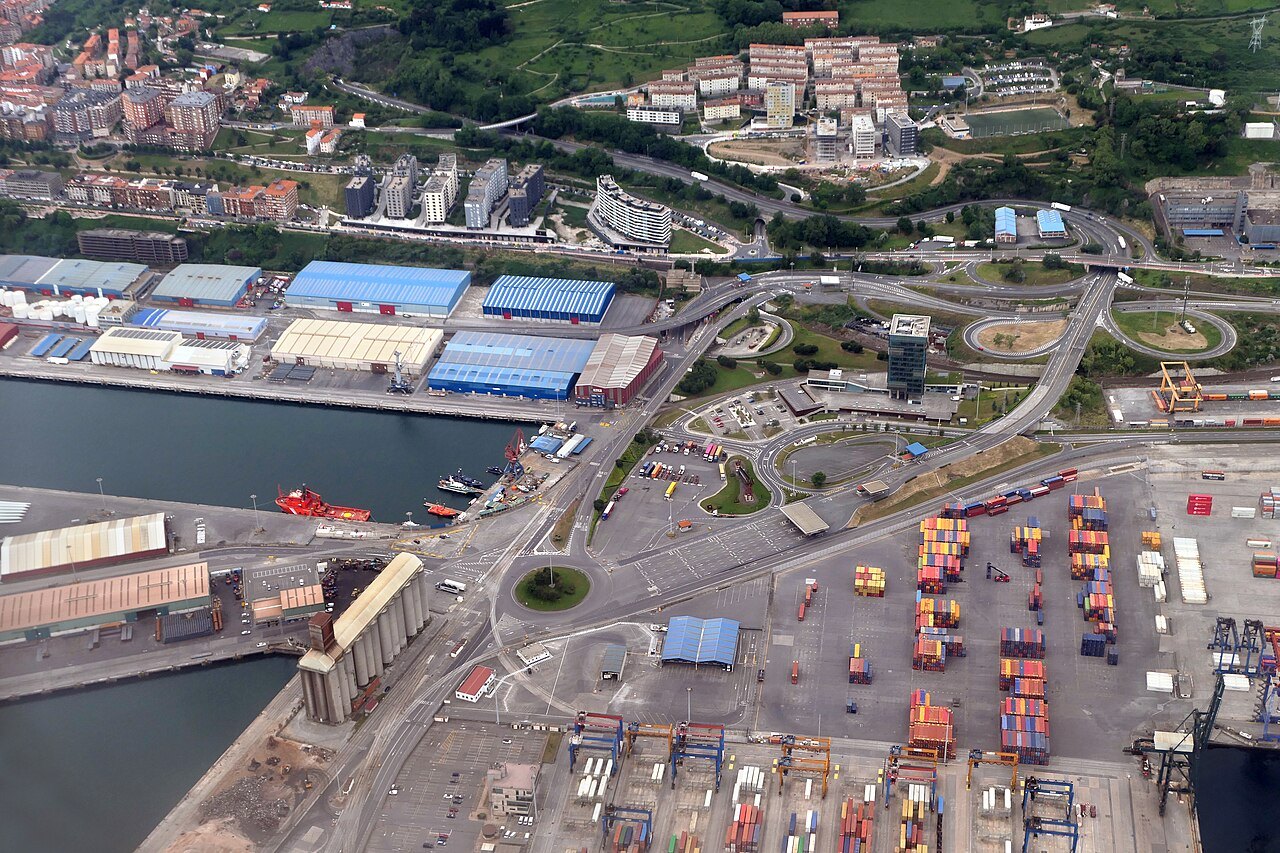
Container quays and warehouses of the outer port from the airAdam Cli, Wikimedia Commons, CC BY-SA 4.0