Home · Sights · The Casco Viejo
The Casco Viejo
What you are looking at
Ibaiondo · right bank
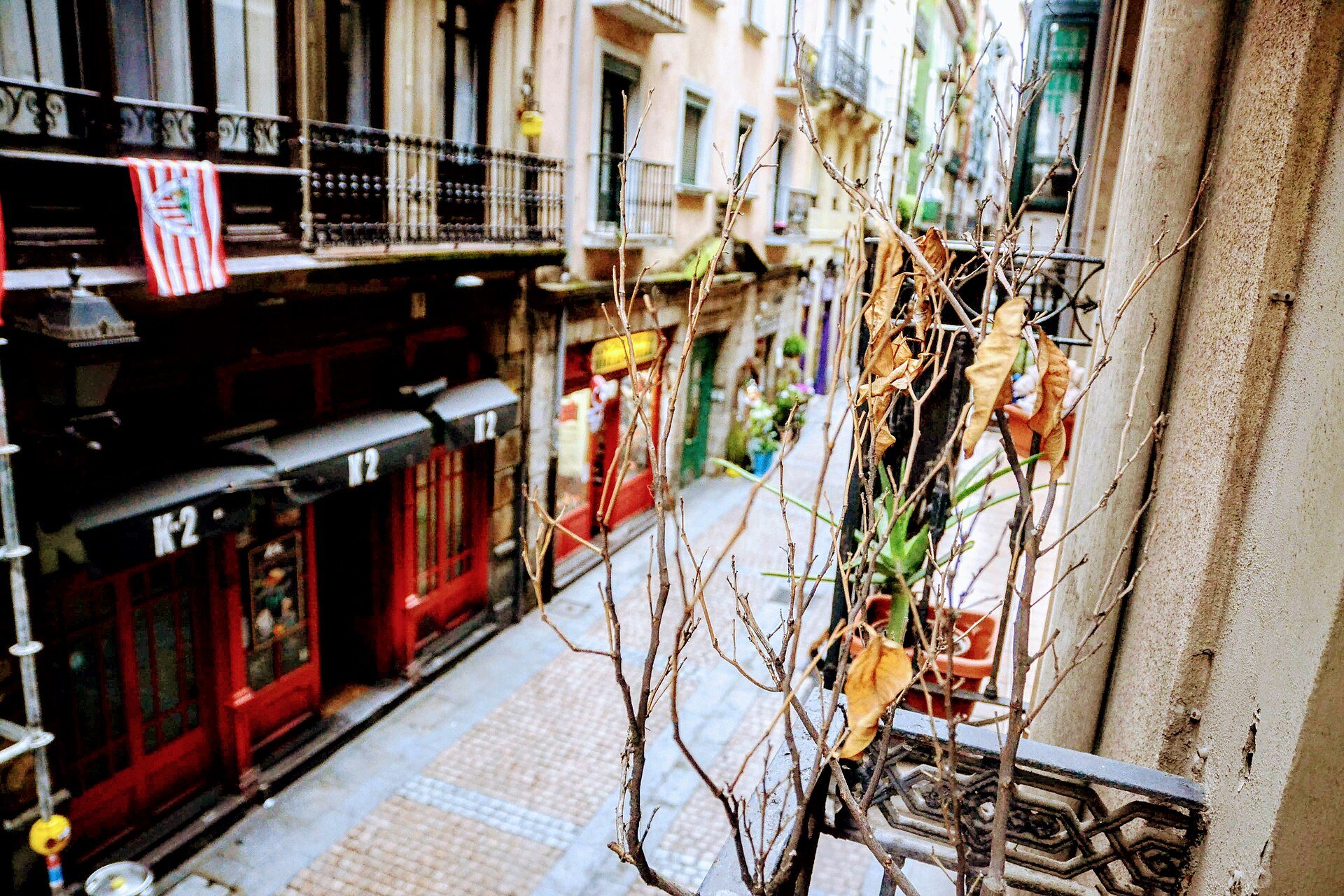
- 1The seven streetsSomera, Artekale, Tendería, Belostikale, Carnicería Vieja, Barrenkale and Barrenkale Barrena, running parallel down toward the river.
- 2San AntónThe late Gothic church beside the old bridge, the building shown on the city's coat of arms.
- 3The Santos JuanesA seventeenth-century classical Baroque church that belonged to a Jesuit college until the eighteenth century.
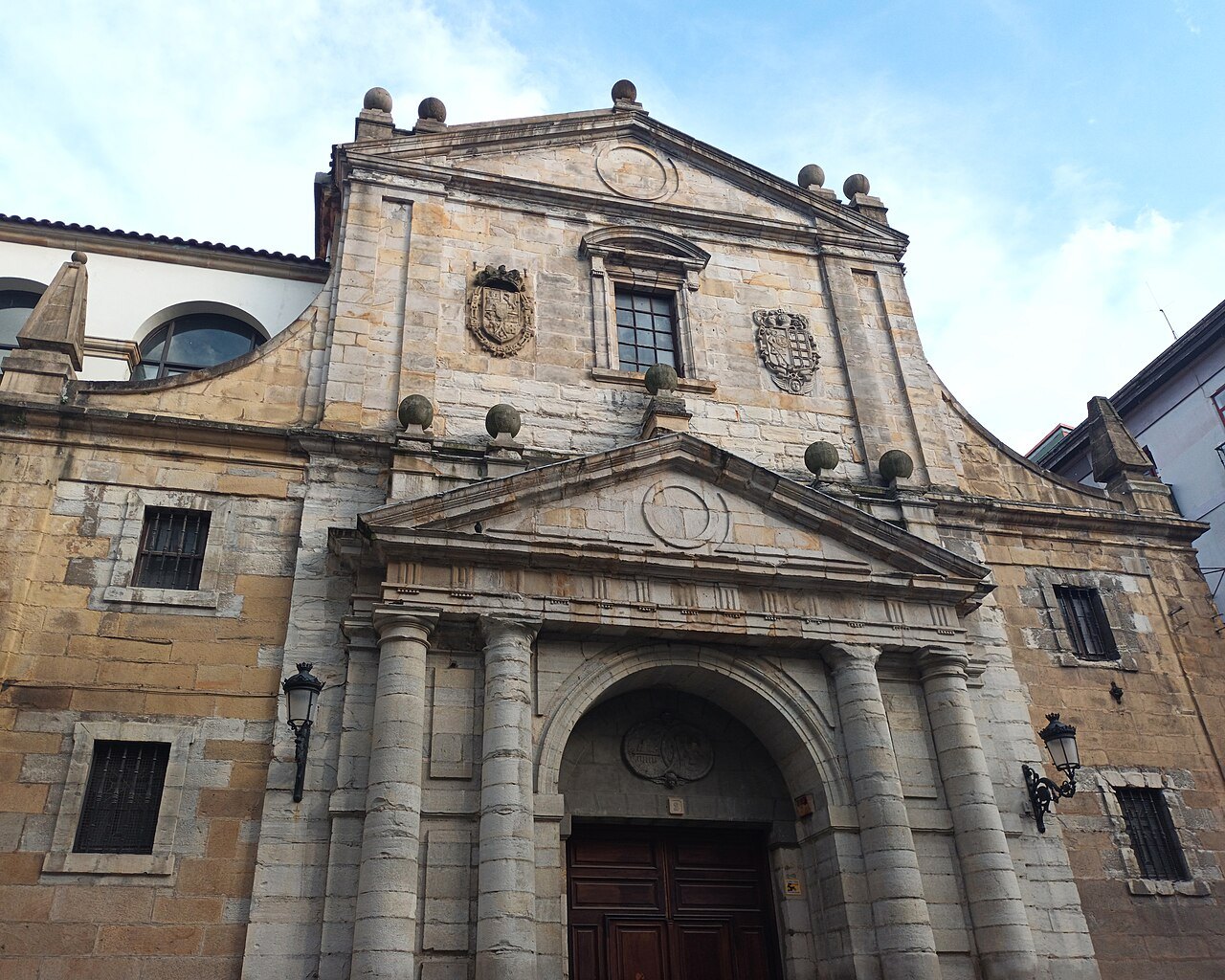
- 4San NicolásA Baroque church of 1756 facing the Arriaga theater, dedicated to the patron of the fishermen's quarter.
- 5The Basque MuseumA museum of Basque life and archaeology in the Baroque cloister of the old Jesuit college.
- 6The Bidebarrieta libraryAn eclectic building of 1888 to 1890, built as a club for the defenders of Bilbao and a library since 1956.
Reading the place
The sight in full
Why it matters
The Casco Viejo, the Old Town, is the oldest part of Bilbao and the place where the town began. In Basque it is Zazpikaleak and in Spanish Las Siete Calles, the Seven Streets, after the seven parallel lanes that made up the medieval town on the right bank of the river. It is now part of the Ibaiondo district, but people still call it the Casco Viejo.
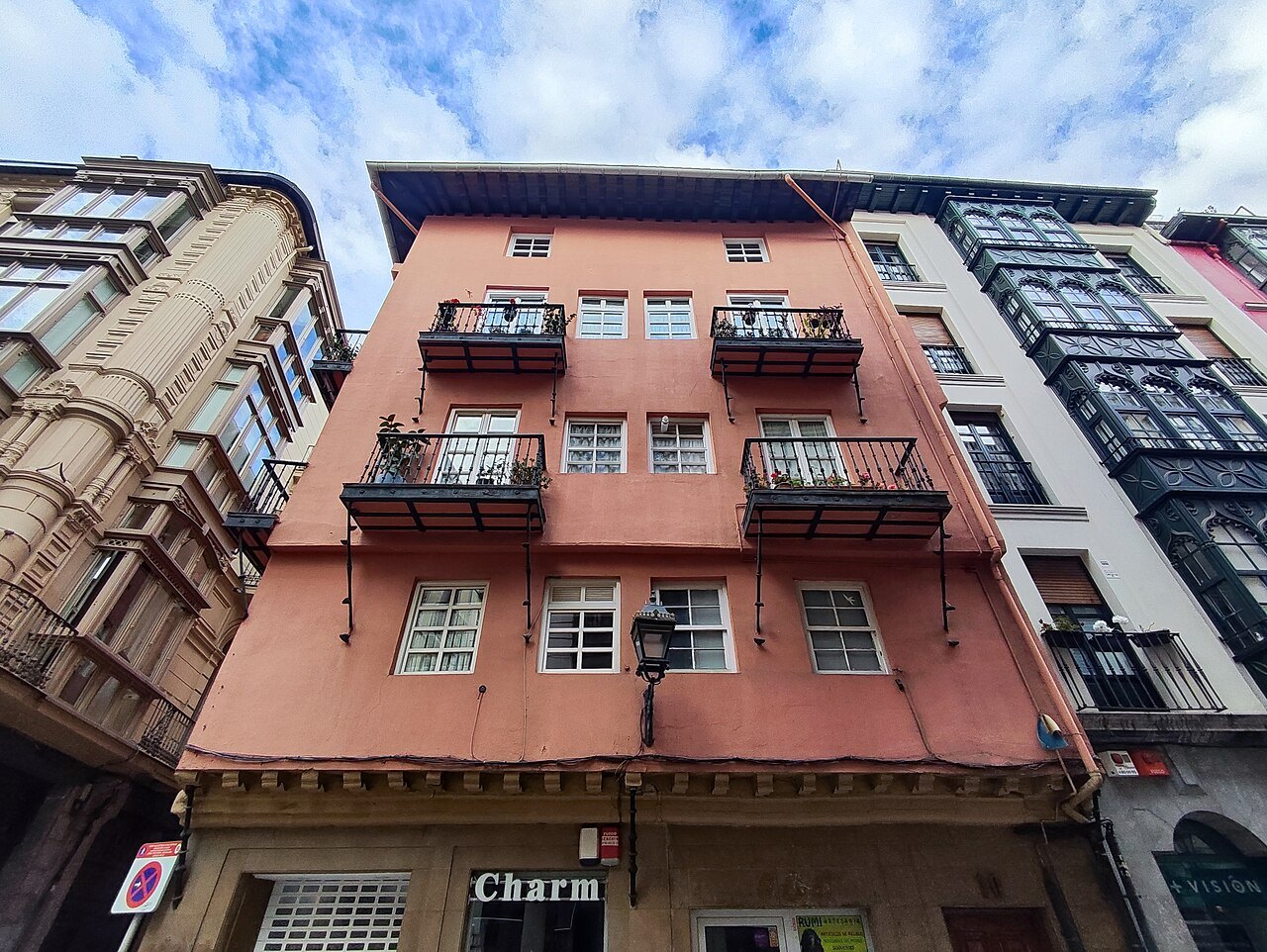
For a visitor it is the densest part of the city: in a few hundred yards stand Santiago Cathedral, the churches of San Antón, San Nicolás and the Santos Juanes, the Plaza Nueva, the Ribera market and the Basque Museum. It is also where Bilbao eats and drinks standing up, at the bar counters of its pintxo bars.
The seven streets
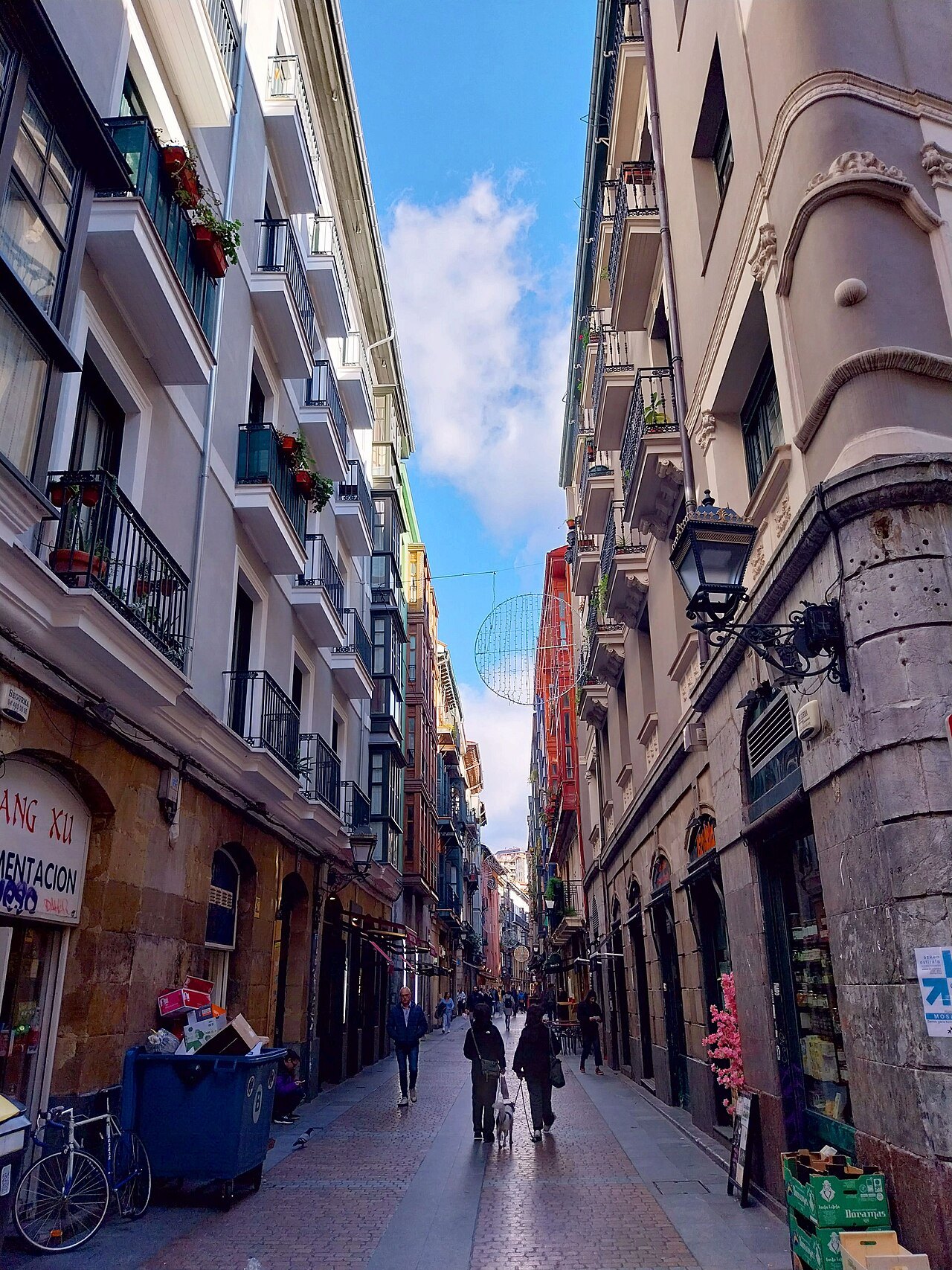
The seven streets that historically formed the Casco Viejo are, from the top of the slope to the river, Somera, Artekale, Tendería, Belostikale, Carnicería Vieja, Barrenkale and Barrenkale Barrena. They run roughly parallel, with short cross lanes between them, and their names still appear on the street plates, often in Basque and Spanish.
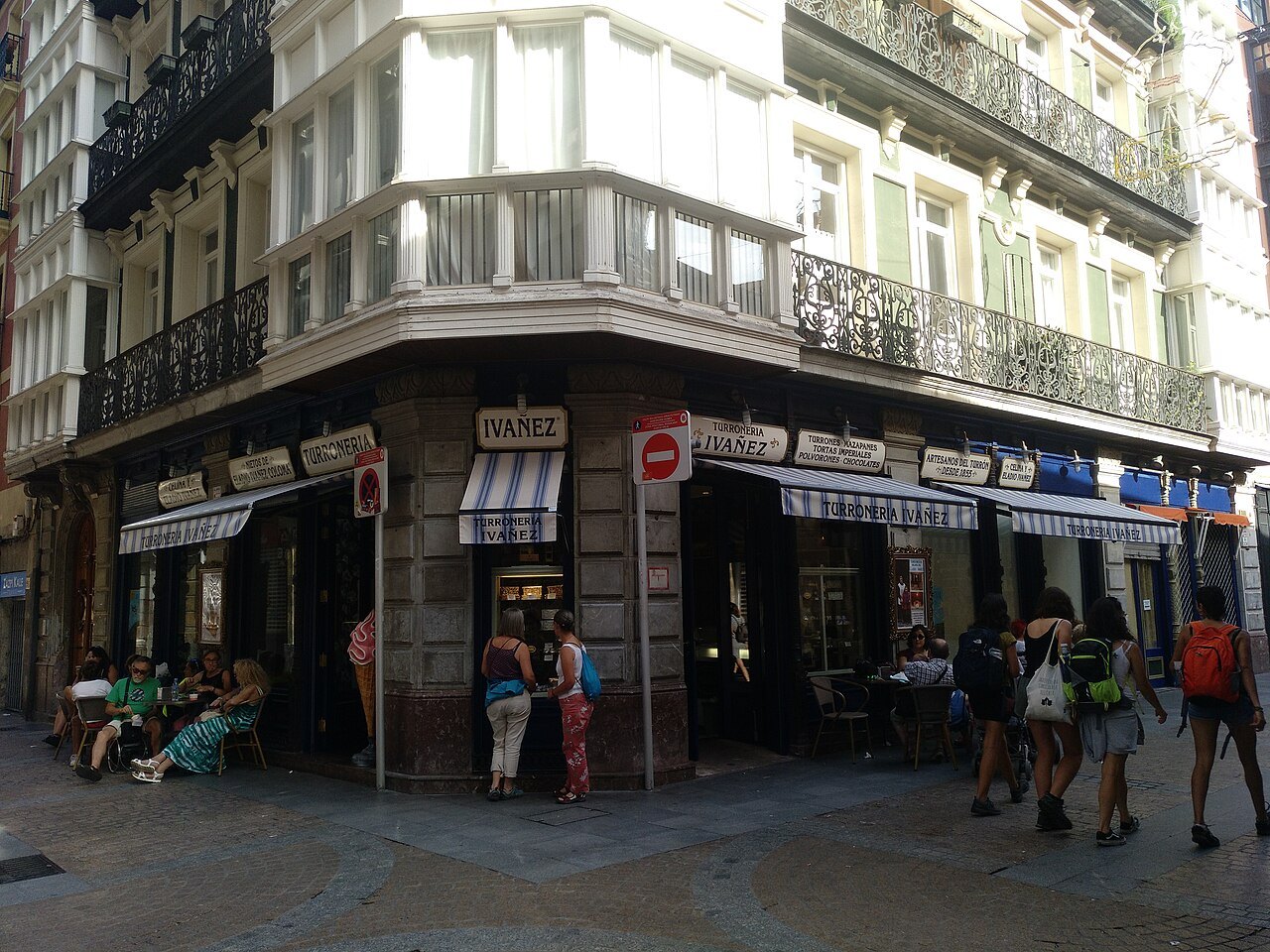
Somera, also called Goienkale, the upper street, was the edge of the first town: the wall that surrounded medieval Bilbao, about six meters high, was built into the backs of its houses. In the Middle Ages it held stables, shops and inns. It is now a street of bars and small restaurants, and one of the best for an evening walk.
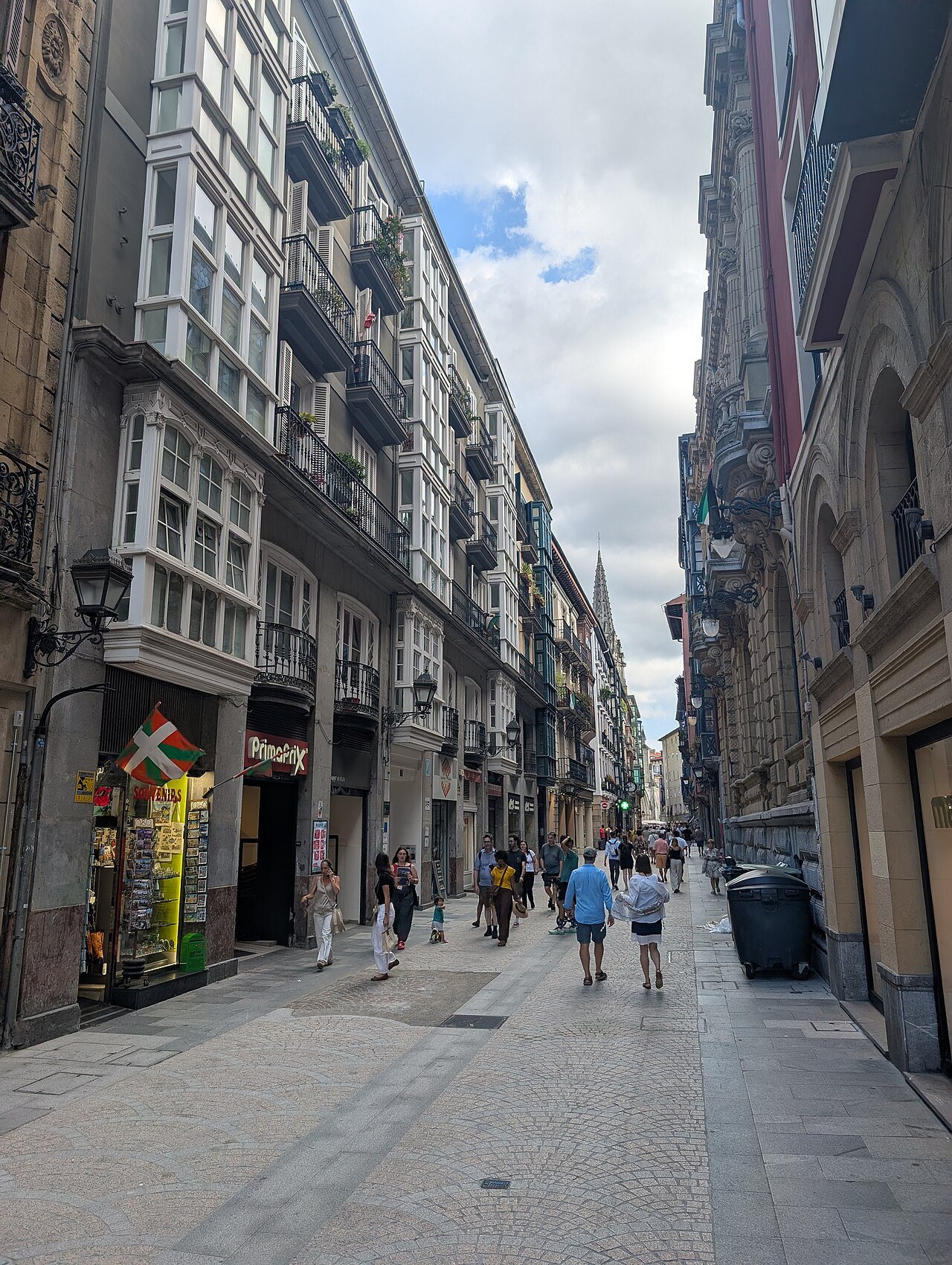
Most of the buildings you see are later than the street plan: tall, narrow houses of four and five floors with wooden or glazed balconies, many of them rebuilt after the floods and fires that run through the quarter's history. The plan is what survives from the Middle Ages, not the houses.
Founded on a river crossing
In 1300 Diego López V de Haro, Lord of Biscay, granted a charter to the settlers on the bank of the river, and the town grew around a warehouse for river goods that already stood beside the crossing. The bridge of San Antón was for centuries the only bridge over the Ría, the obligatory crossing for trade between Biscay and Castile, and the people of Bilbao fought in the courts, and sometimes by other means, to stop anyone building another.
In 1334 King Alfonso XI built a fortress and a defensive wall on the riverbank, which also served as a dike against floods; its foundations were found in excavations in 2002 and can be seen behind the altar of San Antón. The fortress was soon pulled down for a church, consecrated in 1433, and the present church replaced it at the end of the fifteenth century. The bridge in front of it was rebuilt downstream in the 1870s and again in 1937, after it was blown up in the Civil War.
What you see
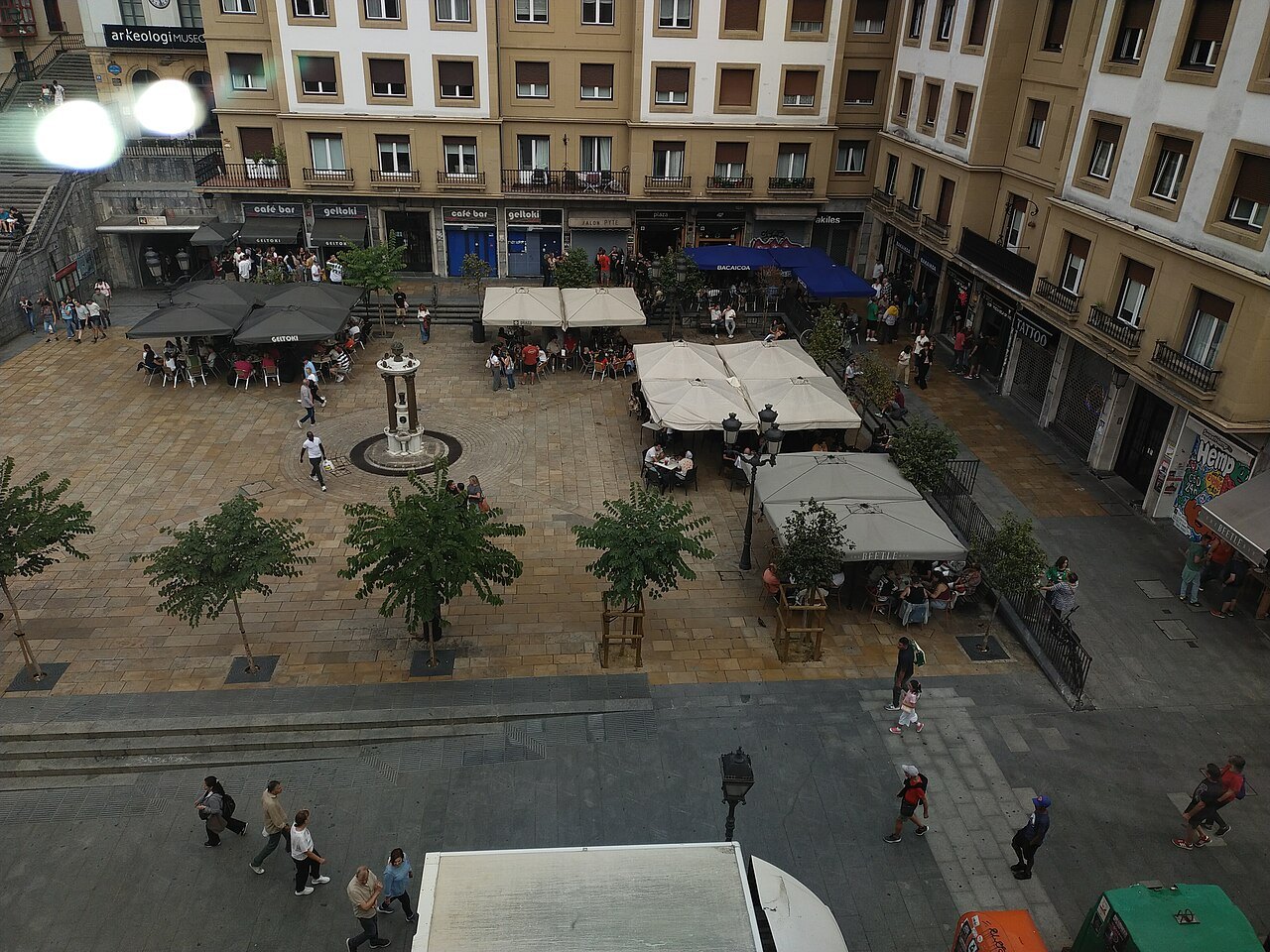
Start at the river end, at San Antón and its bridge, the image on the city's coat of arms. Behind the church the long front of the Ribera market runs along the quay. Walk up through the seven streets, crossing from one to the next by the short lanes, and you reach the cathedral in its small square, with the Paret fountain in front of it.
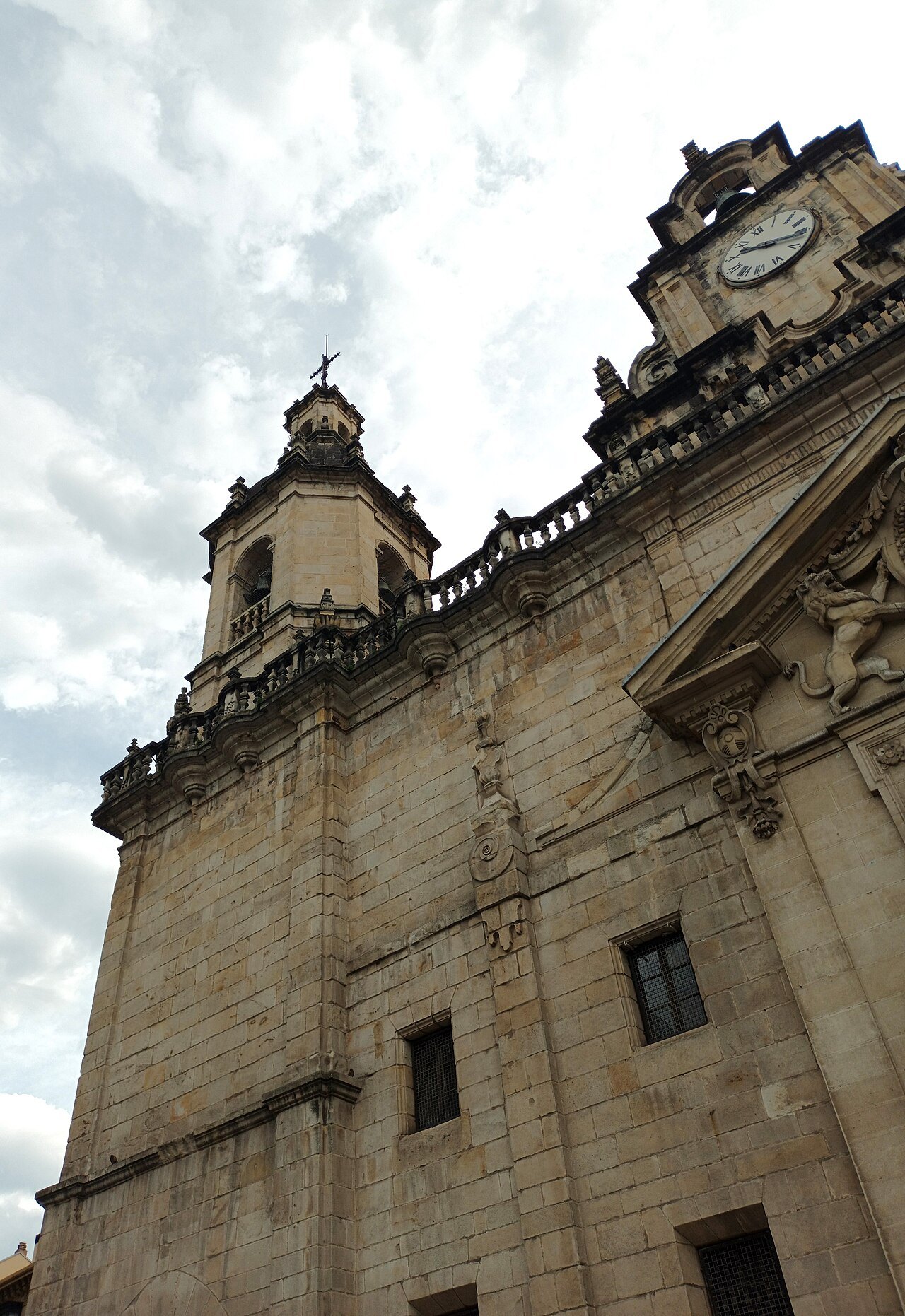
Further in are the Santos Juanes, a church built in a restrained Baroque style in the seventeenth century for the Jesuit college of San Andrés, and the Basque Museum, which opened in 1921 in the college's Baroque cloister and covers the archaeology of Biscay and the ways of life of the Basque Country. The museum stands on the Plaza Miguel de Unamuno, at the top of the quarter.
On the river side, the church of San Nicolás of 1756 faces the Teatro Arriaga across a small square; it began as a chapel for the fishermen's quarter outside the walls. Between them, on Bidebarrieta, the municipal library occupies an eclectic building put up between 1888 and 1890 as the club of a society founded in honor of the town's defenders in the Carlist Wars.
The flood of 1983
On 26 August 1983, during the city's summer festival, days of heavy rain made the river burst its banks. The water rose up to about five meters in places and two people died. The Casco Viejo, low on the riverbank, took much of the damage: San Antón lost most of its furnishings, the Bidebarrieta library was closed for five years, and many ground-floor shops and bars had to be rebuilt.
How to visit
The quarter is small and entirely walkable; allow half a day to see the churches, the market and the museum, and an evening for the bars. Most of the lanes are pedestrian, paved, and gently sloping toward the river.
It is the best-connected part of the city. The Zazpikaleak/Casco Viejo station is the one stop where all three Metro lines meet, and the riverside tram stops at Arriaga, Ribera and Atxuri. From the Ensanche it is a short walk across the Arenal bridge. See getting around for how the Metro and tram work.
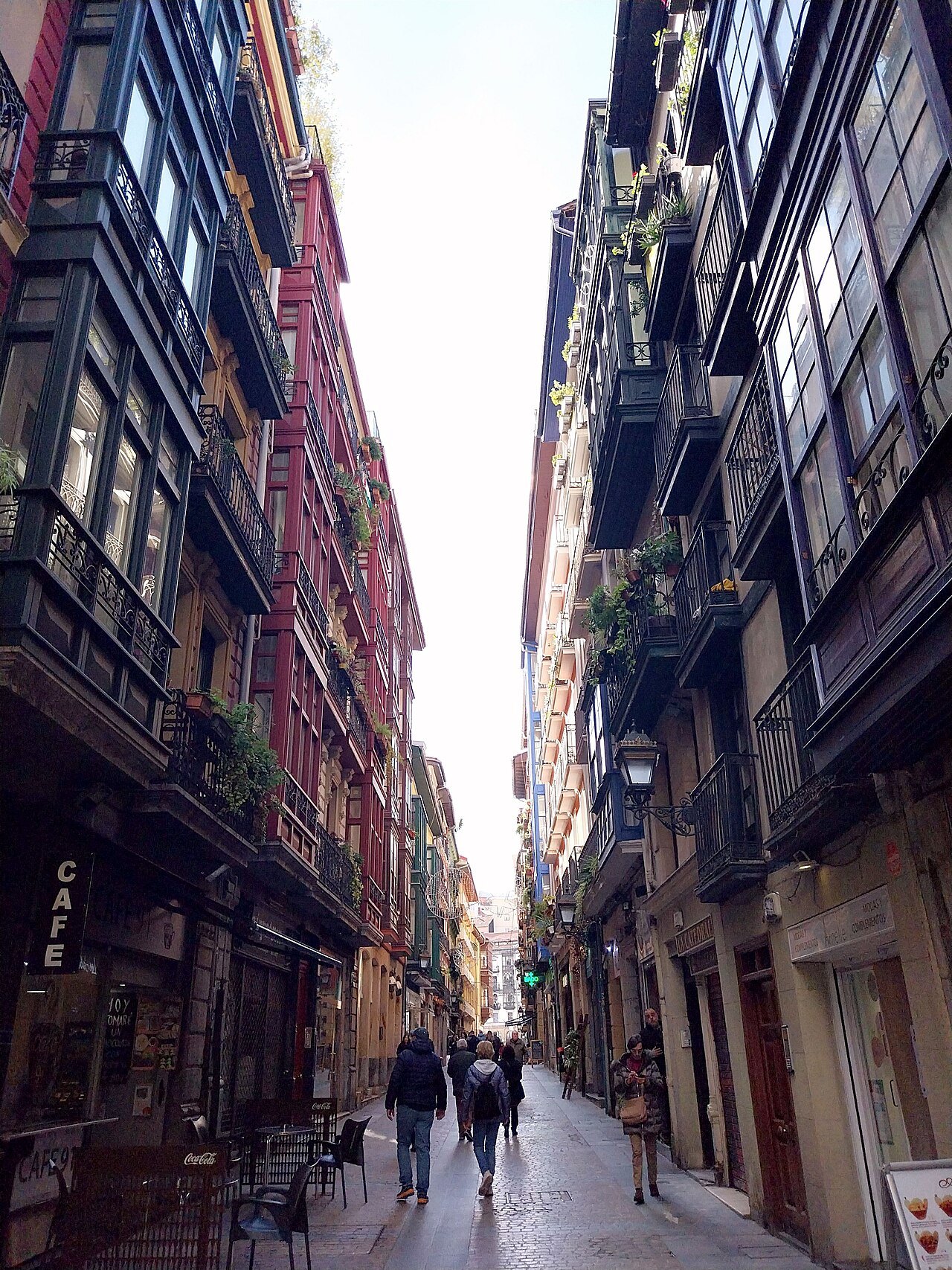
The streets are busiest at the end of the working day and on weekend evenings, when the bars fill and people stand outside them. Churches keep their own visiting times and close to visitors during services, so weekday mornings, before the bars fill, are the quietest time to see the architecture.
Honest notes
The Seven Streets are a medieval plan with nineteenth- and twentieth-century houses on it, much rebuilt after floods; do not expect a preserved medieval town. What is old is the layout, the churches and the river crossing that made the place.
The name casco viejo is simply Spanish for old town and is used in many cities, so look for Zazpikaleak or Siete Calles when searching for this one.
Nearby
Where to go next
- Nearby · Casco Viejo · right bankSantiago CathedralThe Gothic parish church of the founding town, rebuilt after a fire in 1374 and raised to a cathedral in the twentieth century: a compact church of warm sandstone in the Seven Streets, with a cloister, a great porch and a Gothic Revival front and spire.Read the page →
- Nearby · Casco Viejo · right bankPlaza NuevaA closed neoclassical square of arcades at the edge of the Seven Streets, planned in 1821 and finished in 1851, where the Basque language academy now sits behind the clock and the old town's bars fill the arches.Read the page →
- Nearby · Casco Viejo · right bankThe Ribera MarketBilbao's covered food market, a long Art Deco building on the riverbank beside the church of San Antón, standing on the site where the town has held its market since the fourteenth century.Read the page →