Home · Sights · Teatro Arriaga
Teatro Arriaga
What you are looking at
El Arenal · right bank
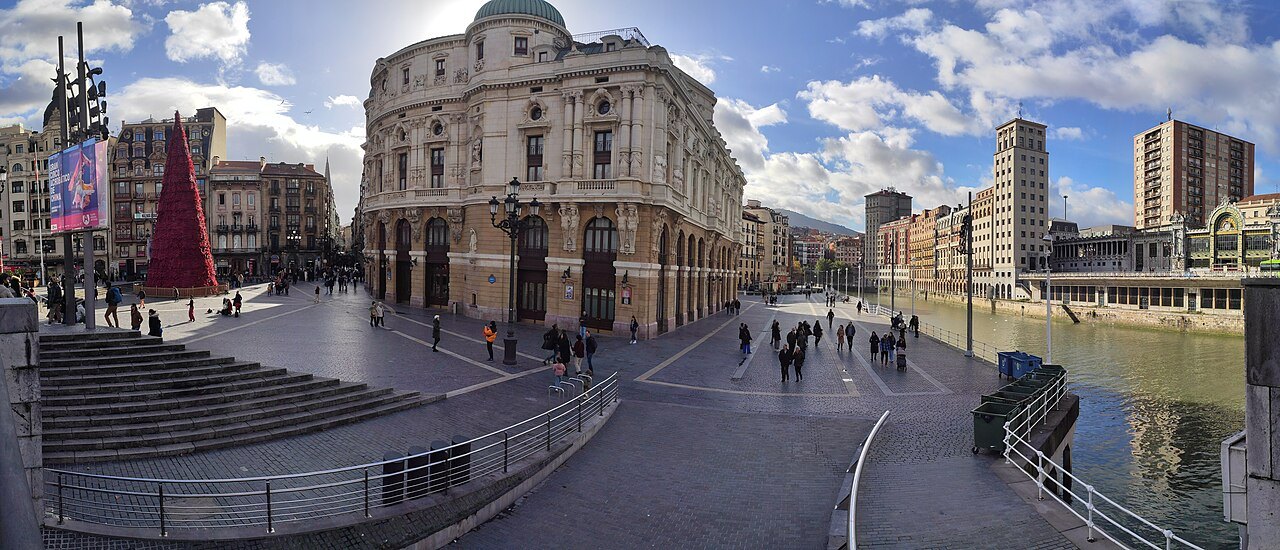
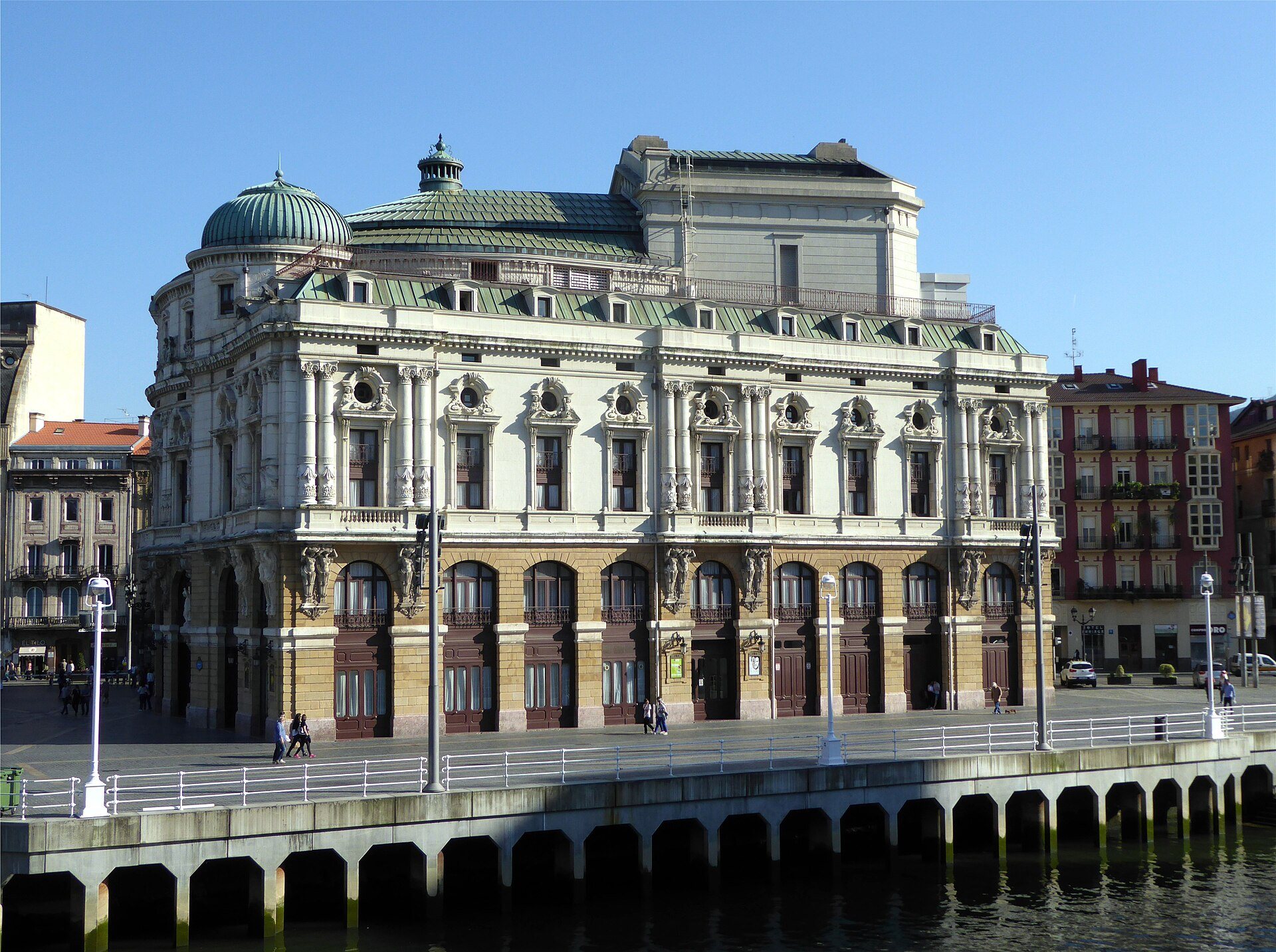
- 1The curved frontA convex Neo-Baroque facade facing the river, framed by two domed turrets with a clock at the top.
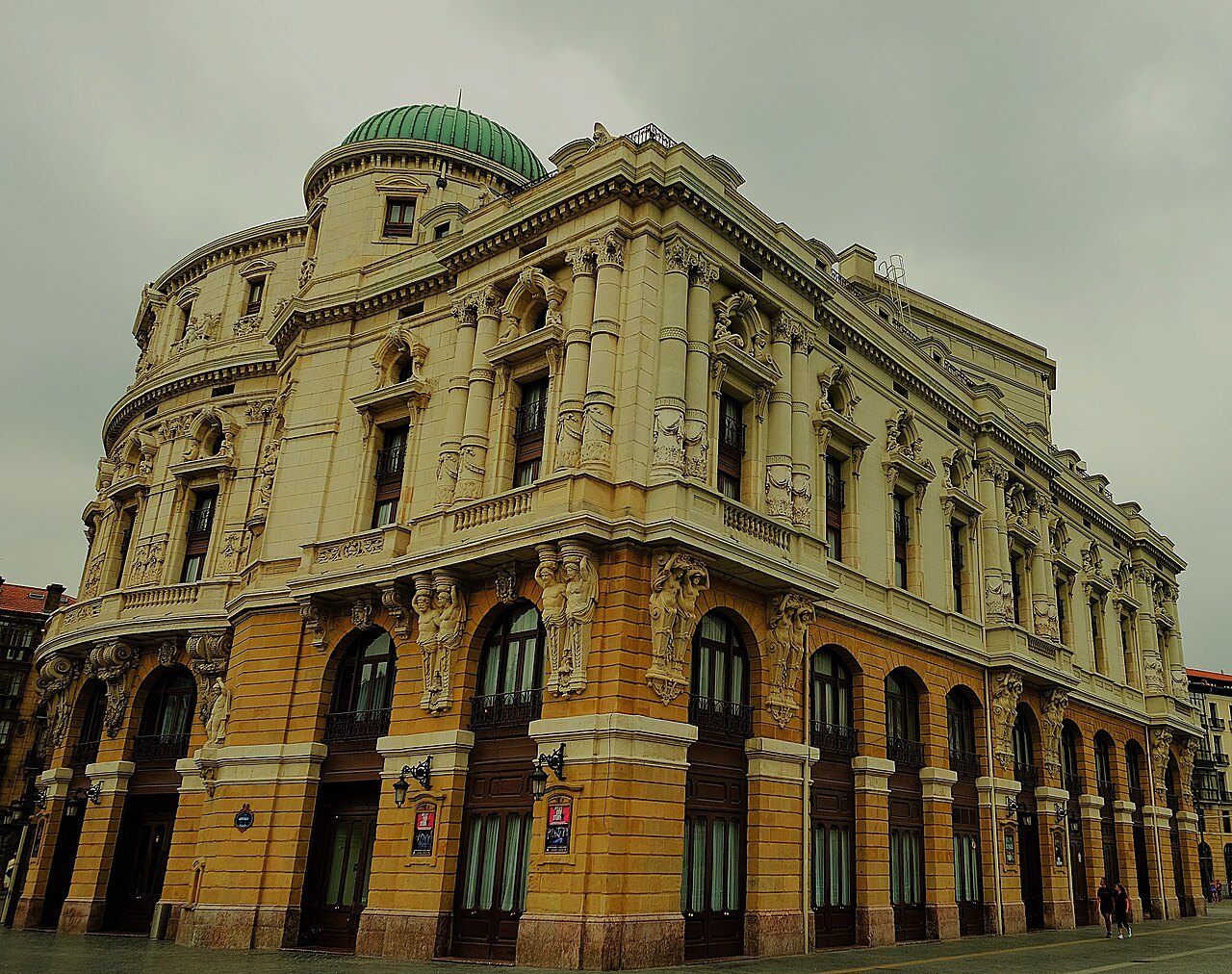
- 2The allegoriesSculptures representing the performing arts, in the manner of the Paris Opera House.
- 3The horseshoe auditoriumAbout 1,200 seats in stalls, boxes, amphitheater and gallery, in the classic European plan.
- 4The imperial staircaseA grand double stair added in the restoration finished in 1986.
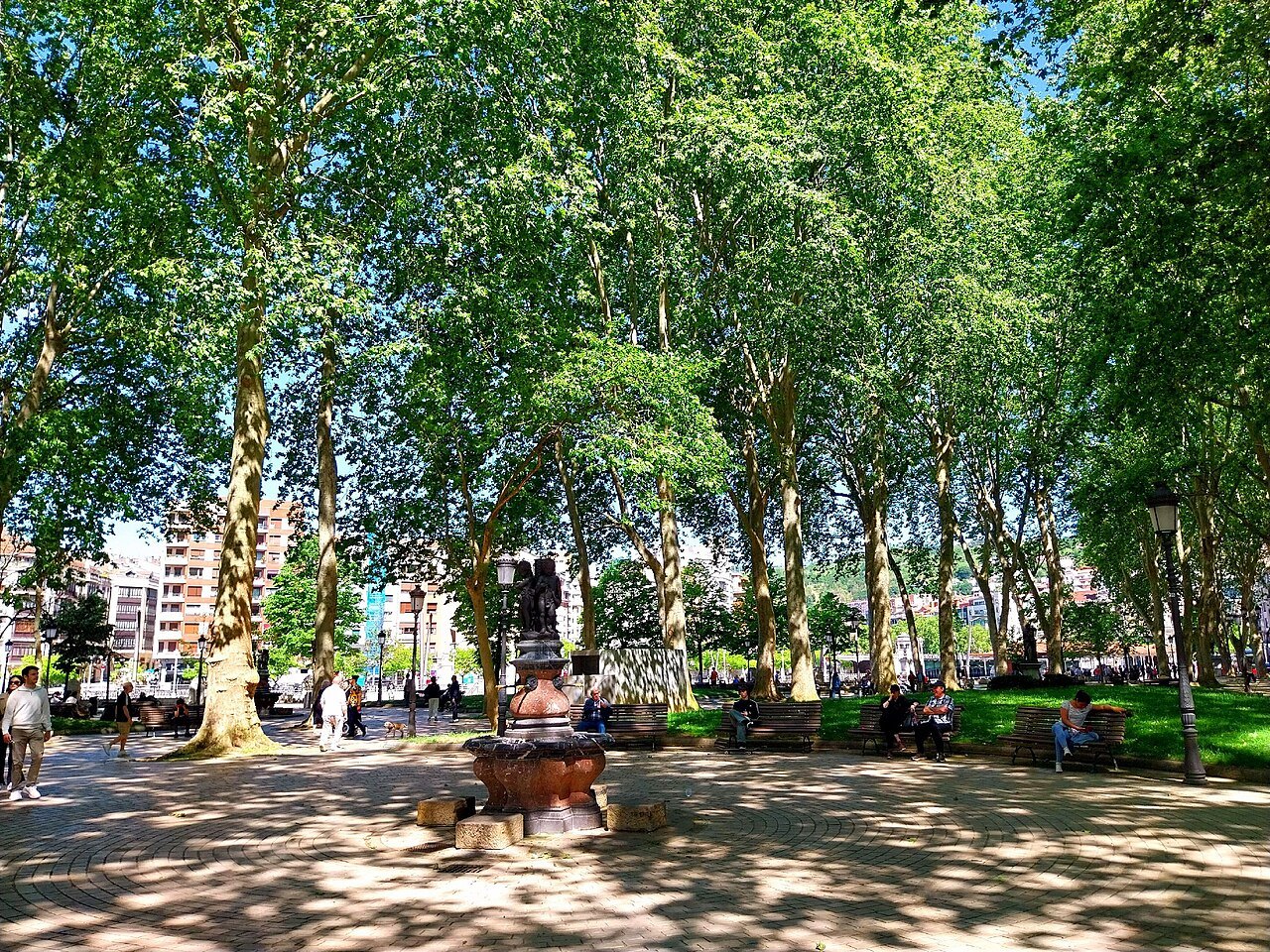
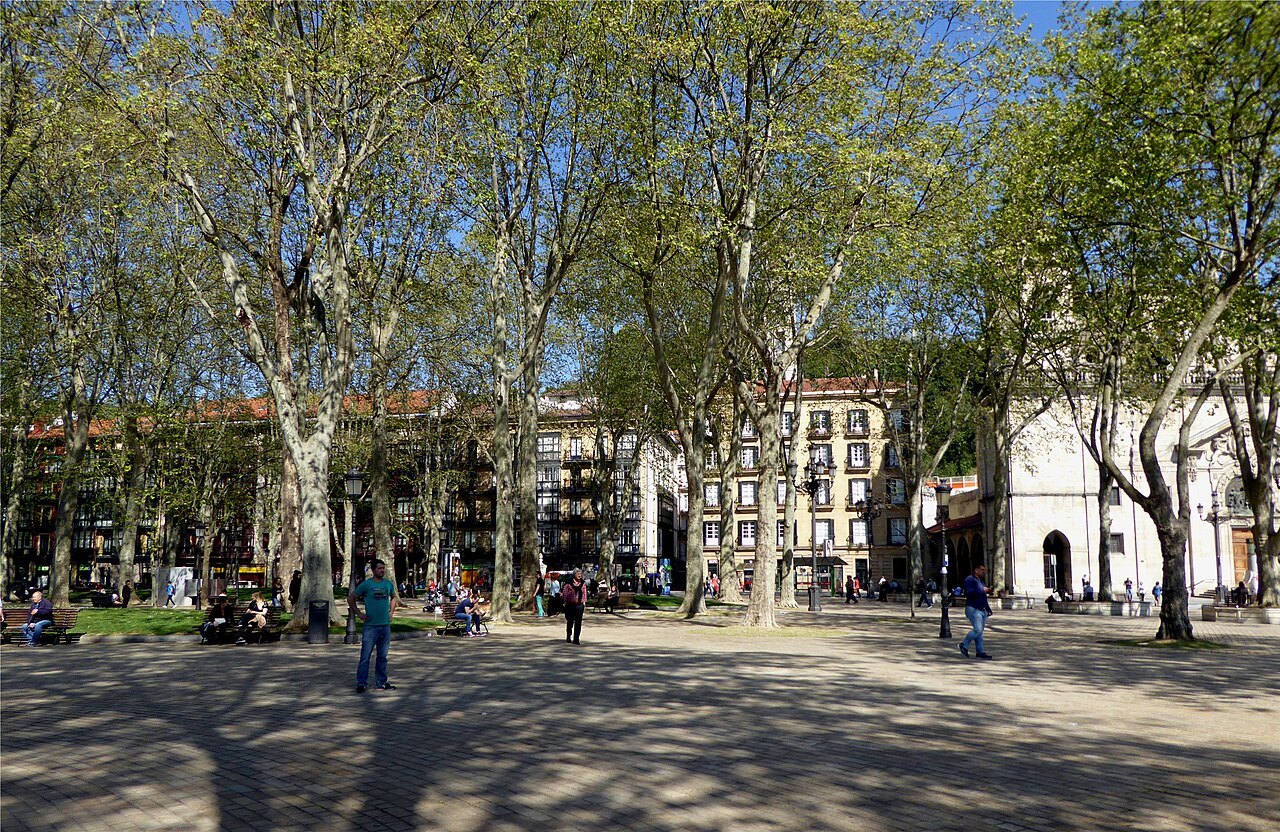
- 5El ArenalThe riverside promenade and gardens beside the theater, with fountains and a bandstand.
- 6San NicolásThe Baroque church across the small square, facing the theater front.
Reading the place
The sight in full
Why it matters
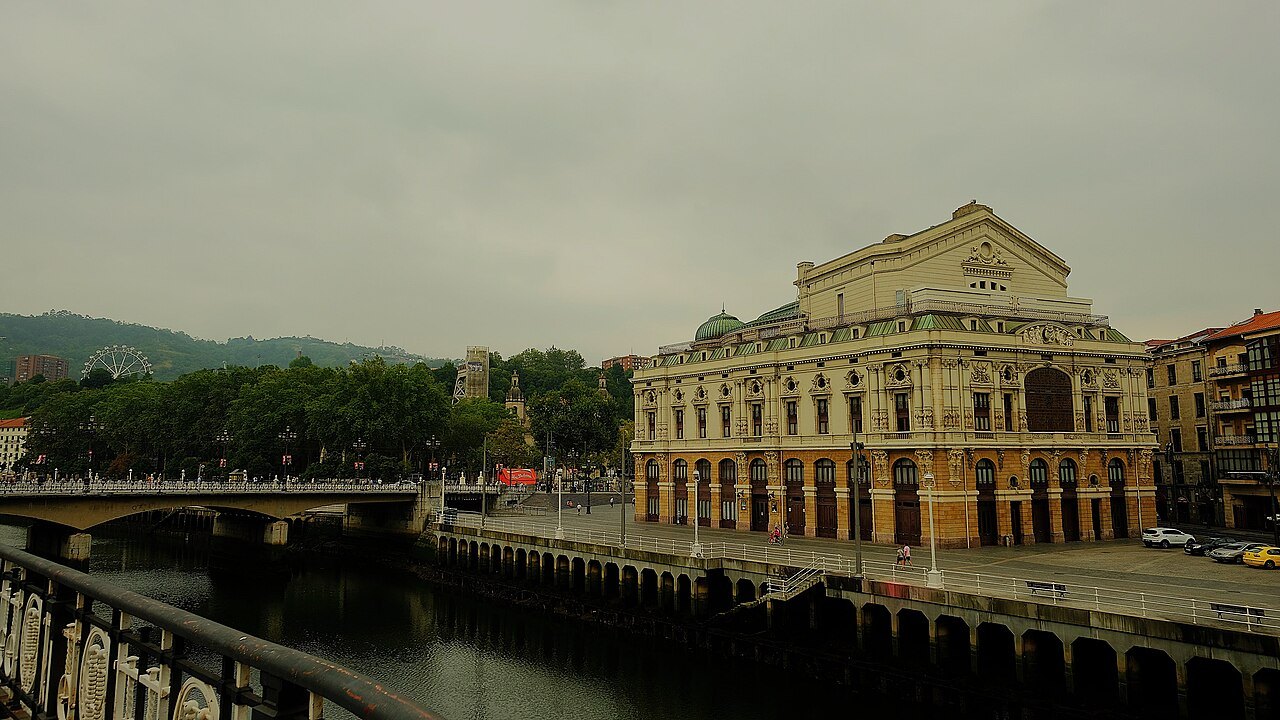
The Teatro Arriaga, Arriaga Antzokia in Basque, is Bilbao's historic opera house and one of the most notable buildings in the city. It stands on the right bank of the Ría at the edge of the Casco Viejo, facing the river and the Arenal bridge, and its pale front is the image that greets anyone crossing from the Ensanche into the old town.
It was built in a Neo-Baroque style by the architect Joaquín Rucoba, who also designed the city hall, and opened in 1890. It is named after Juan Crisóstomo de Arriaga, a composer from Bilbao who died young and was later nicknamed the Spanish Mozart. The building has survived a fire and a flood, each followed by a long reconstruction.
From the town theater to the new theater
In 1834 the Teatro de la Villa opened as Bilbao's main stage. The city grew fast in the middle of the century after the railway arrived, while the Carlist Wars did great damage to it and left the old theater in ruins. By 1882 the Teatro de la Villa was too small and in too poor a state, and plans were made for a new theater to replace it.
Led by Rucoba, the Nuevo Teatro de Bilbao opened on 31 May 1890, after four years of building. The name Teatro Arriaga first appeared in newspaper announcements for a performance in 1902. The theater was technically advanced for its time: it was an early user of electric lighting and was built on an iron frame in the hope of avoiding fire.
The Spanish Mozart
Juan Crisóstomo de Arriaga was born in 1806, the son of a merchant who had moved to Bilbao two years earlier. A child prodigy, he was sent to study at the Paris Conservatoire under Luigi Cherubini and François-Joseph Fétis, who were impressed by his originality. He died in Paris of a lung illness ten days before his twentieth birthday.
He was called the Spanish Mozart after his death: like Mozart he was a prodigy who died young, they shared their first baptizmal names, and both were born on 27 January, the feast of Saint John Chrysostom, fifty years apart. A monument to him stands outside the Fine Arts Museum.
Fire and flood
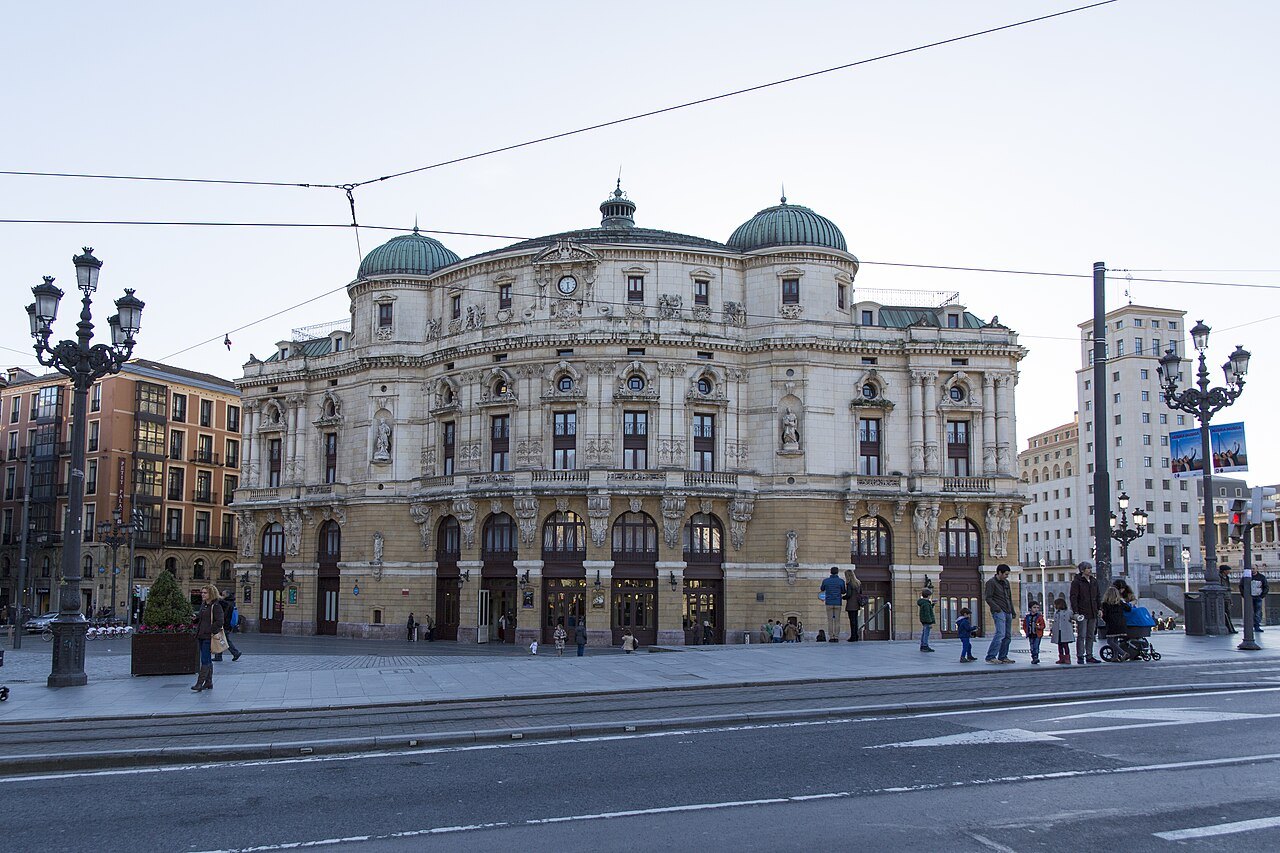
That hope failed. On the night of the Santo Tomás market in 1914 the theater was destroyed by fire. The architect Federico de Ugalde led its reconstruction, and it was inaugurated a second time on 5 June 1919. Through the twentieth century it passed through the hands of private companies and in 1978 became the property of the city, at a time when theater-going had declined and cinema filled much of its program.
On 26 August 1983 the great flood reached about five meters in parts of the city, and the Arriaga was badly damaged. It reopened on 5 December 1986 after a major restoration by the architect Francisco Hurtado de Saracho, which added the imperial staircase. Between 1999 and 2000 the fronts, damaged by salt, pollution, damp and growths, were restored: stone was cleaned and repaired and the sculptures were reinforced.
What you see
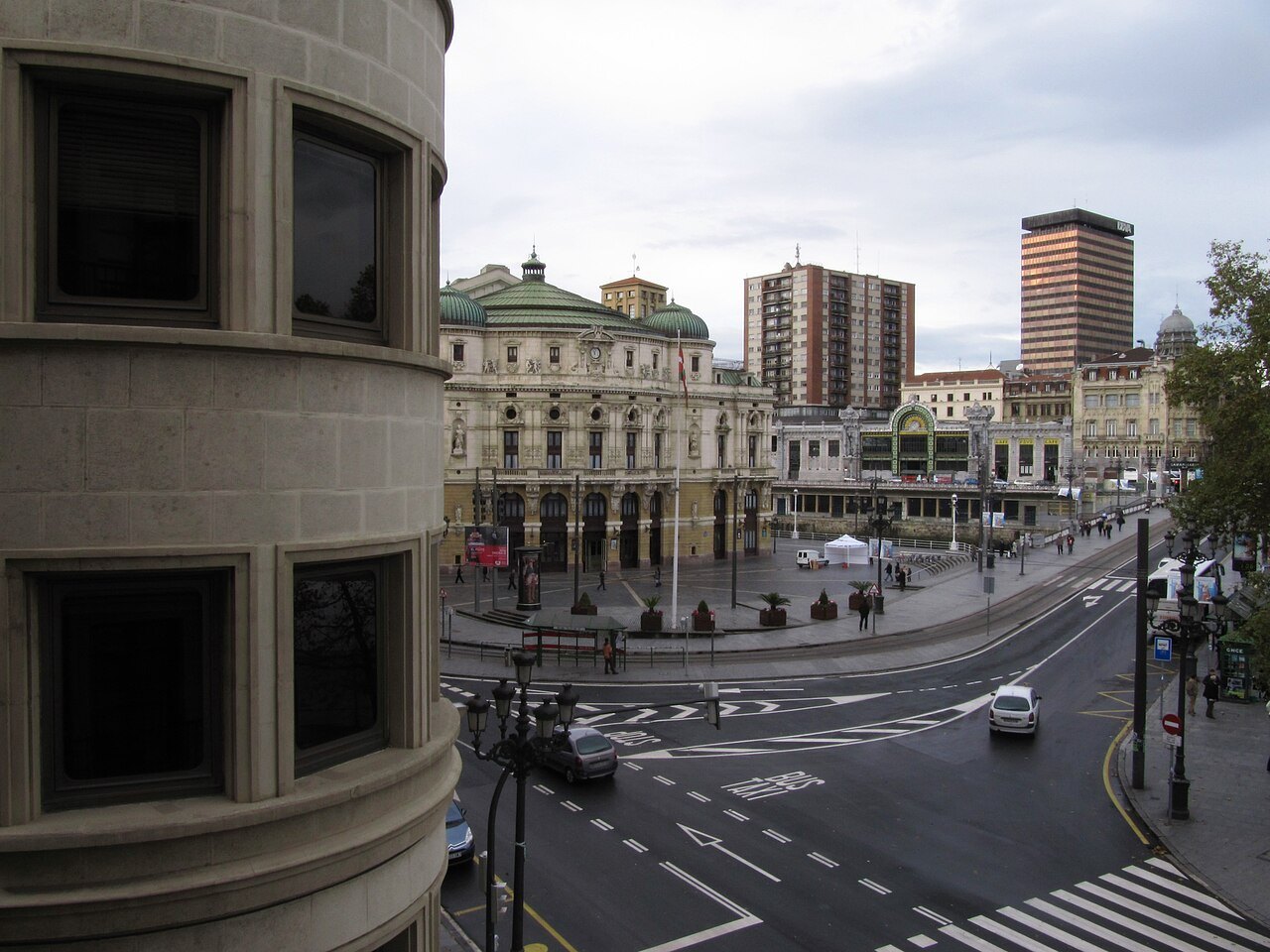
The building is Neo-Baroque with French influences, and its fronts were inspired by the Paris Opera House. The main front, curving outward toward the river, is framed by two domed turrets and set out on three levels: a row of arches at the base; rectangular windows, round openings and balconies in the middle; and a clock at the center of the top level. Sculptures around it represent allegories of the performing arts.
Inside, the auditorium seats about 1,200 people in a horseshoe plan, like other European opera houses, divided into stalls, orchestra, boxes, amphitheater and gallery. Because the ground floor of Rucoba's design held shops, the stage is on the second floor. The orchestra pit sits on a lift with three positions: lowered as a pit, level with the stalls for extra seats, or raised to the stage.
El Arenal and the square
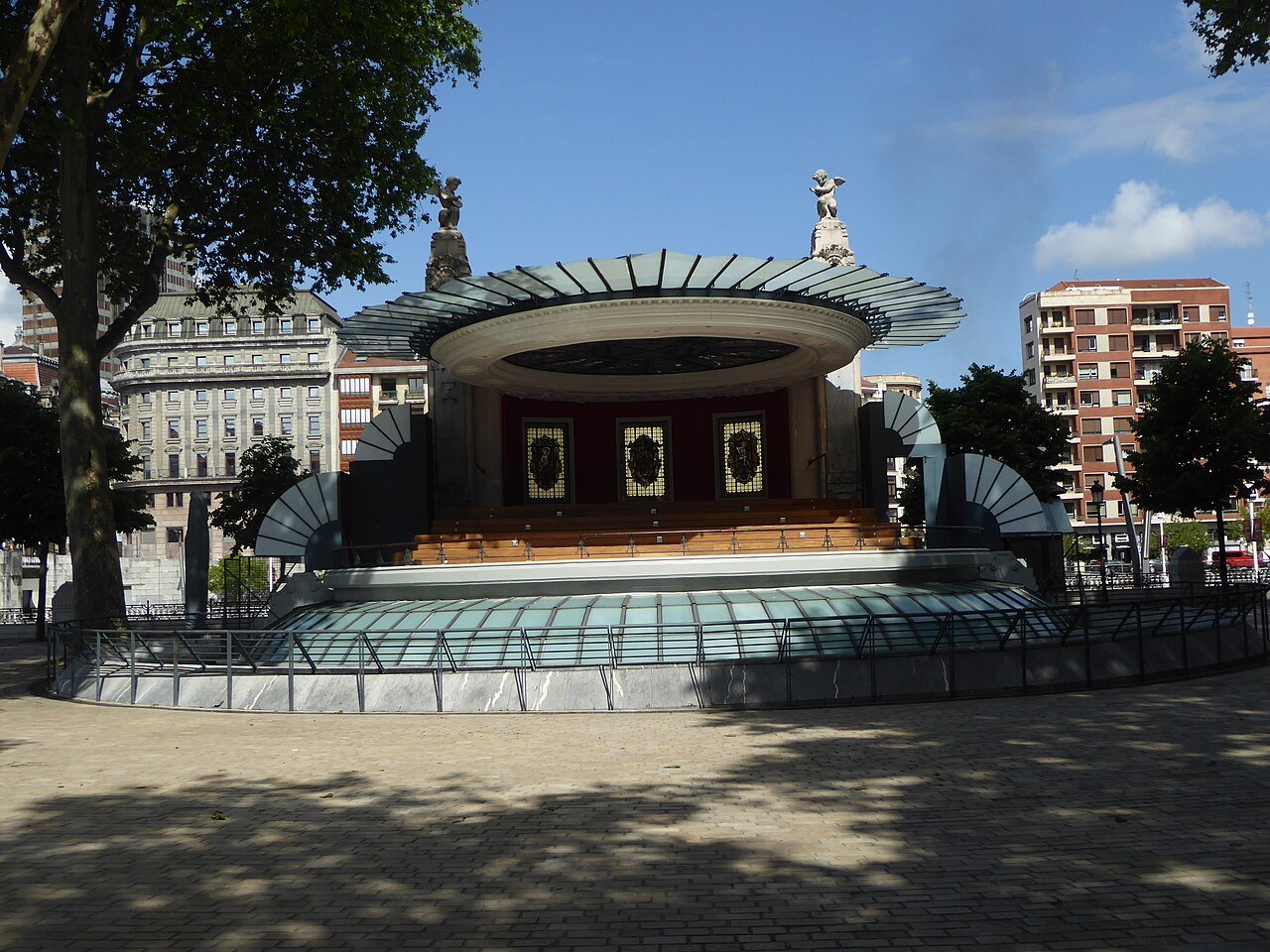
The theater stands at one end of El Arenal, Areatza in Basque, the riverside promenade that is the old town's front door: about 300 meters along the water and more than 125 meters wide at its broadest. Inside it are three walks, two fountain pools with small bronze mermaids, gardens with figures of Bacchus and Pan, and a bandstand.
Between the theater and the church of San Nicolás lies a small square planted with trees and circular wooden benches, and near the Arenal bridge stands a statue of the improvising poet Balendin Enbeita. From here the Arenal bridge crosses to the Ensanche and to Abando station.
How to visit
To see the inside, go to a performance: the Arriaga stages theater, dance, opera and concerts through the season, and the program and tickets are on the theater's own site. Guided visits of the building have been offered at times; check the theater for current arrangements rather than counting on one.
From outside, the best views are from the Arenal bridge and from the opposite bank, where the curved front and the turrets can be seen together over the water, and at dusk, when the front is lit. The Arriaga tram stop is in front of the theater and the Zazpikaleak/Casco Viejo Metro station a few minutes away; see getting around.
For opera at full scale, the city's main season is held across the river at the Euskalduna; the booking ahead page explains what needs a ticket in advance.
Honest notes
Arriaga's music is little played outside Spain, and the theater is a monument to the city's pride in him as much as to his work. The building you see is largely the reconstruction of 1919 restored after 1983, faithful to Rucoba's design rather than original stone throughout.
Nearby
Where to go next
- Nearby · Ibaiondo · right bankThe Casco ViejoThe oldest quarter of Bilbao and the town's original core: seven parallel streets on the right bank of the Ría, with the cathedral, three old churches, the market and the city's busiest bars packed between them.Read the page →
- Nearby · Casco Viejo · right bankPlaza NuevaA closed neoclassical square of arcades at the edge of the Seven Streets, planned in 1821 and finished in 1851, where the Basque language academy now sits behind the clock and the old town's bars fill the arches.Read the page →
- Nearby · Casco Viejo · right bankThe Ribera MarketBilbao's covered food market, a long Art Deco building on the riverbank beside the church of San Antón, standing on the site where the town has held its market since the fourteenth century.Read the page →