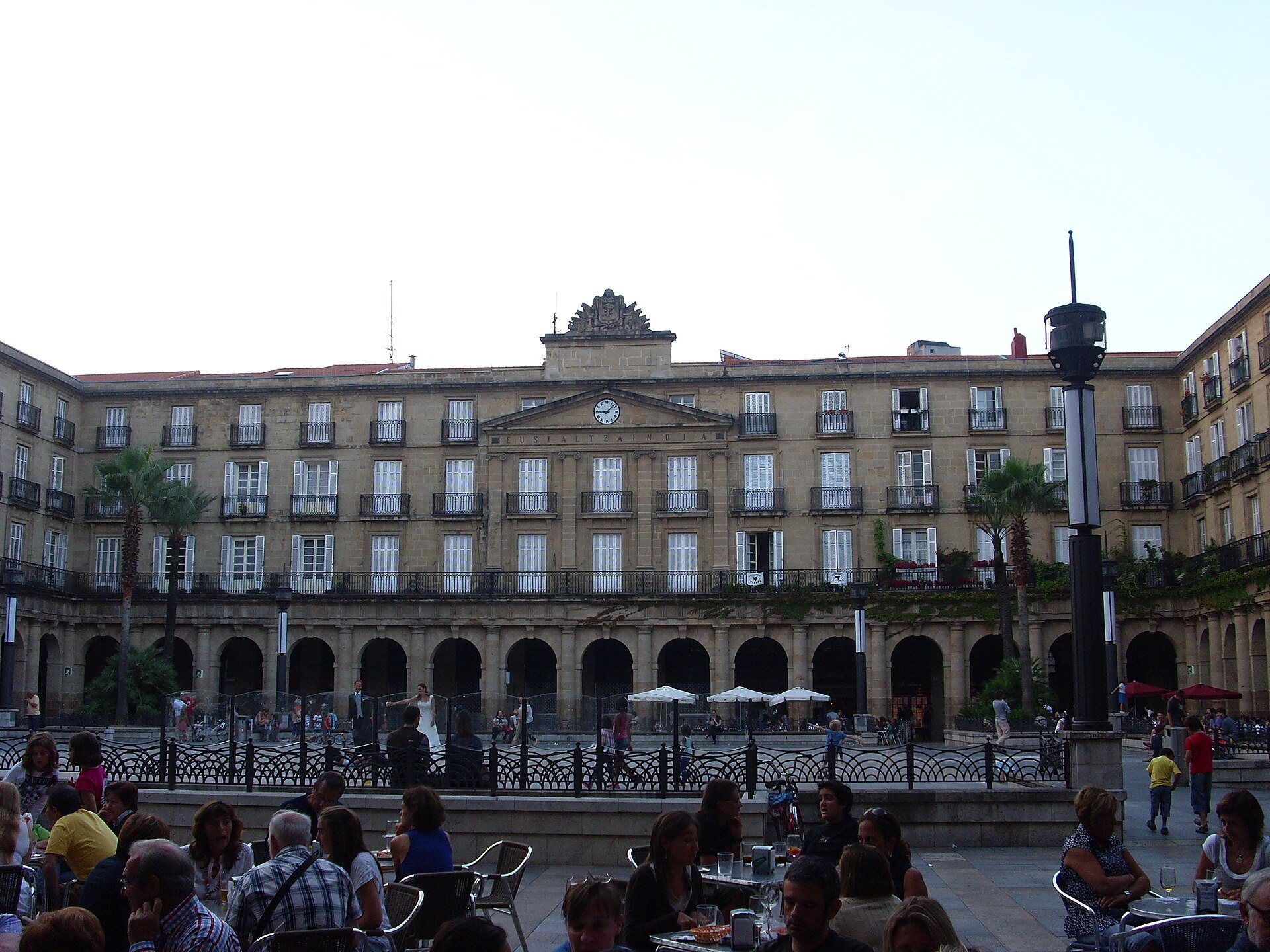
Plaza Nueva
What you are looking at
Casco Viejo · right bank
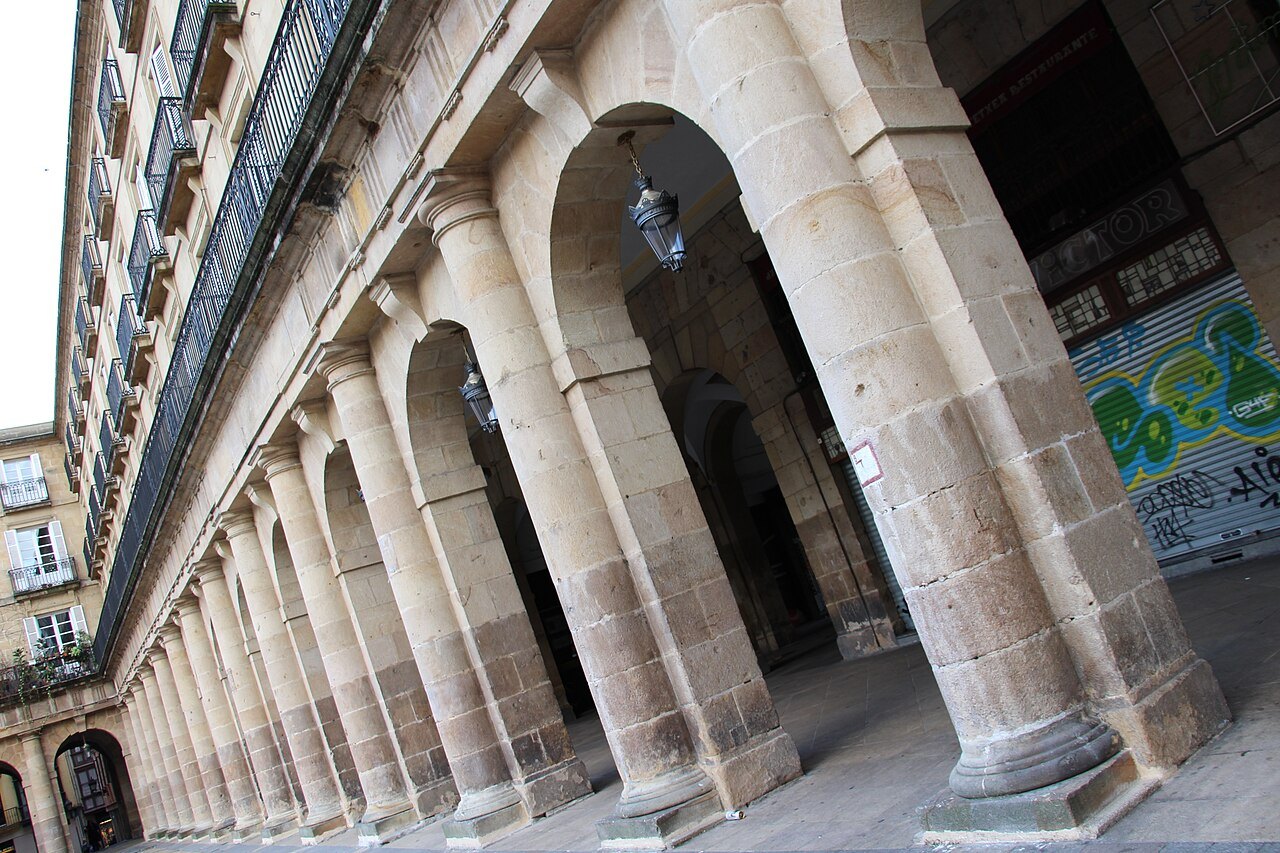
- 1The arcadesA continuous run of round arches on every side, sheltering bars, restaurants and shops.
- 2The clock buildingThe monumental block on one side, once the seat of Biscay's government, now the Basque language academy.
- 3The five entrancesArched passages into the square from the surrounding streets, each a framed view in.
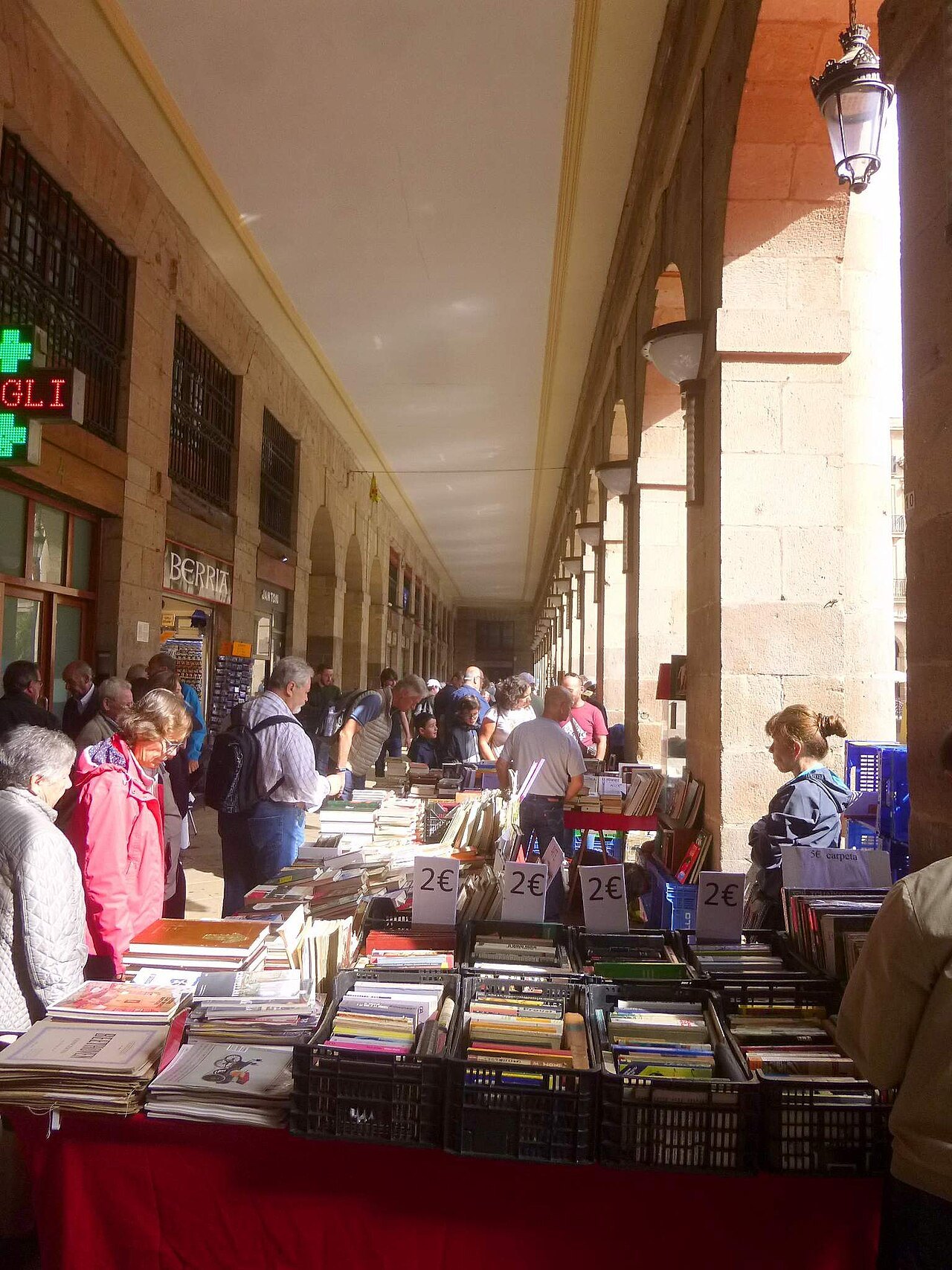
- 4The Sunday marketA flea market under the arches on Sunday mornings, with old books, coins and stamps.
- 5The Santo Tomás fairA farmers' market that fills the square every year on the feast of Santo Tomás in December.
- 6The pintxo barsSome of the oldest and most typical bars in the city, with counters full of pintxos.
Reading the place
The sight in full
Why it matters
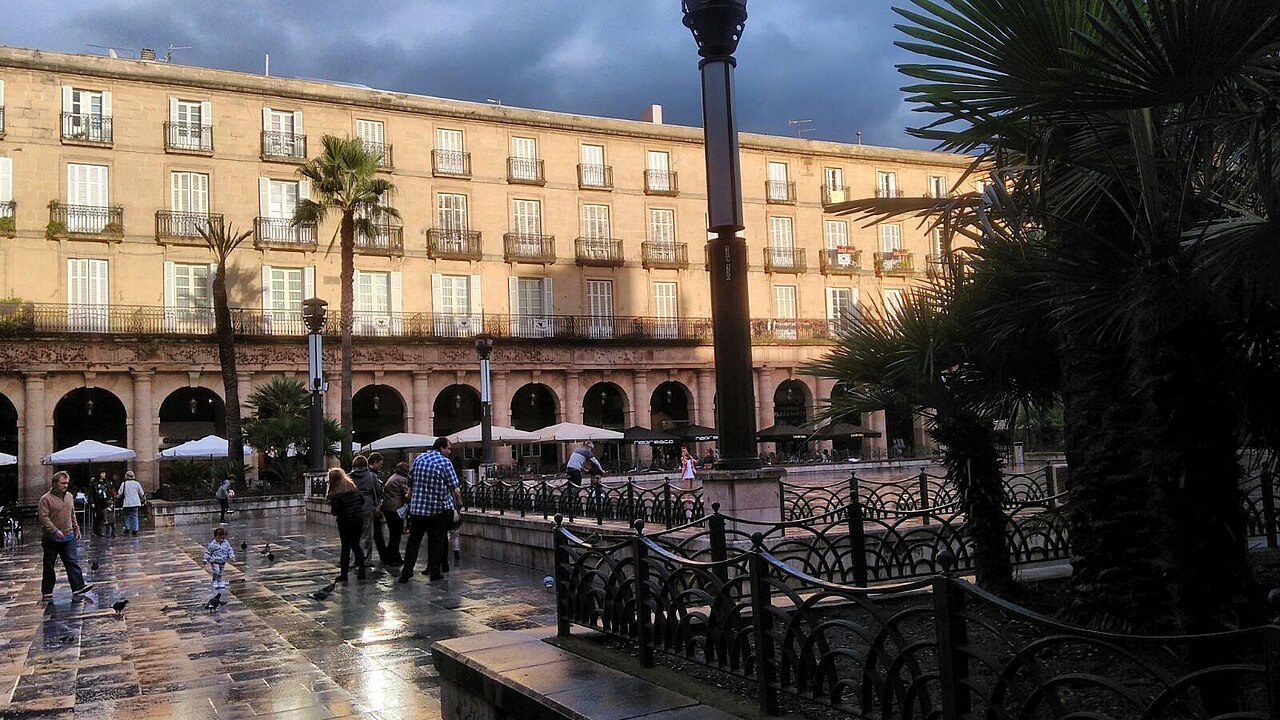
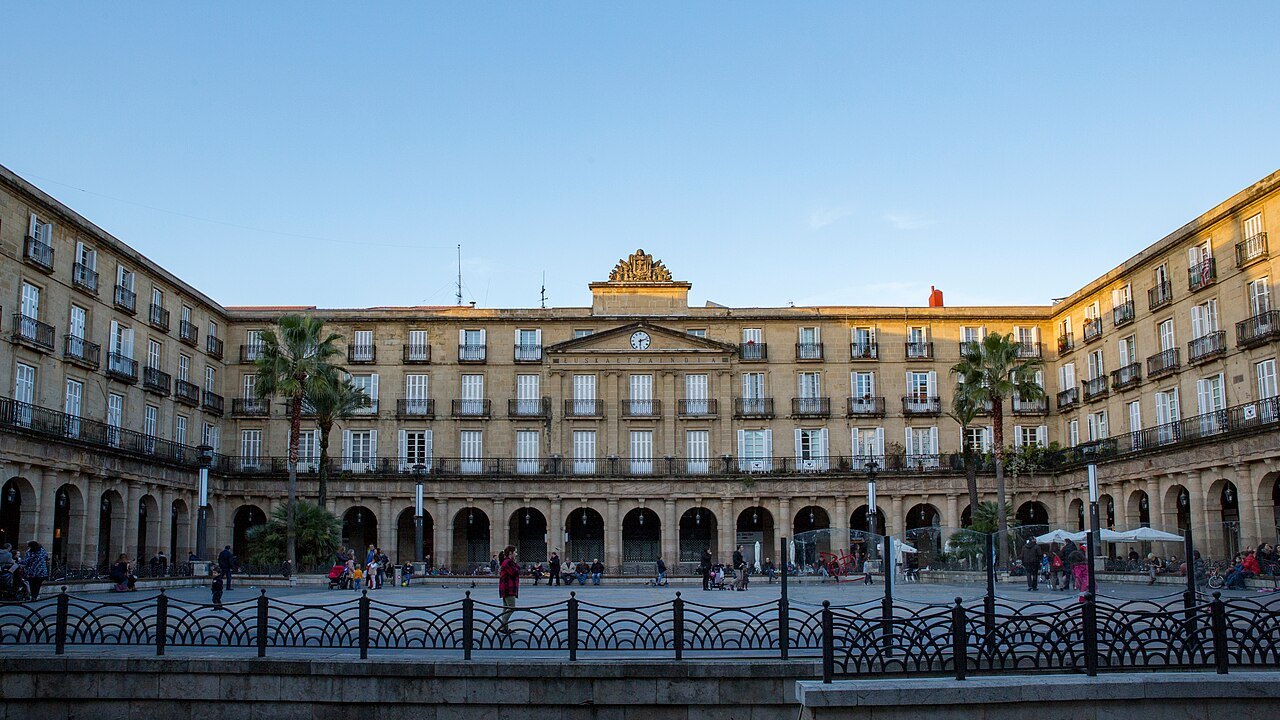
The Plaza Nueva, Plaza Barria in Basque, the New Square, is the grand public room of the Casco Viejo. It is a neoclassical reinterpretation of the traditional Spanish plaza mayor: a large, regular, enclosed square with continuous arcades, matching fronts and heights, and arched entrances, the type that developed in Castile in the early modern centuries. One side is taken by a monumental building with a clock.
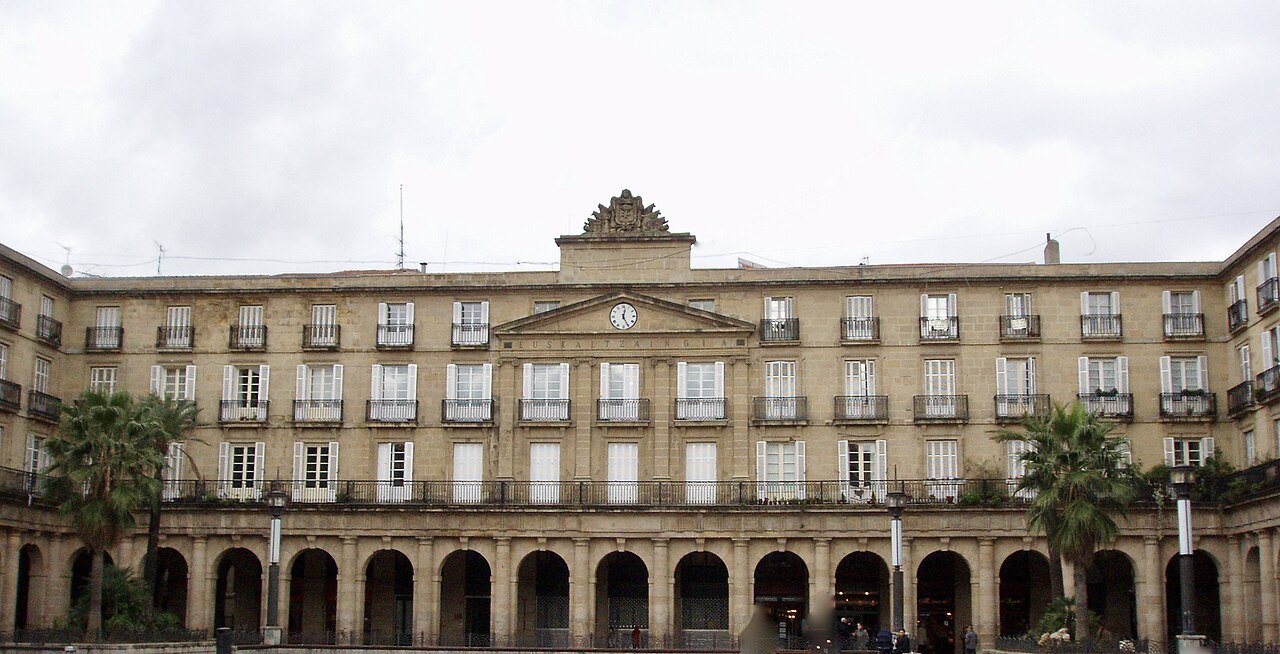
It was called New to set it apart from the Old Square, the town's main square beside the church of San Antón, where the Ribera market now stands. Today the arcades hold bars, restaurants and shops, and the square is one of the busiest meeting places in the old town, especially at the hour of the aperitif.
Sixty-five years to build
The idea of a new square came from the spirit of the Enlightenment in late eighteenth-century Bilbao: to replace the old crowded center with a space that would be functional, comfortable, hygienic and beautiful. A very complex administrative process stretched the project over sixty-five years, in two periods: planning from 1786 to 1829, and building from 1829 to 1851.
That long process left three authors. Silvestre Pérez drew the plans in 1821. Antonio de Echevarría took over direction of the works in 1825 and produced two revised schemes, in 1829 and 1832. Between 1840 and 1851 direction passed to Avelino de Goicoechea, who changed Echevarría's design in turn. The square that opened in 1851 is therefore the work of a generation, though it reads as a single, calm design.
The building with the clock
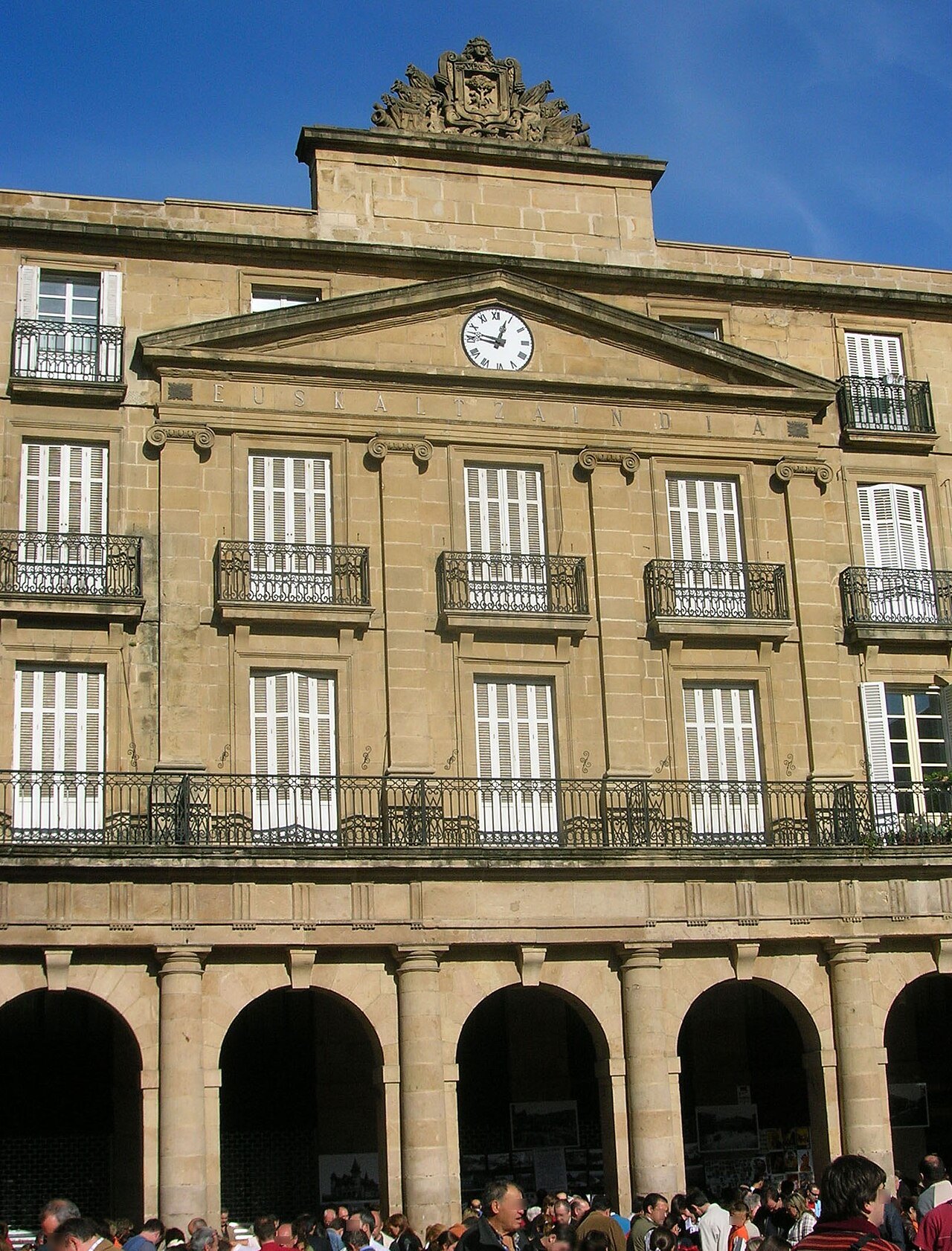
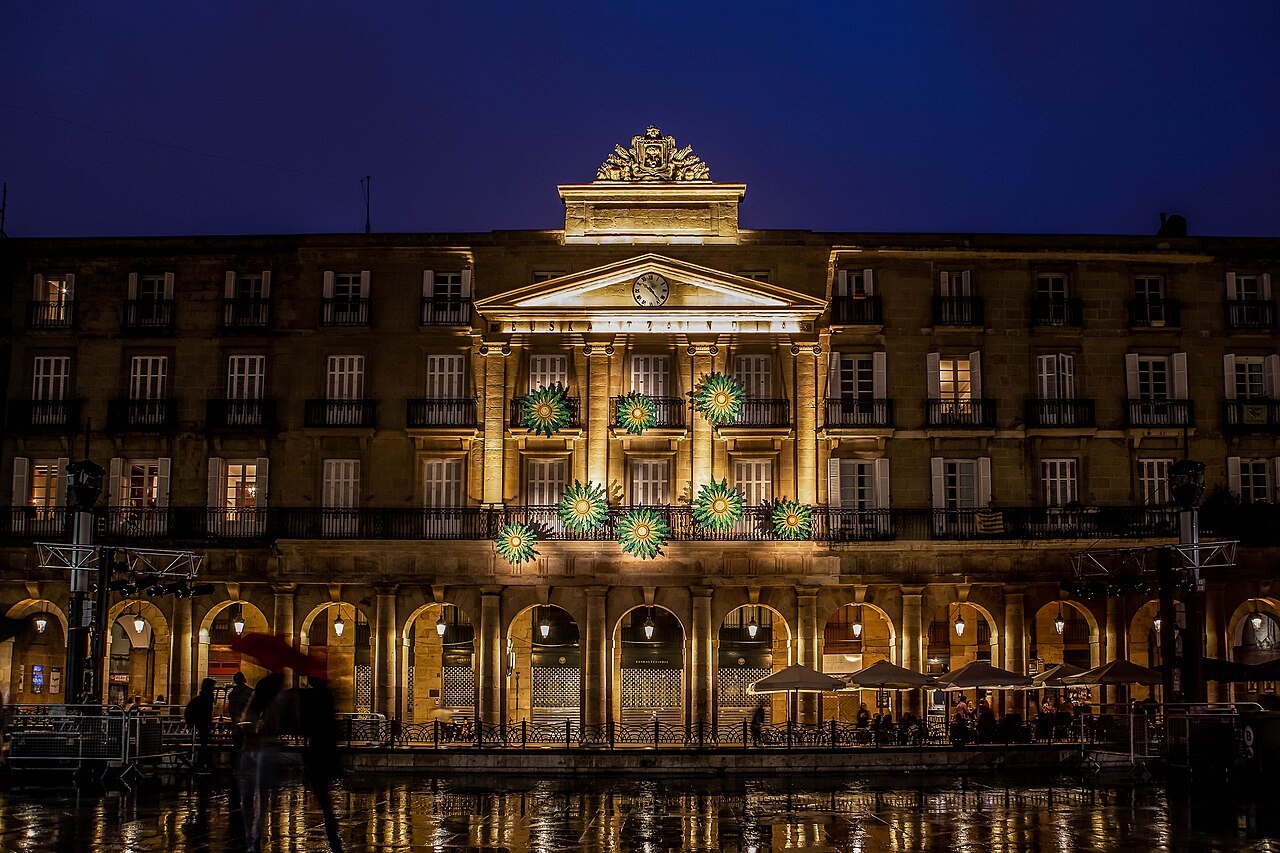
The main building on one side of the square, the one with the clock, was the seat of Biscay's provincial government until a new palace was built for it, around 1890 to 1900. Over the years the square's buildings also held hotels and the offices of banks.
Today the clock building is the headquarters of Euskaltzaindia, the Royal Academy of the Basque Language, which regulates Basque and decided which of the city's two Basque names, Bilbao or Bilbo, is the historical one. It is a fitting tenant for the main square of the old town; the Basque page explains the language and the academy's role.
The academy behind the clock
Euskaltzaindia, whose name means the group of keepers of the Basque language, was born in the Basque cultural revival of the late nineteenth and early twentieth centuries. The first initiative came from the provincial government of Biscay, the other provinces joined in 1918, and the academy was legally constituted in October 1919. A year later it launched its journal, Euskera, which is still published.
The academy conducts research, protects the language and sets the standards of its use, and in the second half of the twentieth century it led the creation of unified written Basque. It has its head office here in Bilbao and offices across the Basque-speaking area on both sides of the border, and its 24 full members meet in plenary session at least once a month. Look up at the clock building and you are looking at the institution that decides how Basque is written.
What you see
Come in through one of the five arched entrances and the square opens all at once, its pale stone fronts and arcades running unbroken round all four sides. The arches give shade and shelter from the rain, which in Bilbao matters, and under them are the counters of the old bars, some among the oldest and most typical in the city.
The garden that once filled the middle was lost when an underground car park was built beneath the square in 1966, and a music bandstand was pulled down; today there are a few trees at the corners and an open paved center that suits markets, festivals and concerts. In 2008 and 2009 a glass pavilion in the square hosted the Grand Slam Masters Final, one of the strongest chess tournaments in the world.
Markets and festivals
On Sunday mornings a traditional flea market takes over the arcades and the square, with old books, coins, stamps, birds and flowers for sale. On the feast of Santo Tomás, 21 December, the square becomes a great farmers' market, one of the city's best-loved days, with produce from the farms of Biscay.
The square is also used for folk dancing, festivals and concerts through the year, and during the summer festival it is one of the centers of the old town's celebrations. The when to come page sets out the festival calendar.
How to visit
There is nothing to pay and no set time: walk through at any hour, and come back in the evening to see the square at its liveliest. The Zazpikaleak/Casco Viejo Metro station has an exit close by, and the Arriaga tram stop is a few minutes away. From the cathedral it is a short walk through the Seven Streets.
For eating, the square's bars are the classic place for a round of pintxos: order at the counter, point to what you want, and pay at the end. The eating and drinking page explains how a pintxo bar works and what the local specialities are.
Honest notes
Plaza Nueva is a common name for squares across Spain, and the one in Bilbao is often confused online with others of the same name, including Granada's and Seville's. Look for Plaza Barria or the Basque academy to be sure you are reading about this one. It was declared a historic-artistic monument in 1984.
Nearby
Where to go next
- Nearby · Ibaiondo · right bankThe Casco ViejoThe oldest quarter of Bilbao and the town's original core: seven parallel streets on the right bank of the Ría, with the cathedral, three old churches, the market and the city's busiest bars packed between them.Read the page →
- Nearby · Casco Viejo · right bankSantiago CathedralThe Gothic parish church of the founding town, rebuilt after a fire in 1374 and raised to a cathedral in the twentieth century: a compact church of warm sandstone in the Seven Streets, with a cloister, a great porch and a Gothic Revival front and spire.Read the page →
- Nearby · El Arenal · right bankTeatro ArriagaBilbao's opera house of 1890 on the bank of the Ría, a Neo-Baroque front modeled on the Paris Opera, rebuilt after a fire in 1914 and again after the flood of 1983, and named after the composer the city calls its Spanish Mozart.Read the page →