Home · When to Come
Month by month
The year
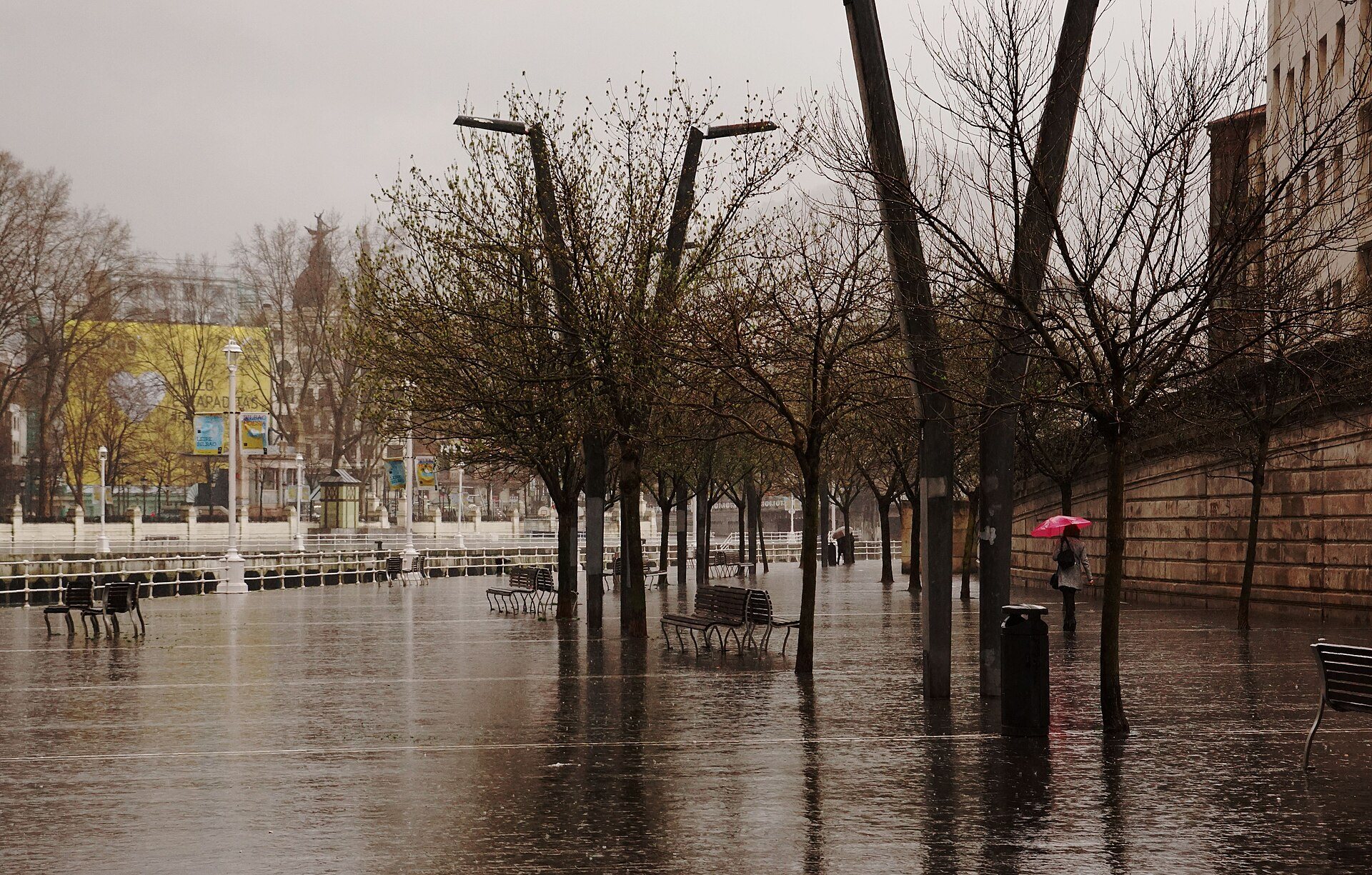
A band of steel marks the rainiest season, October to April.
- JanuaryThe coldest month, typically 55 to 57°F by day and around 41°F at night, with about 13 rainy days. Snow settles on the hills, rarely in the city.
- FebruaryStill within the rainy season, with sleet possible. Carnival comes in February or March, and the city marks the feast of Santa Águeda on 5 February.
- MarchCool and changeable, among the least humid months of the year. Carnival falls in March in some years.
- AprilThe end of the rainiest season. Longer days and the first spring weather make it a good month for walking.
- MayMilder and drier than winter, before the summer visitors; a good month for the coast and the hills.
- JuneWarm, with long days. Getxo holds its blues festival this month.
- JulyThe driest and sunniest month, with about seven rainy days and some six hours of sun a day. The neighborhood fiestas fill the calendar, and Bilbao BBK Live often falls this month.
- AugustThe warmest month, typically 77 to 79°F by day and around 59°F at night, with the sea near 70°F. Aste Nagusia fills nine days after mid-August.
- SeptemberStill warm, with the sea above 68°F. The summer crowds thin out; one of the best months to visit.
- OctoberThe rainy season returns. On 11 October the city celebrates its patroness, Our Lady of Begoña.
- NovemberThe wettest month, with about five and a half inches of rain. Quiet, and good for the museums.
- DecemberShort gray days but mild for the north of Europe. The Santo Tomás fair fills the old town on 21 December, and Olentzero arrives for Christmas.
When to Come
In full
The climate
Bilbao sits close to the Bay of Biscay, and that gives it an oceanic climate, mild in both summer and winter and without the dry summer of most of Spain. It belongs to what the Spanish call Green Spain, the rainy, wooded north, and it gets about twice as much cloud and rain as the cities of the south. Rain falls on about 128 days a year, adding up to around 47 inches, one of the highest totals in the country.
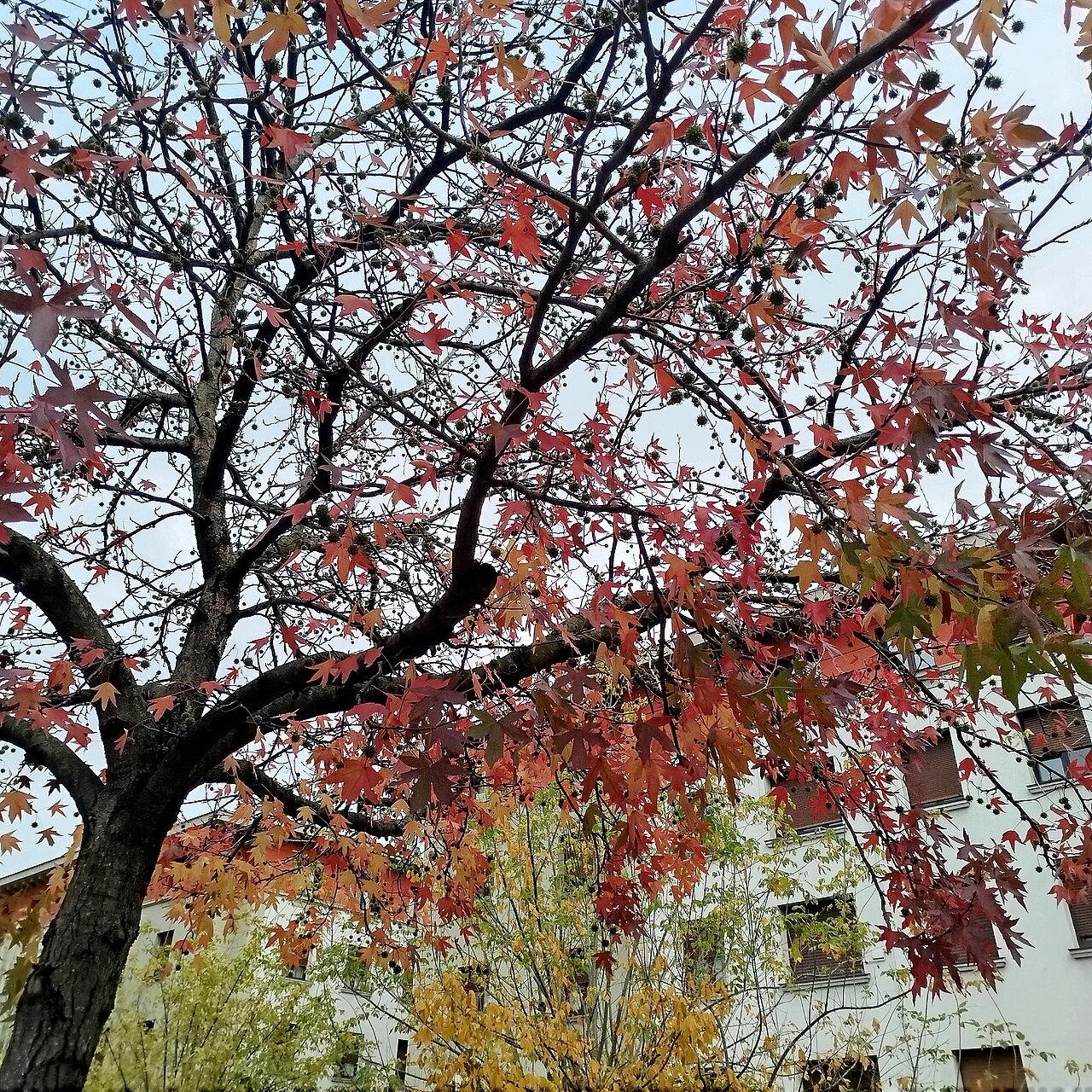
The rainiest months run from October to April, with November the wettest, and July is the driest, though even July has around seven rainy days. Much of the rain comes as showers or as sirimiri, the fine drizzle people in Bilbao have a name for. Bring a light waterproof whatever the month; an umbrella is part of daily life here.
Temperatures
Because of the sea, the swings are small. In January, the coldest month, days are typically around 55 to 57°F and nights around 41°F; in August, the warmest, days are typically 77 to 79°F and nights around 59°F. Snow is unusual in the city, though you may see it on the surrounding mountains, and sleet falls on about ten days a year, mainly in winter.
Heat waves do happen. The highest temperature recorded at the airport was 111°F on 23 August 2023, and in the city center 108°F in July 1947, but these are exceptions. Winter days are longer than in northern Europe, with nearly ten hours of daylight in the darkest months.
Humidity is steady through the year, around 72 percent on average, lowest in February and March and highest in August and November. Sunshine adds up to about 1,640 hours a year, from roughly two and a half hours a day in December to more than six in July: less than most of Spain, but in winter about twice as much as northern Europe.
The sea
The sea along the Biscay coast is cool. Its average temperature is about 61°F over the year, around 54°F in February and around 70°F in August, staying above 68°F from July to September. Late summer is the time for the beaches at Getxo and along the coast; the rest of the year they are for walking.
Aste Nagusia, the Great Week
The city's main festival, Aste Nagusia in Basque and Semana Grande in Spanish, lasts nine days, beginning on the first Saturday after 15 August, the feast of the Assumption. It has been held in its present form since 1978, organized jointly by the city council and the konpartsak, festival groups from the city's districts, each with its own political, social or neighborhood character.
The festival begins with the txupinazo, a rocket fired from the balcony of the Teatro Arriaga by the txupinera, a woman chosen each year from one of the festival groups, while a well-known figure from Bilbao reads the proclamation. The konpartsak then set up their txosnas, festival tents with music and bars, along the Arenal for the nine days.
The symbol of the week is Marijaia, a giant figure of a plump woman with her arms raised in celebration, created in five days in August 1978 by Mari Puri Herrero; since 1997 she has had her own song, Badator Marijaia, by Kepa Junkera. Concerts fill the official program, from Basque bands to international names, and the festival groups and bars put on their own.
Every night an international fireworks competition lights up the river, with a different company each evening and a closing display at the end. It is a joyful and crowded week: if you come for it, book a room well in advance, and if you come for the museums, expect a louder city, especially around the old town and the Arenal. In 1983 the festival had to be suspended when the Ría flooded the city in the middle of the week.
The city's other feasts
The konpartsak also lead the Carnival in February or March and the Santo Tomás fair on 21 December, when the Plaza Nueva fills with a farmers' market. On 5 February the city marks the feast of Santa Águeda, and on 11 October it honors Our Lady of Begoña, patroness of Biscay, at her basilica on the hill above the old town. Around Christmas, Olentzero, the mythical charcoal burner of Basque and Navarrese tradition, brings the presents.
In summer the neighborhoods hold their own fiestas: the Carmen in Santutxu and Indautxu and Santiago in Bilbao La Vieja in July, and others on Artxanda and elsewhere in August. They are small, local and friendly, and you may stumble on one simply by walking.
Music
Bilbao BBK Live, the city's big rock and pop festival, has been held each summer since 2006 on the slopes of Mount Kobetas, southwest of the city, on a site built for it. Its first edition, in July 2006, had more than forty bands, and by 2011 it drew more than 100,000 people. Since the new San Mamés stadium opened it has also hosted big concerts. Getxo, at the mouth of the Ría, holds a blues festival in June, an international jazz festival in July and folk and habaneras in September.
The city's other festivals include Bilbao Distrito Jazz and Bilbao Ars Sacrum, devoted to sacred music, and the city's main opera season, organized by ABAO and staged at the Euskalduna concert hall. Check the city's and venues' own programs before you travel, as dates move from year to year.
Choosing a season
Late spring, from April to June, and early autumn, September and October, are the best all-round months: milder than winter, less crowded than August, and good for walking the river and riding up Artxanda. Summer is the warmest and the busiest, with the festival and the concerts.
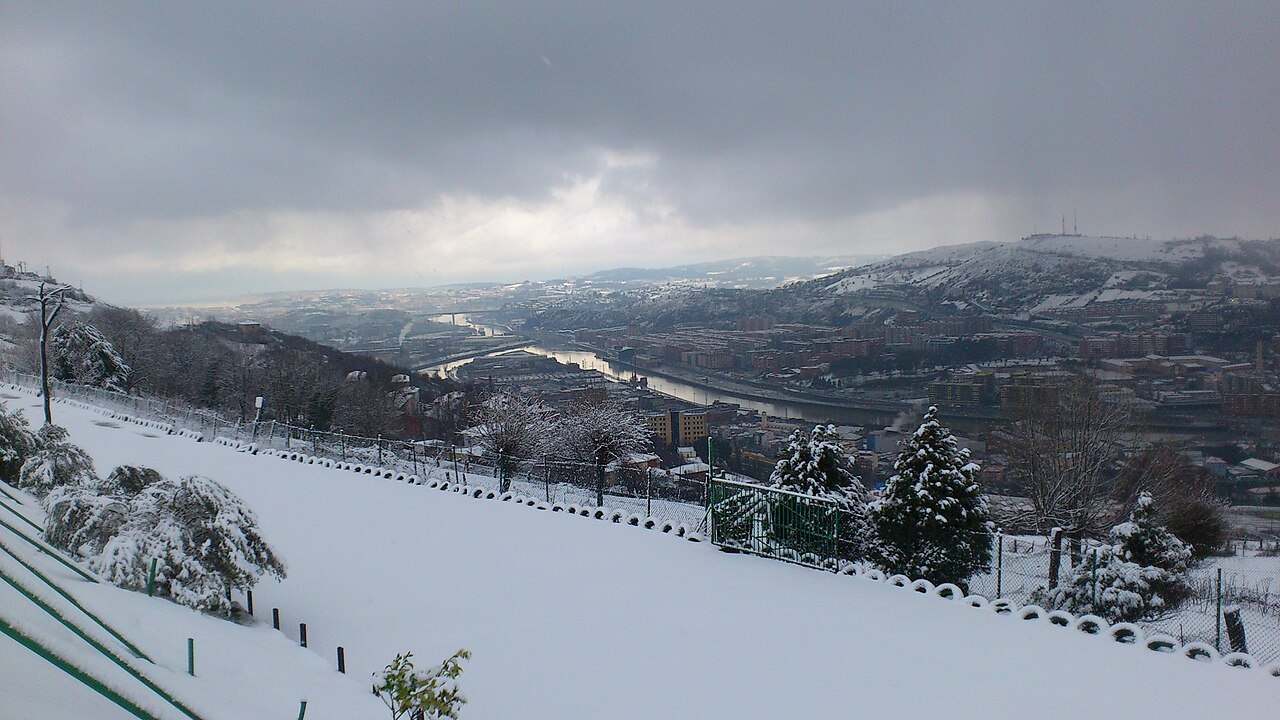
Winter is cool, damp and quiet, a good time for the museums and the pintxo bars, which are lively all year. The Guggenheim and the Fine Arts Museum are excellent on a rainy day, and the booking ahead page explains when you need to reserve.