San Mamés
What you are looking at
San Mamés · left bank
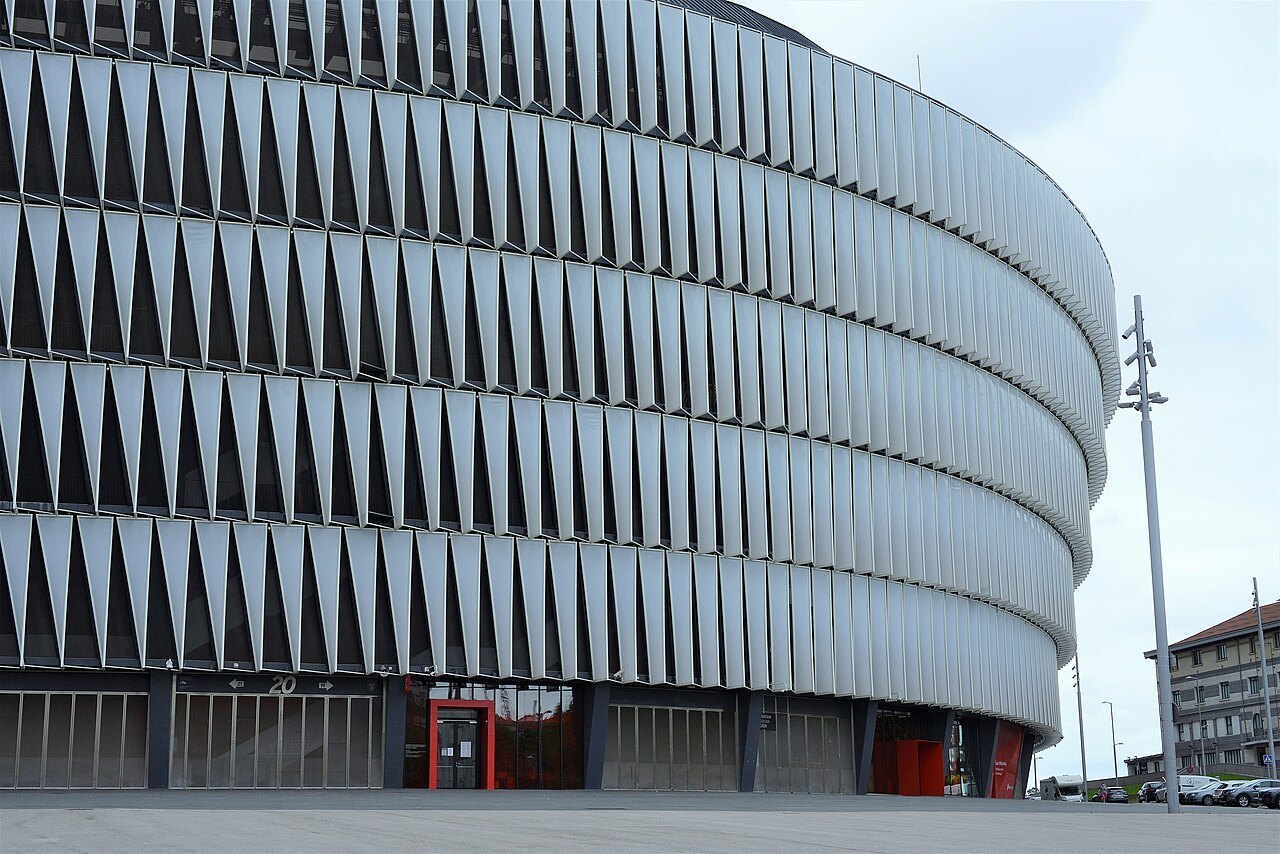
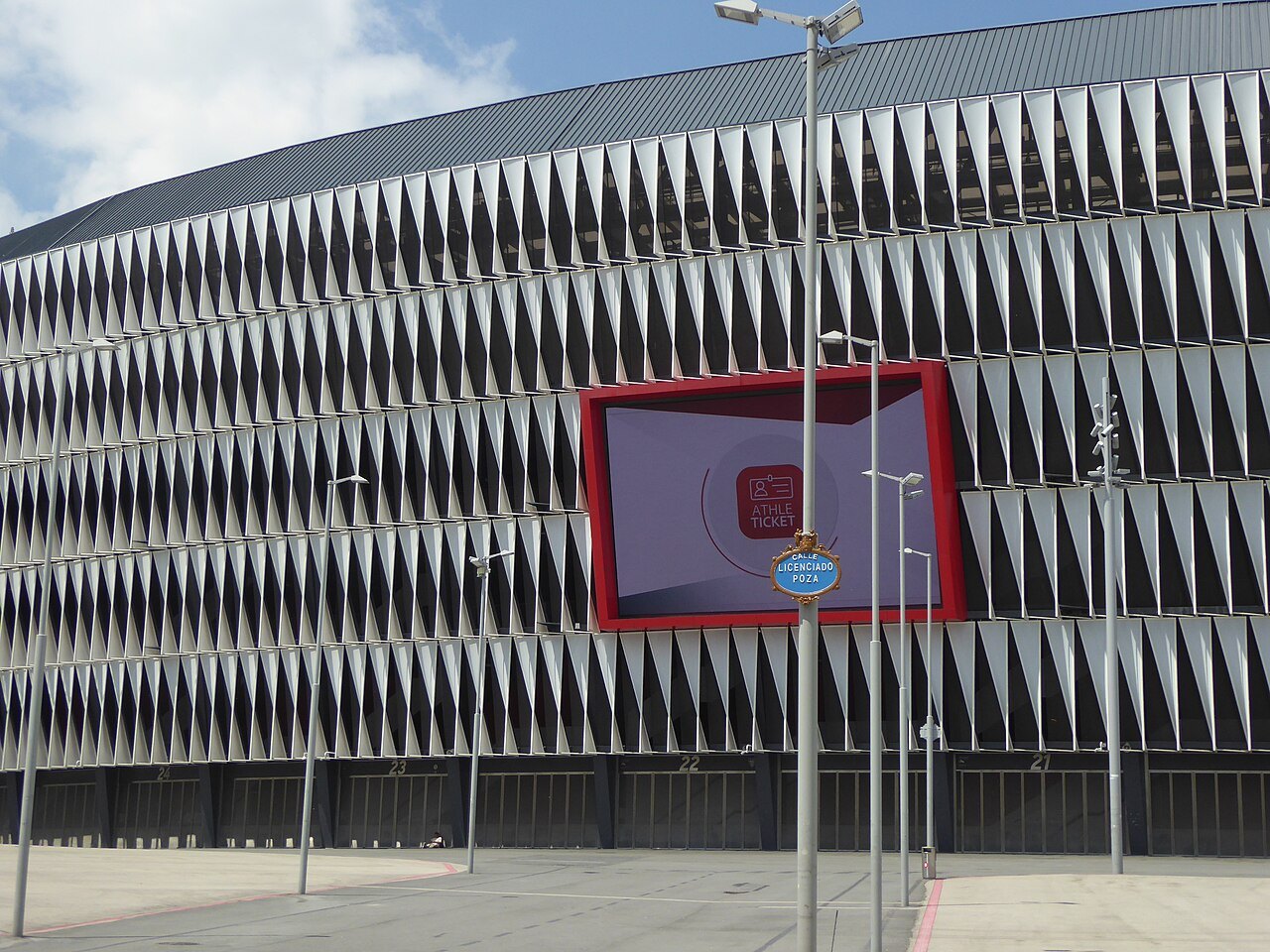
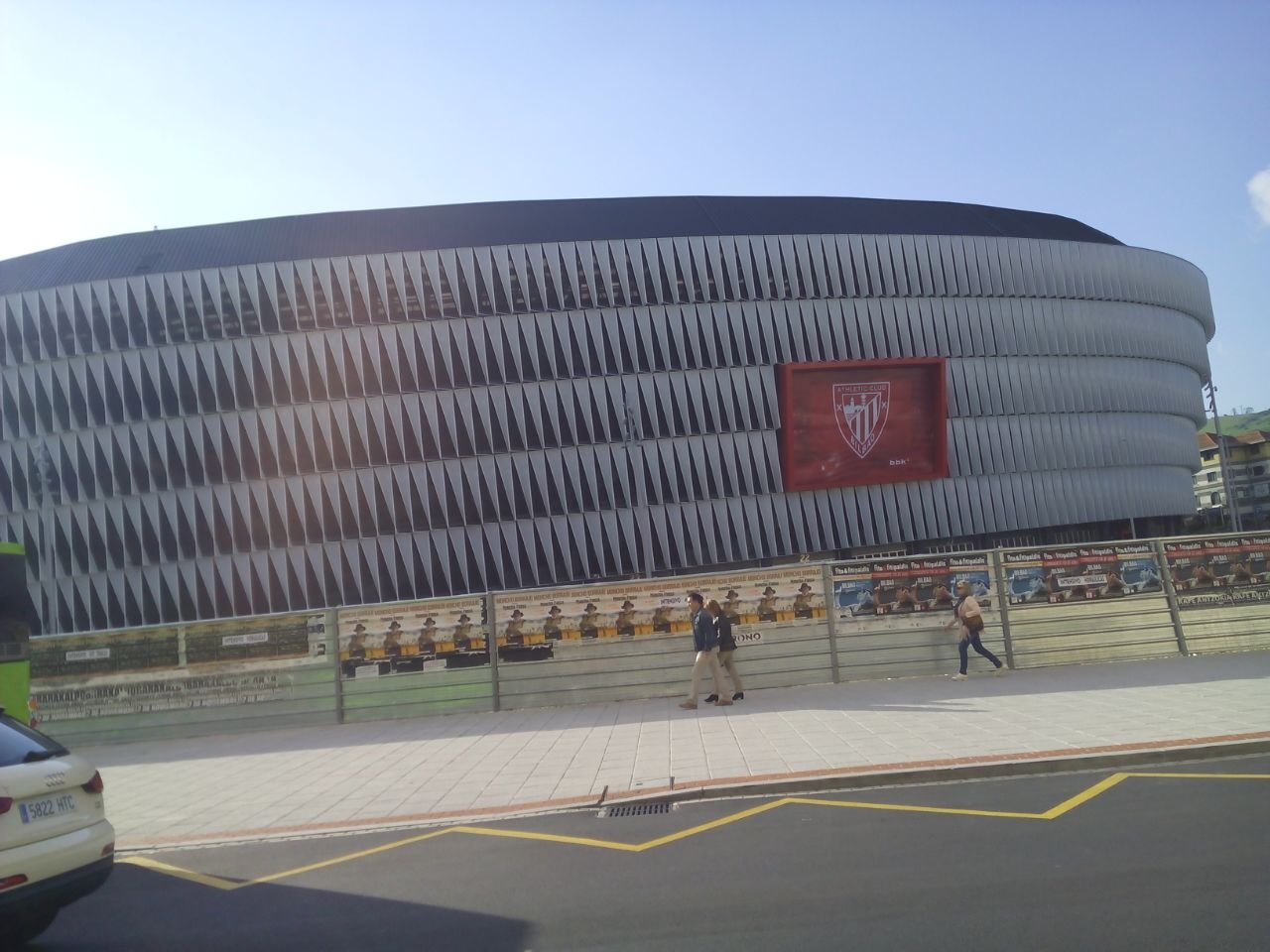
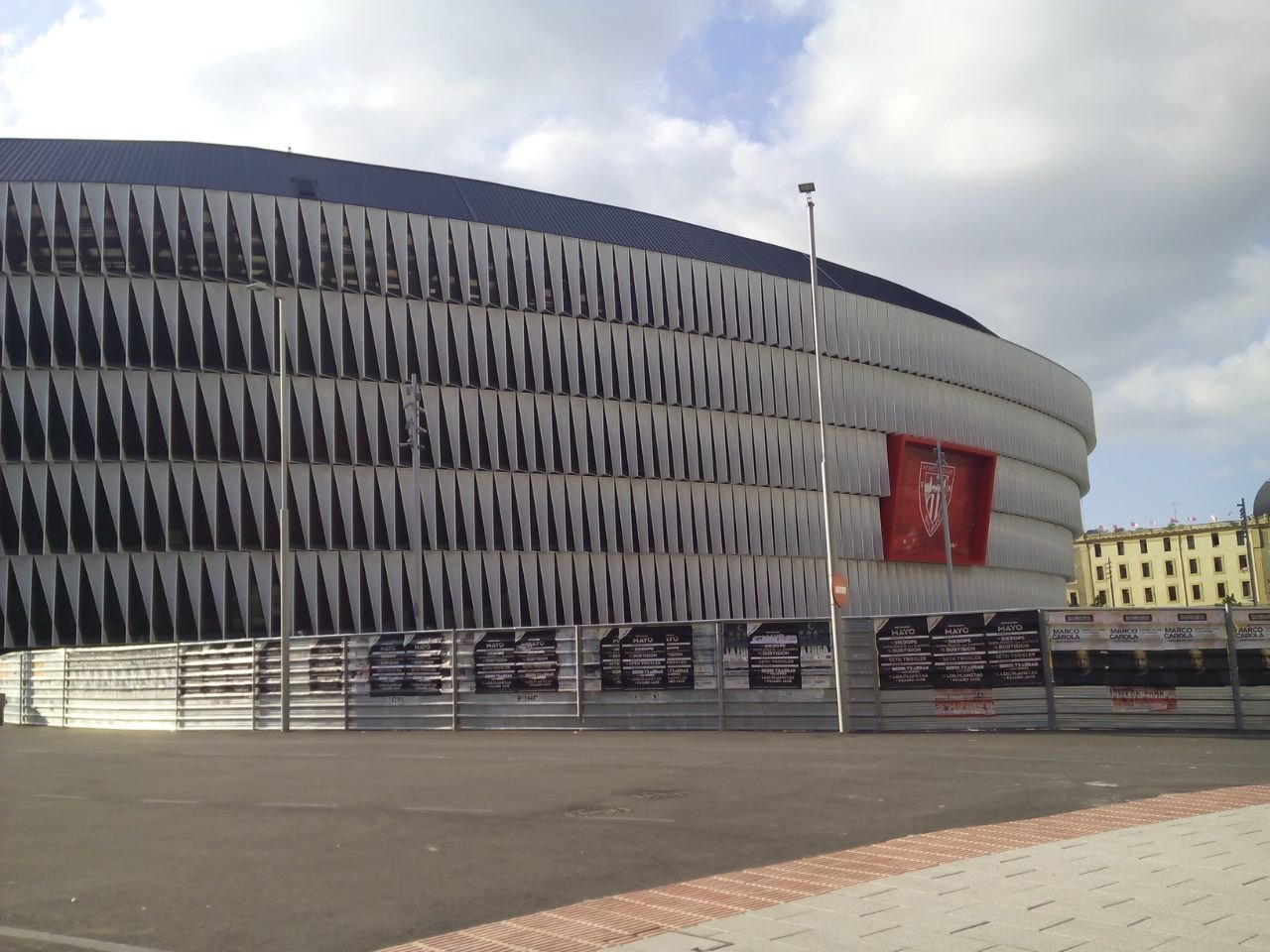
- 1The white skinHundreds of curved white panels around the outside, lit in colors and moving graphics after dark.
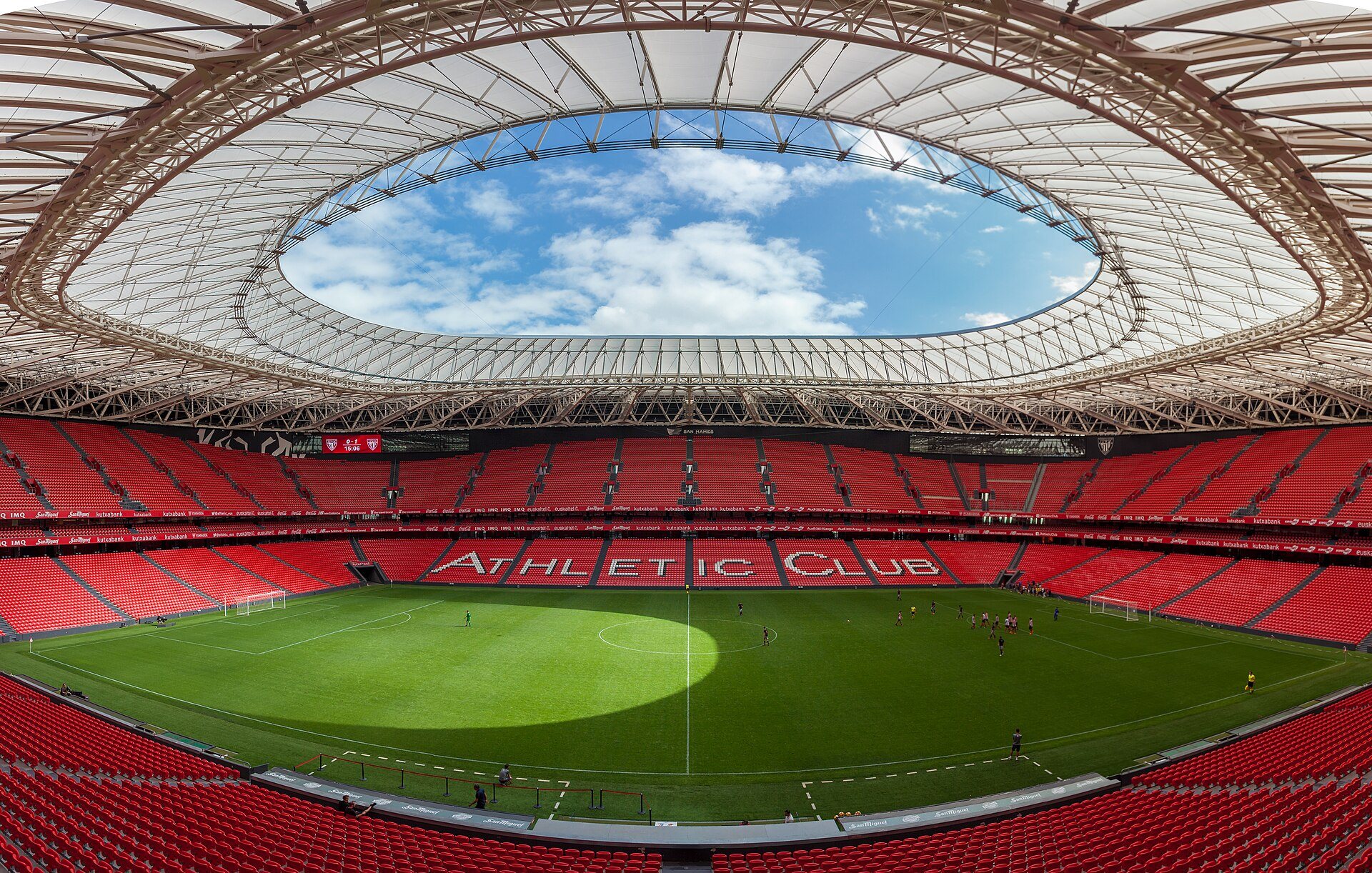
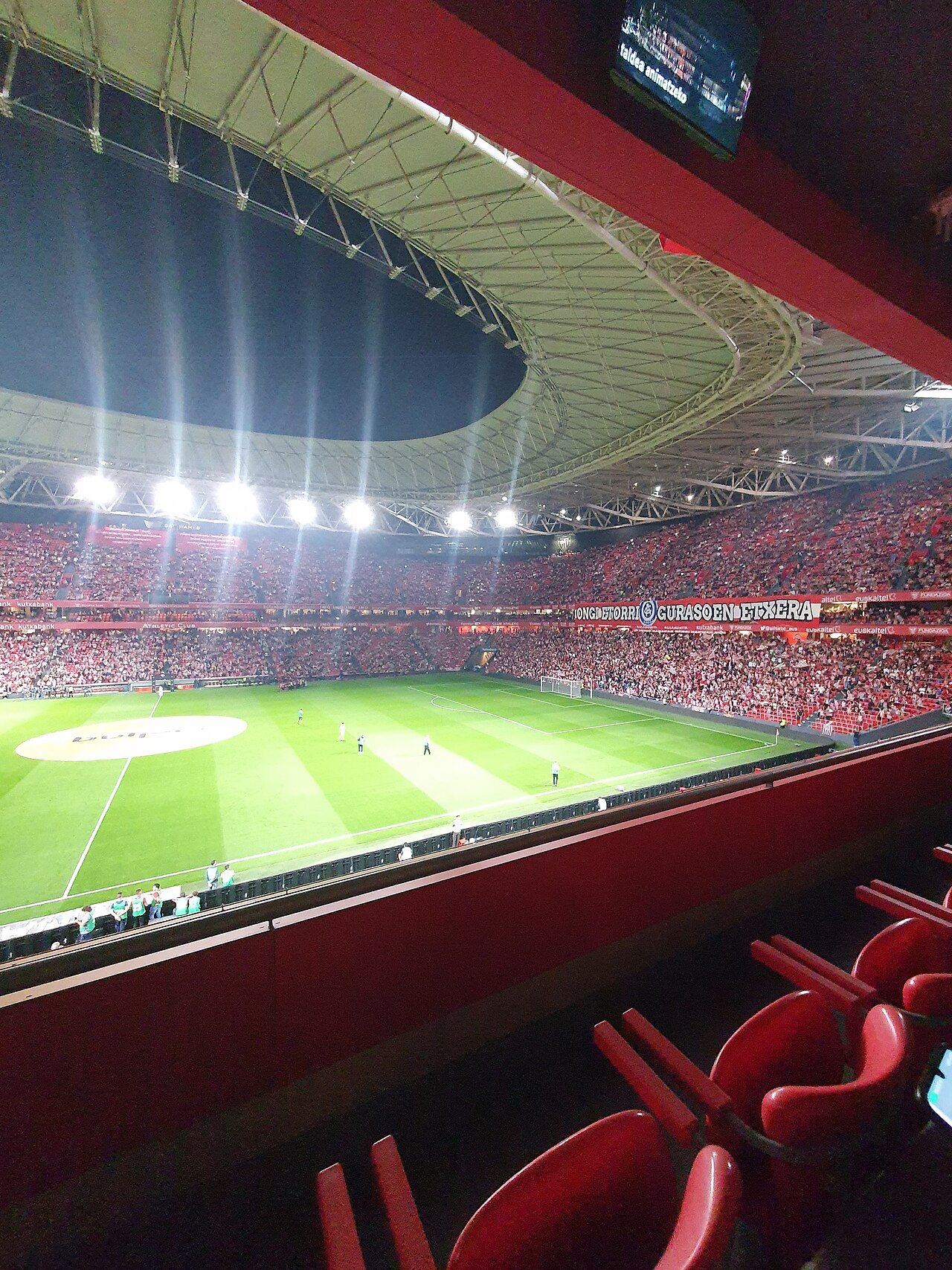
- 2The bowlSteep stands of red seats close to the pitch, under a roof extended in 2016 against the rain.
- 3The club museumAthletic's museum inside the stadium, with trophies and a stuffed lion won in a bet.
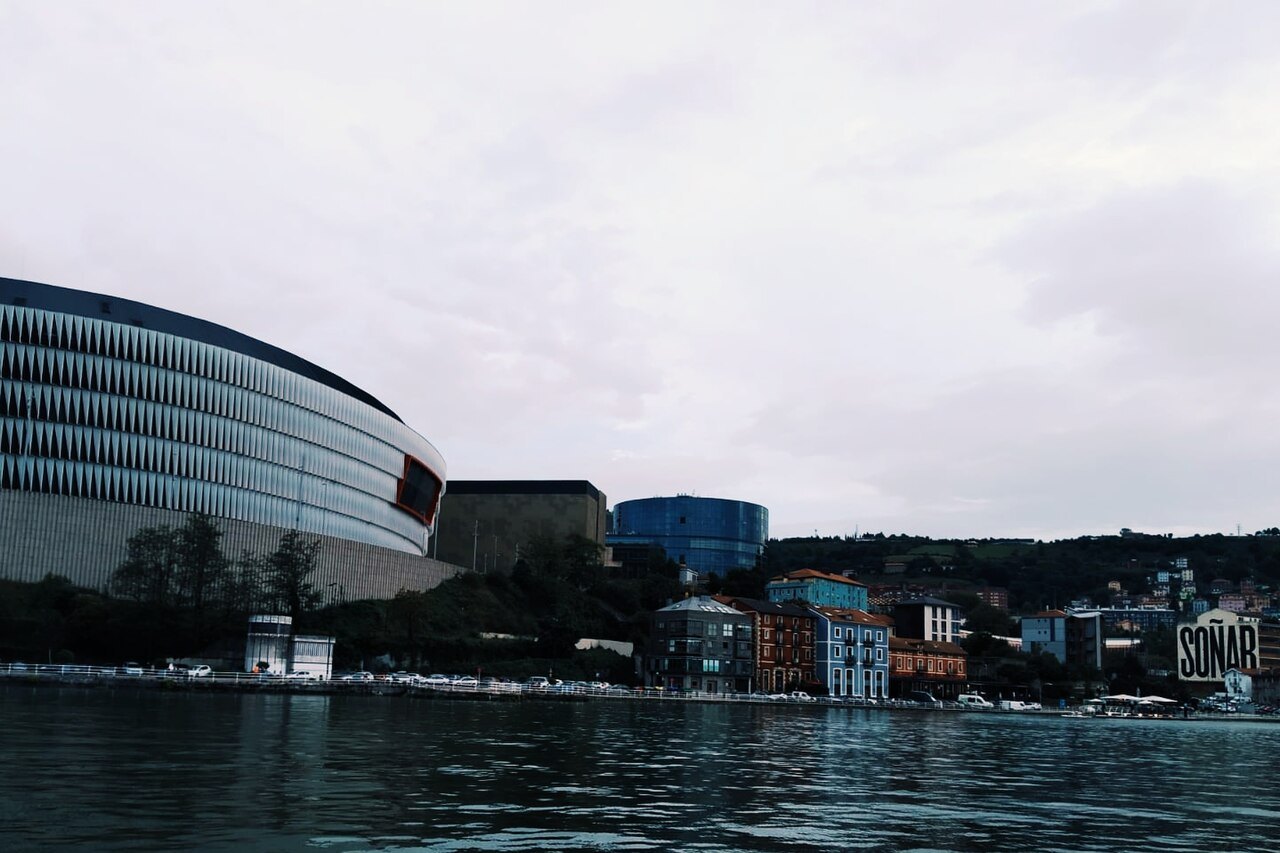
- 4The riverside positionA high bank over the Nervión, from which the lit stadium dominates the river at night.
- 5The Iribar statueA statue of José Ángel Iribar, the club's great goalkeeper, outside the ground.
- 6The IntermodalThe city's main bus station beside the stadium, linked to the Metro, tram and trains.
Reading the place
The sight in full
Why it matters
San Mamés, also called Nuevo San Mamés or San Mames Barria, is the stadium of Athletic Club, the football club that plays in red and white stripes and calls itself the Lions. It was inaugurated on 16 September 2013 and holds 53,331 people, which makes it the largest stadium in the Basque Country and one of the largest in Spain.
Athletic matters to the city more than most clubs do to theirs. Since 1911 it has played only footballers it considers Basque, born or trained in football in the Basque provinces on either side of the border, and it is owned by its members, who elect the president. It is one of three founding clubs of Spain's top division never to have been relegated. A visit to San Mamés is the easiest way to understand that pride, even on a day without a match.
The Cathedral and its successor
The club's nickname, the Lions, comes from its first ground, built beside a church dedicated to San Mamés, Saint Mammes, an early Christian thrown to the lions by the Romans. The old stadium, designed by Manuel María Smith and opened in 1913, became known as La Catedral, the Cathedral of football, and the name passed to the new one.
Plans for a new stadium began around 2004, beside the old ground, on land occupied until 2003 by the city's trade fair. Building started on 26 May 2010. In a symbolic gesture, a piece of turf and a brick from the old stadium were carried to the new site by a human chain of famous former players, youth players, the women's team and the club's oldest and youngest members.
Three quarters of the new stadium were built first and matches began in it while the old one was pulled down to make room for the rest. The full stadium was first used for a Champions League play-off against Napoli on 27 August 2014.
The building
The architect was César Azcárate of the firm ACXT-Idom. The outside is wrapped in hundreds of curved white panels that can be lit to show solid colors or moving graphics, red and white on match days and flashes when Athletic scores; the stadium has been compared with the Allianz Arena in Munich. In 2015 it won the World Architecture Festival's award for the best sports building in the world.
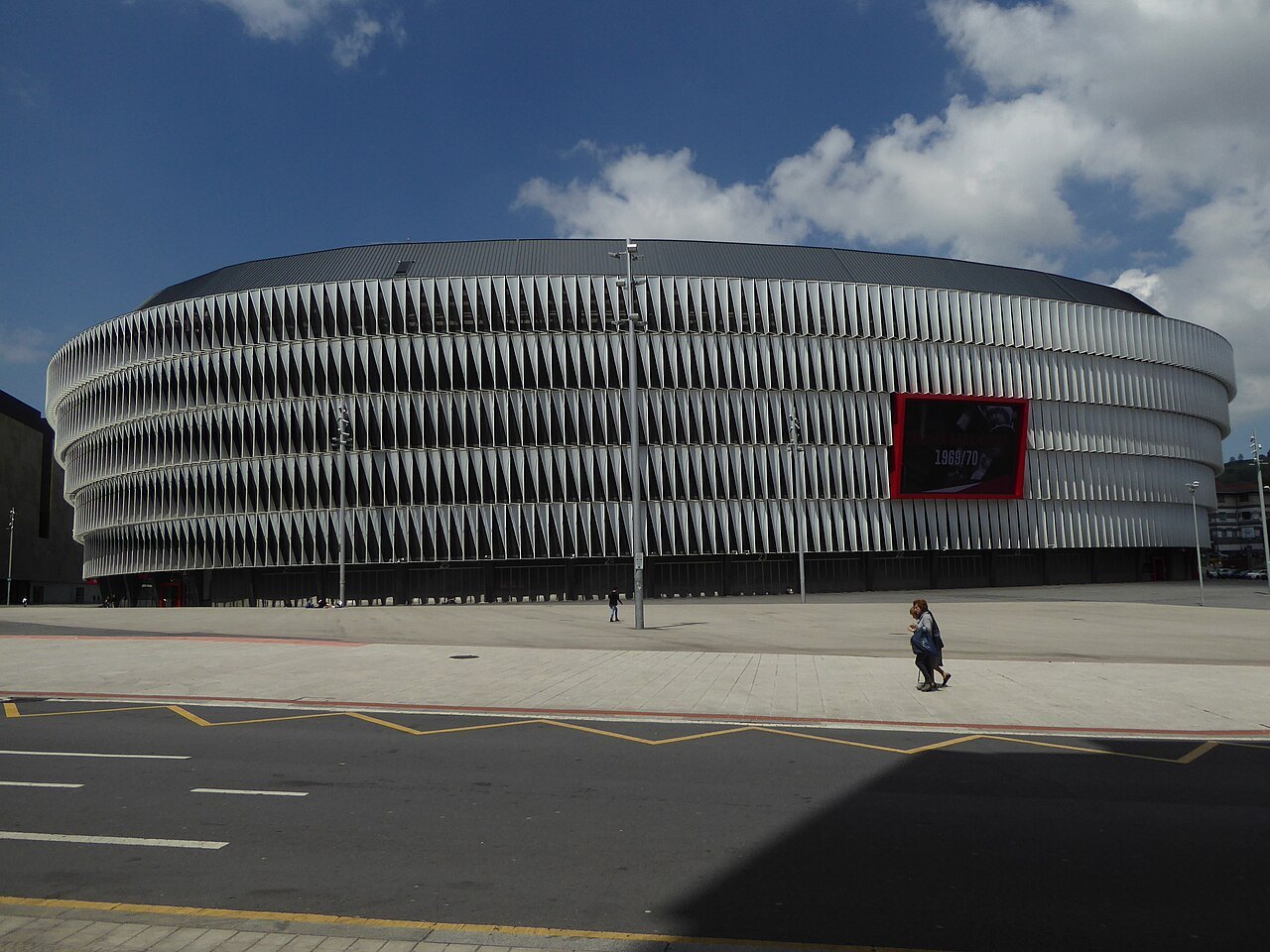
Inside, the stands rise steeply around the pitch. Supporters complained from the first season that the roof did not keep the rain off every seat, and the club paid for extensions finished in November 2016, which were expected to cut the problem by about seventy percent. Lighting rigs now make up for the sunlight the larger roof takes from the grass.
What you see
The stadium stands closer to the river than its predecessor, on a high bank above the Ría at the western end of the city center, and its white bulk is one of the landmarks you see from Artxanda and from the riverside walks. It is at its most striking at night, lit and reflected in the water.
Outside, look for the statue of José Ángel Iribar, the goalkeeper who is one of the club's great figures. Inside, the club's museum holds its trophies, from eight league titles and two dozen Copa del Rey wins, and some stranger objects, among them a stuffed lion won from the president of Alavés in 1984, after he lost a bet with Athletic's directors.
Big occasions
The new San Mamés was built to the highest category of UEFA's stadium rules, which lets it host European finals. It was chosen in 2015 as one of the host stadiums of the European Championship of 2020, a role it later lost when the hosting plans were withdrawn, and in its place UEFA gave it the final of the Women's Champions League in 2024 and the final of the Europa League in 2025.
Athletic's women's team, one of the most successful in Spain with five league titles, also plays its big matches here. Concerts use the stadium as well, and a concert booking once made it impossible to stage a Copa del Rey final in the ground.
How to visit
Match tickets, stadium tours and museum visits are sold by the club, and arrangements change through the season; check Athletic's official site before planning a visit around them. Big matches sell out to members, so tickets for visitors are easier to find for league games against smaller sides.
The stadium is beside the San Mamés station, served by Metro lines 1 and 2, the tram and commuter trains, and next to the Intermodal, the city's main bus station, from which the airport bus leaves. From the Guggenheim it is a walk of about twenty-five minutes downstream along the river or through the Ensanche. See getting here for the bus station.
On match days the streets around the ground fill hours before kick-off, and the bars along the nearby streets are part of the experience. If you only want to see the building, a weekday morning without a match is calmer.
Honest notes
The stadium was paid for largely by public institutions as well as the club and a savings bank, on condition that it included facilities for public use, and that use of public money was debated at the time. For a visitor, the more useful fact is that the club's identity is about the Basque Country, not only about Bilbao, and its fans come from the whole of Biscay and beyond.
Nearby
Where to go next
- Nearby · Indautxu · left bankDoña Casilda ParkAn English-style garden laid out from 1907 on land given by Casilda Iturrizar, the servant-turned-philanthropist who became one of Bilbao's richest women: a duck pond, century-old trees, a pergola and the Fine Arts Museum, now running down to the river.Read the page →
- Nearby · Abandoibarra · left bankThe EuskaldunaThe concert hall and conference center of 1999, standing on the site of the shipyard that built Bilbao's ships for most of the twentieth century, its river front clad in rusted steel in memory of the yard and the furnaces.Read the page →
- Nearby · Indautxu · left bankThe ItsasmuseumBilbao's maritime museum, opened in 2003 on the land of the Euskalduna shipyard: galleries about the Ría and its port inside, and outside the yard's dry docks, its pump house and the red Carola crane, once the most powerful in Spain.Read the page →