Home · Sights · The Guggenheim
The Guggenheim
What you are looking at
Abando · left bank
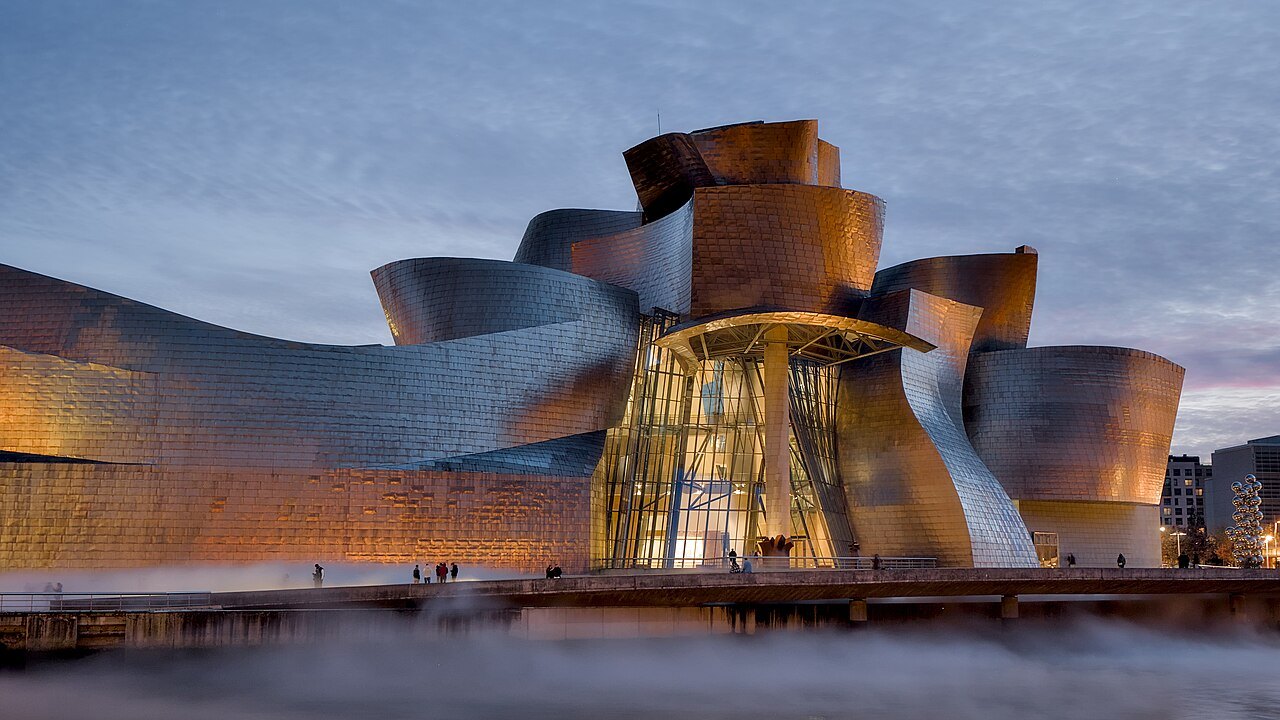
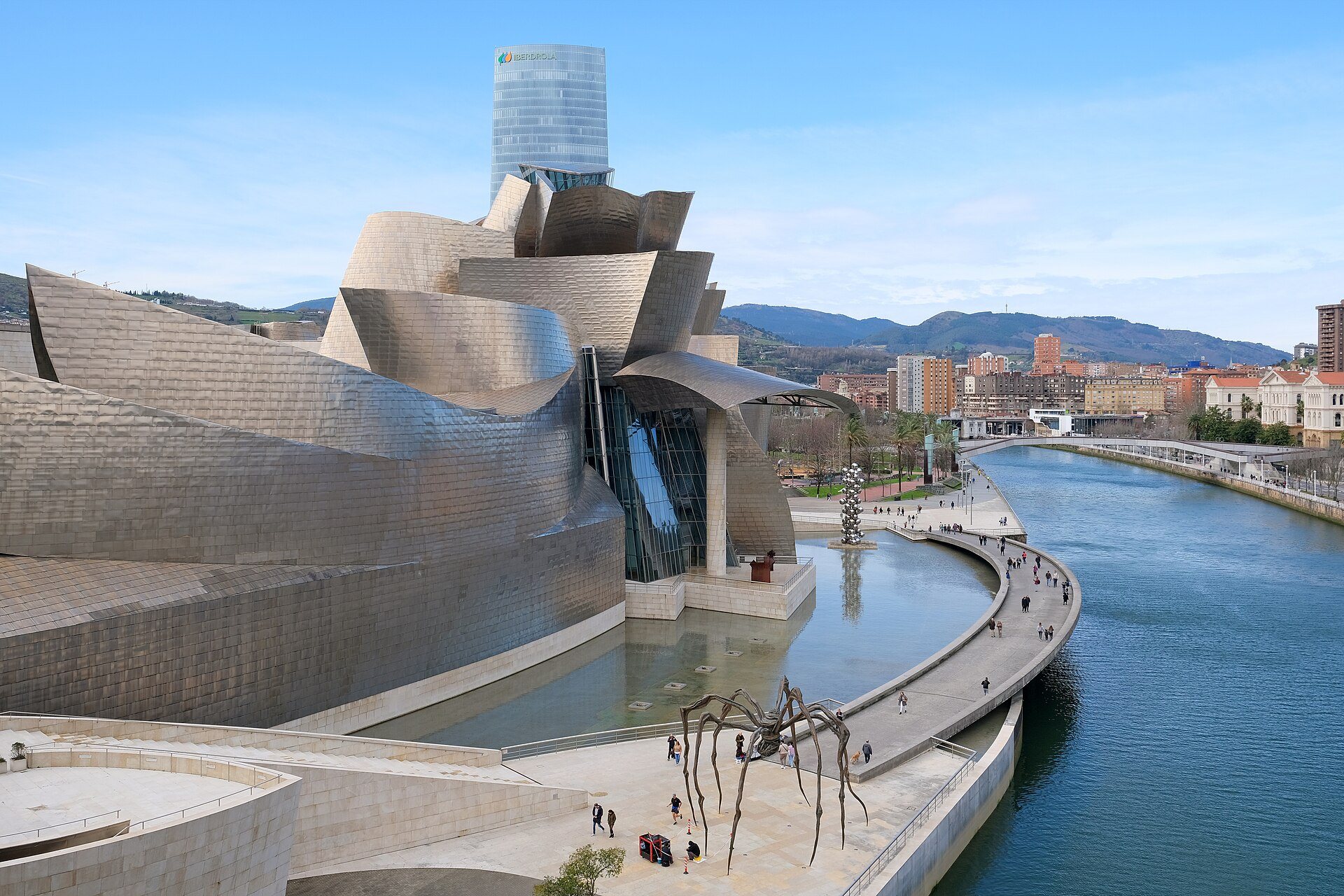
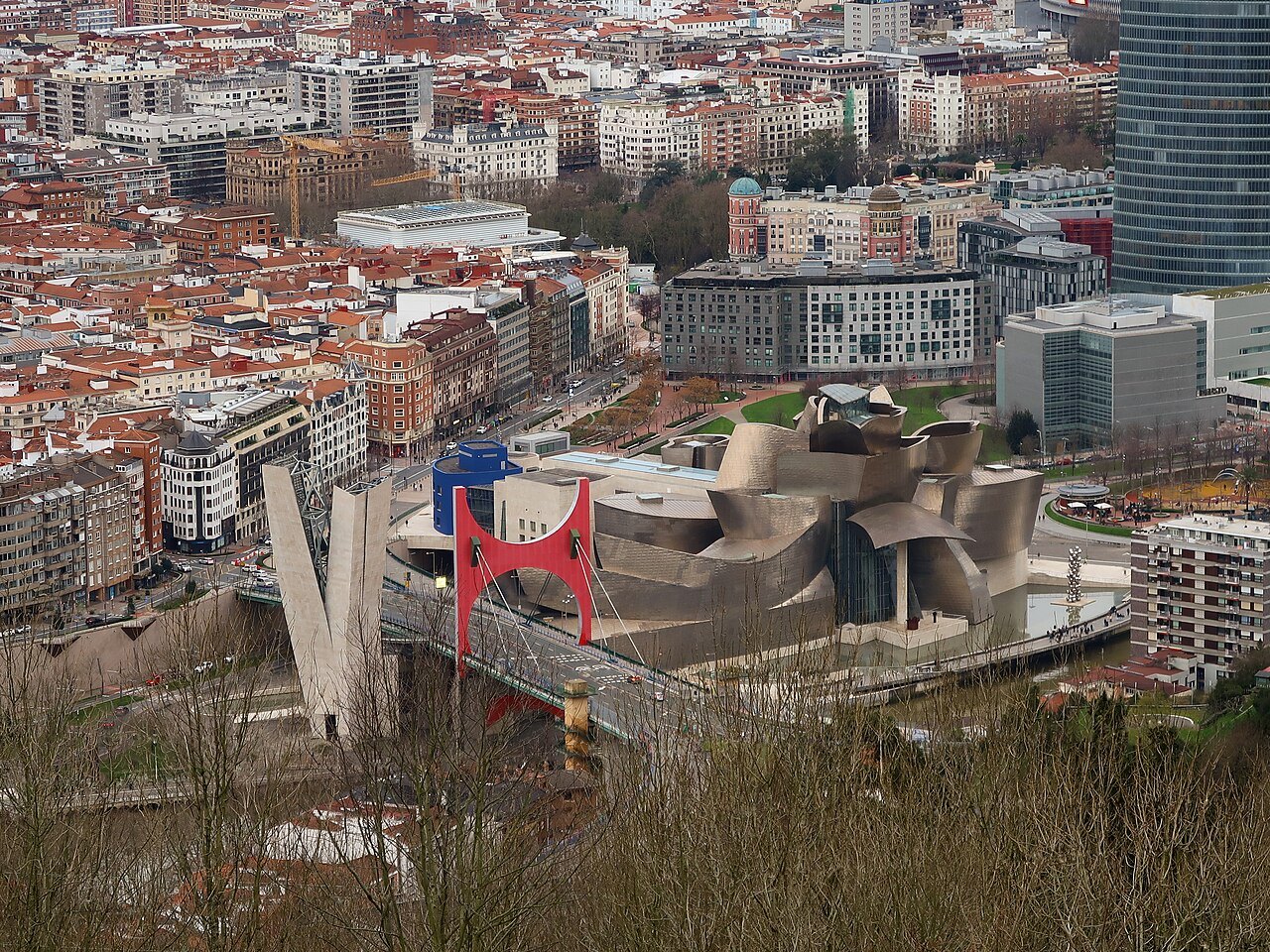
- 1The titanium skinAbout 33,000 thin titanium plates laid like scales over the curved galleries, changing color with the weather.
- 2The atriumA tall glass-and-steel hall that Gehry called the Flower, the hub every gallery opens from.
- 3The Matter of TimeRichard Serra's walk-through steel sculptures, the one permanent installation, filling the longest gallery.
- 4PuppyJeff Koons's terrier covered in tens of thousands of flowering plants, guarding the entrance on the city side.
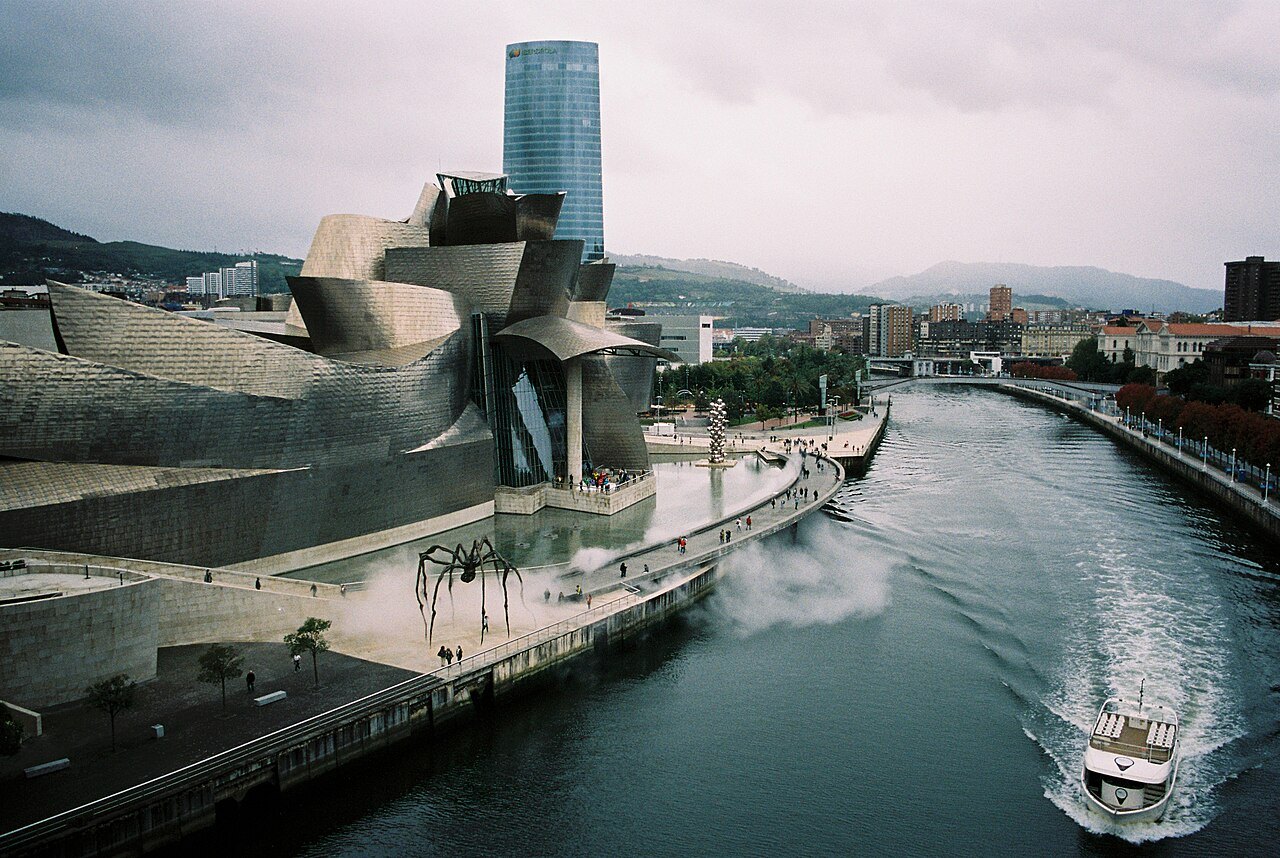
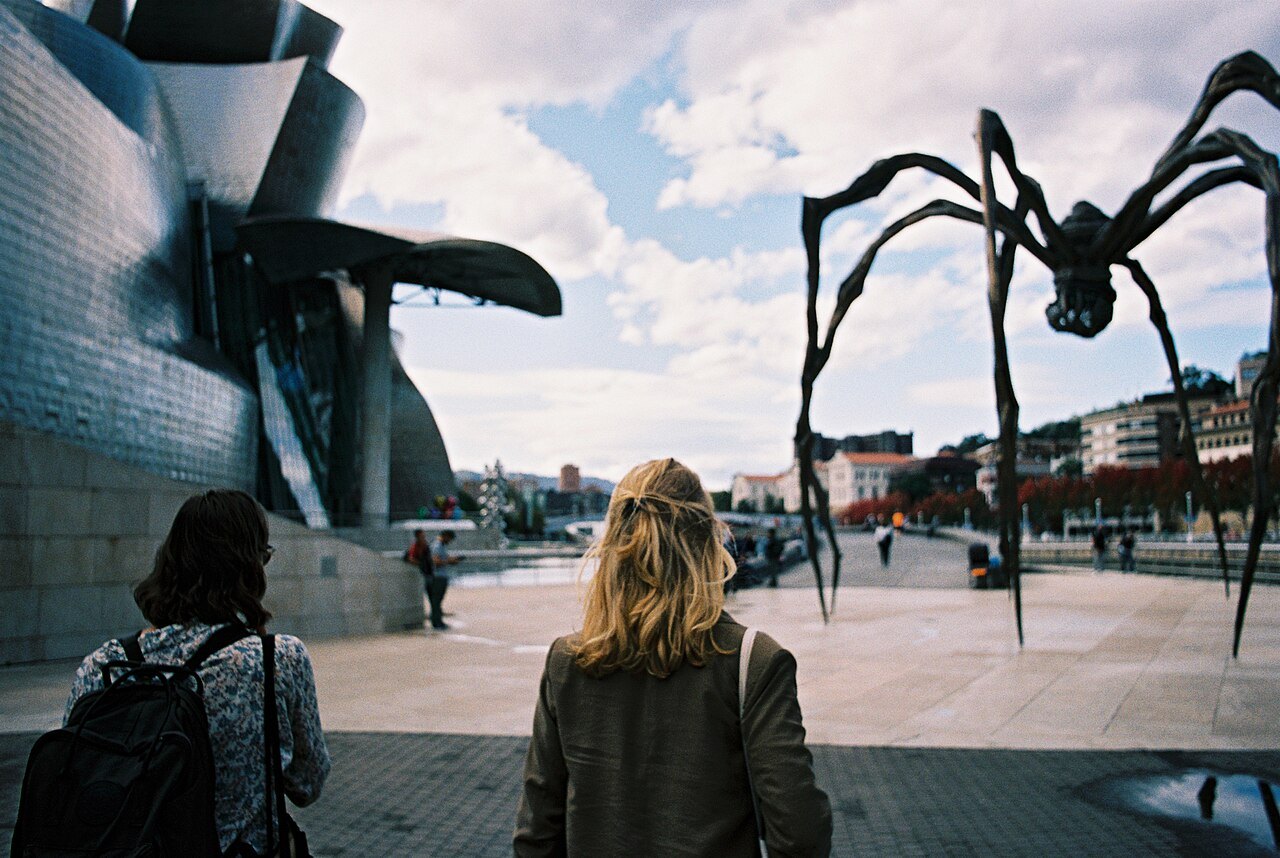
- 5MamanLouise Bourgeois's giant bronze spider, standing on the riverside walk between the museum and the water.
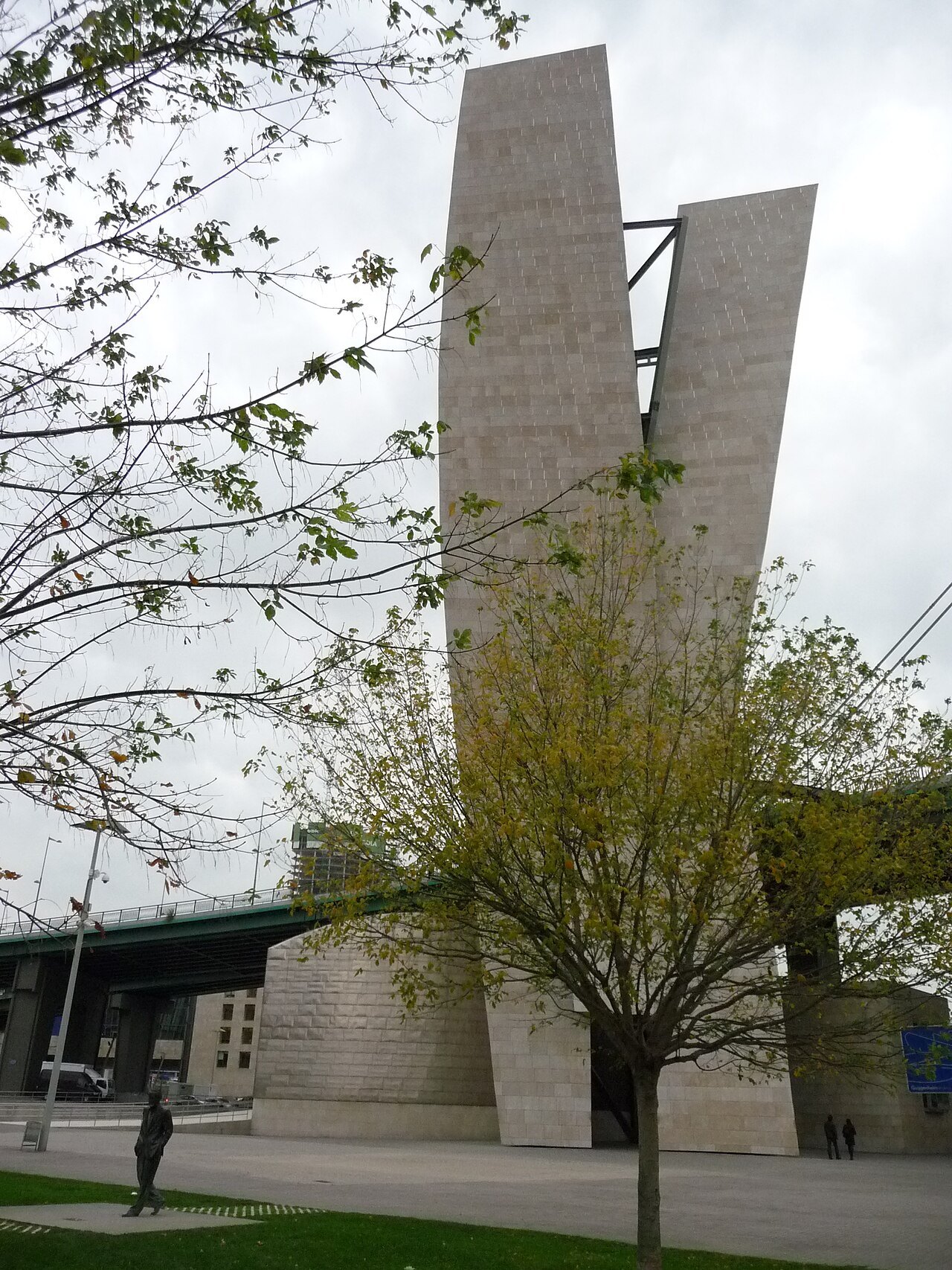
- 6The tower at La SalveA tall stone and steel tower that ties the museum to the bridge that crosses over it.
Reading the place
The sight in full
Why it matters
The Guggenheim Museum Bilbao is a museum of modern and contemporary art run with the Solomon R. Guggenheim Foundation, and it is the reason many visitors come to the city at all. King Juan Carlos I opened it on 18 October 1997, and since then it has averaged more than a million visitors a year. Its architect was Frank Gehry, and the building, more than any work inside it, is what people travel to see.
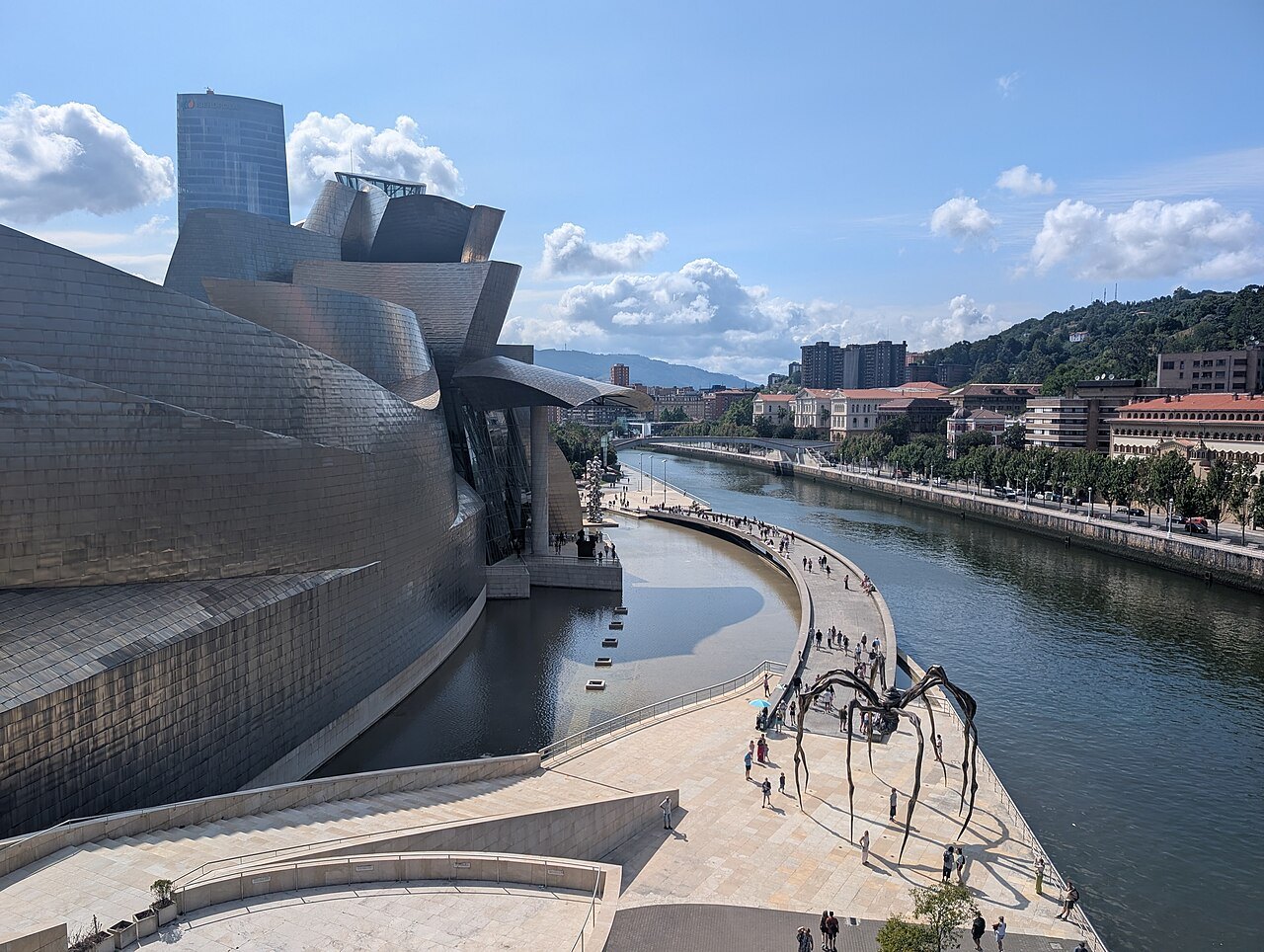
It stands on the left bank of the Ría in Abandoibarra, an area that was docks and industry until the 1990s. The museum was the first large piece of the riverfront's rebuilding, and newspapers began to call its effect on the city the Guggenheim effect. That rebuilding continued for twenty years around it, and you can follow it along the river on foot from here to the Euskalduna.
How it came to Bilbao
In 1991 the Basque Government proposed to the Guggenheim Foundation that it would pay for a museum on the decrepit port land, which had once been the city's main source of income. The Basque side agreed to fund the building, an acquisitions budget and the running costs; in exchange the foundation would manage the museum, lend works from its own collection and organize the temporary exhibitions.
The foundation chose Gehry, and its director encouraged him to design something daring. The building was finished on time and on budget, which is rare for a structure this complicated. Gehry's office modeled the curves with aircraft-design software, which calculated stresses point by point and guided the cutting of stone and metal.
The building, outside
From the street the museum is fairly modest; from the river it is overwhelming, and that is the side to see it from first. The base is clad in beige limestone, the window walls in treated glass, and the curving galleries in about 33,000 titanium plates only a fraction of a millimeter thick, laid in a quilted pattern so they would not vibrate in storms. The critic Calvin Tomkins called it a dream ship in a cloak of titanium, and the plates do look like fish scales.
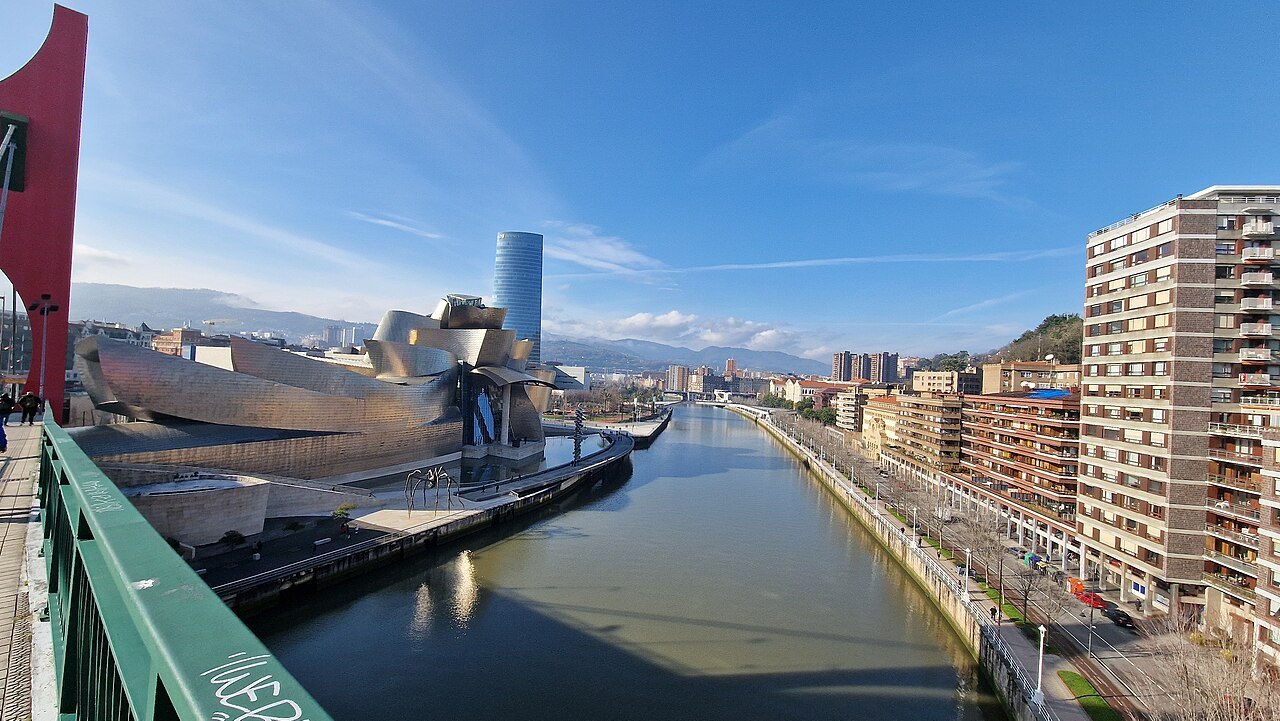
Seen from above, the plan has the shape of a flower. The galleries with stone fronts are rectangular rooms; the ones with titanium fronts are the irregular, swirling shapes. On the east side a tall tower rises beside La Salve Bridge, which passes over the edge of the site, so that road, bridge and museum read as one composition.
Two sculptures now belong to the place as much as the building. Puppy, by Jeff Koons, is a West Highland terrier about 41 feet tall, planted with tens of thousands of flowers that are replaced twice a year; it has stood at the entrance since the opening. On the river side stands Maman, Louise Bourgeois's bronze spider, more than 30 feet tall, with a sac of marble eggs under her body.
Inside
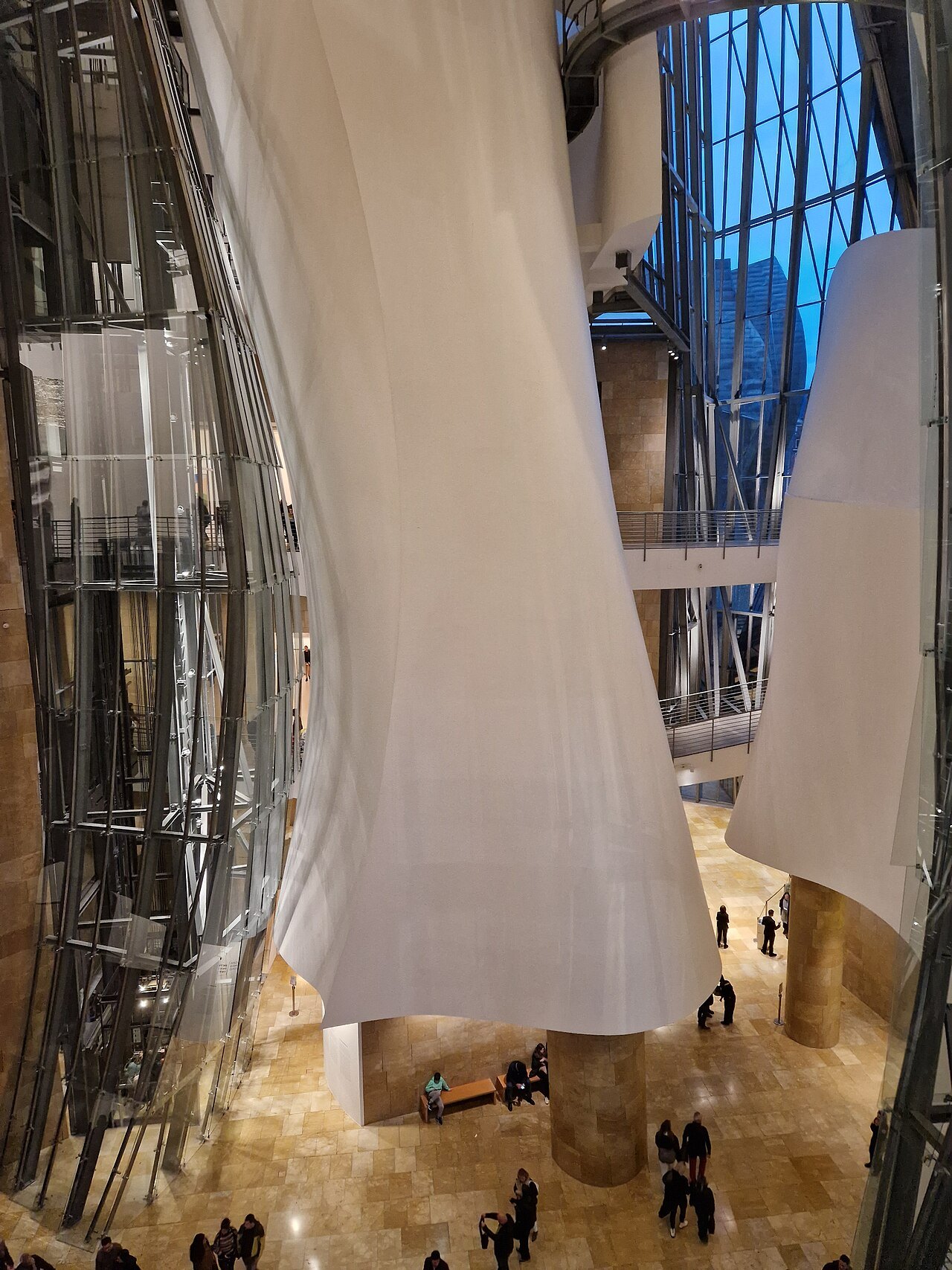
The main entrance is at the bottom of a broad flight of steps, so you go down into the building rather than up. You arrive in the atrium, a hall about 50 meters high under a glass and steel roof, with views of the Ría and the hills. Gehry nicknamed it the Flower, and every gallery opens from it.
There are nineteen galleries over three floors, about 11,000 square meters of exhibition space. The largest, the long gallery once called the Fish Gallery, holds the museum's one permanent installation: Richard Serra's The Matter of Time, a series of huge curving walls of weathering steel that you walk into and around. Most of the other rooms hold temporary exhibitions that change several times a year, with installations and large works outnumbering traditional paintings.
What you actually see on a visit
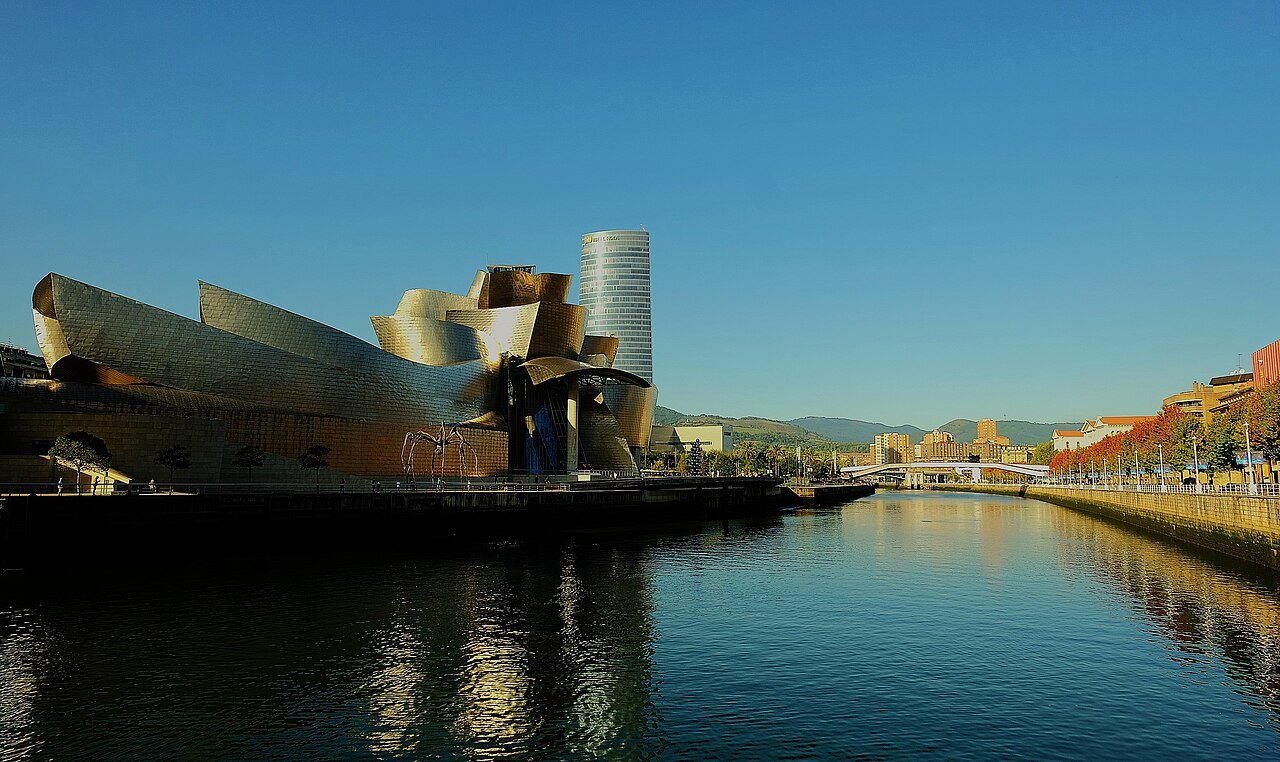
A visit has two halves. Outside, walk the riverside path from the Puppy side round to Maman and under La Salve, then cross the river on the footbridge or the bridge itself and look back from the right bank, where the whole building can be seen at once. Morning and evening light on the titanium change it more than you would expect.
Inside, start in the atrium, go to the Serra gallery on the ground floor, then follow whatever exhibitions are on above. The museum's own list of essentials includes Puppy, The Matter of Time, Jenny Holzer's Installation for Bilbao and Maman, which is a useful short route if time is tight.
How to visit
Allow two to three hours inside and as long again outside if the weather is kind. Tickets are sold on the museum's official website, which warns against buying from other sellers, and every ticket includes an audio guide. The museum closes on some Mondays and a few days each year, so check its calendar before planning a day around it.
Busy days are the summer months, holiday weekends and the opening weeks of a big exhibition; on those days a ticket bought ahead saves a queue. The building is a short walk from the Moyúa and Abando areas of the Ensanche, and the riverside tram stops beside it. The outdoor sculptures stand in public space along the riverside walk and cost nothing to see.
Honest notes
The Guggenheim effect is real but often told too simply: the museum was one part of a much larger rebuilding of the city, with the Metro, new bridges and the riverfront itself, all described on the transformation. Bilbao did not change because of one building.
The collection is not the reason most people come. The permanent works are few, and what you see depends on the exhibitions of the season, which can be superb or not to everyone's taste. If you mainly want the architecture, the outside, the atrium and the Serra gallery are the essentials, and the best views are from across the river.
Nearby
Where to go next
- Nearby · Abando · Campo VolantínLa Salve BridgeThe road bridge of 1972 that passes over the edge of the Guggenheim's site, named for the hymn sailors sang when they first saw the shrine of Begoña, and crowned since 2007 by Daniel Buren's red arch.Read the page →
- Nearby · Abando · left bankAbandoibarraThe riverside strip of shipyards and railway yards below the Ensanche, rebuilt since the 1990s into a district of museums, gardens and new architecture, with César Pelli's Iberdrola Tower, the tallest building in the Basque Country, at its center.Read the page →
- Nearby · Campo Volantín · UribitarteZubizuriSantiago Calatrava's white footbridge of 1997, a curved deck hung on cables from a single tilted arch, which carries the walk from the right bank to the museum side of the river.Read the page →