Home · The Transformation
From the yards to the museum
A century in seven dates
- 1902The industrial cityAltos Hornos de Vizcaya is founded; steelworks and shipyards line the Ría, and the population grows from 11,000 in 1880 to 80,000 in 1900.
- 1983Crisis and floodThe industrial crisis deepens, the closure of the Euskalduna shipyard is announced, and in August the Ría floods the city during its festival.
- 1992A plan and a companyBilbao Ría 2000 is founded to turn disused industrial land along the river into parks, avenues, housing and public buildings.
- 1995The MetroNorman Foster's Metro opens, its glass entrances and cavern stations becoming one of the first faces of the new city.
- 1997The GuggenheimFrank Gehry's museum opens on 18 October on old port land; Zubizuri and the Euskalduna bridge open the same year.
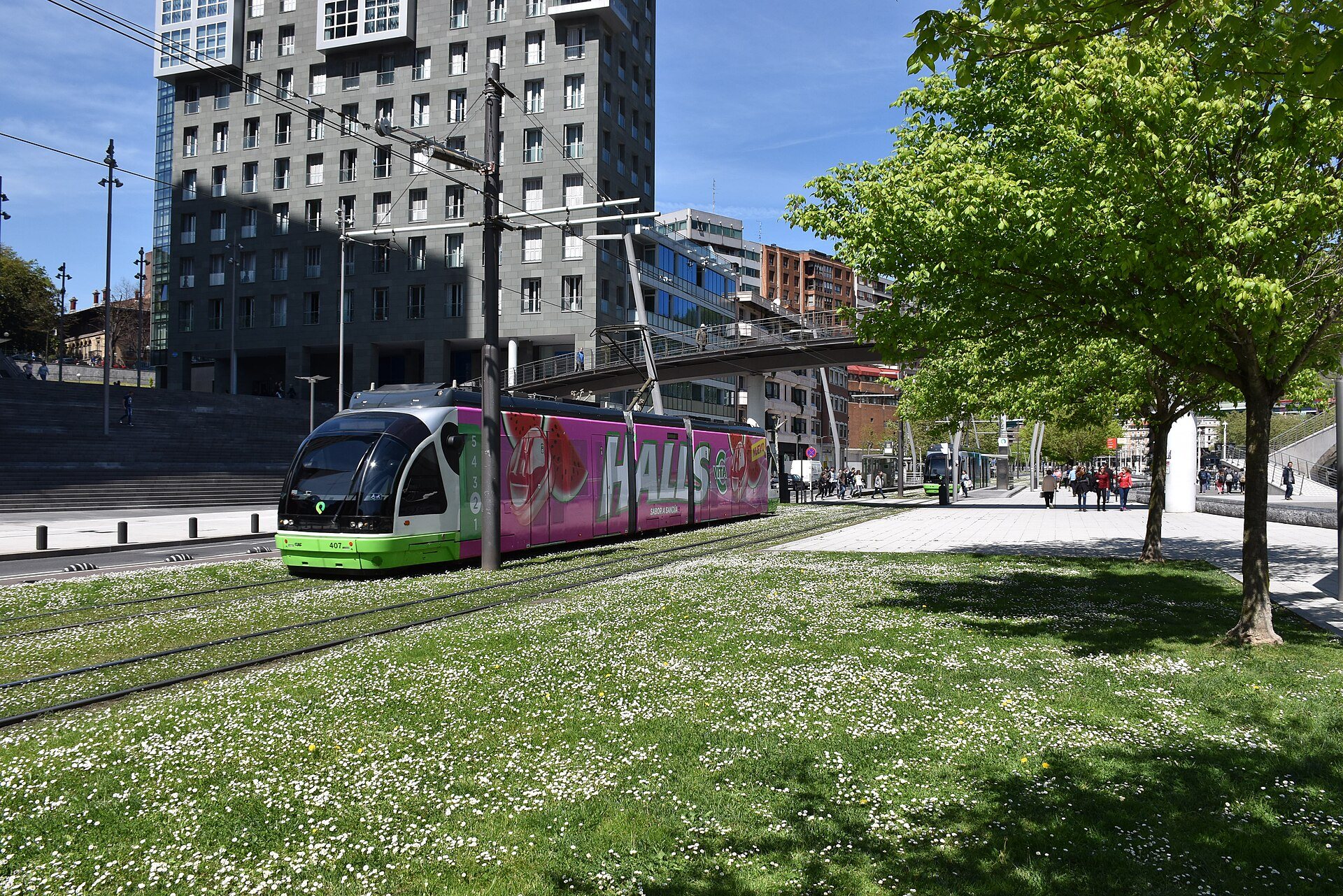
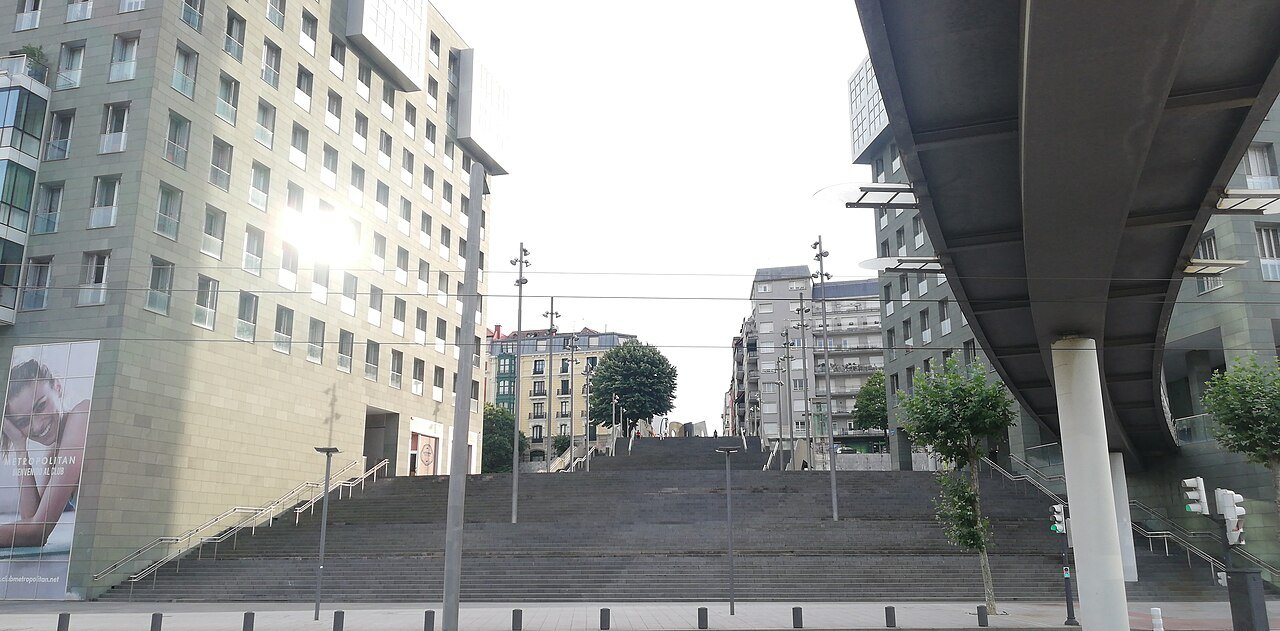
- 1999–2012The riverfront fillsThe Euskalduna concert hall, the tram, Abandoibarra's new buildings and finally the Iberdrola Tower rise on the former shipyards and railway yards.
- 2018ZorrotzaurreThe Deusto canal is completed, turning an industrial peninsula into an island for the city's next district.
The Transformation
In full
Why it matters
Bilbao is visited today for what it became after its industry died, and the change is the thread that ties most of its sights together. The museum, the bridges, the Metro stations, the park by the river and the tower above it were all built on or beside the land of the shipyards, docks and railway yards that made the city rich and then left it. Knowing what was there makes the walk along the river much more interesting.
The phrase Bilbao effect, coined in the media after the Guggenheim opened, came to mean the idea that one daring building by a celebrated architect could revive a declining city. The real story is longer and less simple: the museum was one piece of a plan that included transport, cleaning the river and rebuilding the riverfront, and it took three decades.
The city of iron
Bilbao grew rich on the iron ore in the hills around it, shipped to England and the Netherlands from the port on the Ría. In the nineteenth century the railway arrived, the Bank of Bilbao and the stock exchange were founded, and steelworks such as Santa Ana de Bolueta and Altos Hornos de Vizcaya, founded in 1902, joined the shipyards along the banks. The city laid out its Ensanche, built a new town hall, the Basurto hospital and the Teatro Arriaga, and grew from 11,000 people in 1880 to 80,000 in 1900.
After the Civil War, industry returned and migrants arrived from all over Spain to work in it. Housing could not keep up, and workers built shacks on the hillsides. The left bank downstream became the industrial and working-class heart of Biscay; the river itself, after a century of waste, was badly polluted.
The bottom: the 1980s
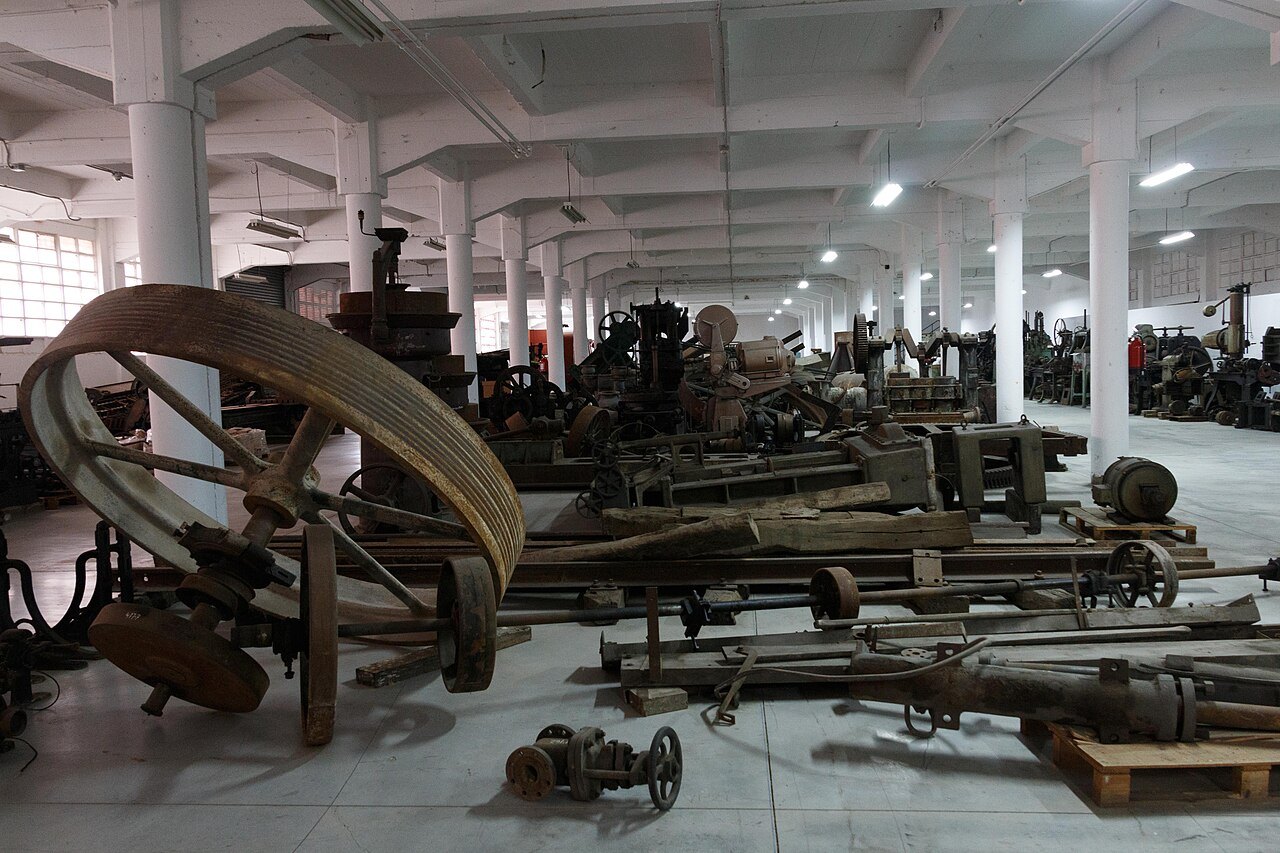
In the 1980s a deep industrial crisis struck. The steel and shipbuilding that had defined the city could no longer compete, and plants began to close. In October 1983 the closure of the Euskalduna shipyard was announced, the start of years of protest that ended only in 1988. Factories along the river went quiet, leaving contaminated land, empty docks and unemployment.
In the same year, on 26 August 1983, during the Aste Nagusia festival, the Ría overflowed after days of rain, reaching up to five meters in parts of the city and wrecking much of its infrastructure. For many people in Bilbao, 1983 marks the low point from which the recovery is measured.
The plan
The response was planned over years by the city, the provincial government of Biscay, the Basque Government and the Spanish state. In 1978 a program to clean the river had begun; in the 1990s public bodies such as Bilbao Metrópoli-30 and Bilbao Ría 2000, founded on 19 November 1992, were set up to organize and supervise the projects, the second of them to turn disused industrial and railway land into housing, offices, green space and public buildings.
Transport came first and mattered as much as the museum. The Metro, with stations by Norman Foster's practice, opened in 1995. In 2000 the commuter railway along the river was moved underground, clearing the left bank for new avenues and the tram, which opened in 2002. The new airport terminal by Santiago Calatrava opened in 2000.
The museum
In 1991 the Basque Government proposed to the Solomon R. Guggenheim Foundation that it would pay for a Guggenheim museum in Bilbao's run-down port area, once the city's main source of income, covering the building, an acquisitions fund and the running costs; the foundation agreed to manage it and lend from its collection. Frank Gehry was chosen as architect, and the museum opened on 18 October 1997.
It became a popular attraction almost at once: almost four million people visited in its first three years. Its success, in a city many visitors had never thought of going to, is what made the transformation famous, and the name Bilbao effect followed.
The riverfront
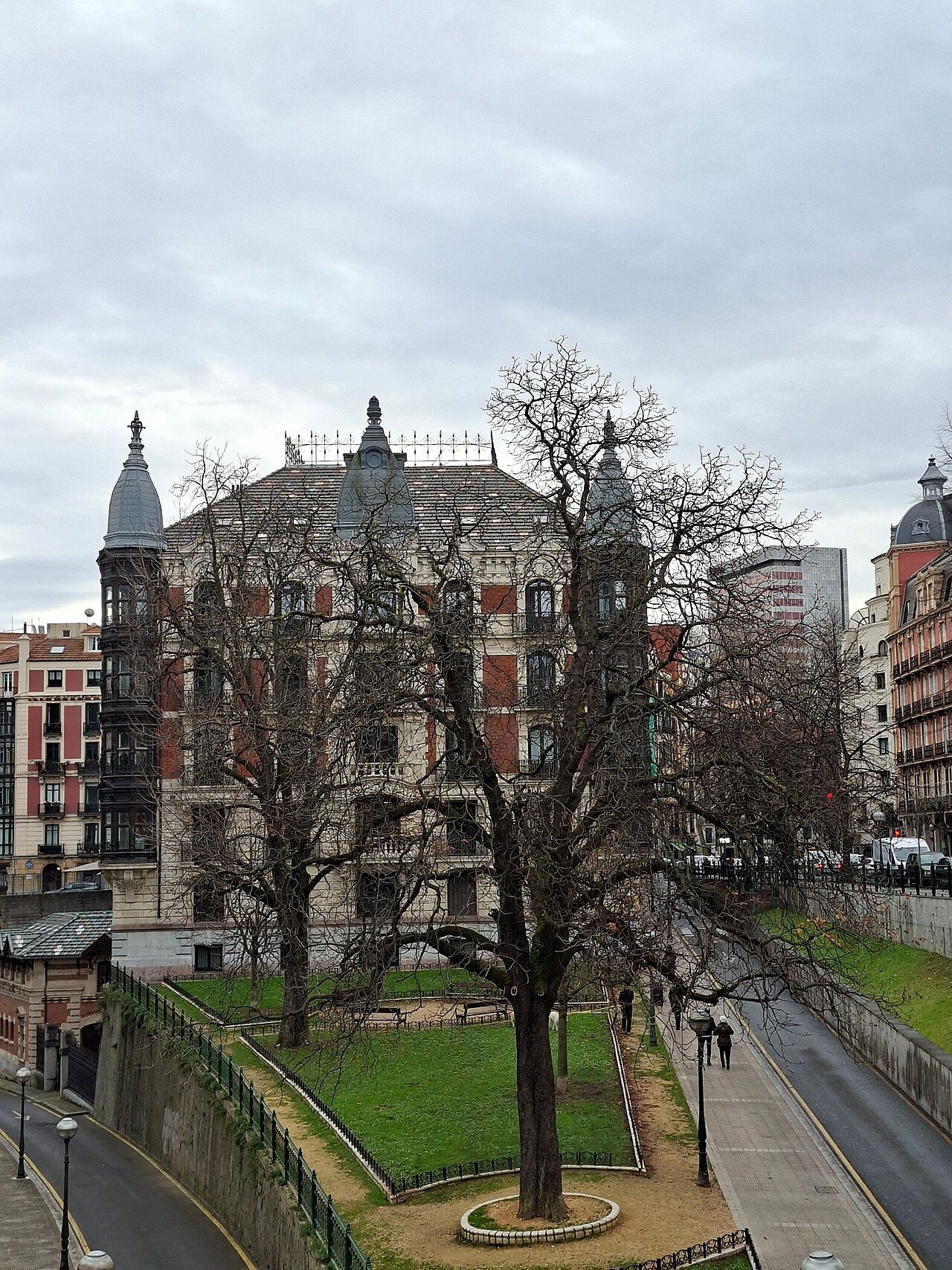
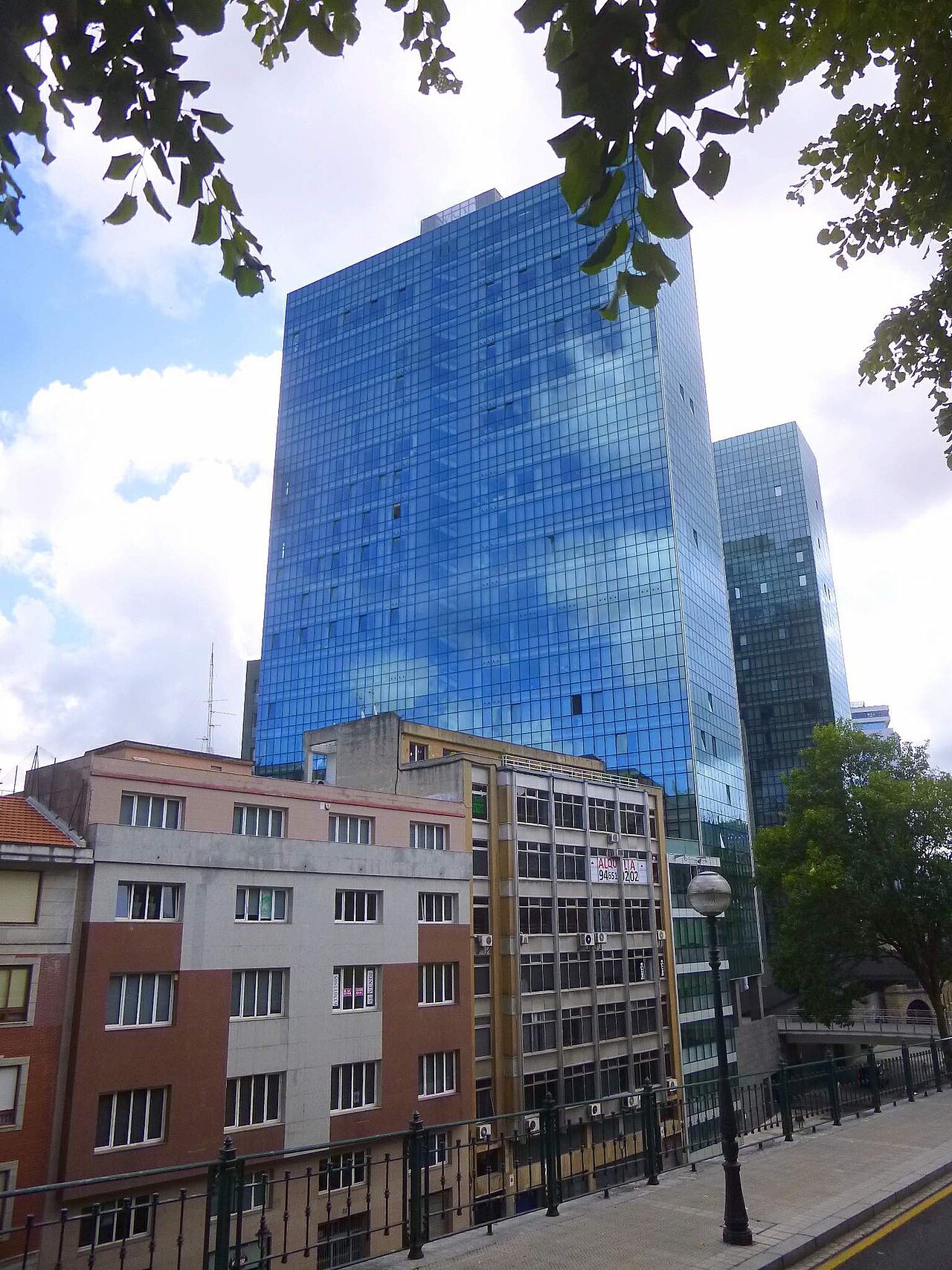
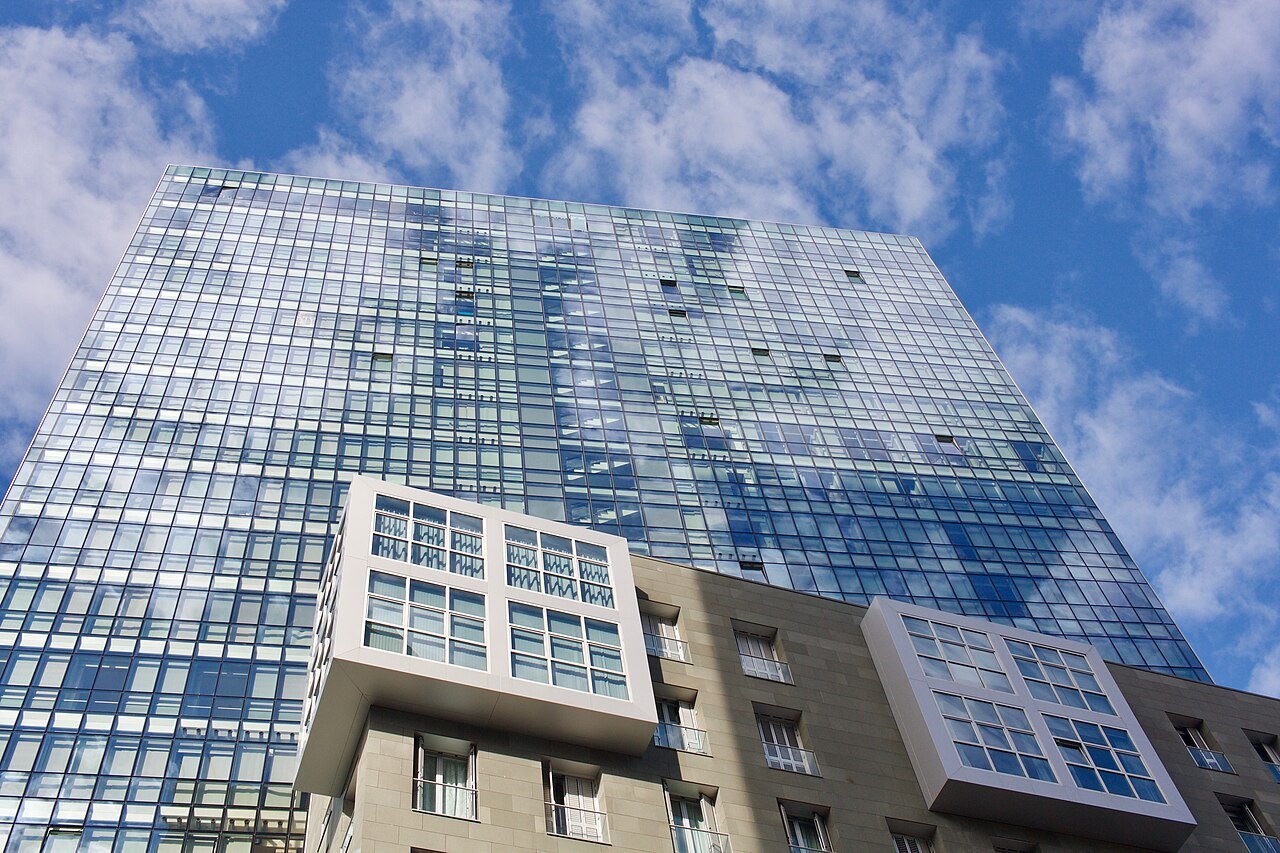
Around the museum, the old shipyard and railway land of Abandoibarra was rebuilt as a district of gardens, promenades and new buildings: the Euskalduna concert hall in 1999, Rafael Moneo's university library, Álvaro Siza's auditorium, housing, hotels and a shopping center, and at the center César Pelli's Iberdrola Tower, inaugurated in 2012, the tallest building in the Basque Country. Doña Casilda Park was extended down to the water.
New crossings joined the banks: Calatrava's Zubizuri and the Euskalduna bridge in 1997, the Pedro Arrupe footbridge, and the red arch Daniel Buren added to the La Salve bridge for the museum's tenth anniversary. Upstream, the old wine warehouse became Azkuna Zentroa, a cultural center redesigned by Philippe Starck.
What comes next
The work continues downstream at Zorrotzaurre, a peninsula created in the 1950s and 1960s when a canal was dug for shipping and left unfinished in 1968. A master plan by Zaha Hadid, approved in 2012, set out a new district of housing and businesses; the canal was completed on 8 October 2018, making it an island, and bridges now join it to Deusto.
The city's transformation has won international prizes, among them the Lee Kuan Yew World City Prize in 2010, and its mayor Iñaki Azkuna was named World Mayor for 2012. Bilbao is now a city of services and visitors rather than steel, though the old industry is still easy to find: in the Carola crane at the Itsasmuseum, in the rusted skin of the Euskalduna, and in the towns down the Ría.
Seeing it for yourself
The best way to see the transformation is to walk it. Start at the old town and the market, follow the river past Zubizuri to the Guggenheim, continue through Abandoibarra past the tower to the Euskalduna and the Itsasmuseum, and look across from the Euskalduna bridge to Zorrotzaurre. Then ride the funicular up Artxanda and see the whole valley at once.
The change reaches beyond the city too. Downstream at Barakaldo, about eight kilometers from the center, the Bilbao Exhibition Center stands on land once occupied by the Altos Hornos de Vizcaya steelworks, and the Metro along the left bank passes through towns that were the heart of the industrial Ría. Ride line 2 to Portugalete and you travel through the whole story, from the old industry to its replacements.