Home · Sights · The Itsasmuseum
The Itsasmuseum
What you are looking at
Indautxu · left bank
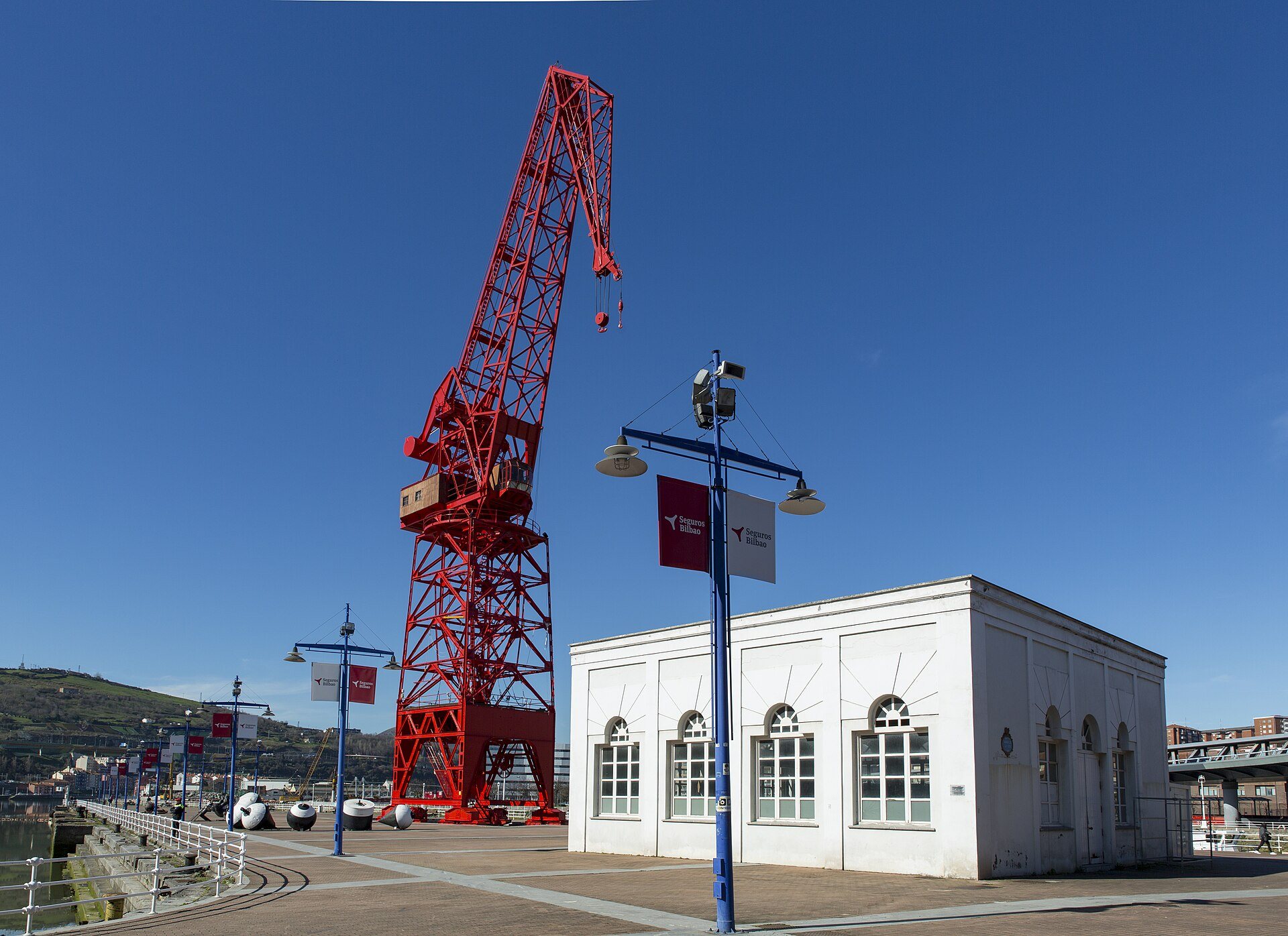
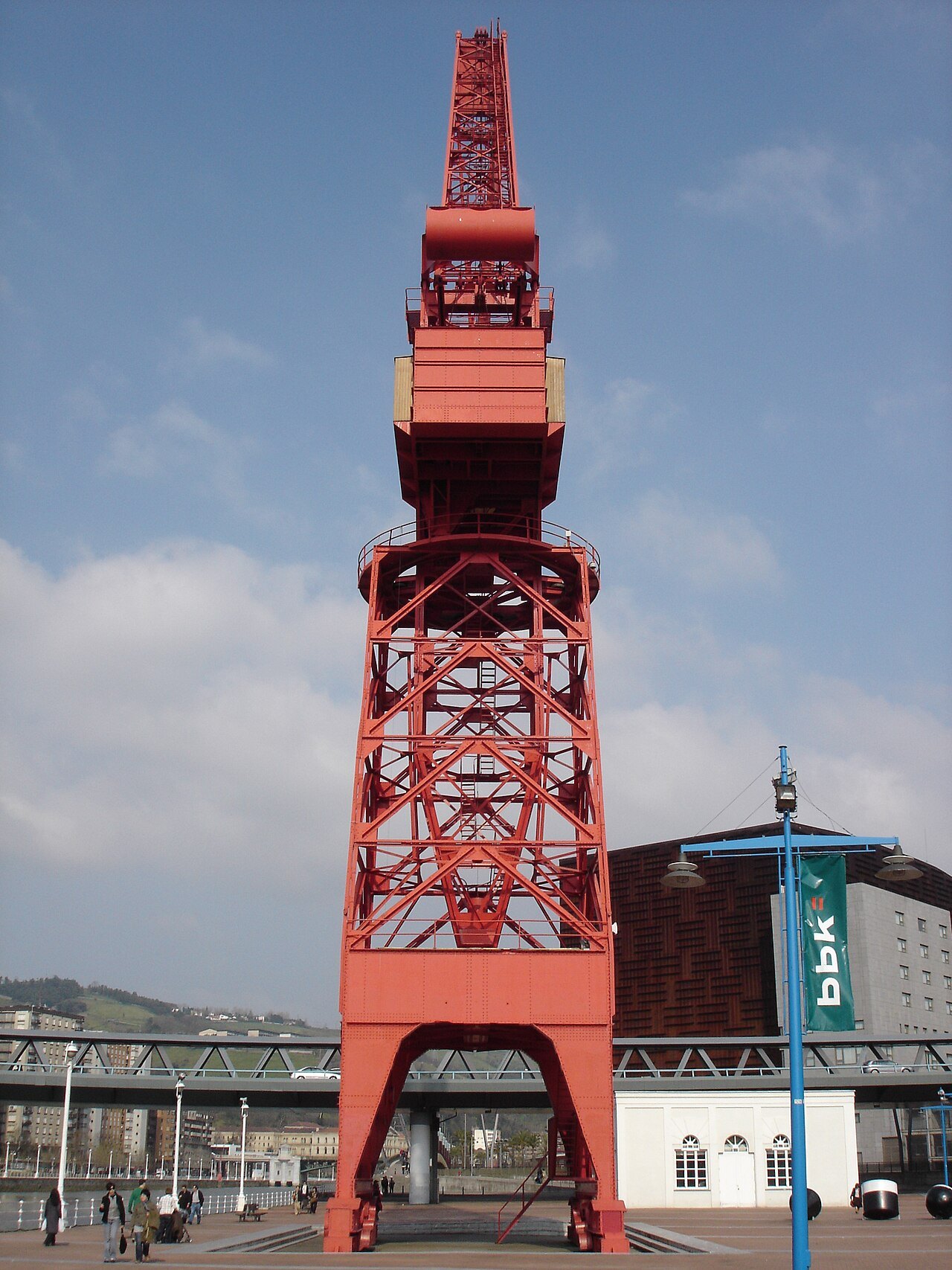
- 1The Carola craneA red riveted crane of 1957, able to lift 60 tons, the symbol of the museum and of the yard.
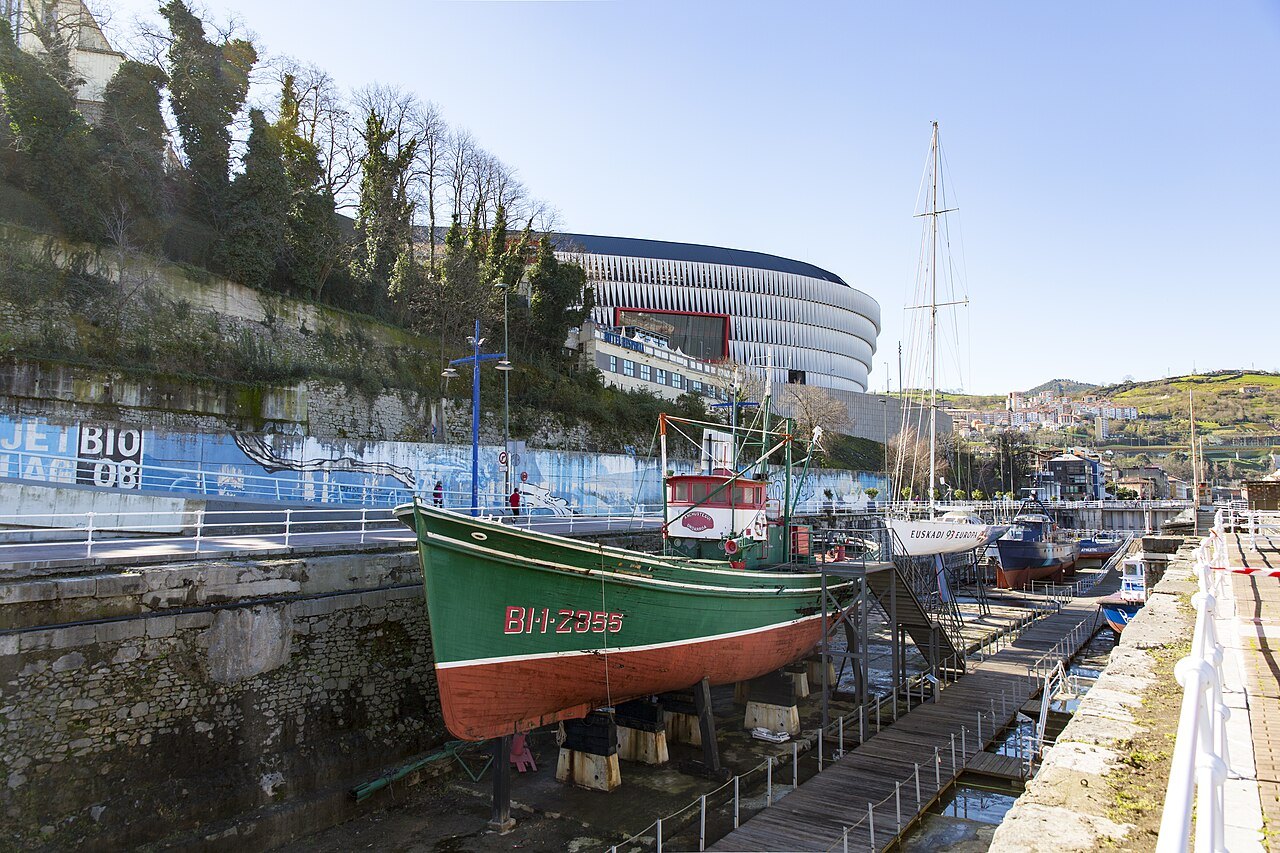
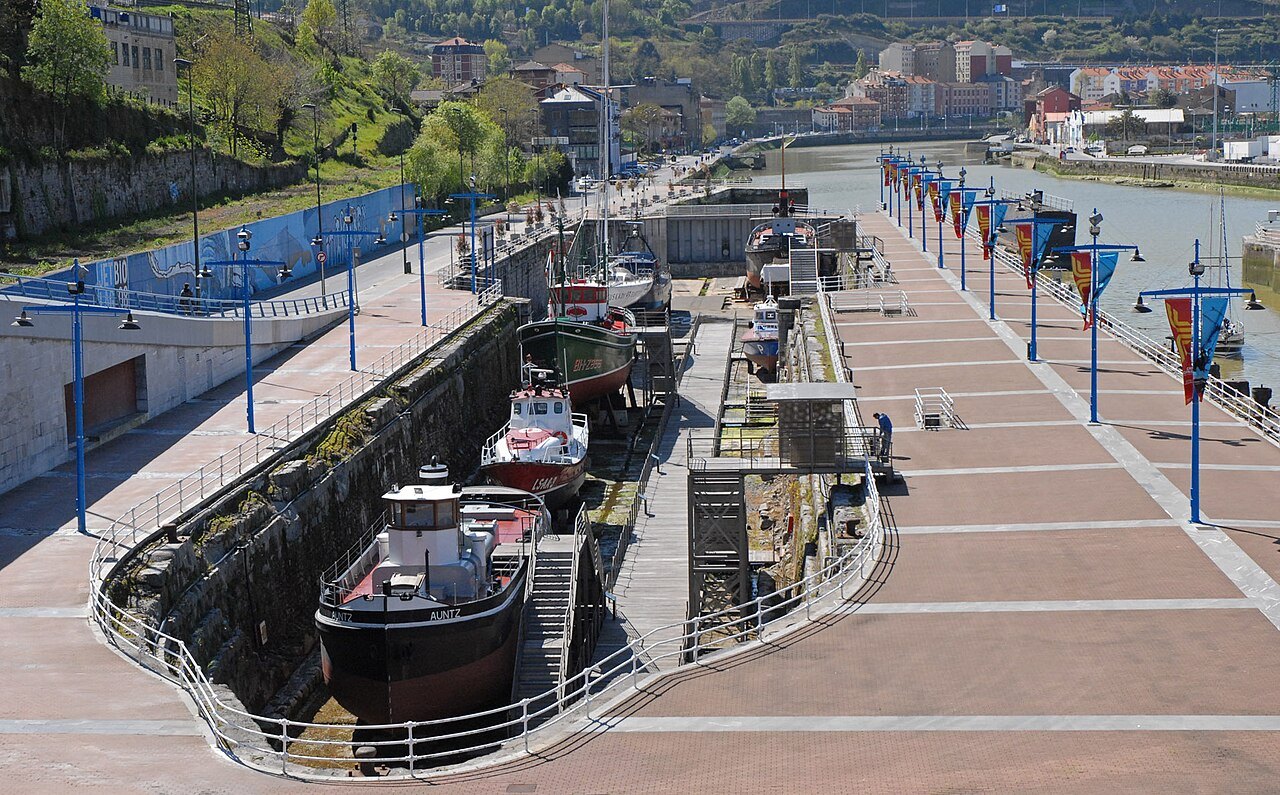
- 2The dry docksThe shipyard's old docks on the outdoor esplanade, with boats displayed in them in the open air.
- 3The pump houseThe 1903 building that worked the docks, an early example of reinforced concrete in Biscay.
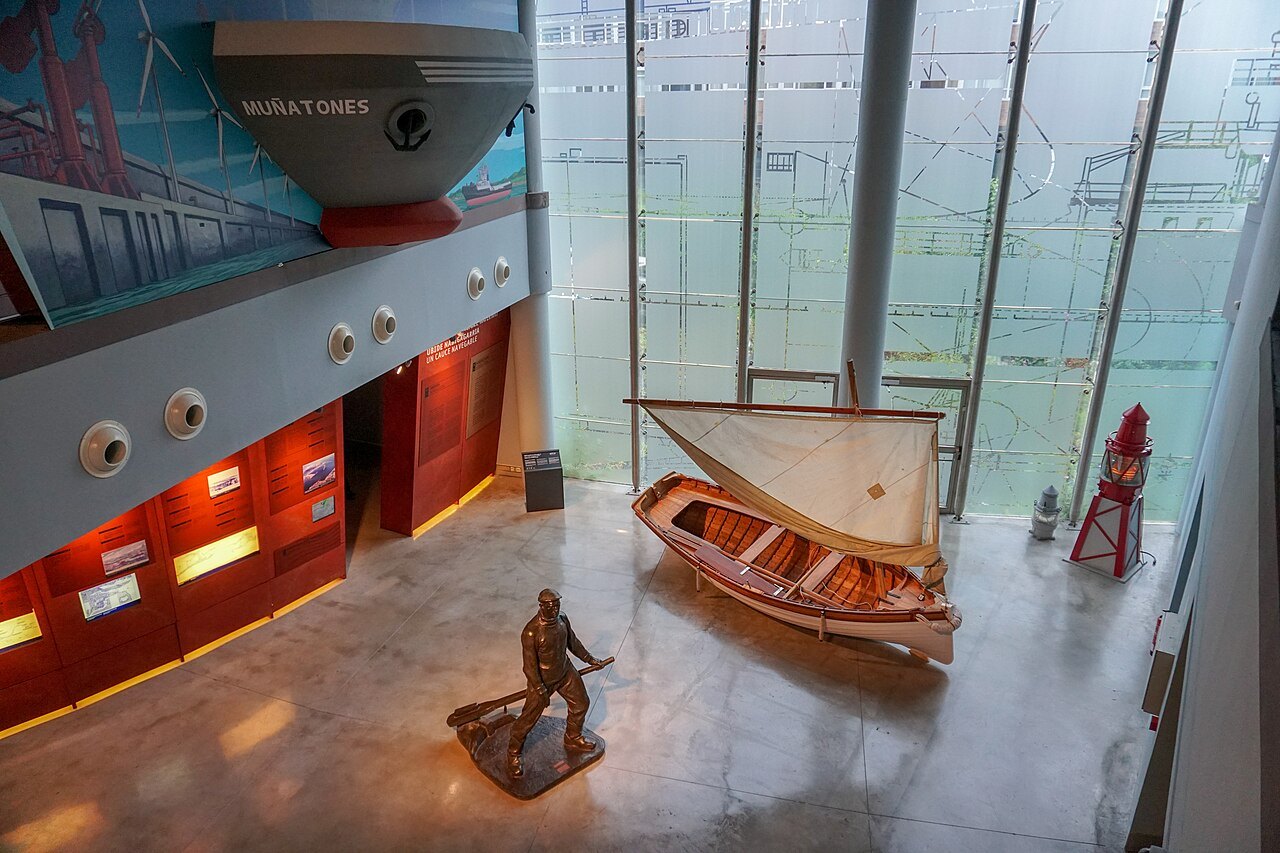
- 4The indoor galleriesExhibitions on the maritime heritage of the Ría, its shipbuilding, trade and people.
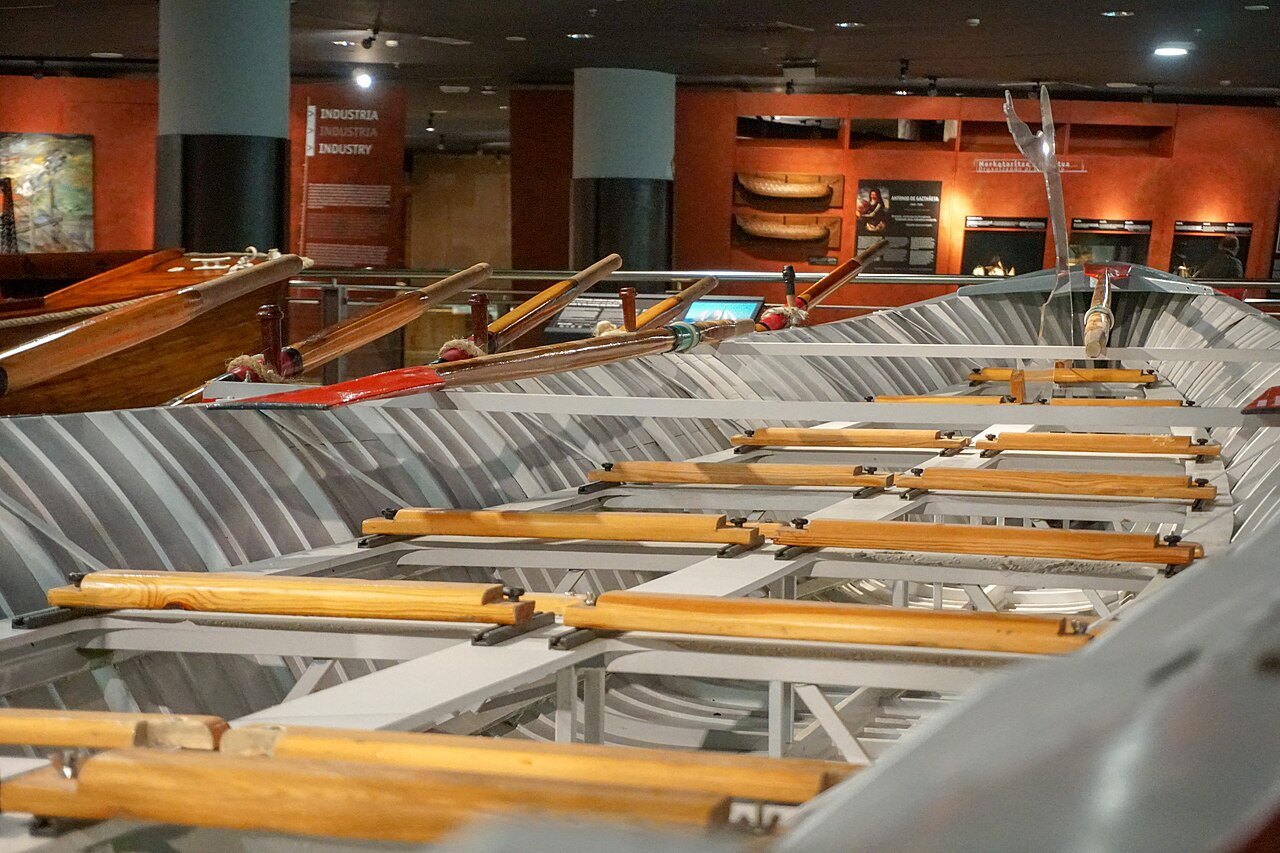
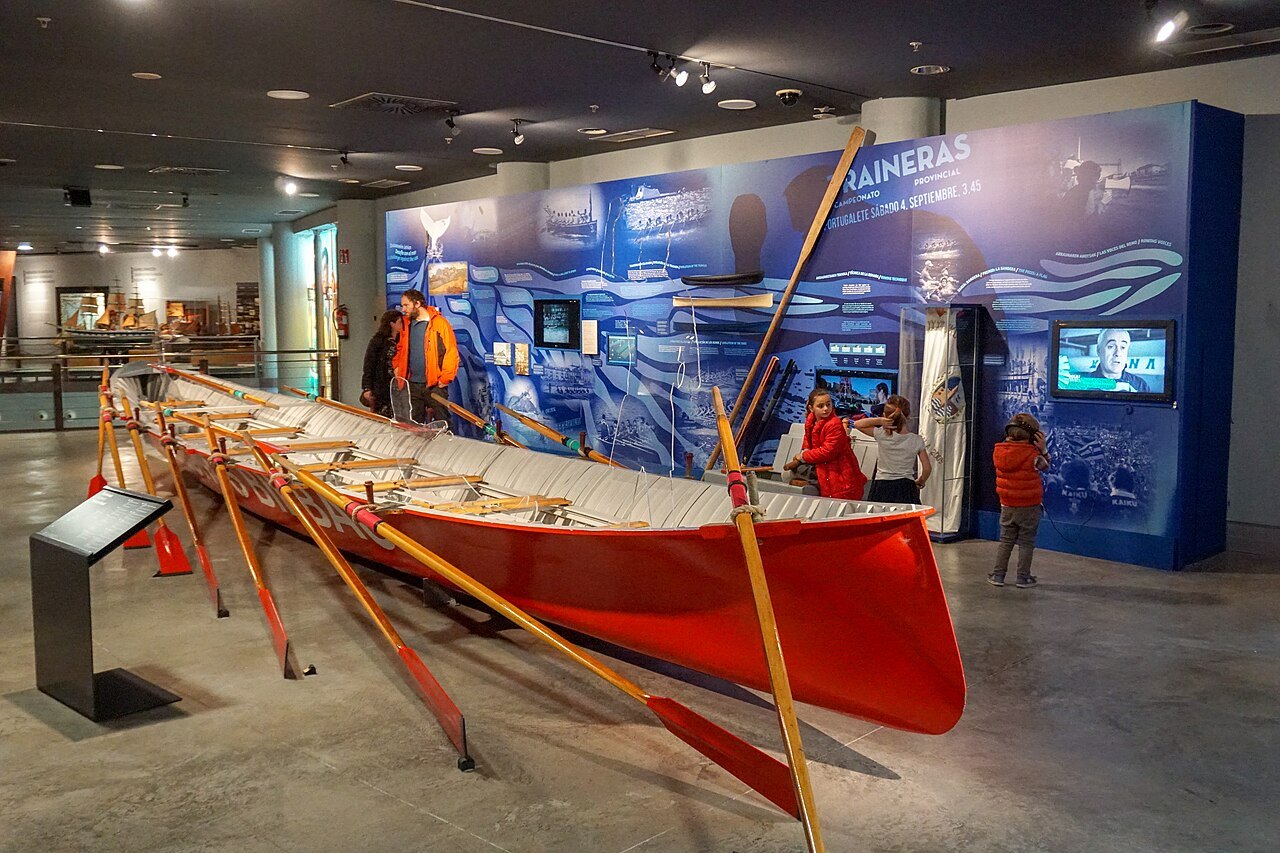
- 5The boatsWorking and historic boats from the coast of Biscay, among them a wooden tuna boat of 1958.
- 6The river frontThe quay beside the Euskalduna bridge, looking across to Deusto and Zorrotzaurre.
Reading the place
The sight in full
Why it matters
The Itsasmuseum Bilbao, until recently the Museo Marítimo Ría de Bilbao, takes its name from the Basque word itsas, sea, and the English word museum. It opened on 20 November 2003 beside the Euskalduna concert hall, on the land where the Euskalduna shipyard built ships for most of the twentieth century, and its subject is the maritime heritage of the Ría and the coast around it.
For a visitor its great asset is the place itself. The museum has about 27,000 square meters, inside and on an open esplanade where the shipyard's dry docks are kept, together with the pump house that worked them and the yard's red crane, the Carola. They are the last physical traces of the yard, and of the shipbuilding that made Bilbao an industrial city.
The yard behind the museum
The Euskalduna shipyard was founded in 1900 by Eduardo Aznar and his cousin Ramón de la Sota on about 90,000 square meters of the left bank, close to the city center. It built large ships and railway equipment, boomed during the First World War, and in 1969 became part of Astilleros Españoles, then the largest shipbuilder in Spain.
The closure of the yard was announced in 1983 and fought by its workers for years; it was reduced to ship repair in 1985 and closed for good in 1988. Its docks, crane and pump house went to the museum, its office building on the Plaza del Sagrado Corazón was let to companies, and the rest of its land became the concert hall and the Euskalduna bridge.
The Carola
The Carola is a level-luffing crane, built between 1954 and 1957 by Talleres de Erandio, a workshop downstream on the Ría. When it was finished it was the most powerful lifting machine in Spain, able to lift 60 tons, and it was used to build large ships. It worked until 1984, when the yard stopped building, and then stood unused and was vandalized until the city bought it and gave it, with the docks and the pump house, to the provincial government of Biscay to become part of the museum.
It was built from riveted steel sections, the plates joined by rivets heated to about 900 degrees and driven home with a sledgehammer. Its control cabin is about 35 meters above the ground and its top about 60 meters, and it moved on rails along the quay. Its main motor was made by a Bilbao firm on Zorrotzaurre.
The crane is named after Gerónima Carlota Iglesias, known as Carol, a woman who lived on the right bank and worked on the left. Like many people in the industrial city, she crossed the Ría every day to work.
The dry docks and the pump house
Early in the twentieth century the yard had three dry docks: one for building ships, one for repairs and a third, for larger vessels, that could be divided by two gates to refloat ships in sections. The docks were controlled by pumps, and the pump house built for them in 1903, with reinforced concrete beams, was a pioneering building of its kind. Its steam engines were soon replaced by electric motors.
Today the docks hold boats displayed in the open air, and you can walk along their edges and look down into them, which gives a better sense of the scale of shipbuilding than any model indoors.
Inside the museum
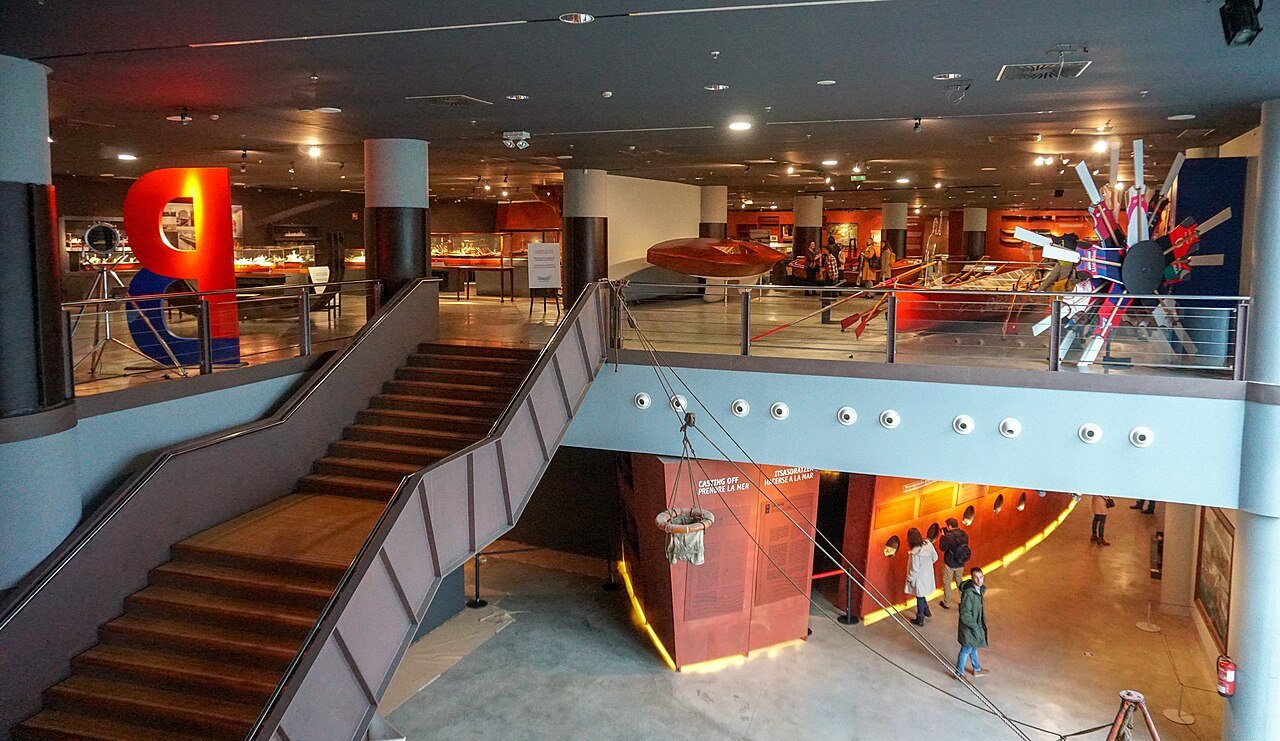
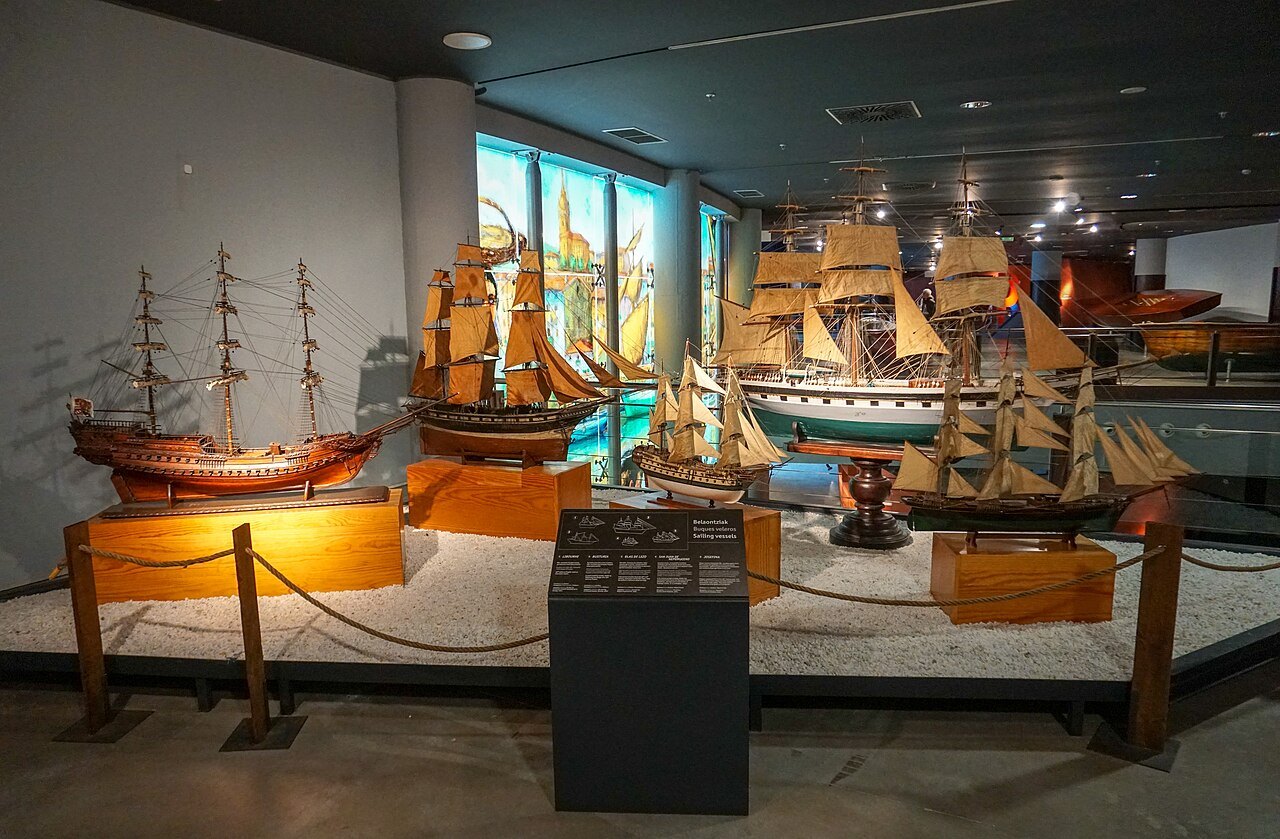
The galleries tell the story of the Ría as a maritime place: its port, its trade, its shipyards, its fishing and the people who worked on the water, with models, instruments, objects and temporary exhibitions. By its fifth anniversary the museum had welcomed about 323,000 visitors, received 28 boats and held 21 temporary exhibitions.
One of the boats is the Nuevo Antxustegi, a wooden tuna boat built in 1958 in a riverside yard on the Biscay coast, typical of the inshore fishing of the mid-twentieth century. Its owners gave it to the museum in 1998 after a careful restoration, and it was placed in one of the docks outdoors; its former owners have since campaigned over its deterioration in the open air.
What you see
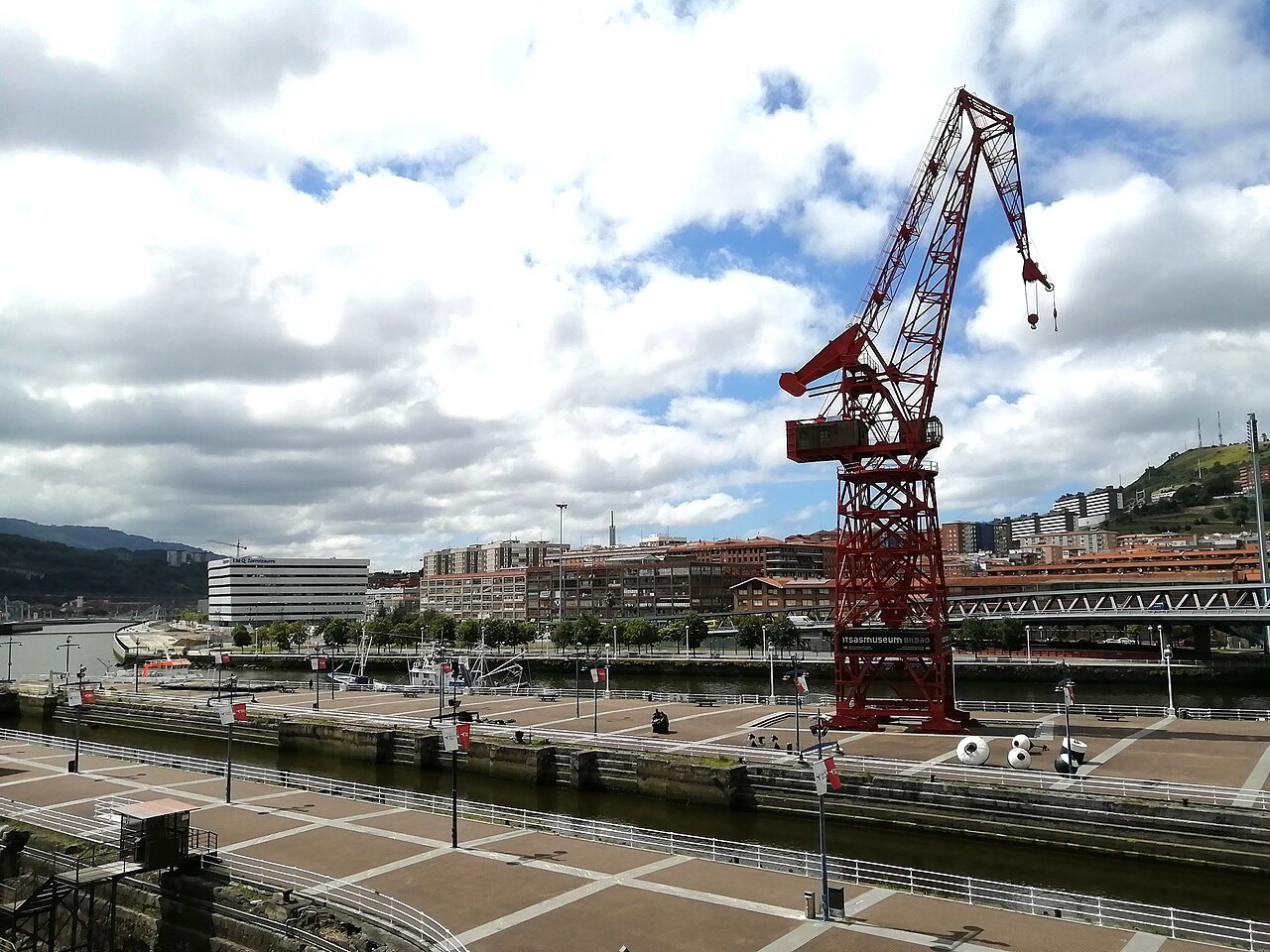
Arrive along the riverside walk from Abandoibarra or from the Euskalduna. The Carola rises over the quay before you see anything else, red against the sky, with the Euskalduna bridge and its lighting tower behind it and the white bulk of San Mamés on its bank downstream.
From the edge of the docks the view runs across the river to Deusto and to Zorrotzaurre, the former industrial strip that is now an island and the city's last big regeneration project, described on the transformation.
How to visit
Allow an hour and a half for the galleries and the docks. Opening days, hours and tickets are set by the museum and published on its site; check them before going. The crane and the river front can be seen from the public walk outside at any time.
The museum is beside the Euskalduna tram stop and a short walk from the San Mamés Metro station; from the Guggenheim it is about twenty minutes on foot along the river. It pairs well with the Euskalduna and Doña Casilda Park next door.
Honest notes
The museum is modest compared with the city's art museums, and its indoor galleries will interest people who like ships and industrial history most. A plan to build a leisure center with a wave pool and a wind tunnel in the yard's wet dock was stopped by a judge in April 2022, who backed the city's refusal and urged that the dock be protected.
Nearby
Where to go next
- Nearby · Abandoibarra · left bankThe EuskaldunaThe concert hall and conference center of 1999, standing on the site of the shipyard that built Bilbao's ships for most of the twentieth century, its river front clad in rusted steel in memory of the yard and the furnaces.Read the page →
- Nearby · San Mamés · left bankSan MamésThe home of Athletic Club, opened in 2013 on a high bank over the Ría: a 53,331-seat bowl wrapped in white panels that light up at night, built beside the old ground the city called the Cathedral.Read the page →
- Nearby · Indautxu · left bankDoña Casilda ParkAn English-style garden laid out from 1907 on land given by Casilda Iturrizar, the servant-turned-philanthropist who became one of Bilbao's richest women: a duck pond, century-old trees, a pergola and the Fine Arts Museum, now running down to the river.Read the page →