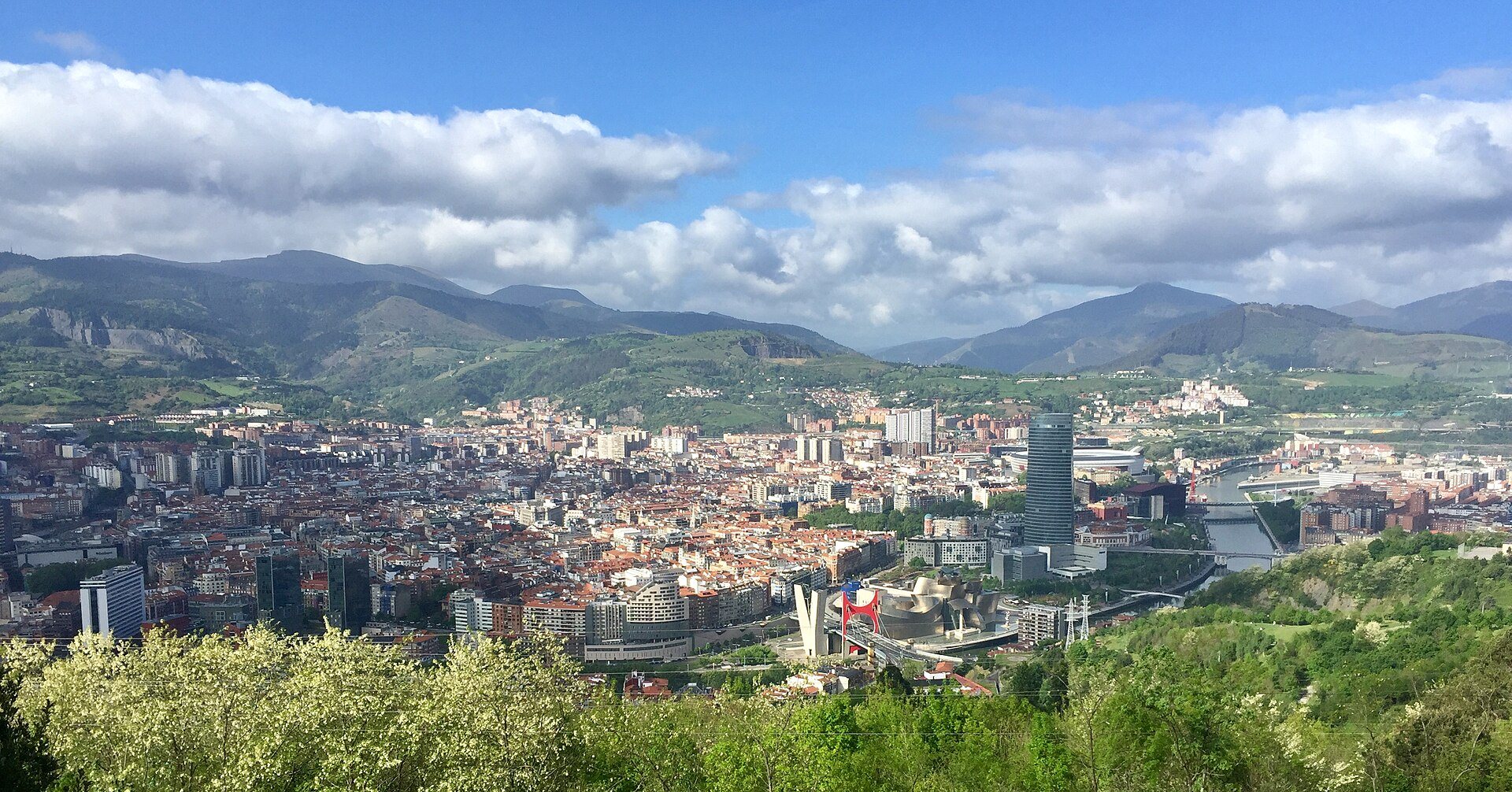
Home · The Sights
The sights, from the old town to the sea
All twenty
The Seven Streets
The old town on the right bank, where the city began in 1300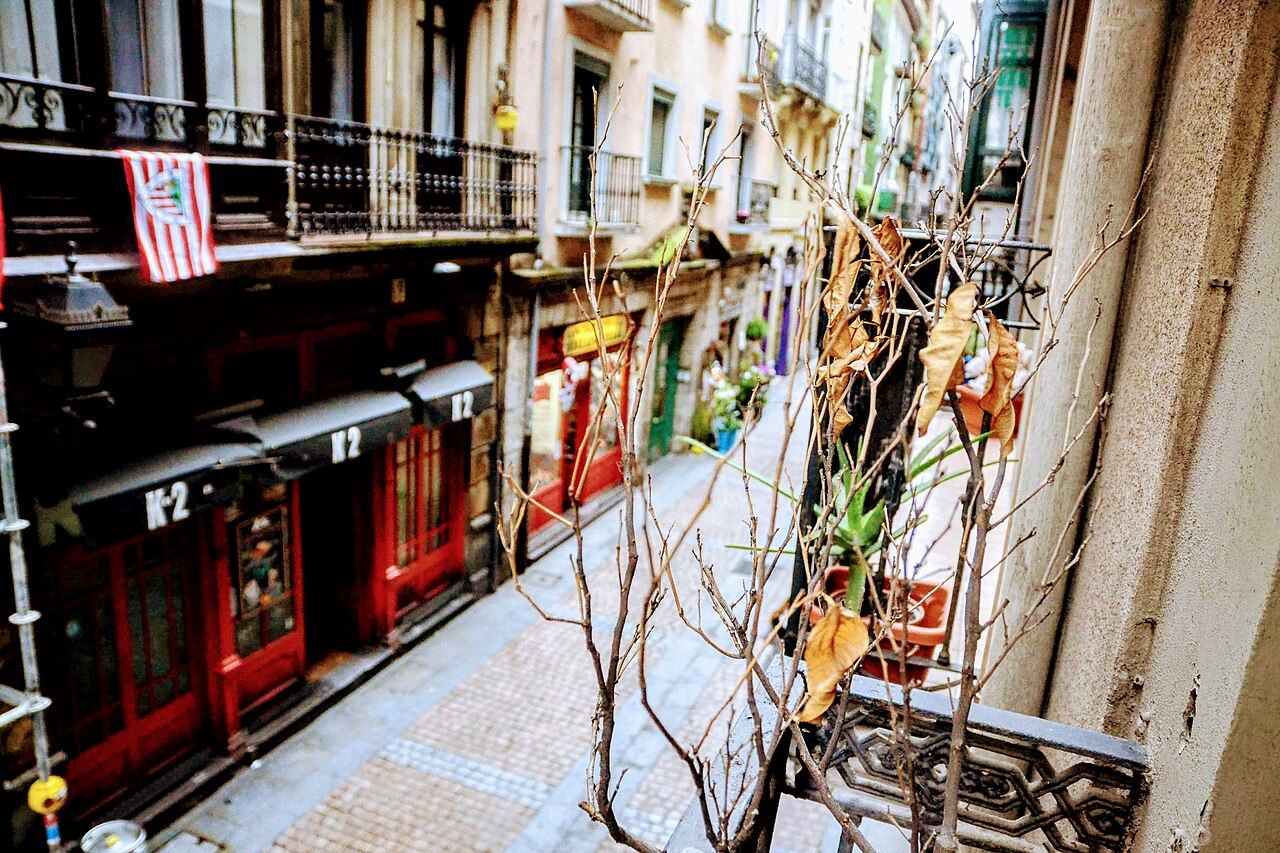 Ibaiondo · right bankThe Casco ViejoThe oldest quarter and the town's original core: the Seven Streets, Zazpikaleak in Basque.
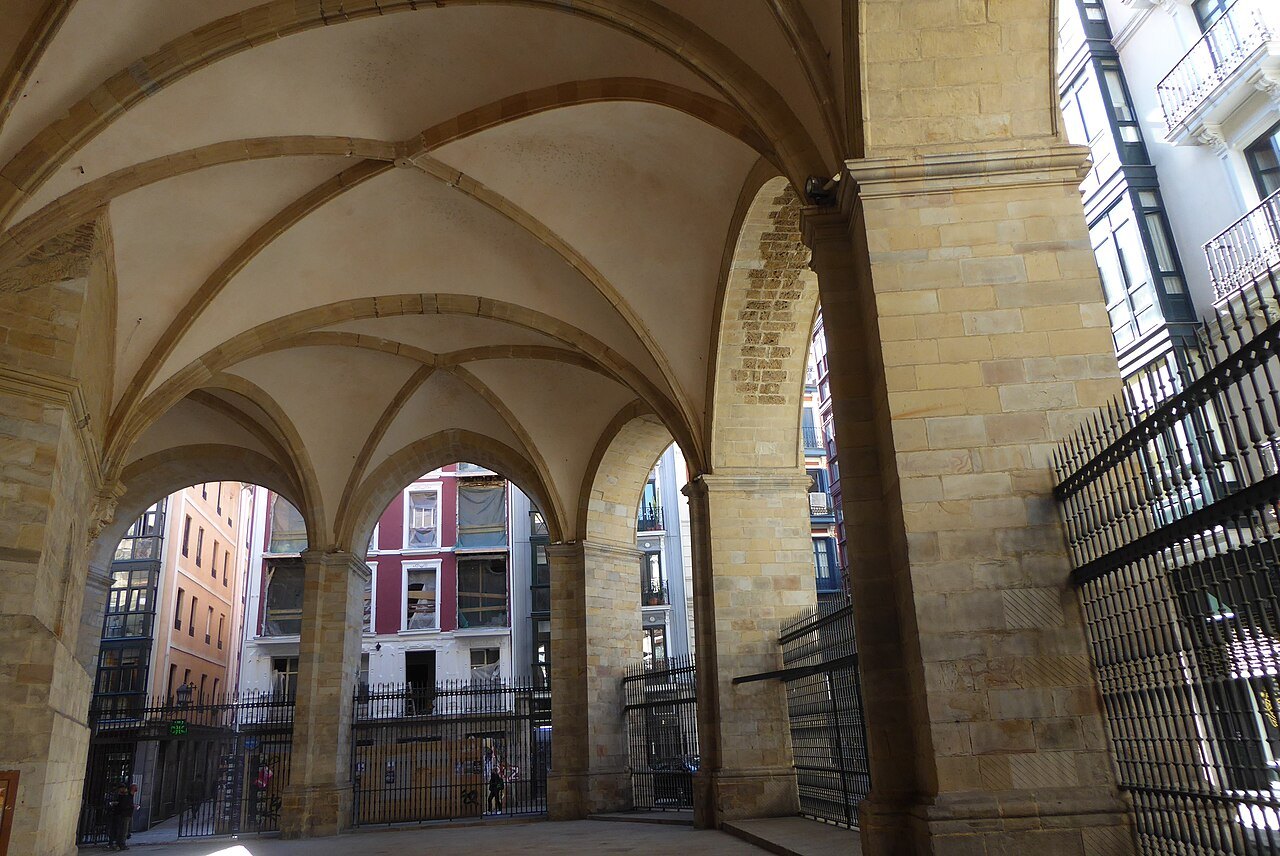 Casco Viejo · right bankSantiago CathedralThe Gothic parish church of the founding town, built in the fourteenth and fifteenth centuries; a cathedral since 1949.
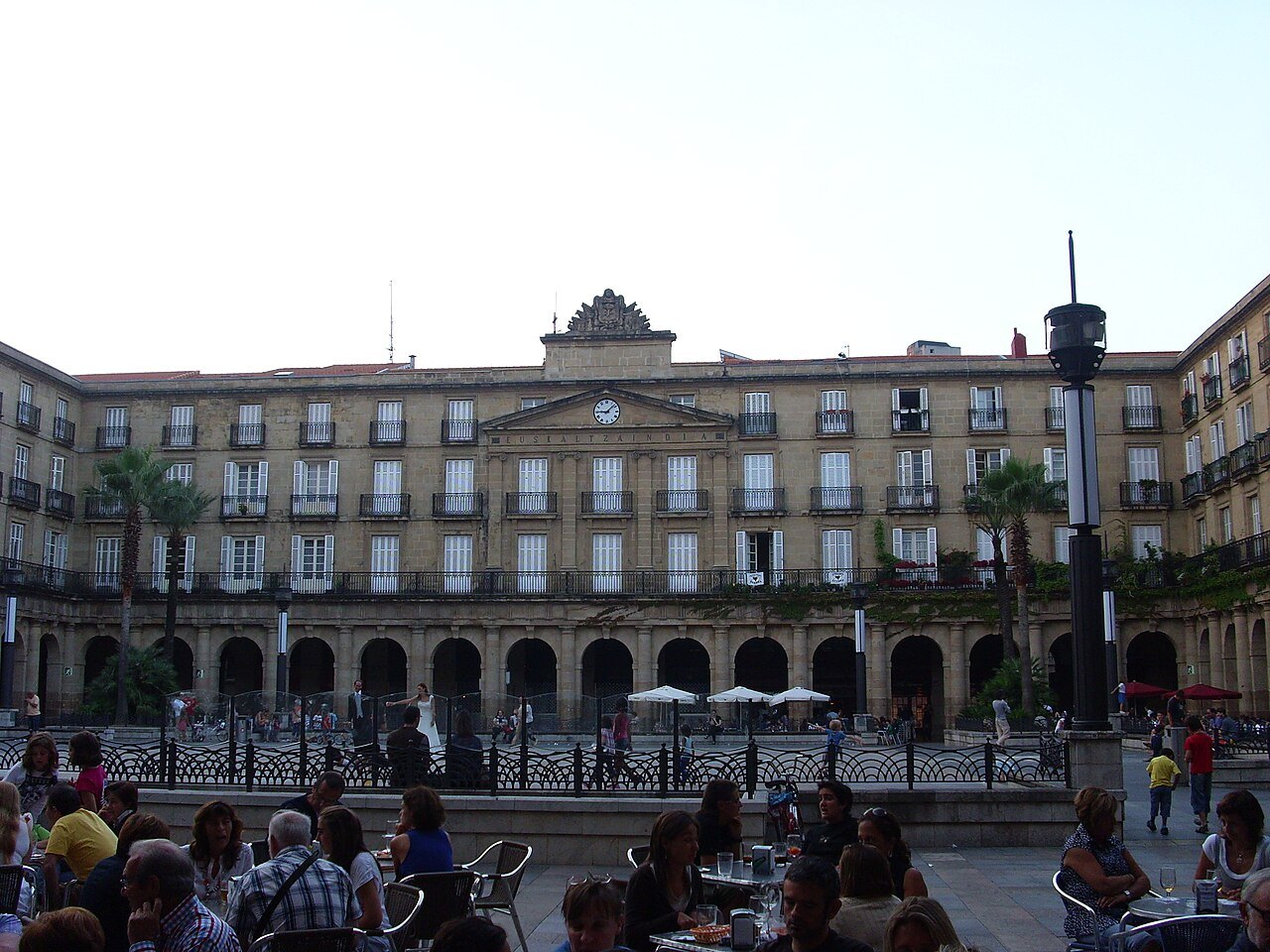 Casco Viejo · right bankPlaza NuevaA neoclassical arcaded square designed in 1821 and inaugurated in 1851, now the home of the Basque language academy.
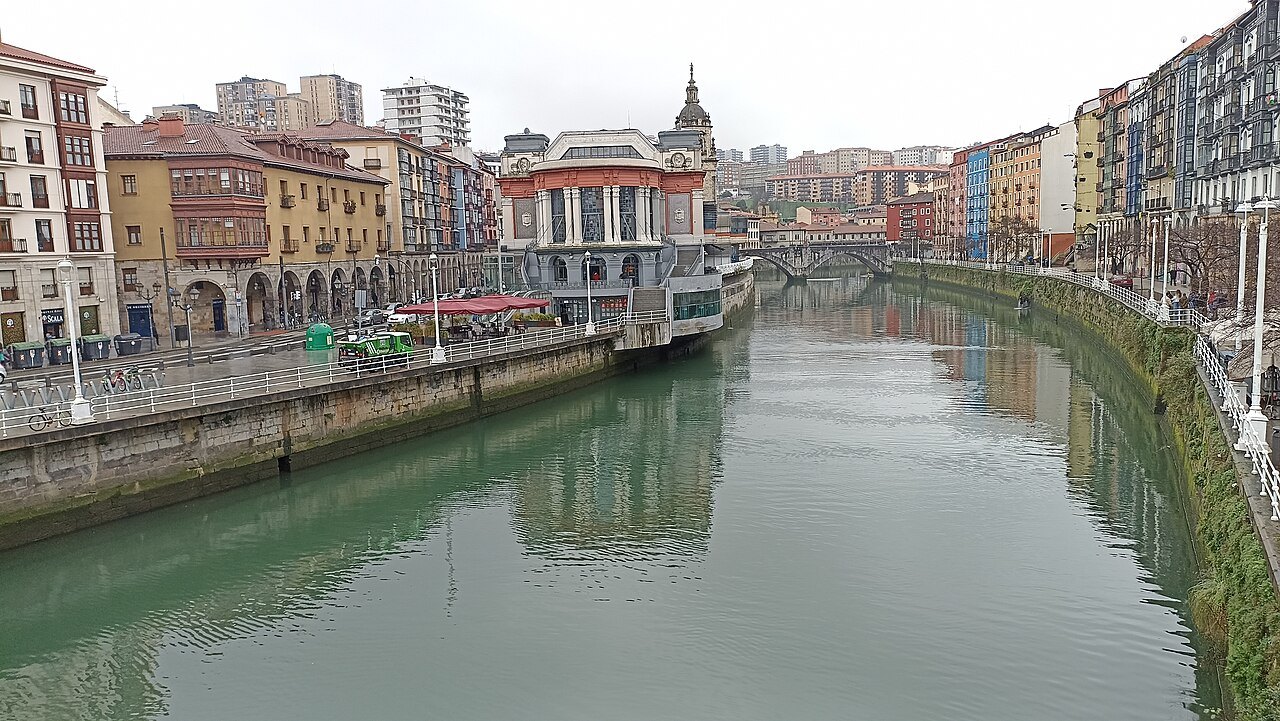
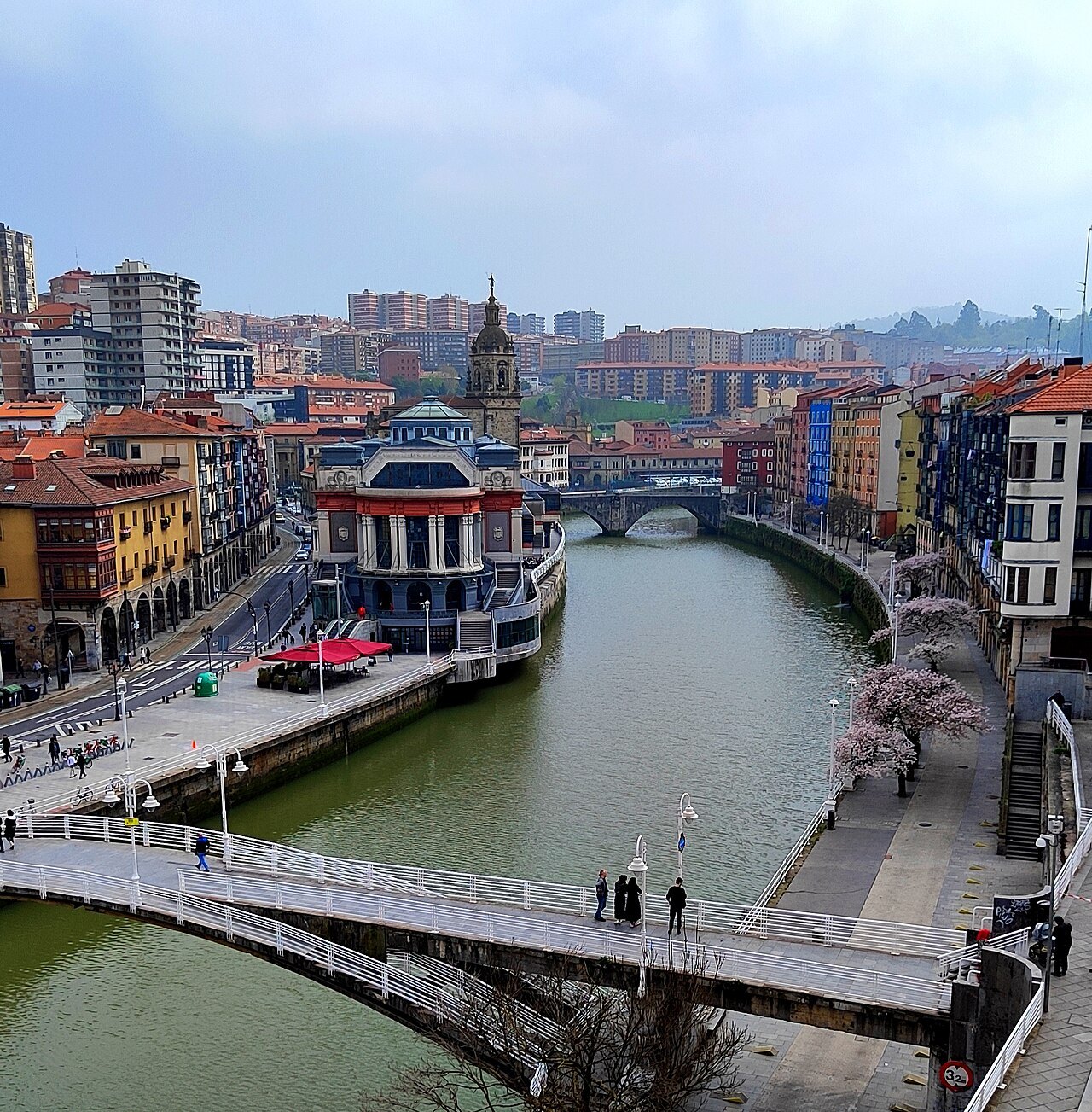
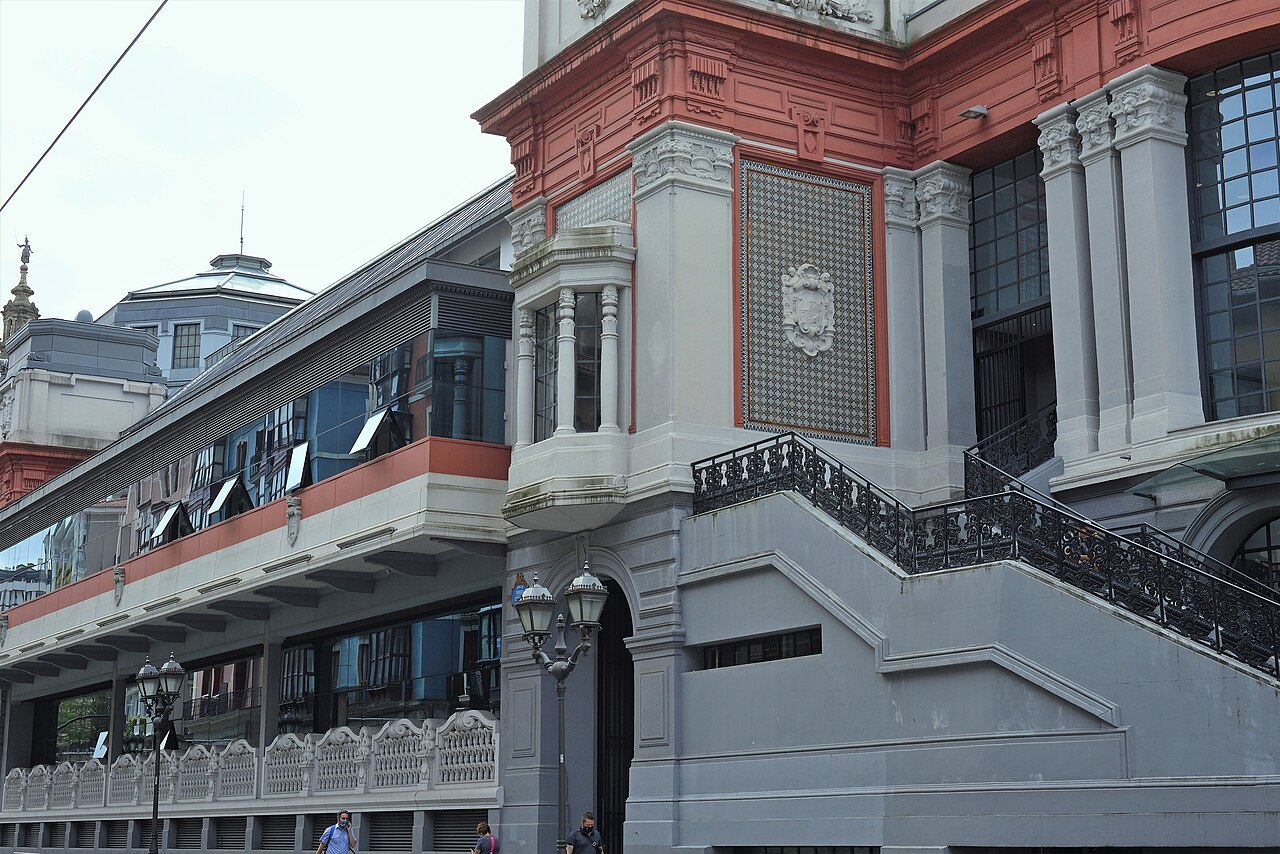 Casco Viejo · right bankThe Ribera MarketA covered food market on the river beside the church of San Antón, one of the largest in Europe.
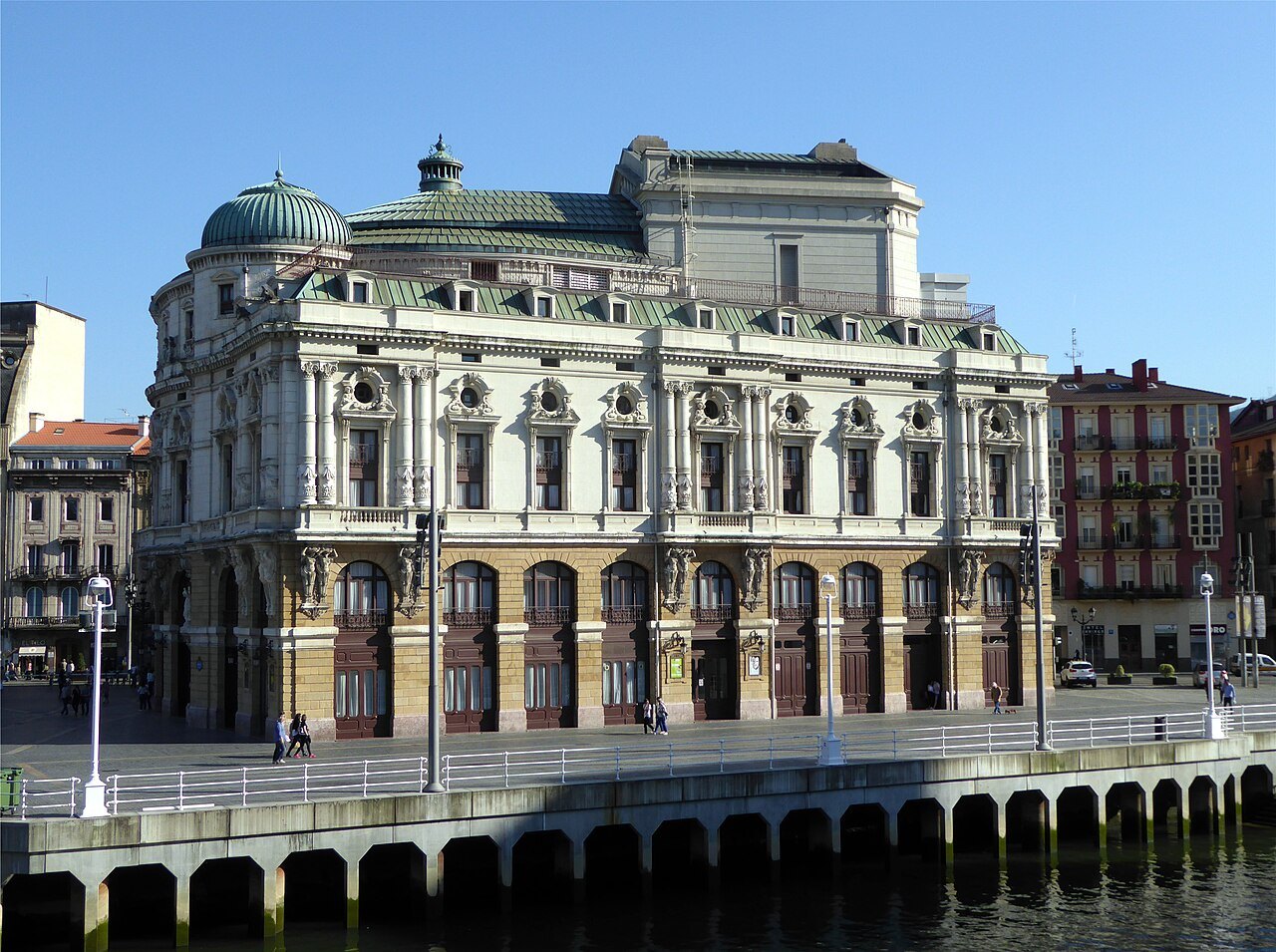 El Arenal · right bankTeatro ArriagaA Neo-Baroque opera house of 1890 on the river, named after Juan Crisóstomo de Arriaga, the Spanish Mozart.
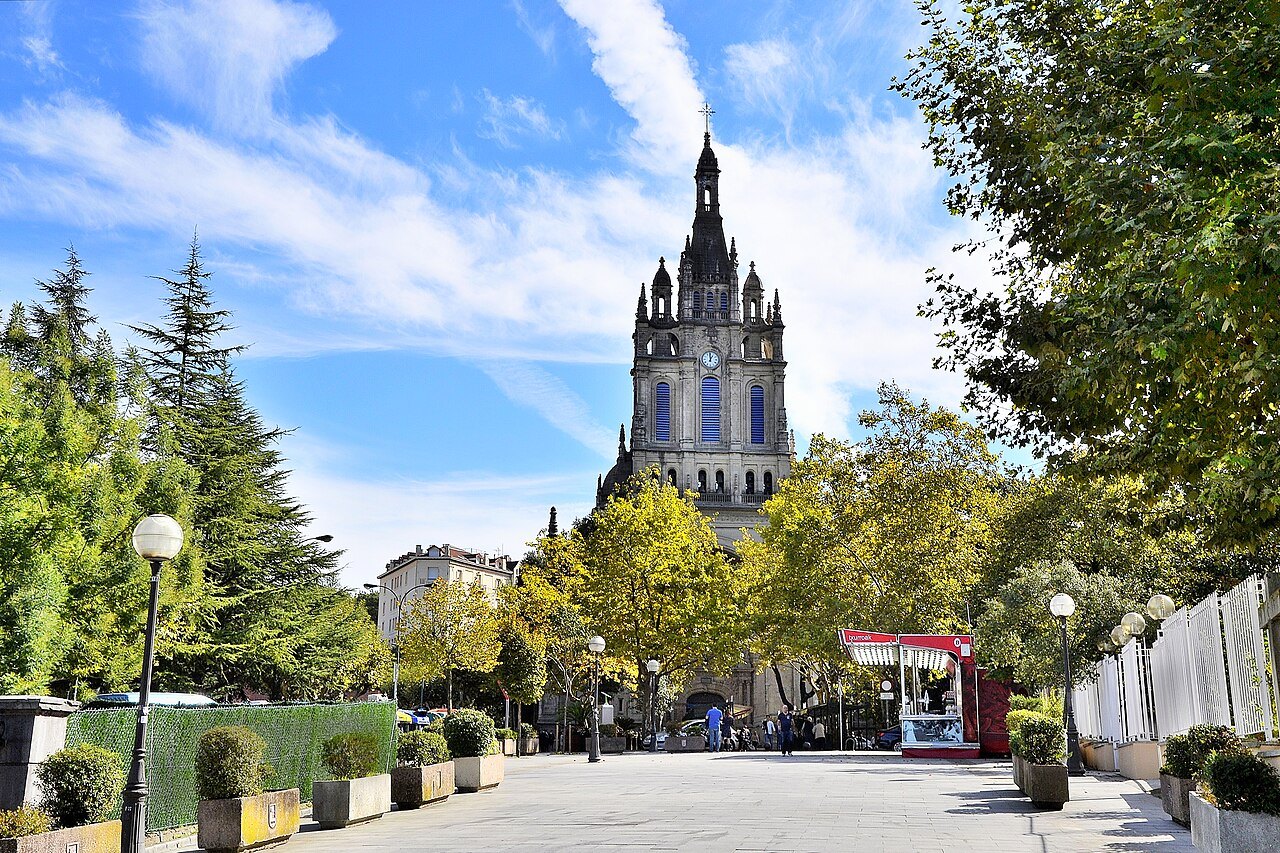 Begoña · right bankThe Basilica of BegoñaThe basilica of Our Lady of Begoña, patroness of Biscay: Gothic naves begun in 1511 and a tower of 1907.
Where the shipyards stood
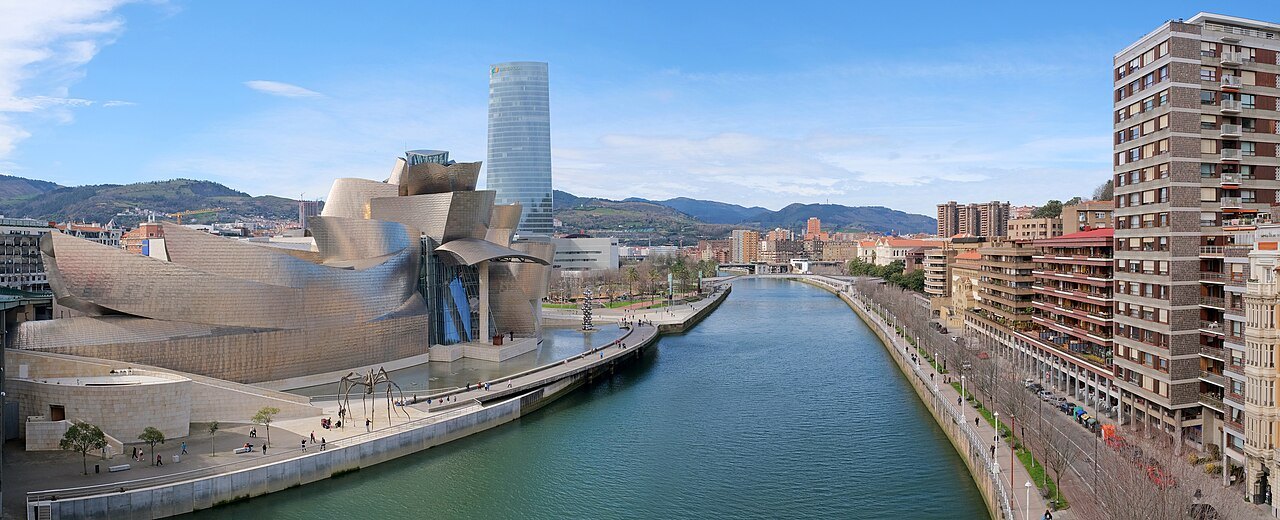
The left-bank riverfront remade since the 1990s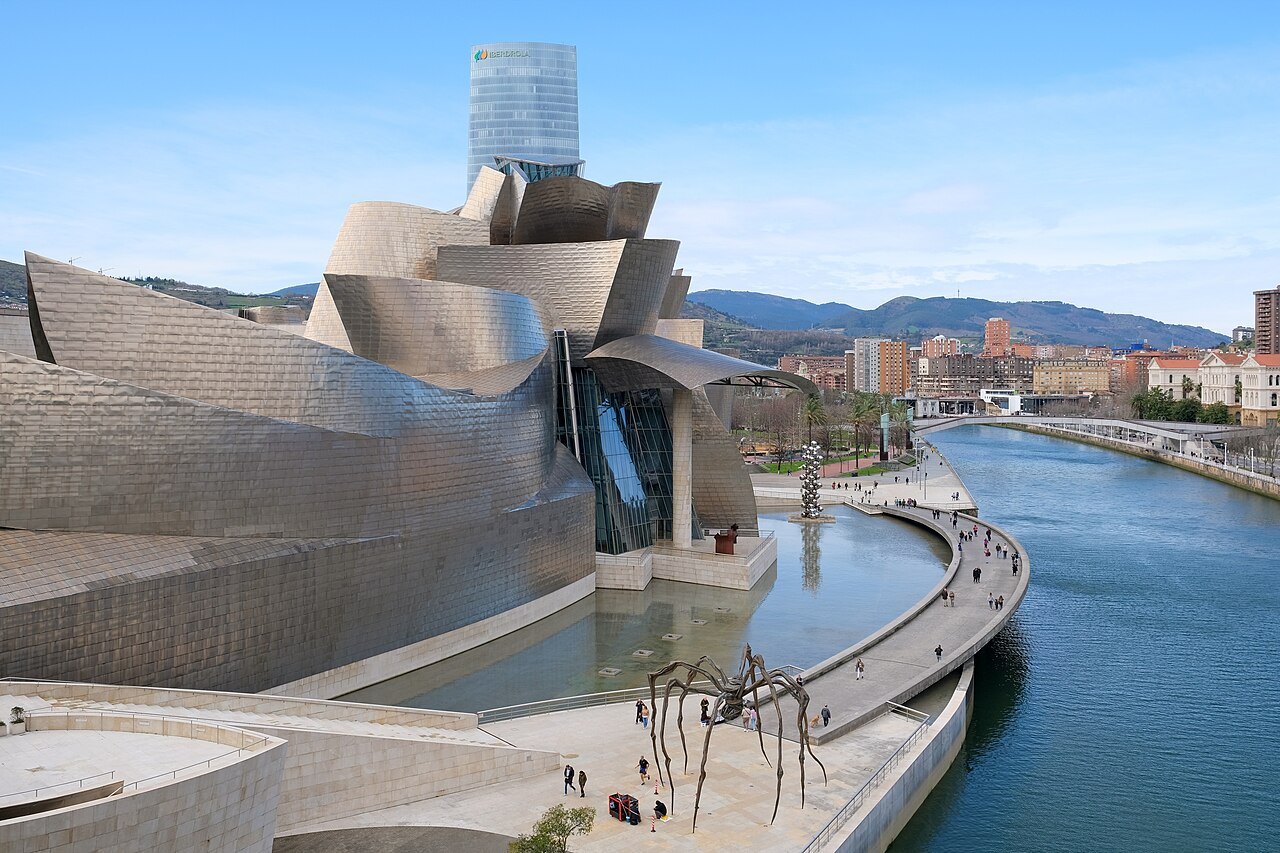 Abando · left bankThe GuggenheimFrank Gehry's museum of modern and contemporary art on the Nervión, opened on 18 October 1997 in the old port area.
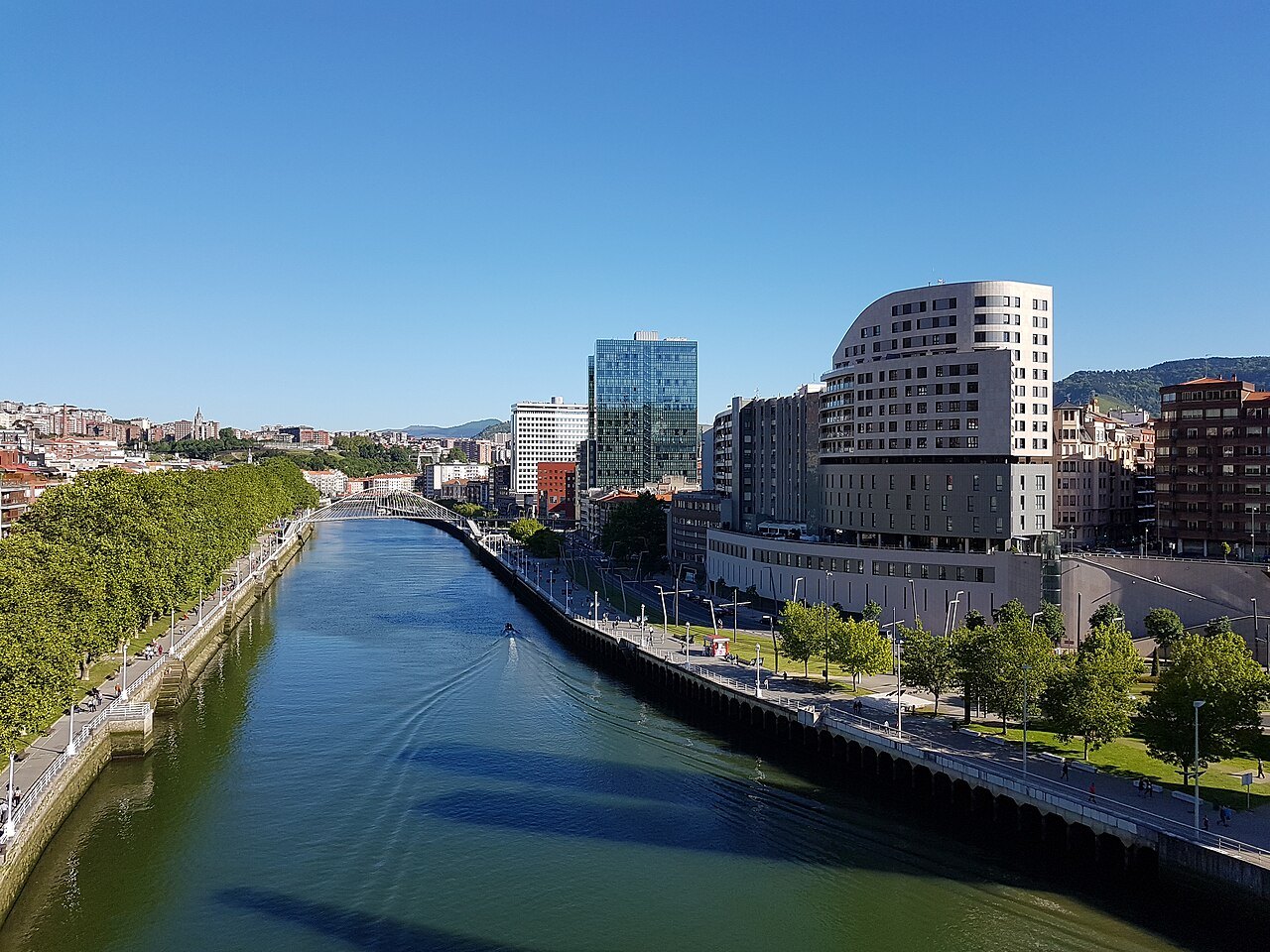 Abando · left bankAbandoibarraThe old docks below the Ensanche, rebuilt since the 1990s around the museum and the city's tallest tower.
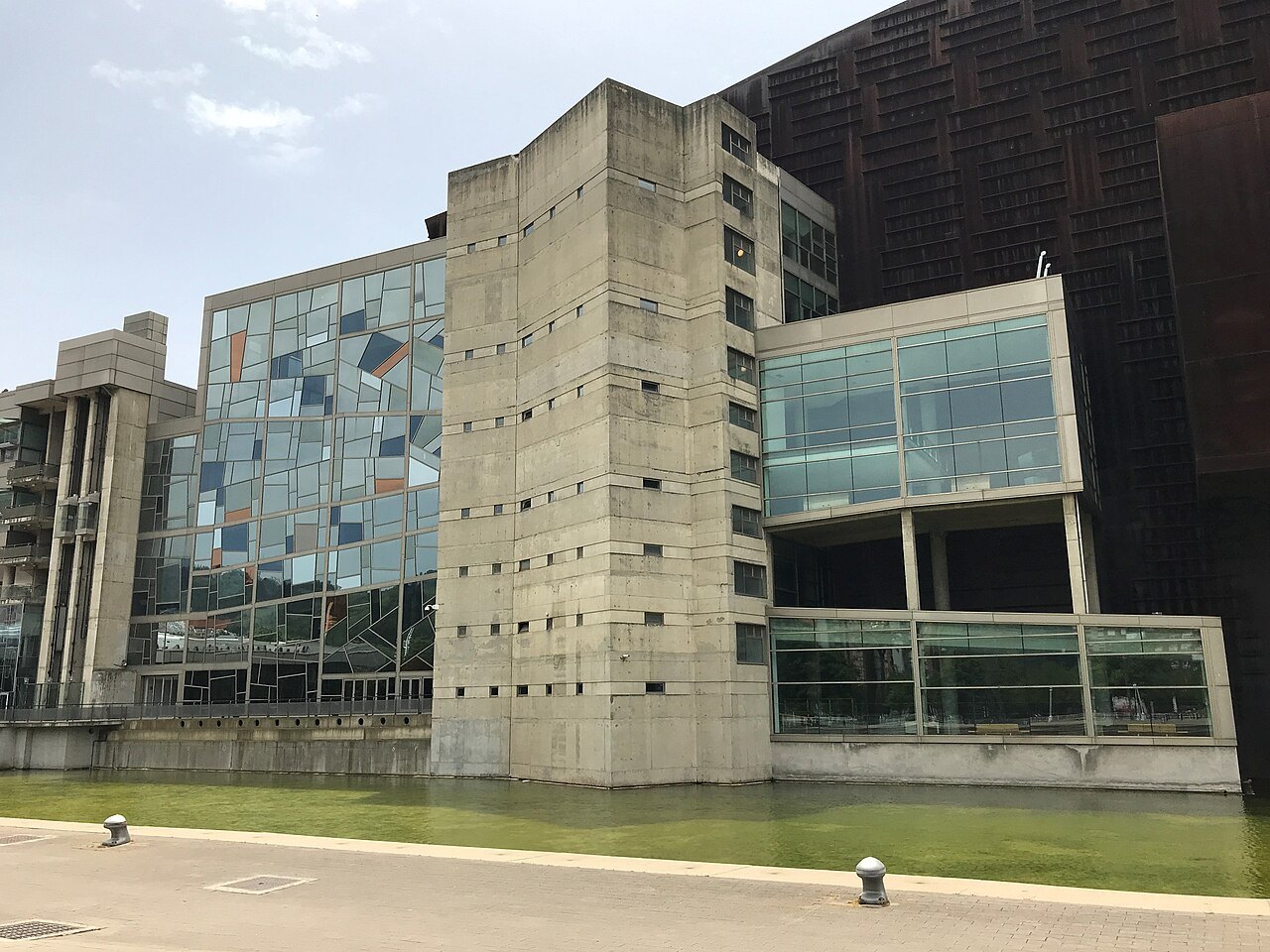 Abandoibarra · left bankThe EuskaldunaThe concert hall and conference center of 1999, built on the site of the Euskalduna shipyards.
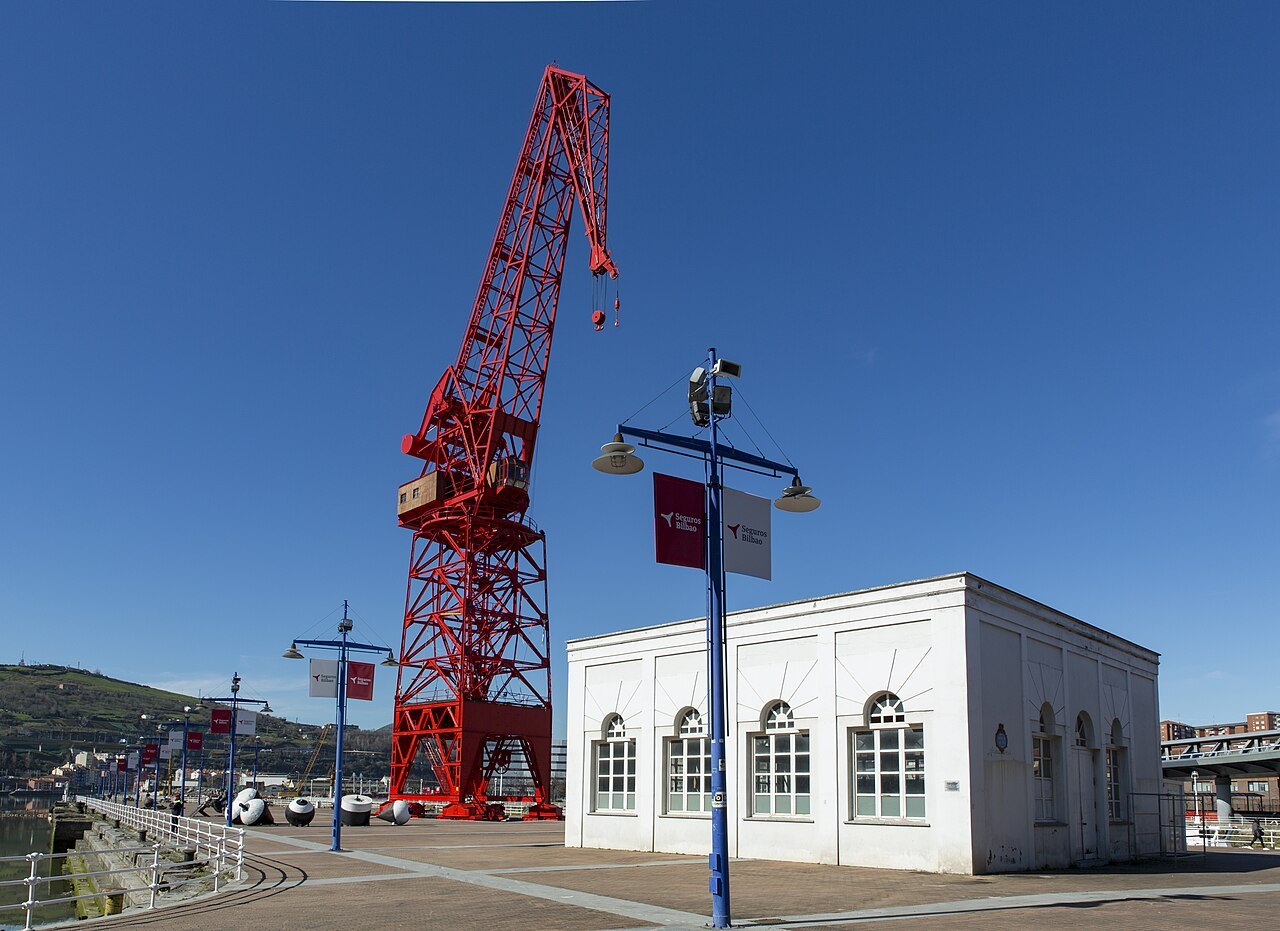 Indautxu · left bankThe ItsasmuseumThe maritime museum on the old Euskalduna shipyard, opened in 2003, with the dry docks and the Carola crane.
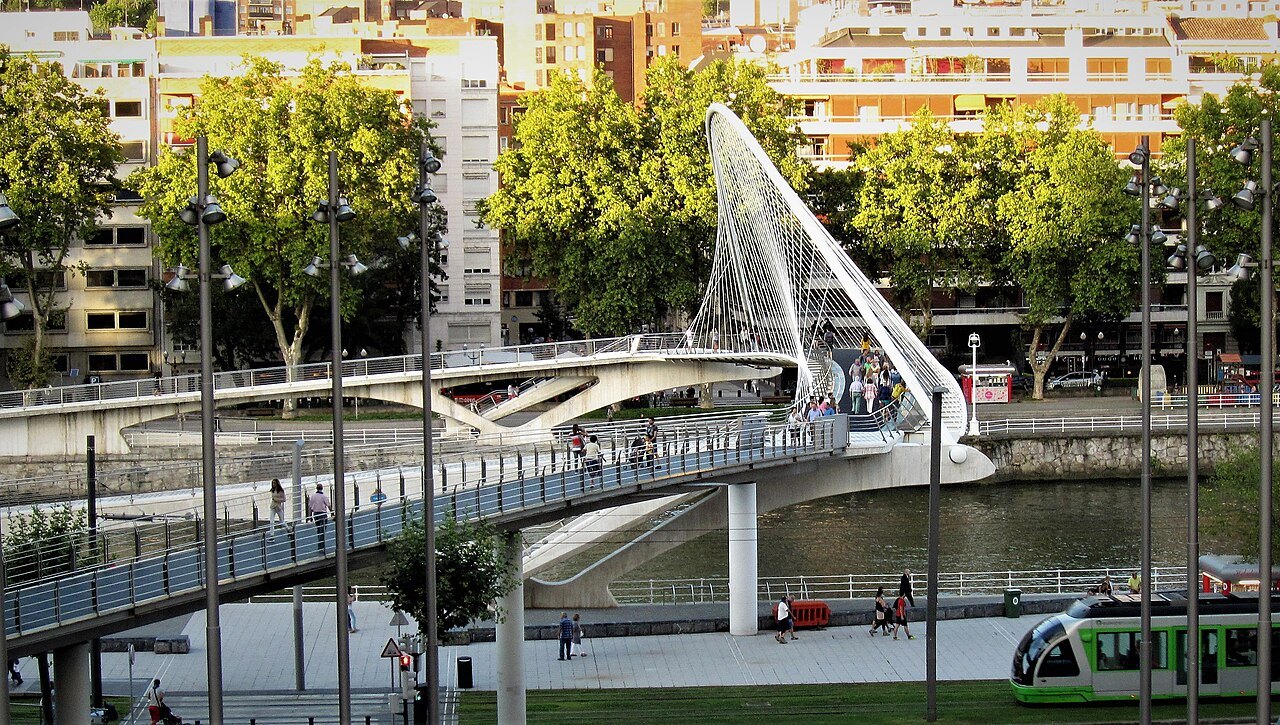 Campo Volantín · UribitarteZubizuriSantiago Calatrava's white footbridge of 1997, a curved deck of glass bricks hung from a tilted arch.
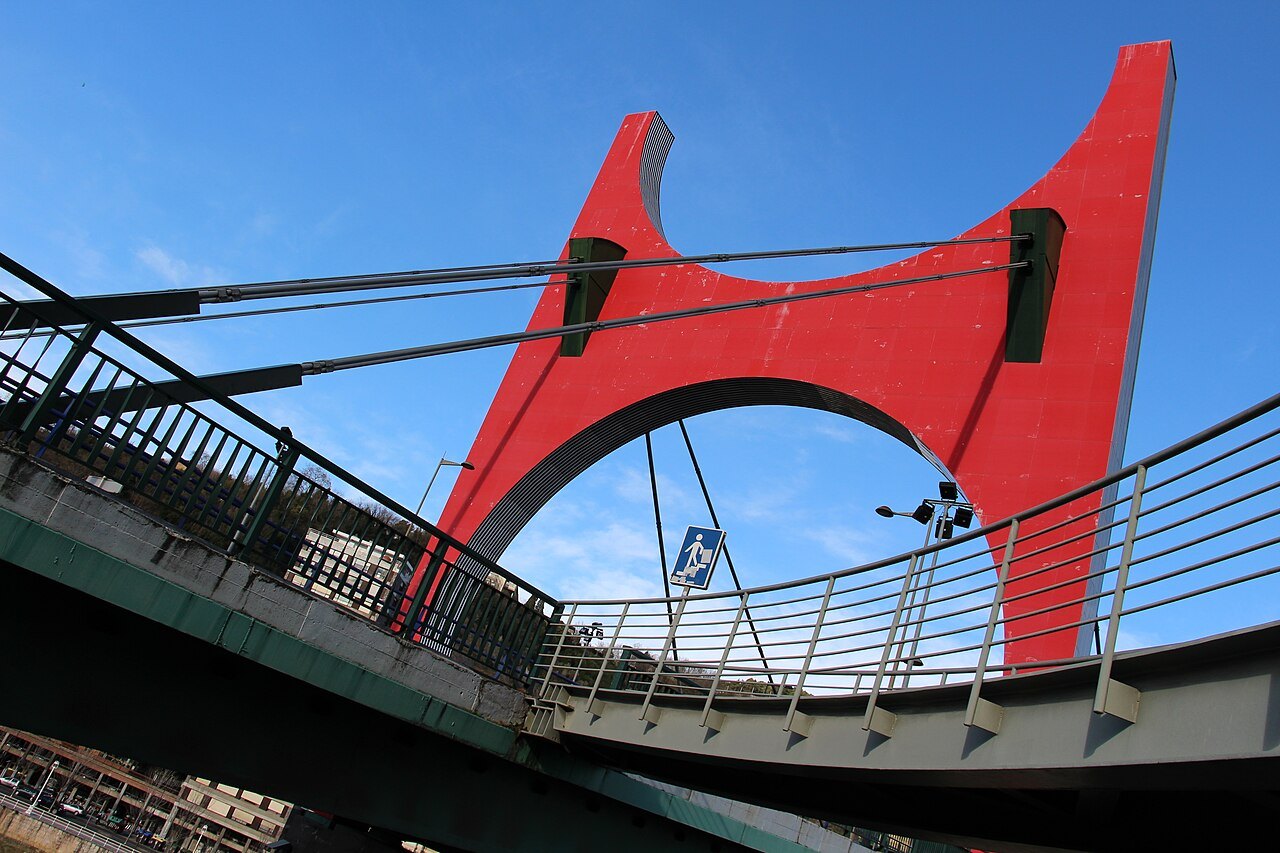 Abando · Campo VolantínLa Salve BridgeThe bridge where sailors coming upriver first saw the Virgin of Begoña and sang the Salve; opened in 1972.
The Ensanche and the park
The nineteenth-century grid of Abando and Indautxu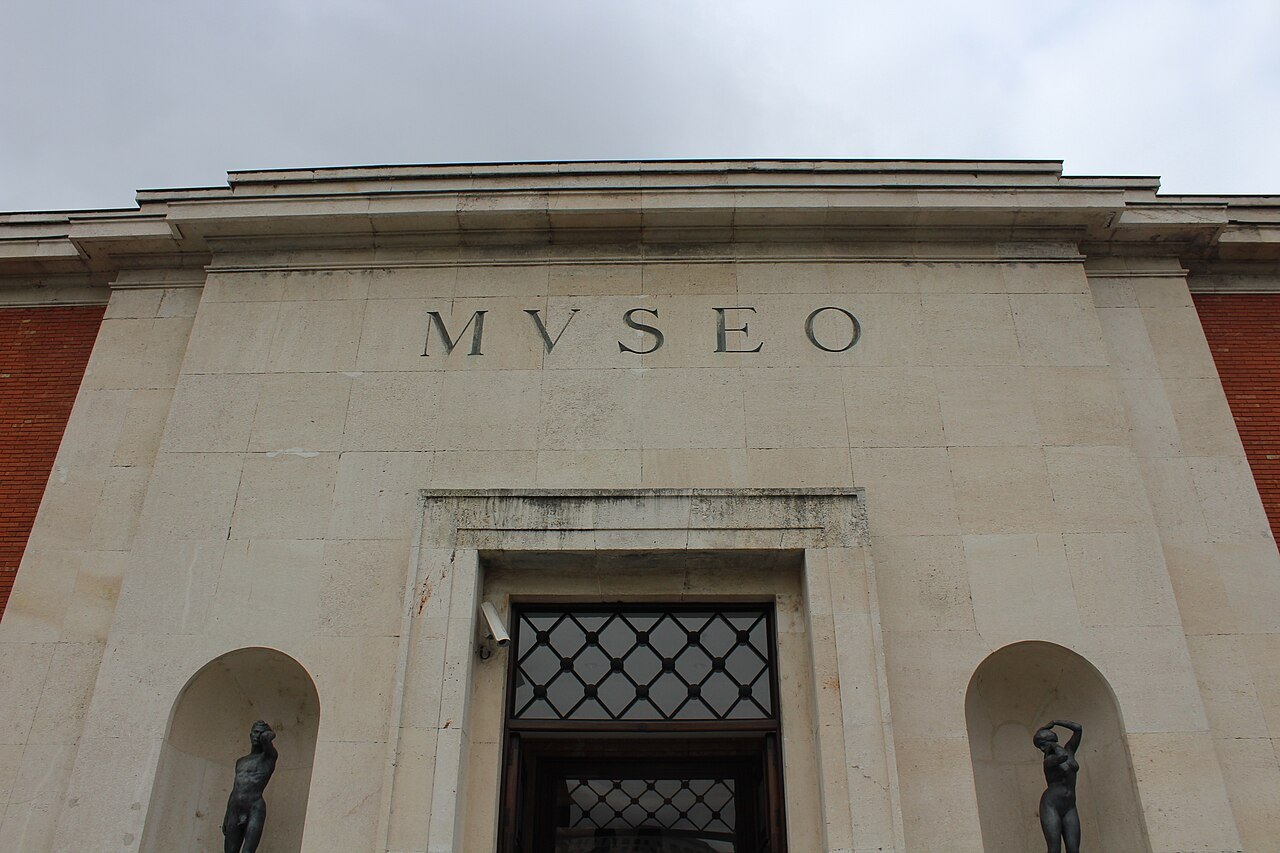 Doña Casilda Park · left bankThe Fine Arts MuseumThe second largest museum in the Basque Country, inside Doña Casilda Park: old masters to Basque modern art.
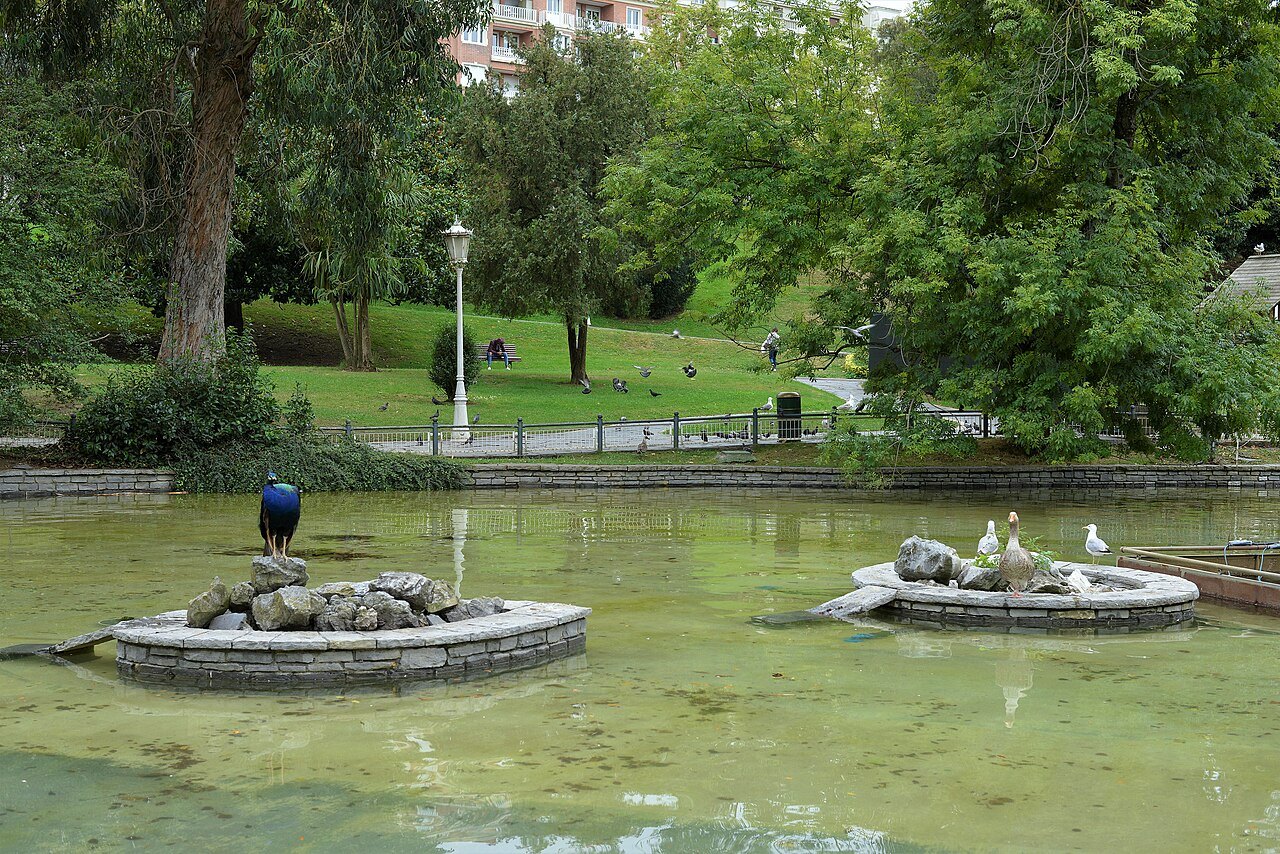 Indautxu · left bankDoña Casilda ParkAn English-style park given by Casilda Iturrizar, known to everyone as the Duck Park for its pond.
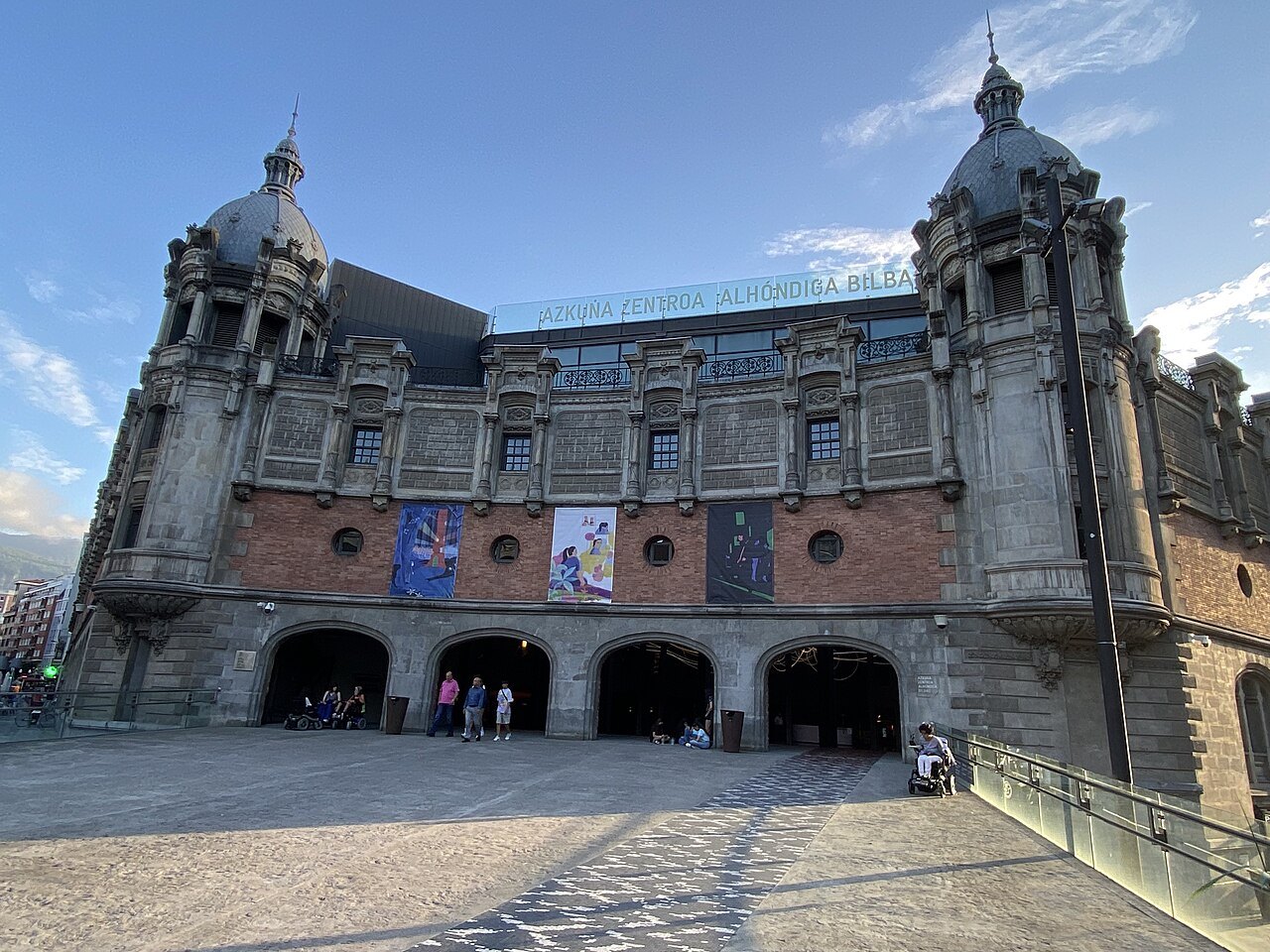 The Ensanche · left bankAzkuna ZentroaRicardo Bastida's wine warehouse of 1909, reopened in 2010 as a culture center by Philippe Starck.
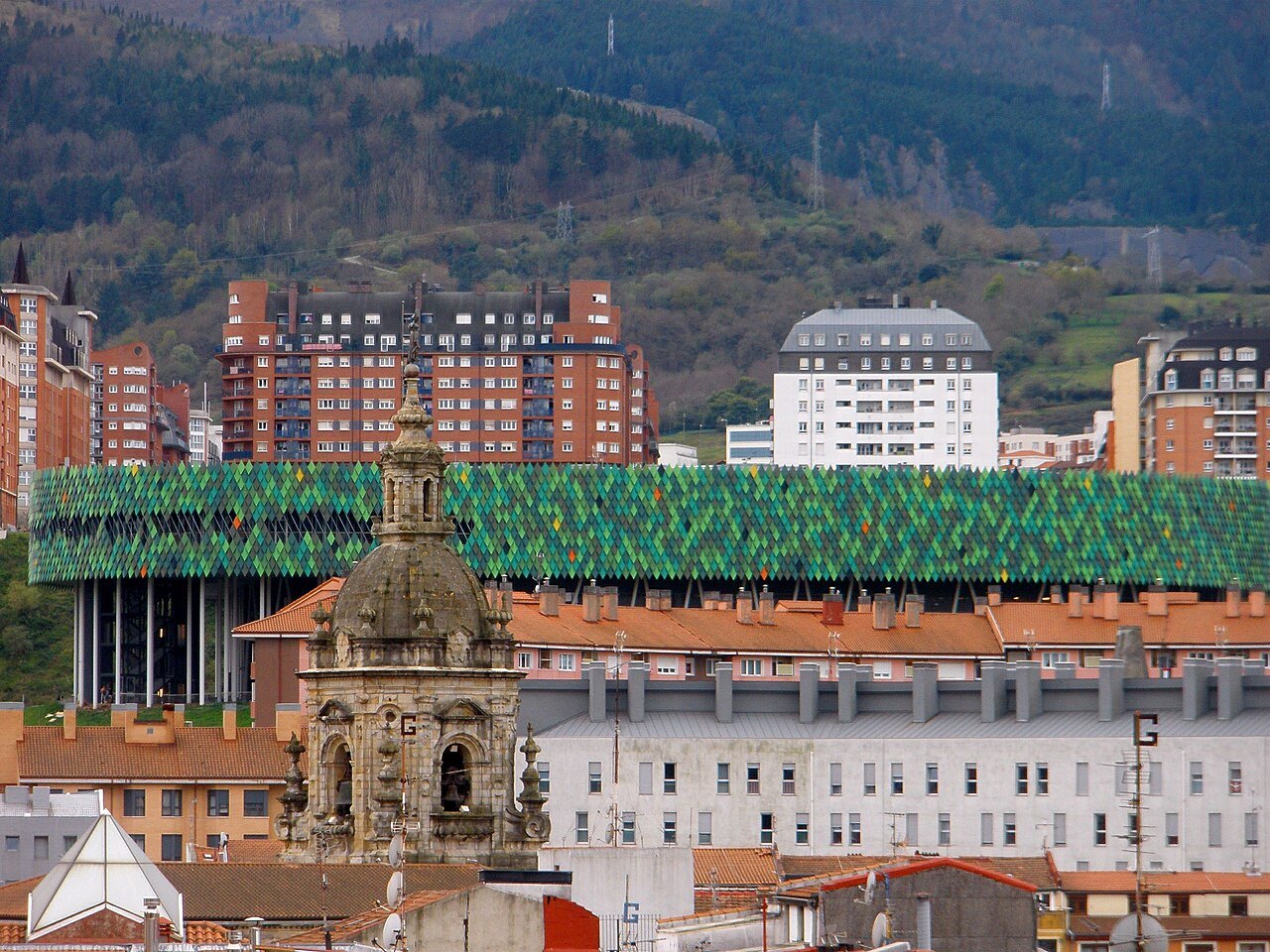
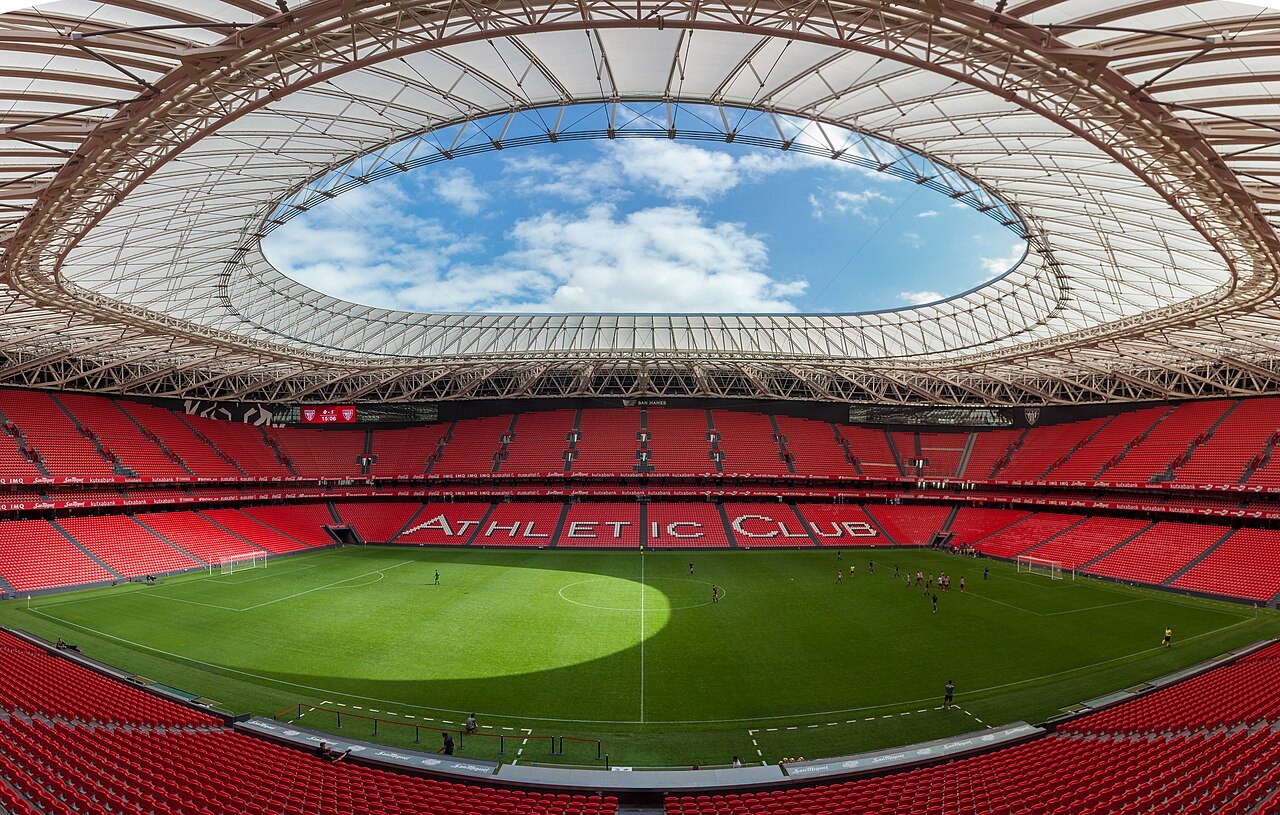 San Mamés · left bankSan MamésAthletic Club's stadium, inaugurated on 16 September 2013: 53,331 seats, the largest in the Basque Country.
Above the city, down to the sea
The hill on the right bank, then the river's last miles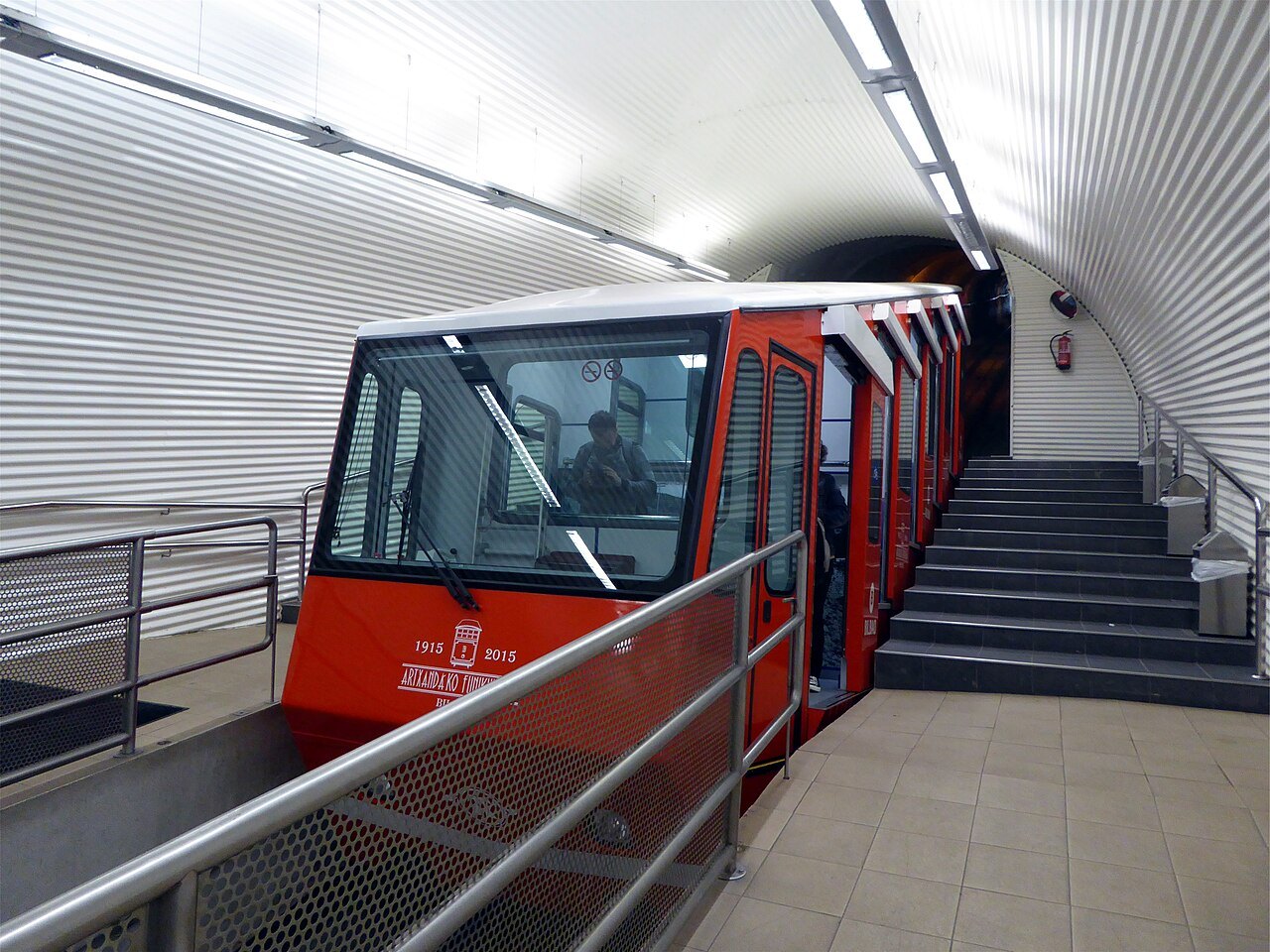 Above the right bankArtxanda and Its FunicularThe hill above the right bank, reached since 1915 by a funicular, with the whole city laid out below it.
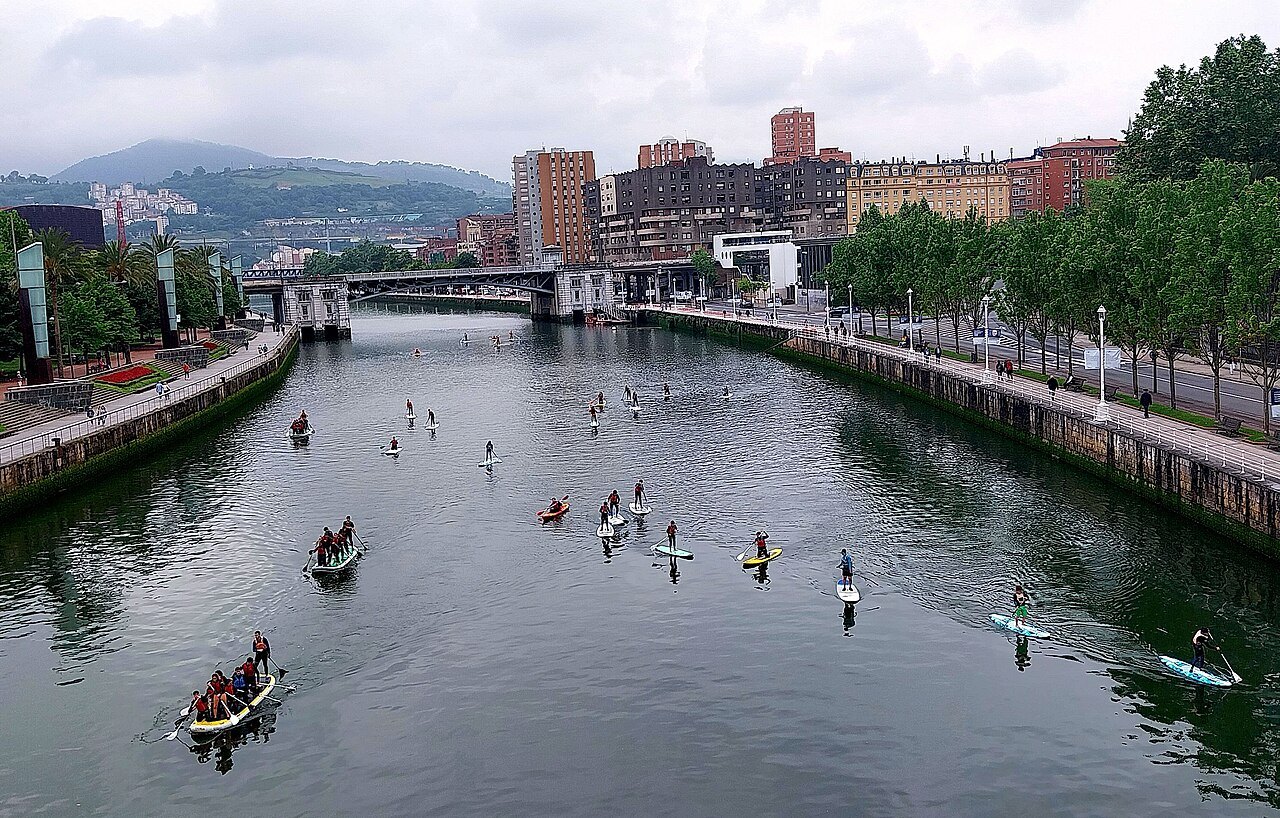 From the Casco Viejo to the AbraThe RíaThe tidal river at the common mouth of the Nervión, Ibaizabal and Cadagua, reaching about ten miles inland.
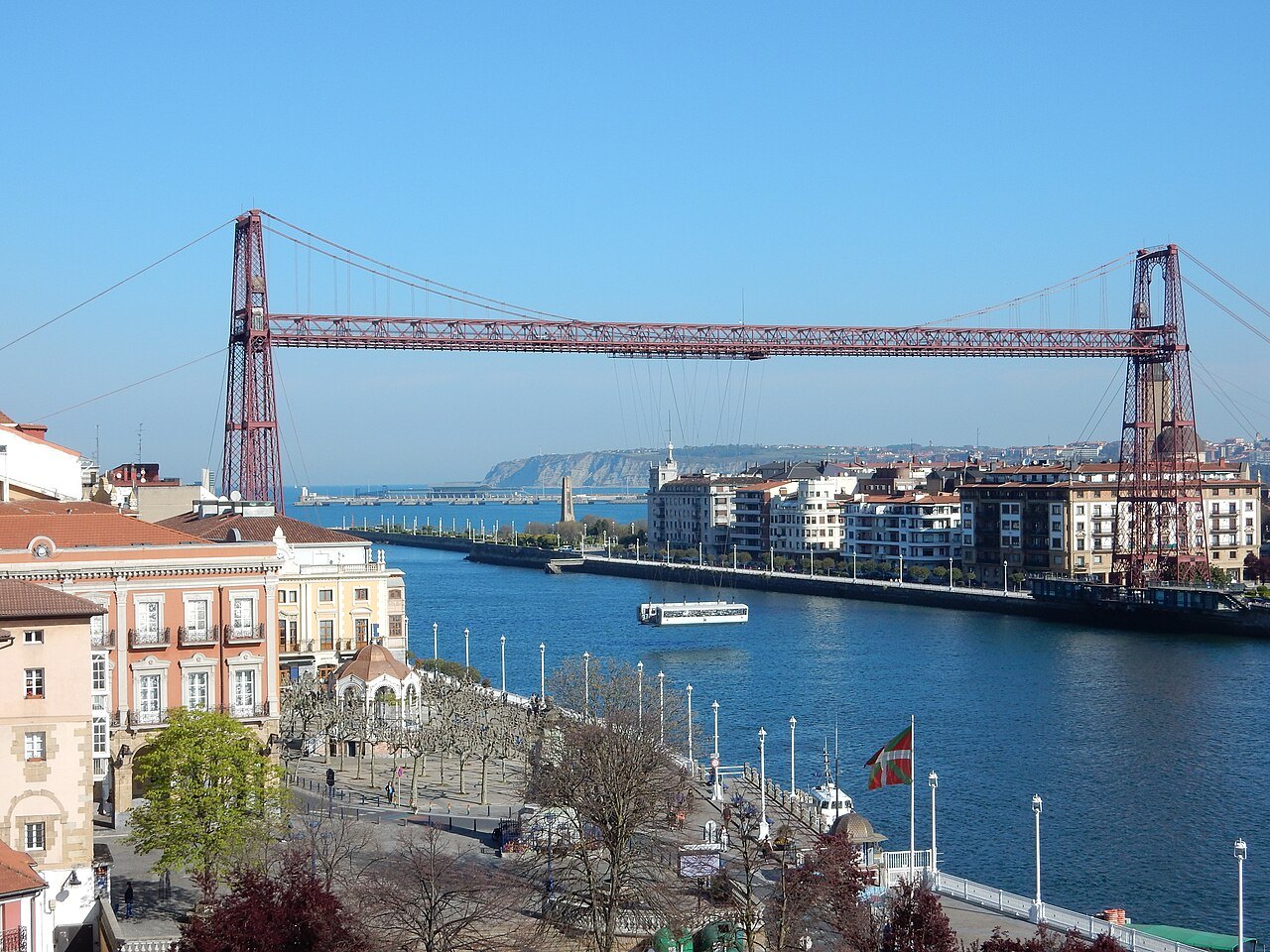 Portugalete · GetxoThe Bizkaia BridgeThe world's oldest transporter bridge, built in 1893 across the mouth of the river between Portugalete and Las Arenas.
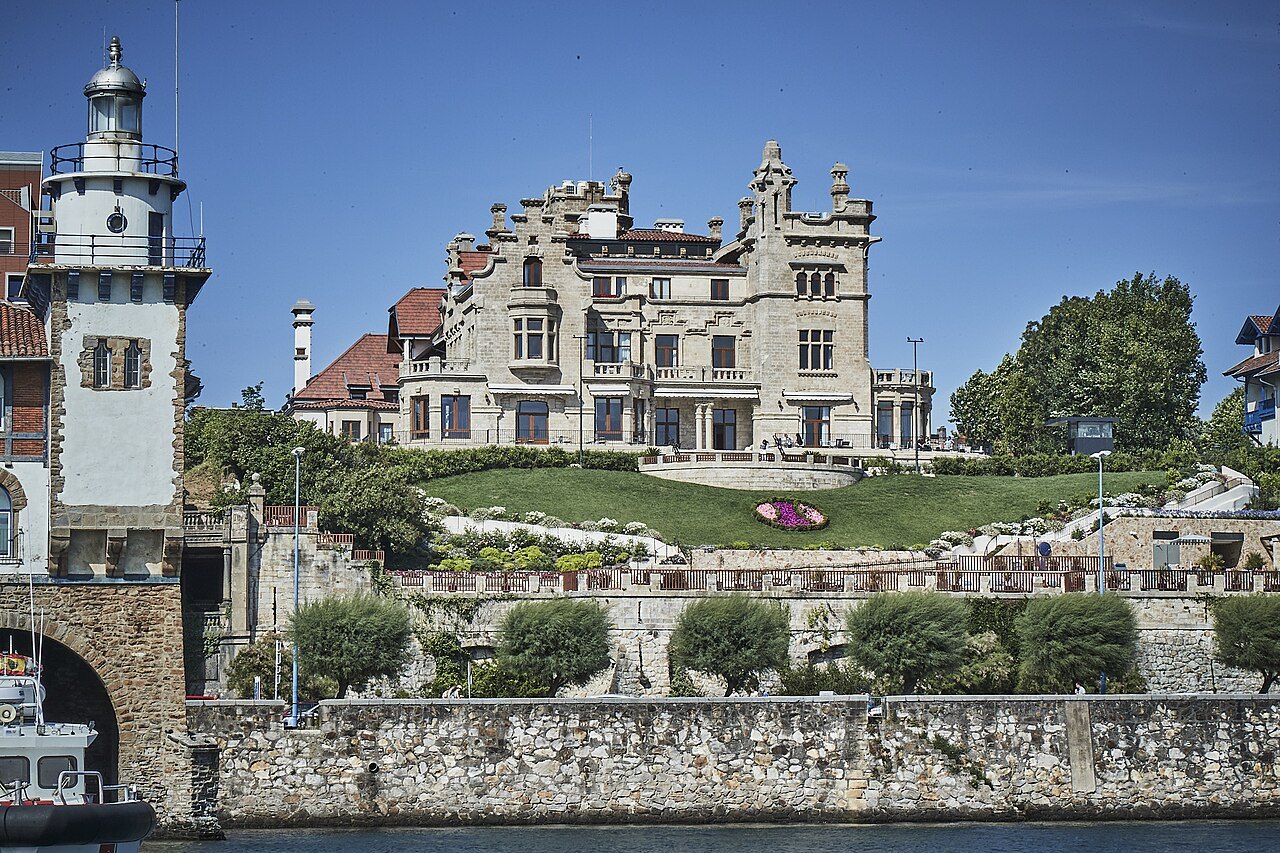 Getxo · right bankGetxoThe town at the mouth of the Ría: Algorta's old fishing port, the mansions of Neguri and the beaches.
The Sights
In full
How the sights are grouped
Bilbao grew along its river, and its sights follow it. The groups on this page run roughly in the order you would meet them walking downstream: first the old town on the right bank, then the rebuilt riverfront on the left bank, then the planned city behind it, and finally the hill above the city and the last miles of the river to the sea.
Most of the city's sights are within walking distance of one another, and the tram along the river links the old town to the museum and the stadium. The four places in the last group need a funicular ride or a Metro trip, but each makes an easy half day. The map on the home page shows where each sight stands.
Every sight page follows the same pattern: why the place matters, its history told from published sources, what you actually see when you stand there, and how to fit it into a visit, with honest notes where a place may disappoint. The pages are long because the places deserve it; skim the opening and the section on what you see if you are short of time, and come back for the history later.
The Seven Streets
Bilbao began on the right bank, where a bridge crossed the river and the town was founded in 1300. The Casco Viejo, or Zazpikaleak, the Seven Streets, is still its heart: narrow parallel streets of tall houses, shops and pintxo bars. At its center stands the Gothic Cathedral of Santiago, a cathedral only since 1949, with its cloister and a doorway for pilgrims on the Northern Way to Santiago.
The arcaded Plaza Nueva, finished in 1851, is the old town's great square and its busiest place for pintxos, with the Basque language academy on one side. On the river, the Mercado de la Ribera of 1929 is one of the largest covered markets in Europe, and at the edge of the old town the Teatro Arriaga, opened in 1890 and rebuilt after a fire and the 1983 flood, faces the Arenal. Above it all, up long flights of steps, the Basilica of Begoña holds the image of the patroness of Biscay.
Where the shipyards stood
Across the river and downstream, the left bank was the city's industrial edge, and it has been rebuilt since the 1990s into the district that made Bilbao famous. The Guggenheim, Frank Gehry's titanium-clad museum, opened on 18 October 1997 on old port land; its curves, its sculptures Puppy and Maman and its collection of modern and contemporary art are the main reason many visitors come.
Beyond it, Abandoibarra is a riverside district of gardens, promenades and new buildings around César Pelli's Iberdrola Tower, the tallest in the Basque Country. At its downstream end the Euskalduna, the concert hall and conference center of 1999, stands on the site of the shipyard whose name it took, its river front clad in rusted steel; next door, the Itsasmuseum keeps the yard's dry docks and its red Carola crane.
Two bridges belong to this group. Santiago Calatrava's Zubizuri, the white footbridge of 1997 with its glass deck, curves across from the right bank, and the La Salve bridge of 1972 passes beside the Guggenheim, wrapped by the museum and crowned by Daniel Buren's red arch.
The Ensanche and the park
Behind the riverfront lies the Ensanche, the nineteenth-century grid laid out on the land of Abando, with the Gran Vía and the Plaza Elíptica at its center. Here the Fine Arts Museum, founded in 1908, holds art from the Middle Ages to the present, from Goya to the Basque painters, and has a new extension designed with Norman Foster.
It stands inside Doña Casilda Park, the English-style garden people call the Duck Park, on land given by the philanthropist Casilda Iturrizar. A short walk away, Azkuna Zentroa, Ricardo Bastida's wine warehouse of 1909 redesigned by Philippe Starck, is a cultural center with a forest of columns and a swimming pool with a glass floor. At the western edge of the Ensanche, San Mamés, the stadium of Athletic Club opened in 2013, glows over the river at night.
Above the city, down to the sea
The last group leaves the center. Artxanda, the hill on the right bank, is reached by a funicular of 1915 and gives the best view of the whole valley, from the old town to Zorrotzaurre. The Ría itself, the estuary of the Nervión, the Ibaizabal and the Cadagua, is the thread through all of these places and leads on to the sea.
At its mouth the Bizkaia Bridge, built by Alberto de Palacio and opened in 1893, the world's first transporter bridge and a UNESCO World Heritage Site, still carries a hanging gondola between Portugalete and Las Arenas. Across the bridge, Getxo offers the old fishing port of Algorta, the mansions of Neguri and the beaches of the Abra, all a Metro ride from the center.
Where to start
If you have one day, walk the river: start in the Casco Viejo and the market, cross to the Arenal and the Teatro Arriaga, follow the riverside walk past Zubizuri to the Guggenheim, and continue through Abandoibarra to Doña Casilda Park and the Fine Arts Museum. If you have two or three days, add Artxanda, the Euskalduna and the Itsasmuseum, San Mamés and Begoña, and give a morning to the trip down the Ría to the Bizkaia Bridge and Getxo.
The itineraries page sets out routes by length of stay, built around the museums' closing days, and the transformation page explains how so many of these places came to be built in a single generation.
Before you go
The sight pages give no opening hours or prices, because they change; check each place's own website before you visit. The Guggenheim and the other museums close on some days, and the Guggenheim is worth booking for busy dates, as the booking ahead page explains. Many of the best things in Bilbao, the old town, the river walks, the bridges and the parks, need no ticket at all.