Home · Sights · The Euskalduna
The Euskalduna
What you are looking at
Abandoibarra · left bank
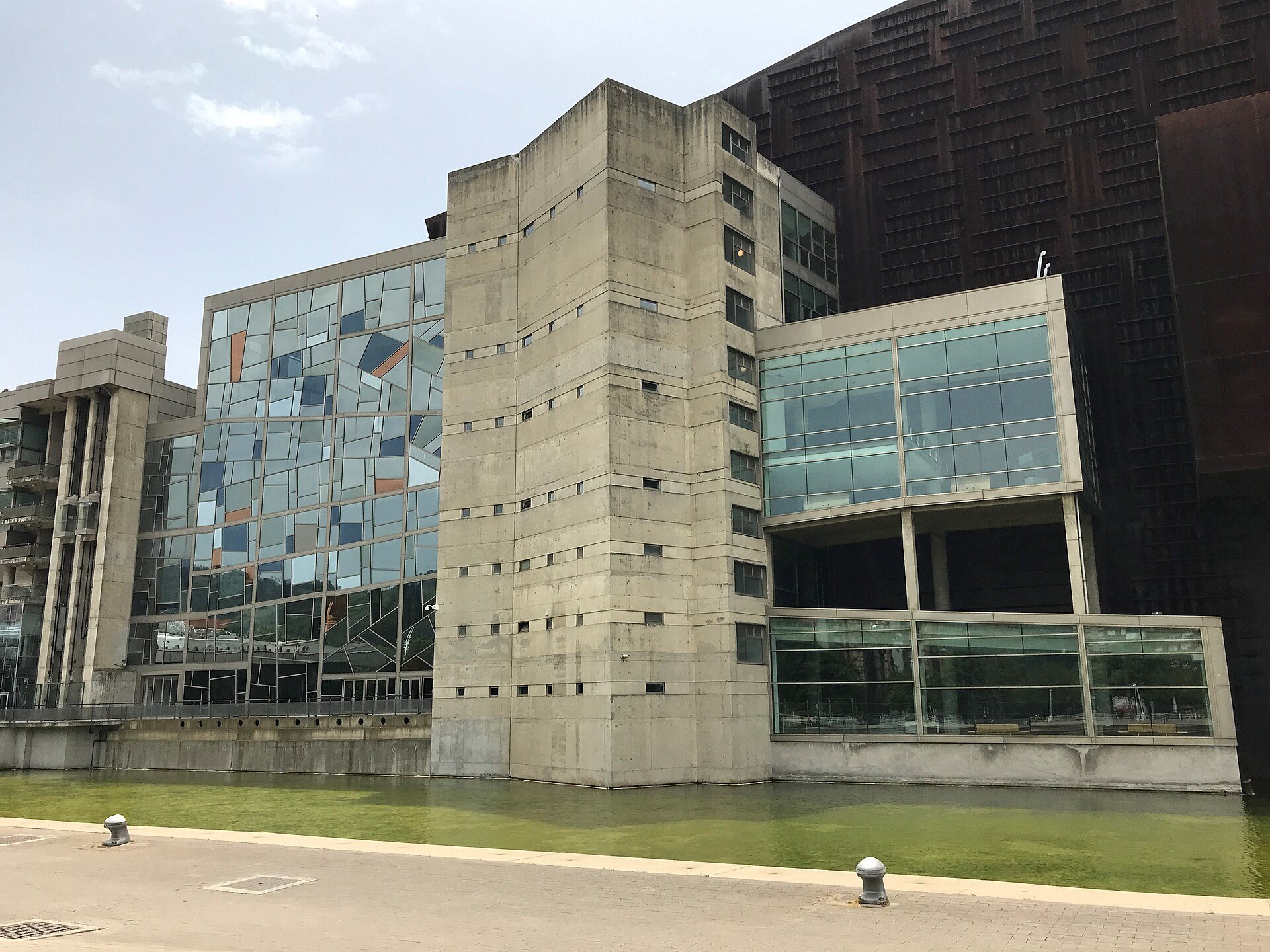
- 1The rusted frontOxidized metal plates covering the river front, a homage to the city's shipbuilding and steel.
- 2The main hallAn auditorium of 2,164 seats for opera, ballet, concerts and theater.
- 3The great stageA stage of about 1,770 square meters, said to be the largest of any theater in Europe.
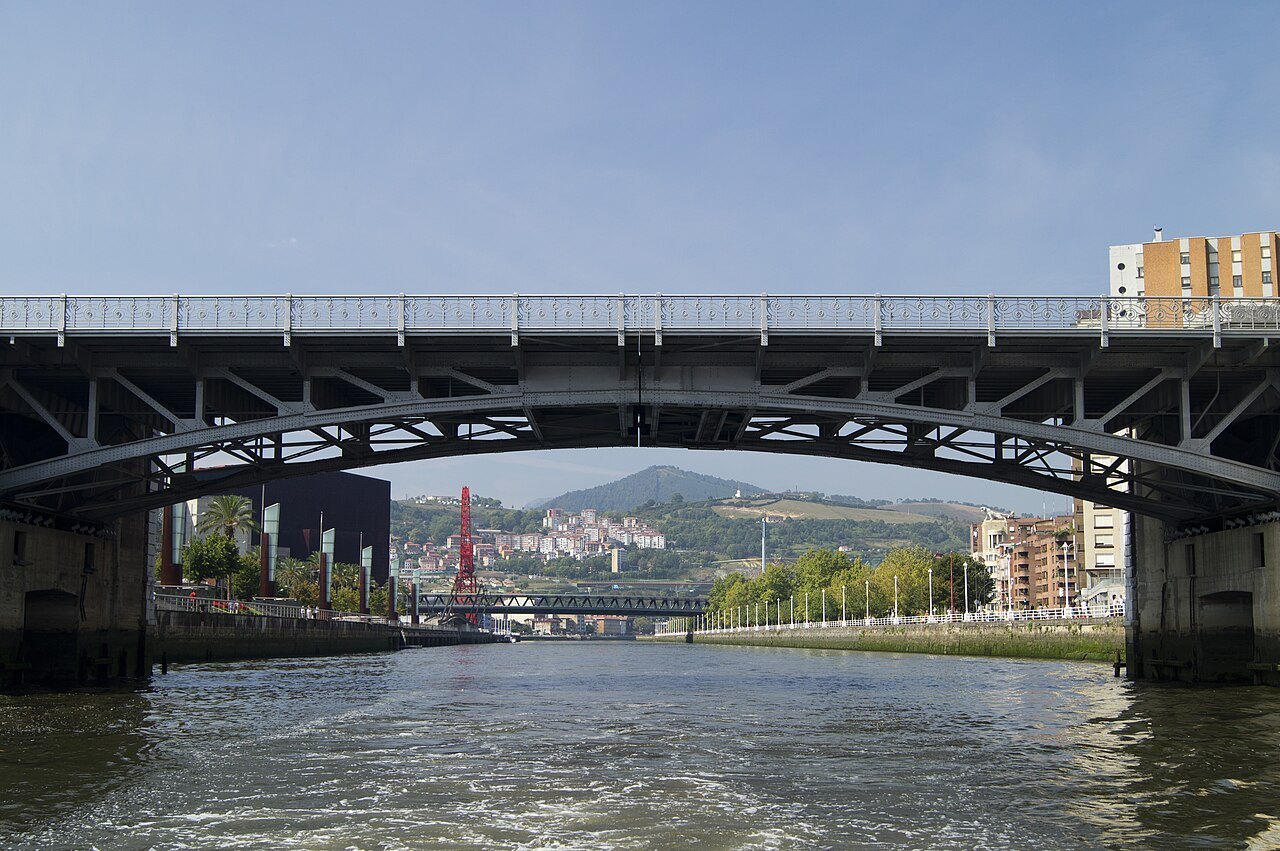
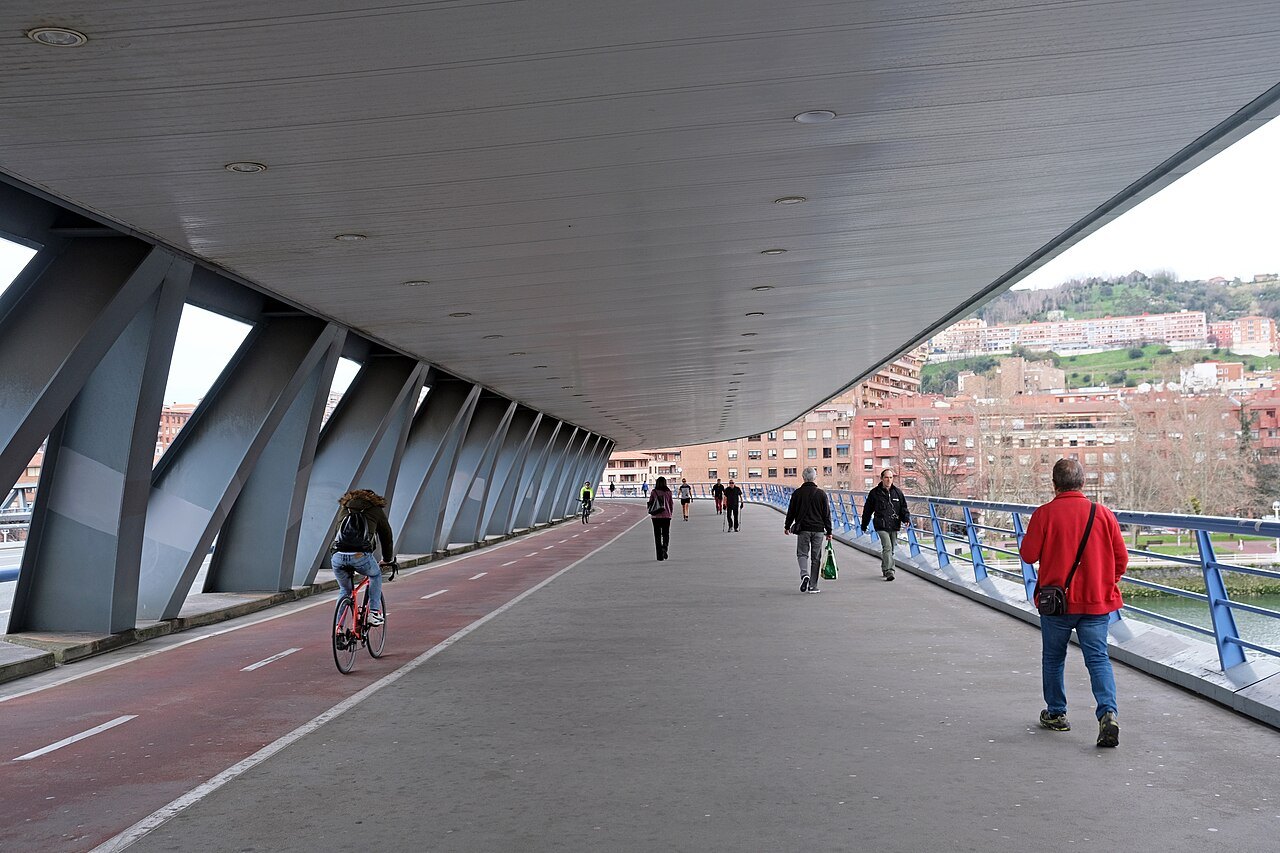
- 4The Euskalduna bridgeJavier Manterola's road bridge of 1997 over the old shipyard, with a lighting tower.
- 5The dry docksThe shipyard's old docks and its Carola crane, kept beside the maritime museum next door.
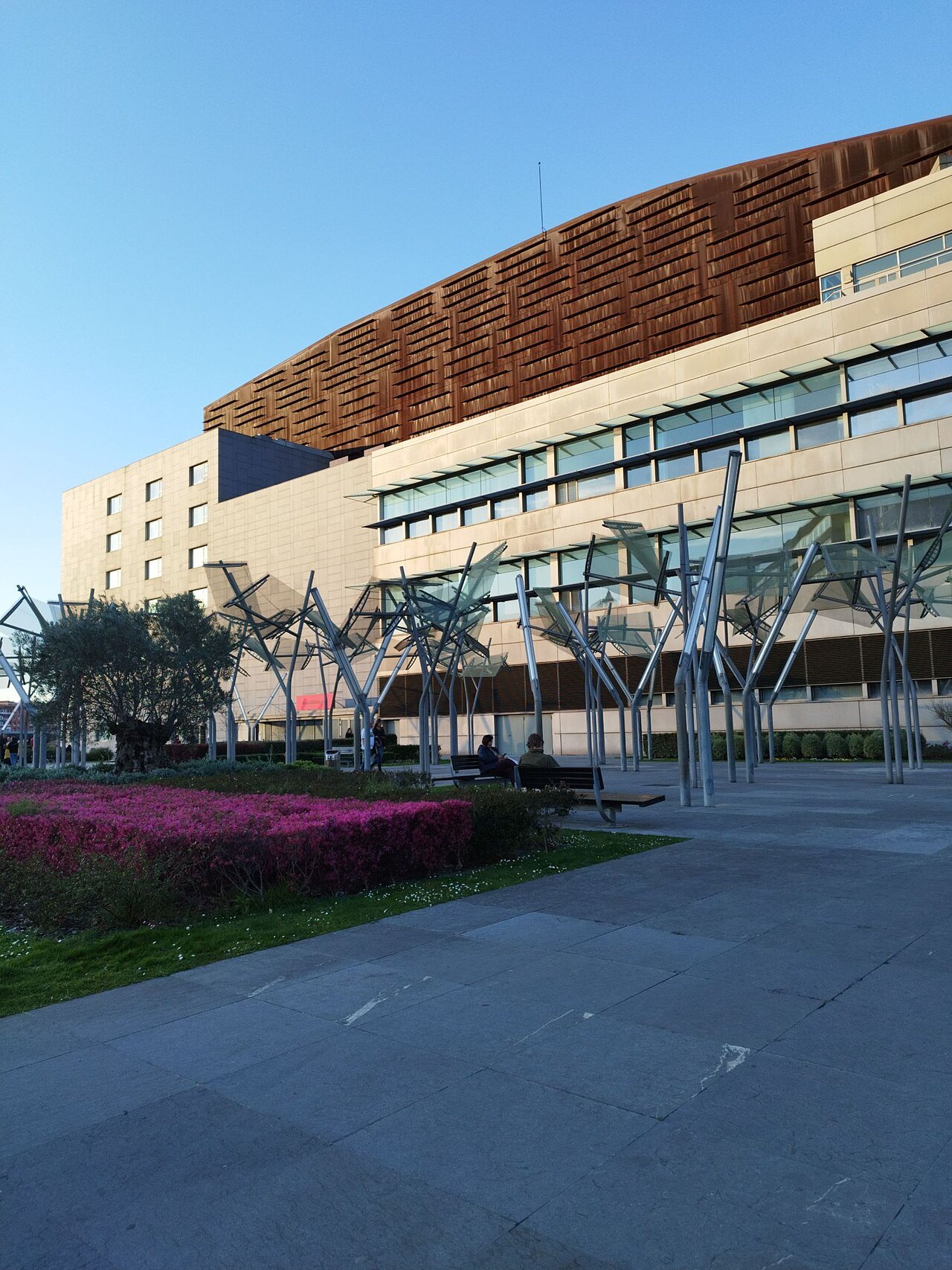
- 6The lamp treesStreet lamps shaped and grouped like trees, standing near the building.
Reading the place
The sight in full
Why it matters
The Euskalduna, officially the Palacio de Congresos y de la Música Euskalduna Jauregia, is Bilbao's concert hall, opera house and conference center. It opened on 19 February 1999 at the downstream end of Abandoibarra, on part of the land once occupied by the Euskalduna shipyards, whose name it took. It is the home of the Bilbao Symphony Orchestra, founded in 1920, and of the city's main opera season, organized by ABAO.
It is the counterpart of the Guggenheim at the other end of the riverside walk: two buildings of the late 1990s that replaced the industrial riverbank with culture. Where Gehry's museum is all bright curves, the Euskalduna is a dark, angular block whose rusted skin deliberately recalls what used to stand here.
The shipyard
In 1900 Eduardo Aznar, Marquis of Bérriz, and his cousin Ramón de la Sota founded the Compañía Euskalduna de Construcción y Reparación de Buques on the left bank of the Ría, on some 90,000 square meters very close to the city center. It built large ships above all, but also railway equipment, and early in the century it had three dry docks for building and repairing ships. Its pump house of 1903, with reinforced concrete beams, was a pioneering building of its kind.
The First World War made it boom; between the wars it diversified into all kinds of metal construction; after the Civil War shortages held it back until state support for shipbuilding revived it from the mid-1950s. In 1969 it merged with two other yards into Astilleros Españoles, AESA, then the largest shipbuilder in Spain and one of the largest in Europe.
The fight over the closure
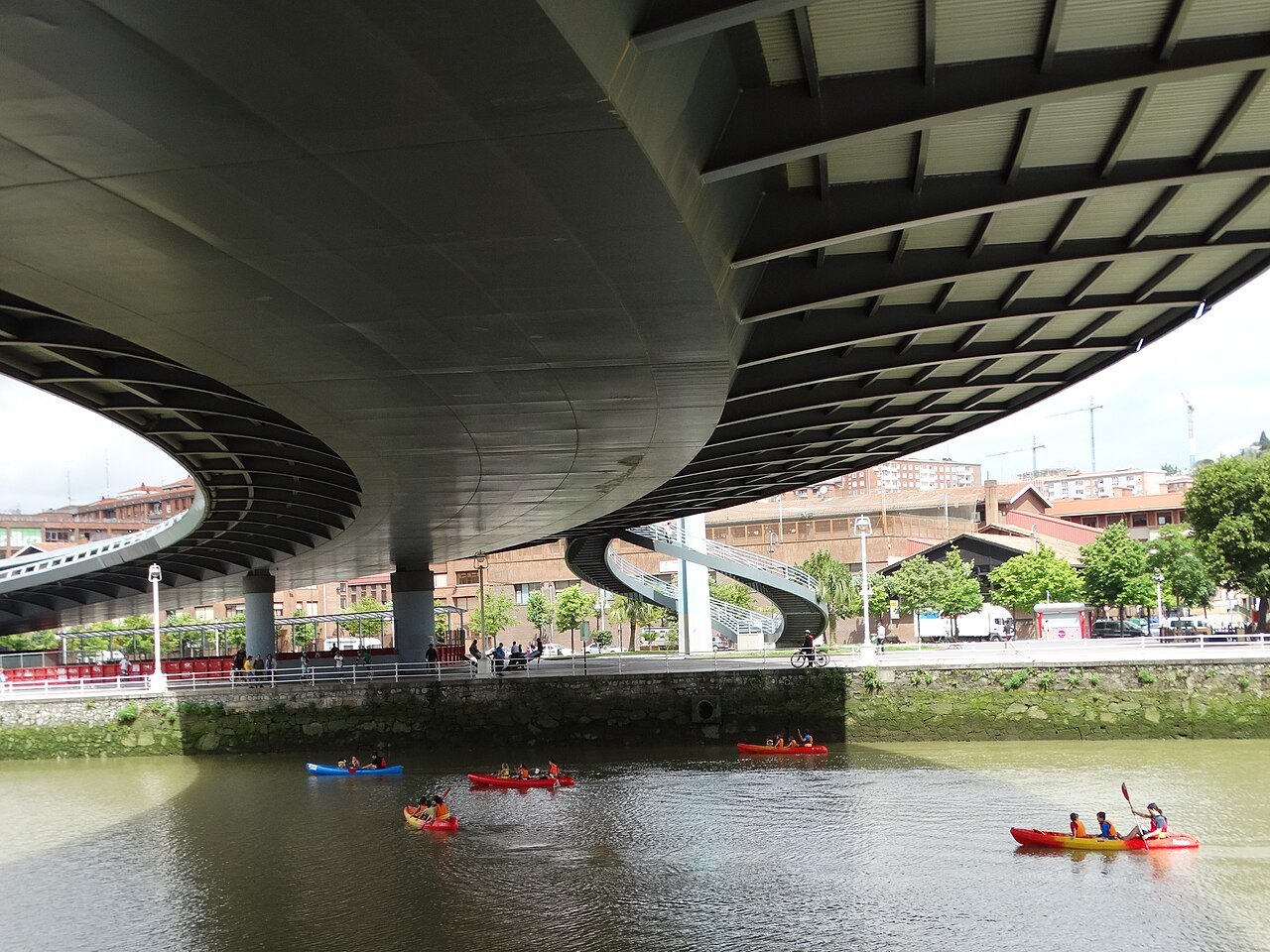
The crisis in shipbuilding hit Euskalduna hard. At the end of October 1983 the decision to close the yard was made public as part of the restructuring of Spanish shipbuilding, demanded too by Spain's entry into the European Community. On 6 November the works committee led a march against the closure, and a long resistance followed: assemblies, occupations of the offices, hunger strikes and repeated clashes with the police in the streets around the yard.
In 1985 the yard was reduced to repairing ships with about 200 workers, a little under a tenth of its former workforce, and the protests went on until June 1988 without saving it. The closure of Euskalduna became one of the defining images of Bilbao's industrial decline, and the concert hall built on its land one of the images of the recovery.
The building
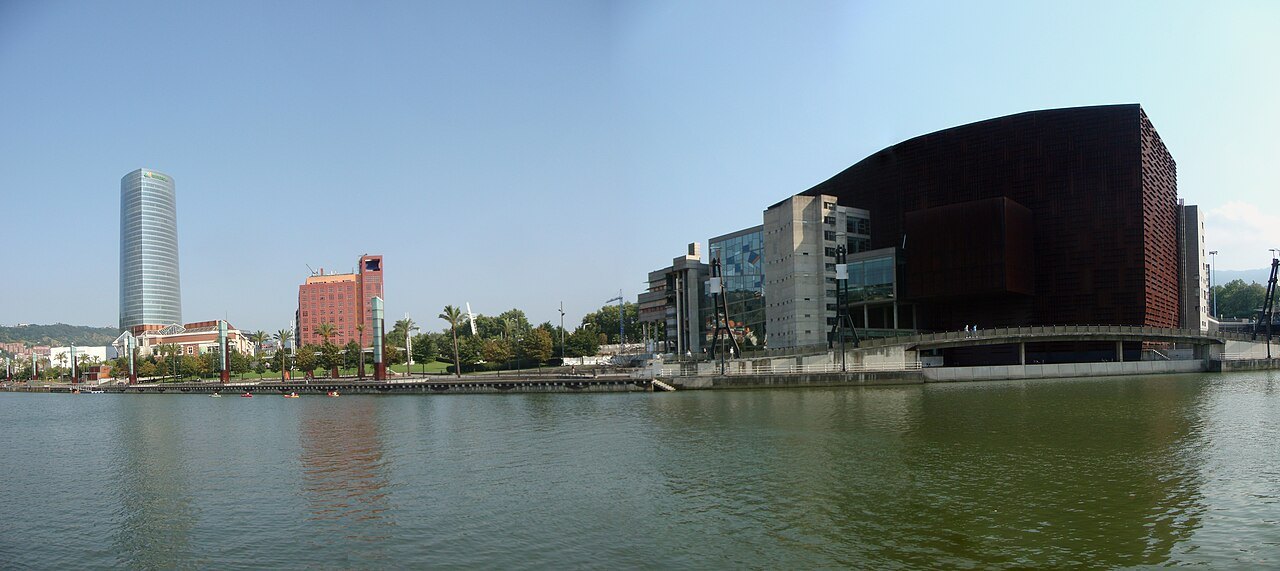
The architects were Federico Soriano and Dolores Palacios. Work began in 1994. The building covers more than 25,000 square meters and rises 53 meters over seven floors, and its front toward the river is covered with oxidized metal plates in homage to the city's old shipbuilding and steel industries.
Inside are a main hall of 2,164 seats for theater, ballet, concerts and opera, three smaller halls, eight rehearsal rooms and seven rooms for conferences and press, with a café, a restaurant and shops. The auditorium's stage, about 1,770 square meters, is said to be the largest of any theater in Europe. In 2003 the International Association of Congress Centers named it the best congress center in the world, and it won the Enric Miralles architecture prize.
The bridge over the yard
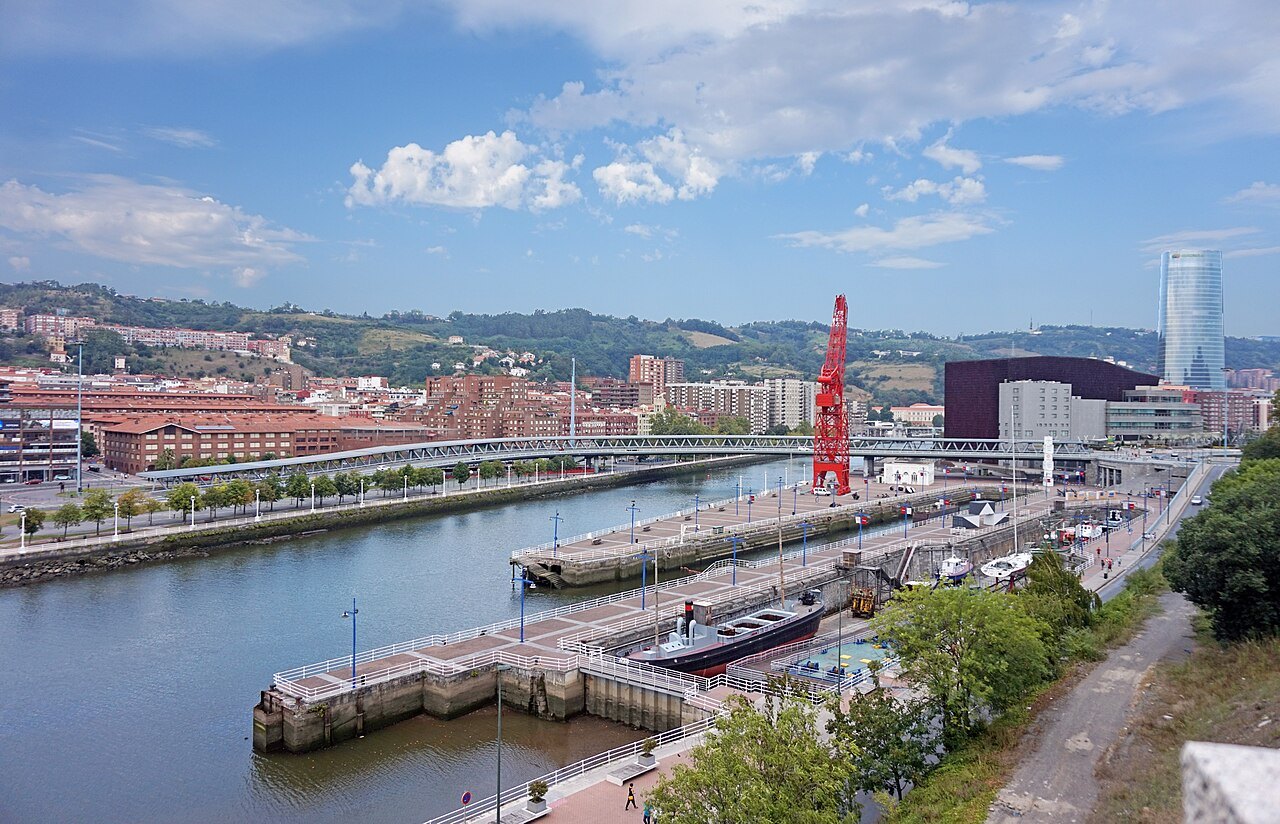
Beside the building, the Euskalduna bridge carries a road across the river and over the site of the old shipyard. Designed by the engineer Javier Manterola and opened on 18 April 1997, it takes much of the traffic off the older Deusto bridge and gives drivers a direct route to the motorway, and a lighting tower about 45 meters high marks it.
It also changed the river: large ships can no longer pass under it, which closed the upper Ría to them and left the opening bridges upstream, at Deusto and the town hall, with no reason to open. The bridge is, in a quiet way, the moment the city's port finally left the center.
What you see
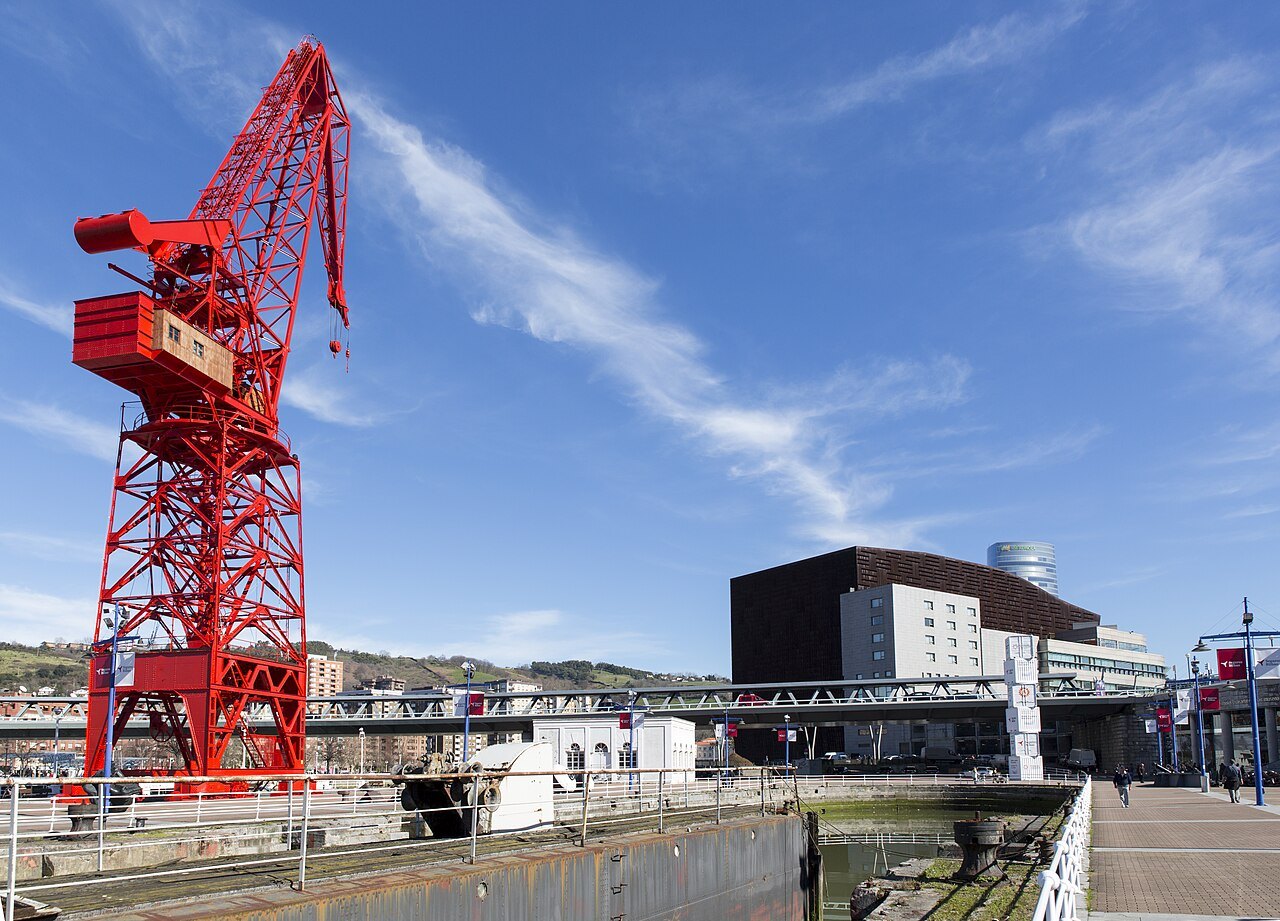
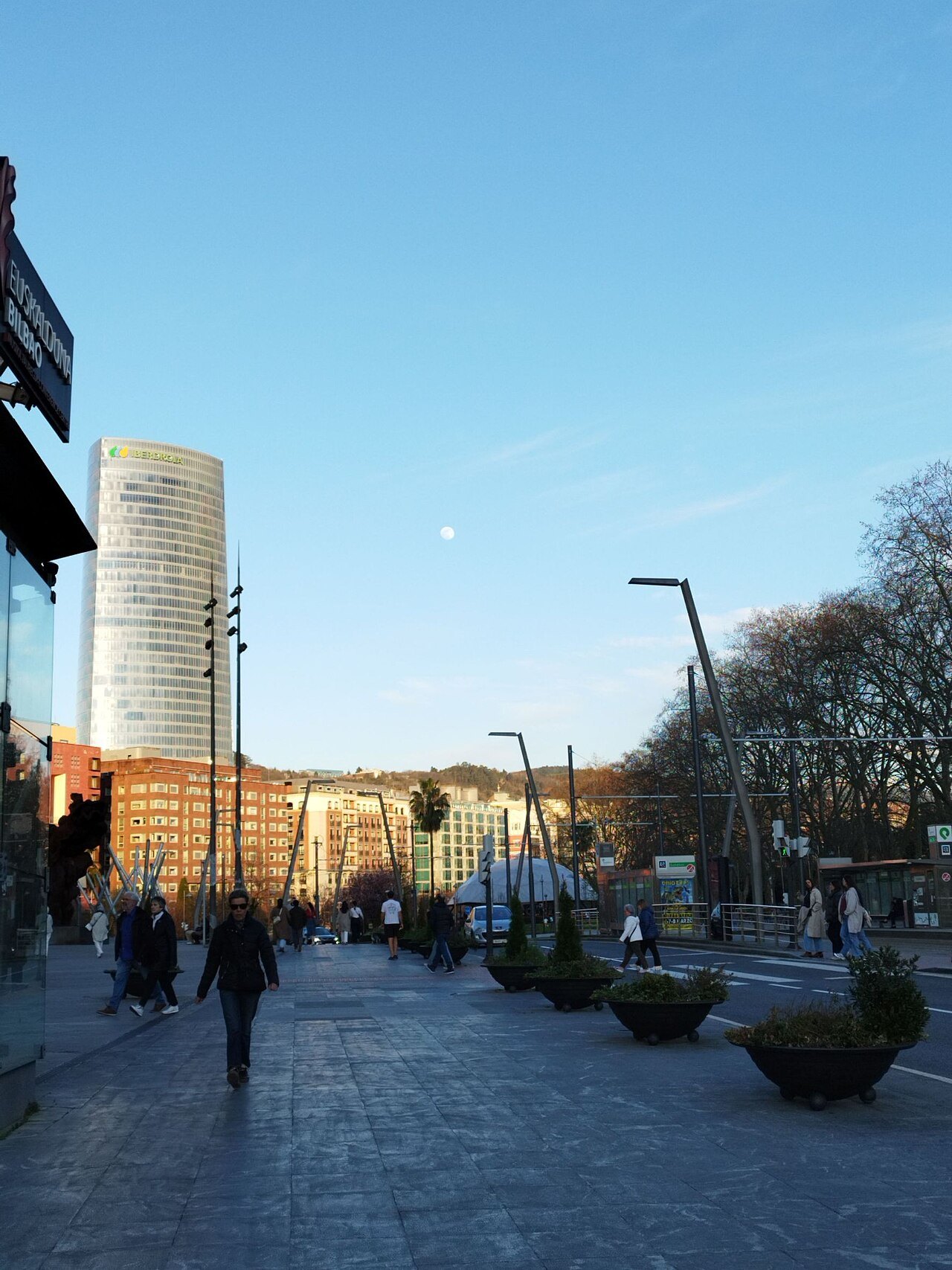
From the riverside walk, the building is a long, dark mass of rusted plates and glass at the water's edge, as heavy and industrial as the yard it replaced. Walk round it to the city side, where its entrance faces the end of the Abandoibarra avenue and the tram stop named after it.
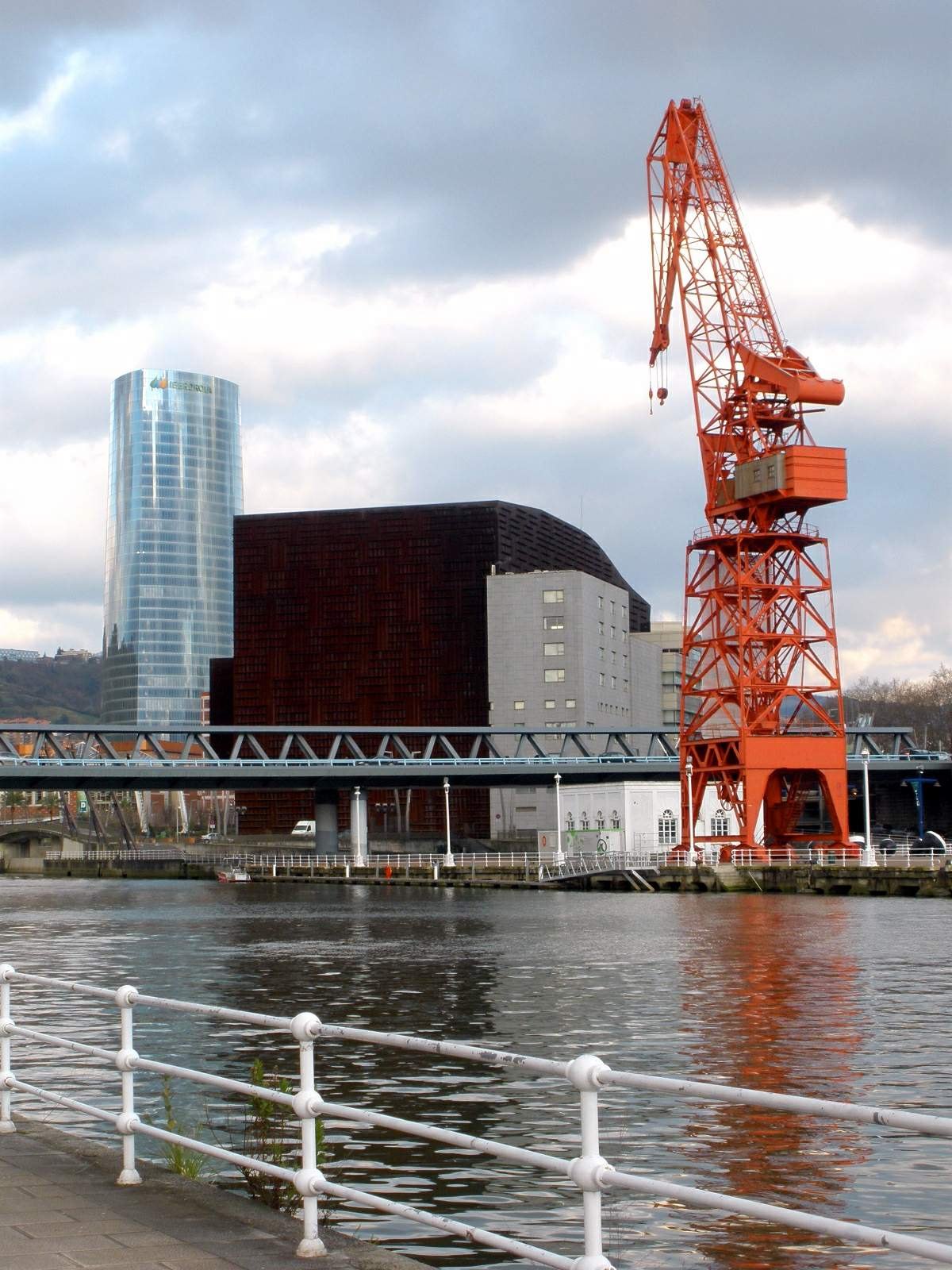
Next door, on the rest of the old shipyard, the Itsasmuseum keeps the yard's dry docks, its pump house and its red Carola crane, the last physical traces of Euskalduna. After the closure the crane stood unused and was vandalized until the city bought it and gave it, with the docks and the pump house, to the provincial government for the museum. Seen together, the crane, the docks and the concert hall tell the whole story of this stretch of river in a few hundred yards.
How to visit
To see the inside, go to a concert, an opera or a show; the program and tickets are on the Euskalduna's own site and ABAO's for the opera season. The booking ahead page explains which performances sell out early.
The Euskalduna tram stop is at the entrance, and the San Mamés Metro and commuter-train station is a short walk away. From the Guggenheim it is about fifteen minutes on foot along the river, and Doña Casilda Park is beside it, so the walk from one end of Abandoibarra to the other makes an easy half day.
Nearby
Where to go next
- Nearby · Indautxu · left bankThe ItsasmuseumBilbao's maritime museum, opened in 2003 on the land of the Euskalduna shipyard: galleries about the Ría and its port inside, and outside the yard's dry docks, its pump house and the red Carola crane, once the most powerful in Spain.Read the page →
- Nearby · Abando · left bankAbandoibarraThe riverside strip of shipyards and railway yards below the Ensanche, rebuilt since the 1990s into a district of museums, gardens and new architecture, with César Pelli's Iberdrola Tower, the tallest building in the Basque Country, at its center.Read the page →
- Nearby · Indautxu · left bankDoña Casilda ParkAn English-style garden laid out from 1907 on land given by Casilda Iturrizar, the servant-turned-philanthropist who became one of Bilbao's richest women: a duck pond, century-old trees, a pergola and the Fine Arts Museum, now running down to the river.Read the page →