Abandoibarra
What you are looking at
Abando · left bank
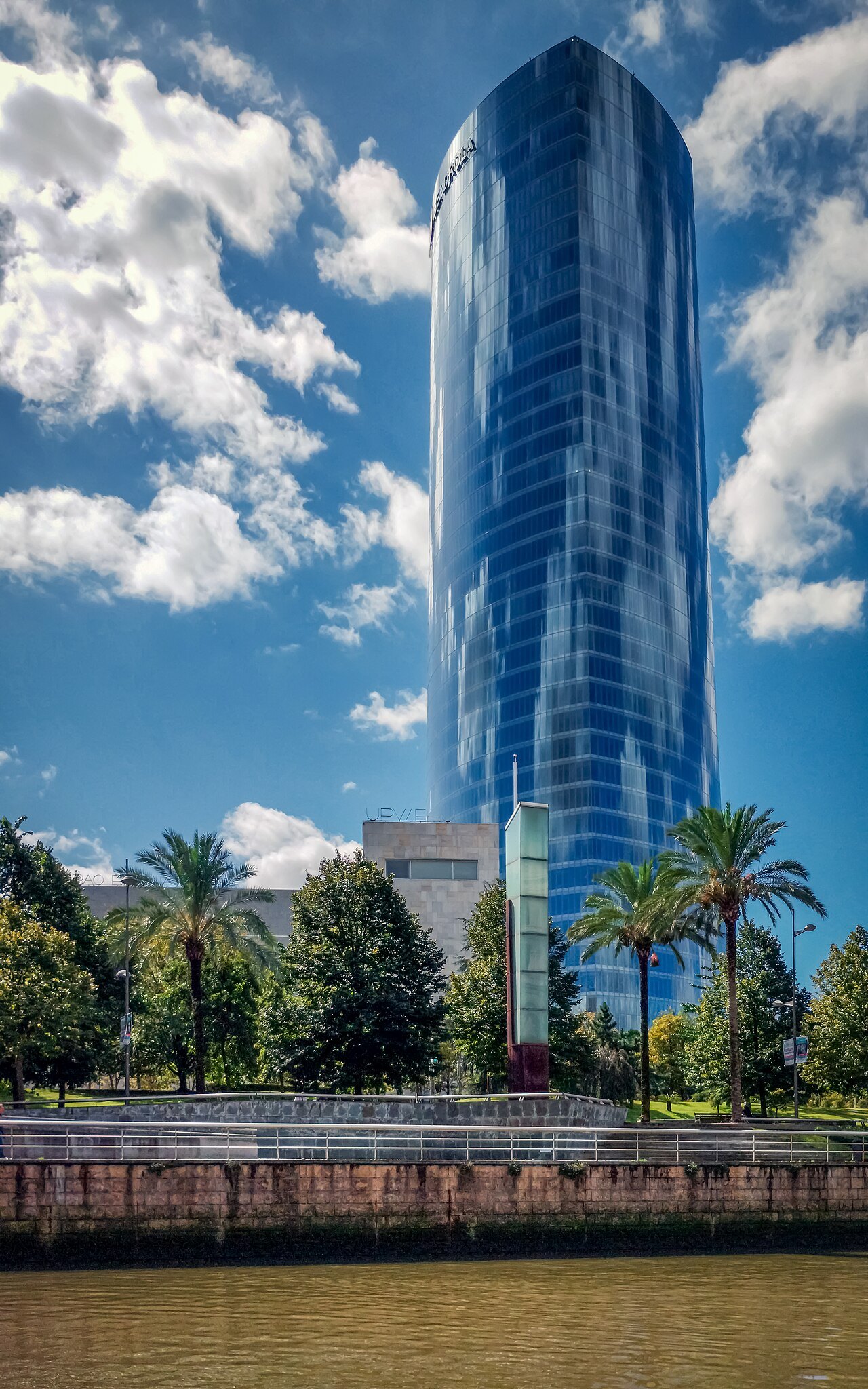
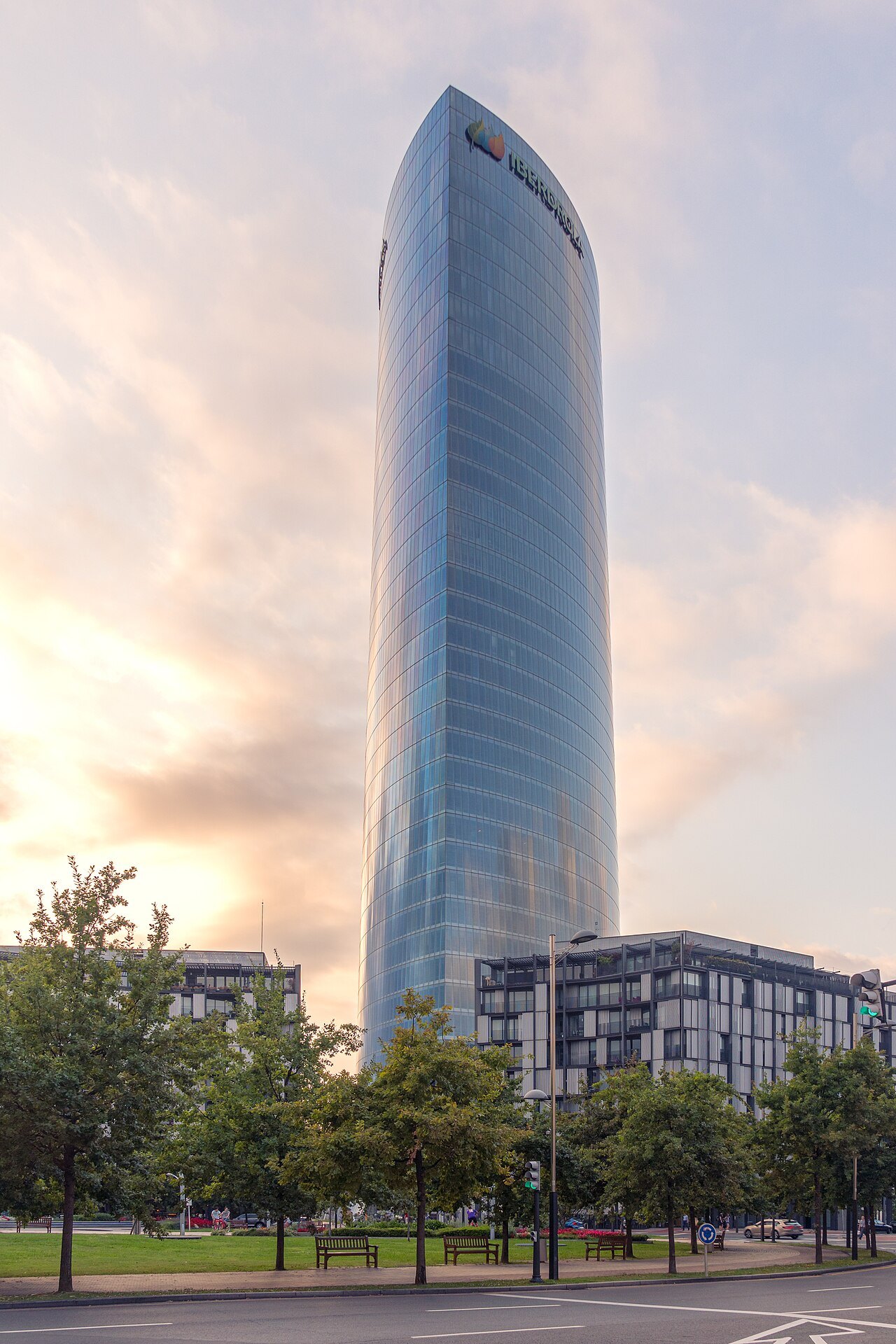
- 1The Iberdrola TowerCésar Pelli's glass tower, 165 meters and 40 floors, the tallest building in the Basque Country.
- 2Plaza EuskadiThe oval square at the foot of the tower, designed by the landscape architect Diana Balmori.
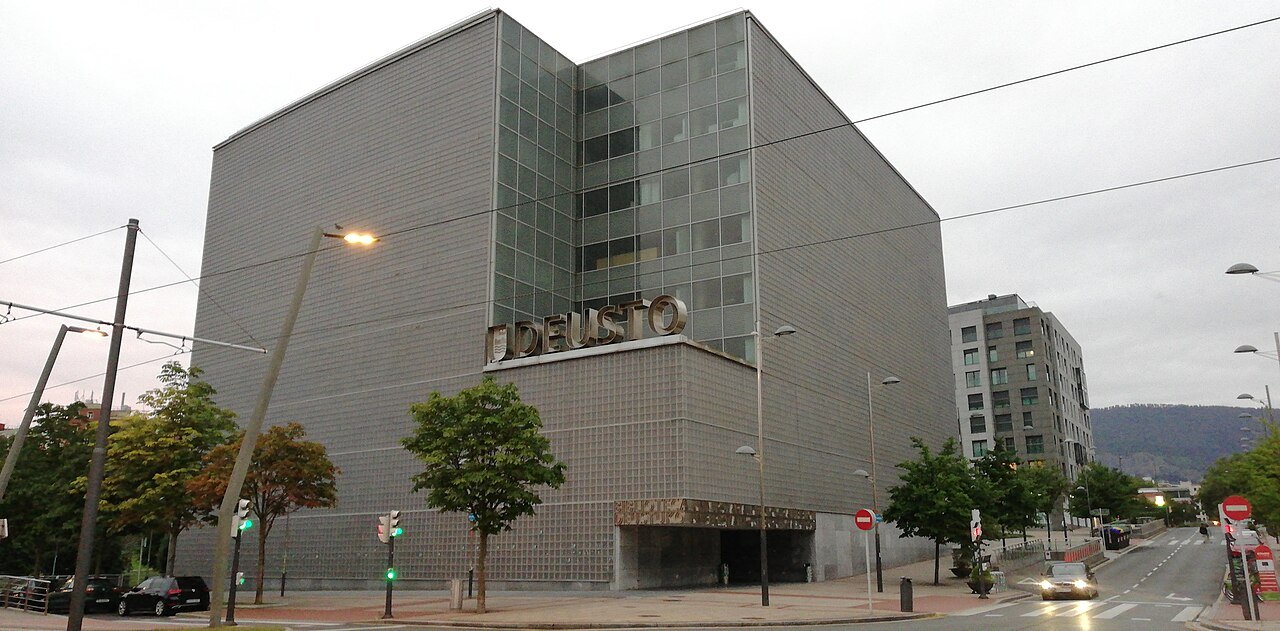
- 3The Deusto libraryRafael Moneo's library for the University of Deusto, facing the river and the university across it.
- 4Bizkaia AretoaÁlvaro Siza's white auditorium building for the University of the Basque Country.
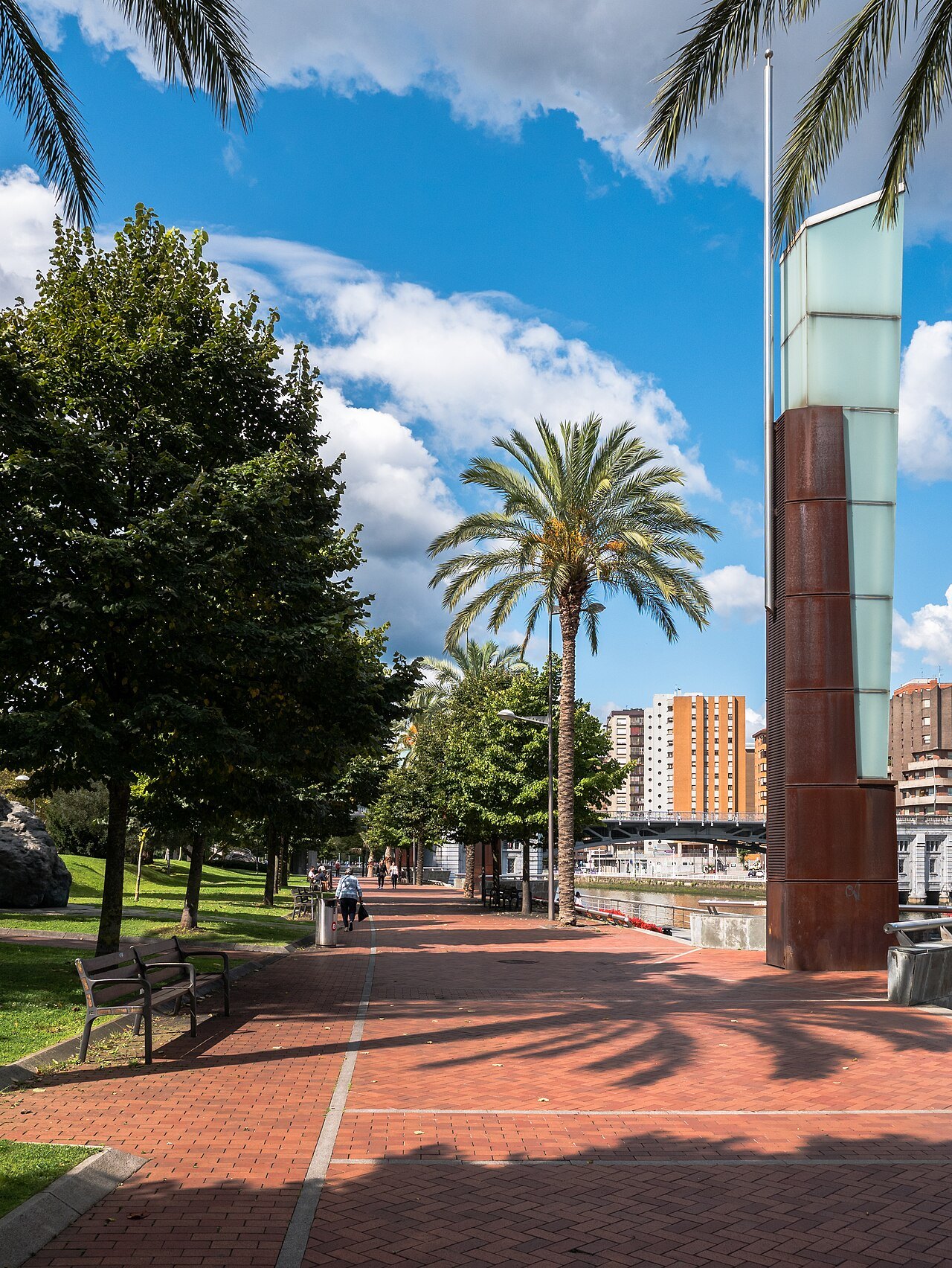
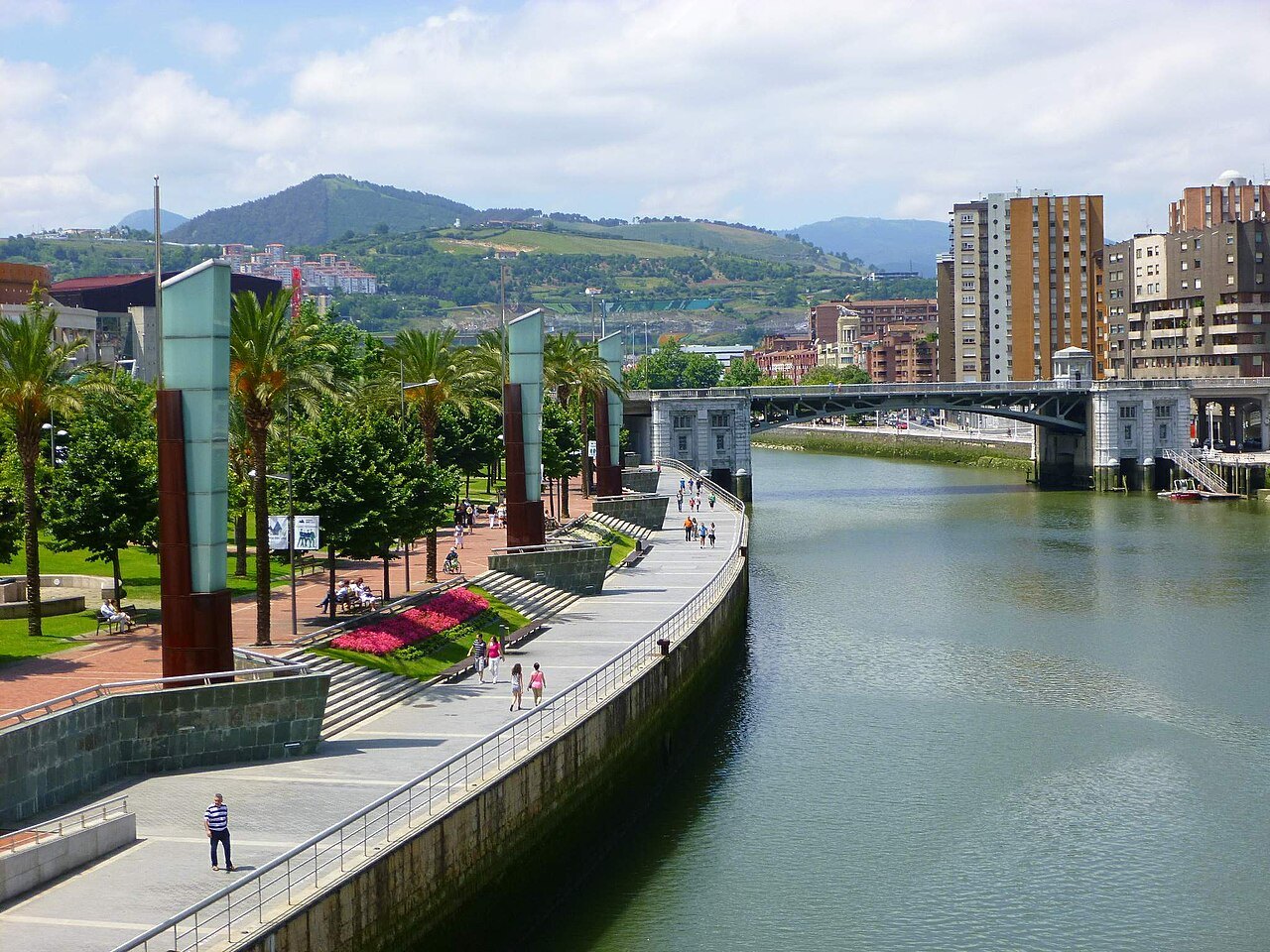
- 5The riverside walkPromenades and gardens along the water, linking the Guggenheim to the Euskalduna.
- 6The Pedro Arrupe footbridgeOne of five crossings from Abandoibarra to the right bank and Deusto.
Reading the place
The sight in full
Why it matters
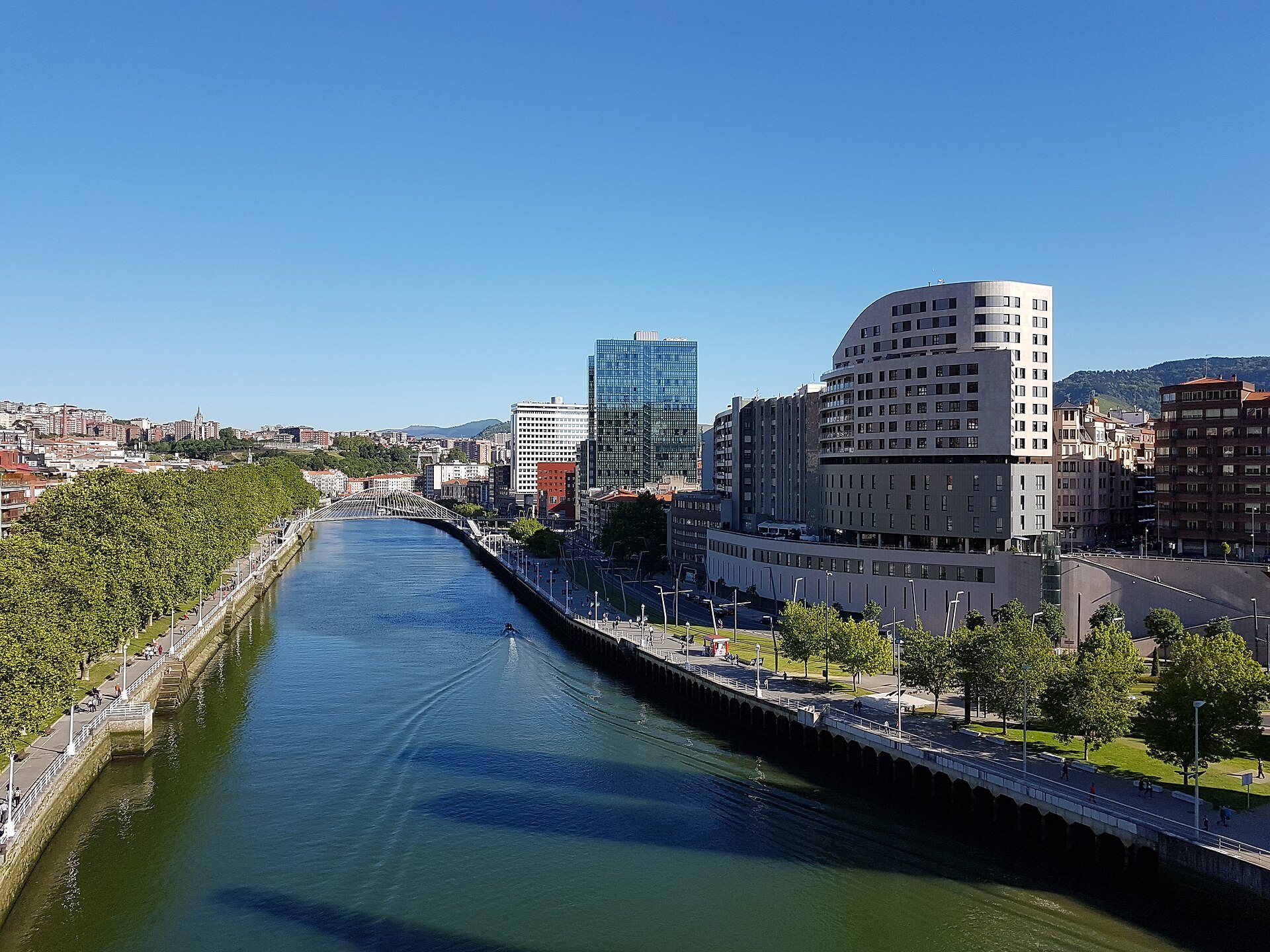
Abandoibarra, from the Basque for the Abando meadow, is the riverside district of the left bank between the Guggenheim and the Euskalduna. It is where Bilbao's transformation is easiest to see: after the city lost its industry, Abandoibarra became the central axis of its urban regeneration, a project that continues downstream at Zorrotzaurre.
For a visitor it is a walk through twenty years of new architecture by some of the best-known architects in the world, set along a river promenade with gardens, a tram and the city's tallest tower. Very little of what you see here existed before the mid-1990s; the transformation page tells the wider story.
What was here
This was Bilbao's industrial edge. The Euskalduna shipyards took up most of the area for many years, and beside them stood the workshops and warehouses of the Spanish railways, full of goods containers waiting for the port. With the industrial crisis, activity here dwindled until it stopped completely, and the land was left badly degraded by its long industrial use.
In 1992 a public company, Bilbao Ría 2000, was created to regenerate the areas hit by the industrial crisis, turning disused industrial land into housing, offices, green space and public buildings. Much of the work in Abandoibarra was carried out by Bilbao Ría 2000 in successive phases, and the result is now one of the most visited parts of the city.
What is here now
The main public works were the extension of Doña Casilda Park to the river, new avenues and streets, a riverside walk named the Paseo de la Memoria, the Ribera park, stairs and a lift between the riverside and the Deusto bridge, the riverside tram and the Pedro Arrupe footbridge.
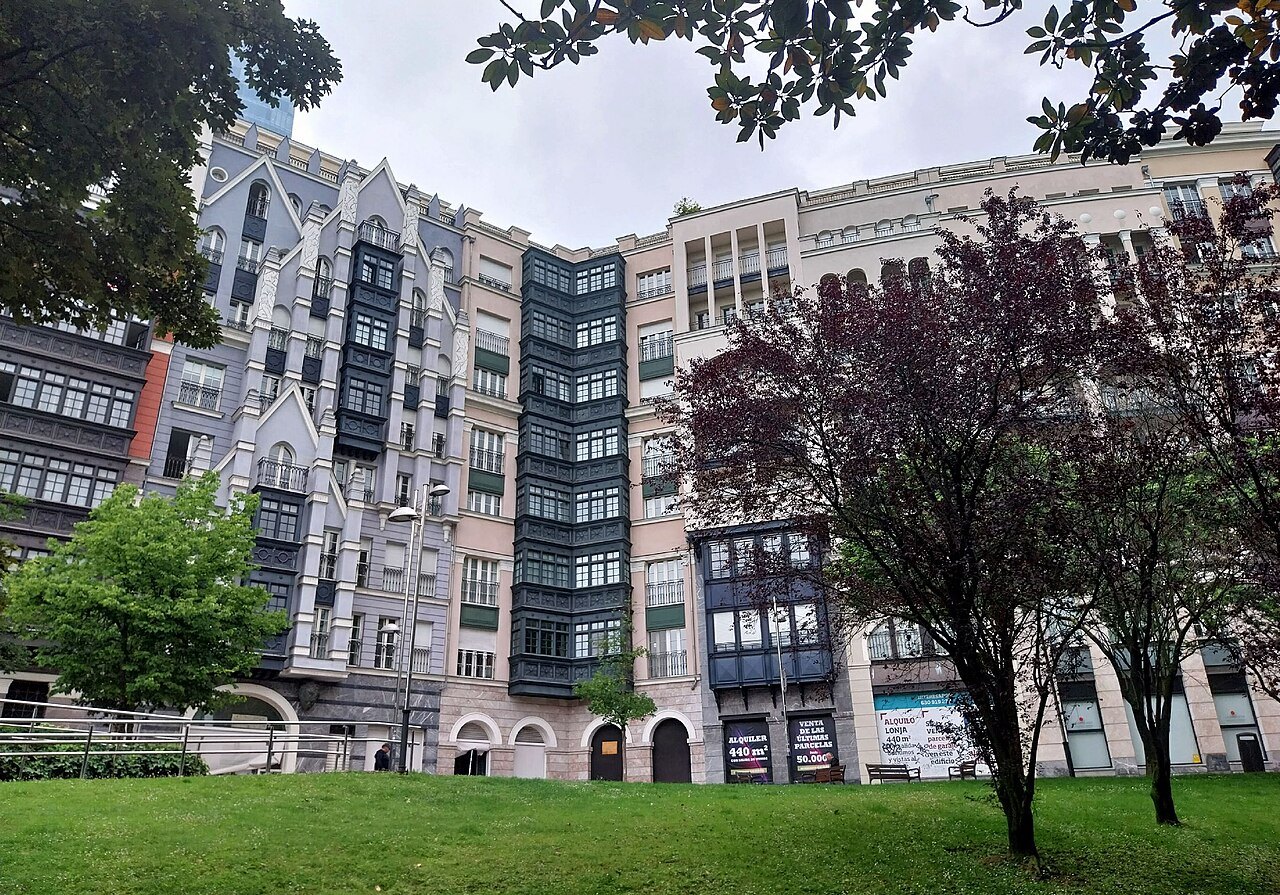
Among the buildings are the Guggenheim by Frank Gehry, the library of the University of Deusto by Rafael Moneo, the Bizkaia Aretoa auditorium by Álvaro Siza, the Iberdrola Tower by César Pelli, housing blocks by Carlos Ferrater and others, the Artklass building by Rob Krier, the Meliá hotel by Ricardo Legorreta, the Zubiarte shopping center by Robert Stern, Plaza Euskadi by Diana Balmori and the Euskalduna by Federico Soriano and Dolores Palacios. Isozaki Atea, Arata Isozaki's twin towers at the upstream end, also belongs to the same rebuilding.
The Iberdrola Tower
The tower began as a plan for the provincial government of Biscay, which in 1998 announced it would gather its offices in a tower of about 150 meters on land bought from the railways. In 2003 the newly elected head of the province scrapped the plan over its cost. In July 2004 the city agreed with the Basque energy company Iberdrola, which made the tower its headquarters.
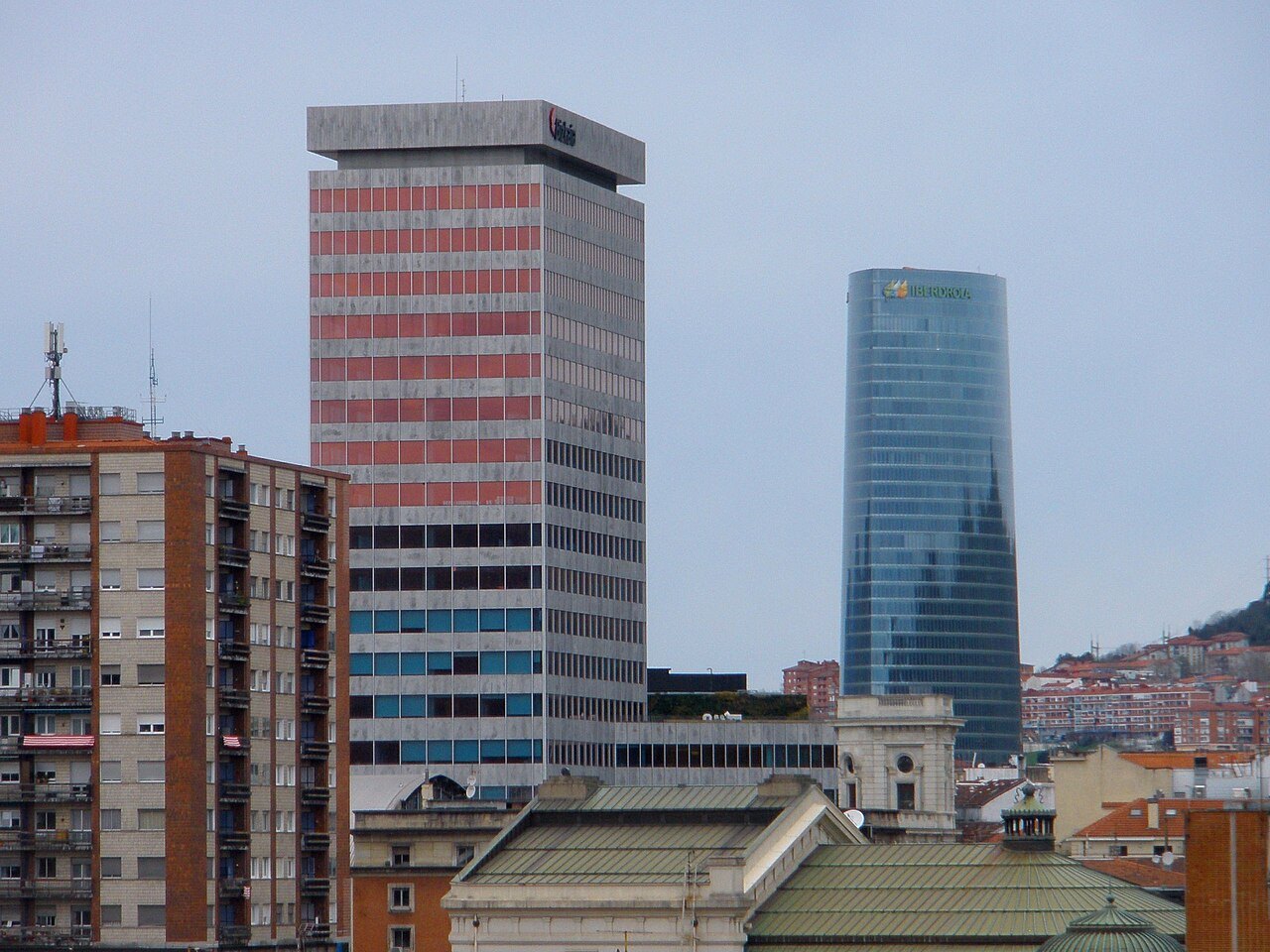
Building began with a ceremony on 19 March 2007 and the tower was inaugurated by King Juan Carlos I on 21 February 2012. It is 165 meters tall, with 40 floors (36 office floors and four for machinery) and five levels underground, designed by César Pelli with engineering by Idom. It is the tallest building in the Basque Country and in Bilbao, and its glass shaft is the city's other landmark beside the museum, seen from Artxanda and from every bridge downstream.
What you see
Walk the riverside promenade downstream from the Guggenheim. On your left the Iberdrola Tower rises above Plaza Euskadi, with Ferrater's residential blocks on either side; on your right, across the water, lies Deusto and its university. The Moneo library and the Siza auditorium stand near the river on this bank, low and calm beside the tower.
Five bridges and footbridges connect Abandoibarra with the right bank: Zubizuri, La Salve, the Pedro Arrupe footbridge, the Deusto bridge and the Euskalduna bridge. Crossing one and walking back along the other bank gives the best views of the whole district.
Across the river, and downstream
Opposite Abandoibarra lies Deusto, the city's first district, an independent municipality until 1 January 1925, when Bilbao annexed it. It is known as a student quarter, home to the University of Deusto, a faculty of the University of the Basque Country and the official language school, and its buildings face the museum and the tower across the water. The Deusto bridge, a bascule bridge opened in 1936 and modeled on the Michigan Avenue Bridge in Chicago, joins the two banks.
Downstream, the regeneration continues at Zorrotzaurre, a long strip of former industry that became an artificial island when the Deusto canal was opened along its full length on 8 October 2018. It is the last large urban renewal project in the city, and you can see its first new buildings from the Euskalduna bridge.
How to visit
The district is public space, with no tickets and no set hours. Allow an hour to walk from the Guggenheim to the Euskalduna and back along the other bank, longer if you stop in the park or at the museums. The riverside tram runs the length of Abandoibarra, and the Moyúa and San Mamés Metro stations are a short walk inland; see getting around.
Evening is a good time, when the tower and the museum are lit and the promenade fills with people from the city out for a walk.
Honest notes
Abandoibarra is new, tidy and sometimes a little empty compared with the old town; it is architecture and gardens more than daily life. For a visitor, it is still the clearest place to see what Bilbao chose to become, and the old town is a short tram ride away when you want the noise back.
Nearby
Where to go next
- Nearby · Abando · left bankThe GuggenheimFrank Gehry's museum of modern and contemporary art, a cluster of titanium curves on the left bank of the Ría, opened in 1997 on what had been the run-down edge of the city's port.Read the page →
- Nearby · Abandoibarra · left bankThe EuskaldunaThe concert hall and conference center of 1999, standing on the site of the shipyard that built Bilbao's ships for most of the twentieth century, its river front clad in rusted steel in memory of the yard and the furnaces.Read the page →
- Nearby · Indautxu · left bankDoña Casilda ParkAn English-style garden laid out from 1907 on land given by Casilda Iturrizar, the servant-turned-philanthropist who became one of Bilbao's richest women: a duck pond, century-old trees, a pergola and the Fine Arts Museum, now running down to the river.Read the page →