Home · Getting Around
Six ways to move
Once you are here
On footOn foot
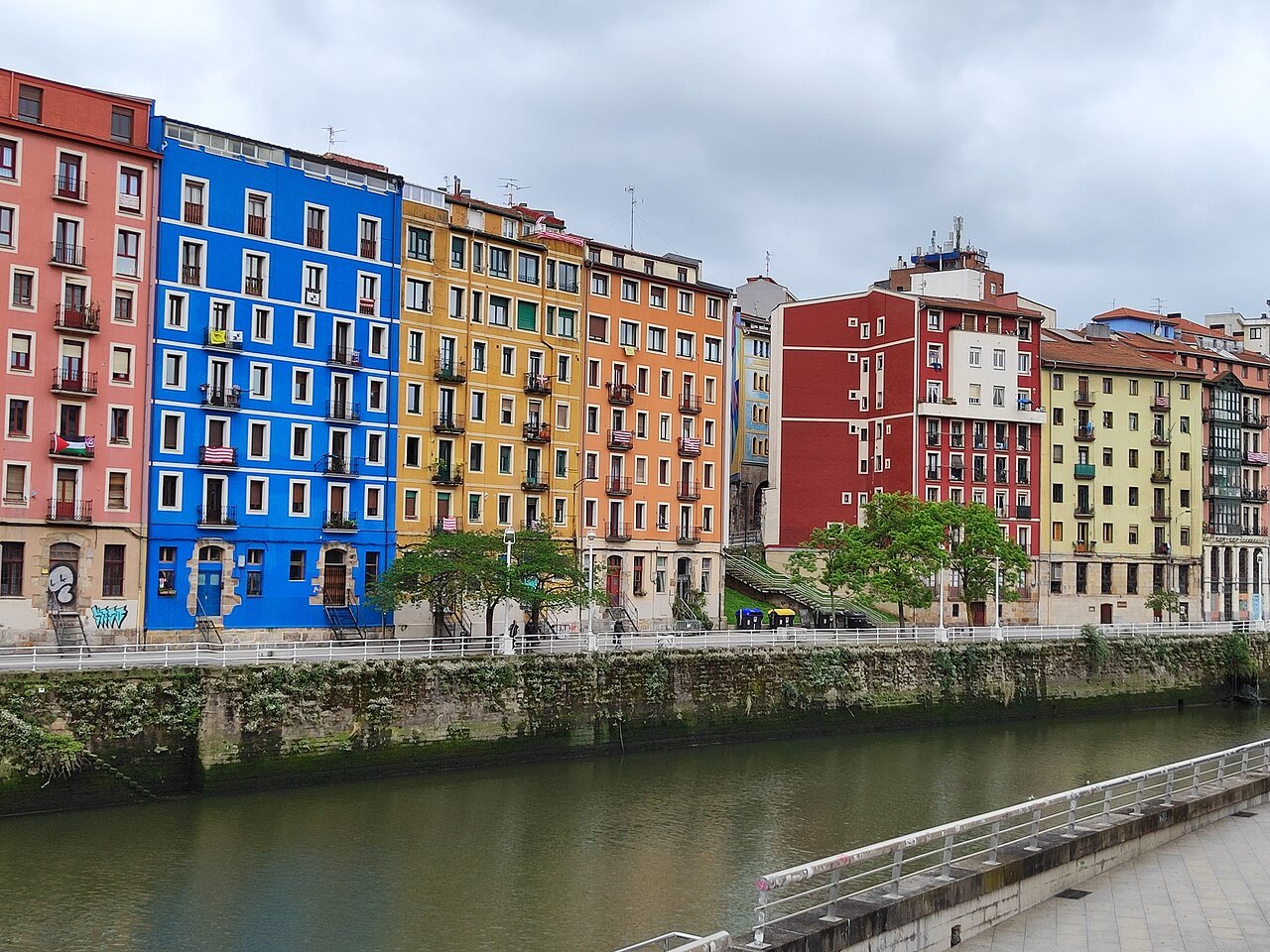
The center is compact and flat along the river. The old town, the Ensanche and the riverside walk to the Guggenheim and the Euskalduna are all an easy walk apart.
UndergroundThe Metro
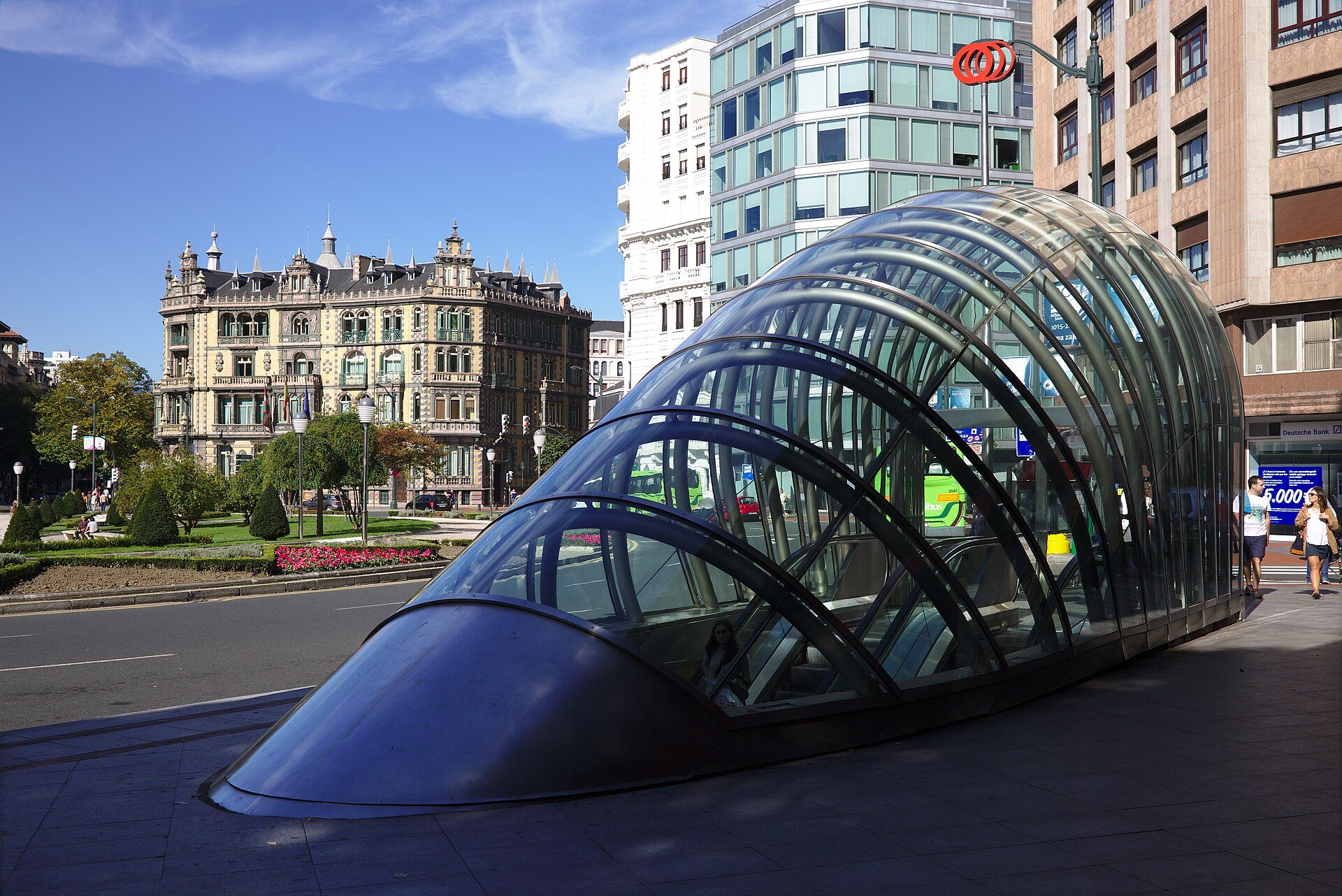
Three lines, with lines 1 and 2 running under the center and then down both banks of the Ría to the sea. Its glass entrances are known as fosteritos.
On the railsThe tram
One line along the river from Atxuri past the old town, Abando and the Guggenheim to San Mamés and La Casilla, with stops level with the doors.
By roadBilbobus and Bizkaibus
Red Bilbobus buses cover the city, including night lines; green Bizkaibus coaches run to the towns of Biscay and the airport.
UphillThe Artxanda funicular
A cable railway of 1915 climbing from near Zubizuri to the park and viewpoint on Artxanda in about three minutes.
By trainCommuter trains
Renfe's commuter lines down the left bank and up the Nervión valley, and Euskotren's lines from the old town to the Basque coast and inland towns.
Getting Around
In full
A walking city
For most visitors Bilbao is a city to walk. The old town, the Arenal, the Ensanche around the Gran Vía and the riverside walks from the market down to the Guggenheim and the Euskalduna are close together and mostly flat, and the river makes it hard to get lost: keep it in sight and you know where you are. From the old town to the Guggenheim along the right bank and back along the left is a pleasant hour.
The city climbs steeply once you leave the river. Begoña, Artxanda, the upper parts of Indautxu and the districts on the hillsides involve real slopes and long flights of steps, and that is where the funicular, the lifts and the Metro earn their keep.
One card
Public transport in Bilbao and the whole province is coordinated by the Biscay Transport Consortium, and its rechargeable card, the Barik, is valid on almost all of it: the Metro, the tram, Bilbobus and Bizkaibus, the commuter trains of Renfe and Euskotren, and the Artxanda funicular. A single card can pay for more than one traveler.
Fares and the types of card change, so check them at a station machine or on the consortium's site rather than relying on a printed list. For a short visit, the card is still worth having for the convenience alone; tickets for single trips are also sold on each system.
The Metro
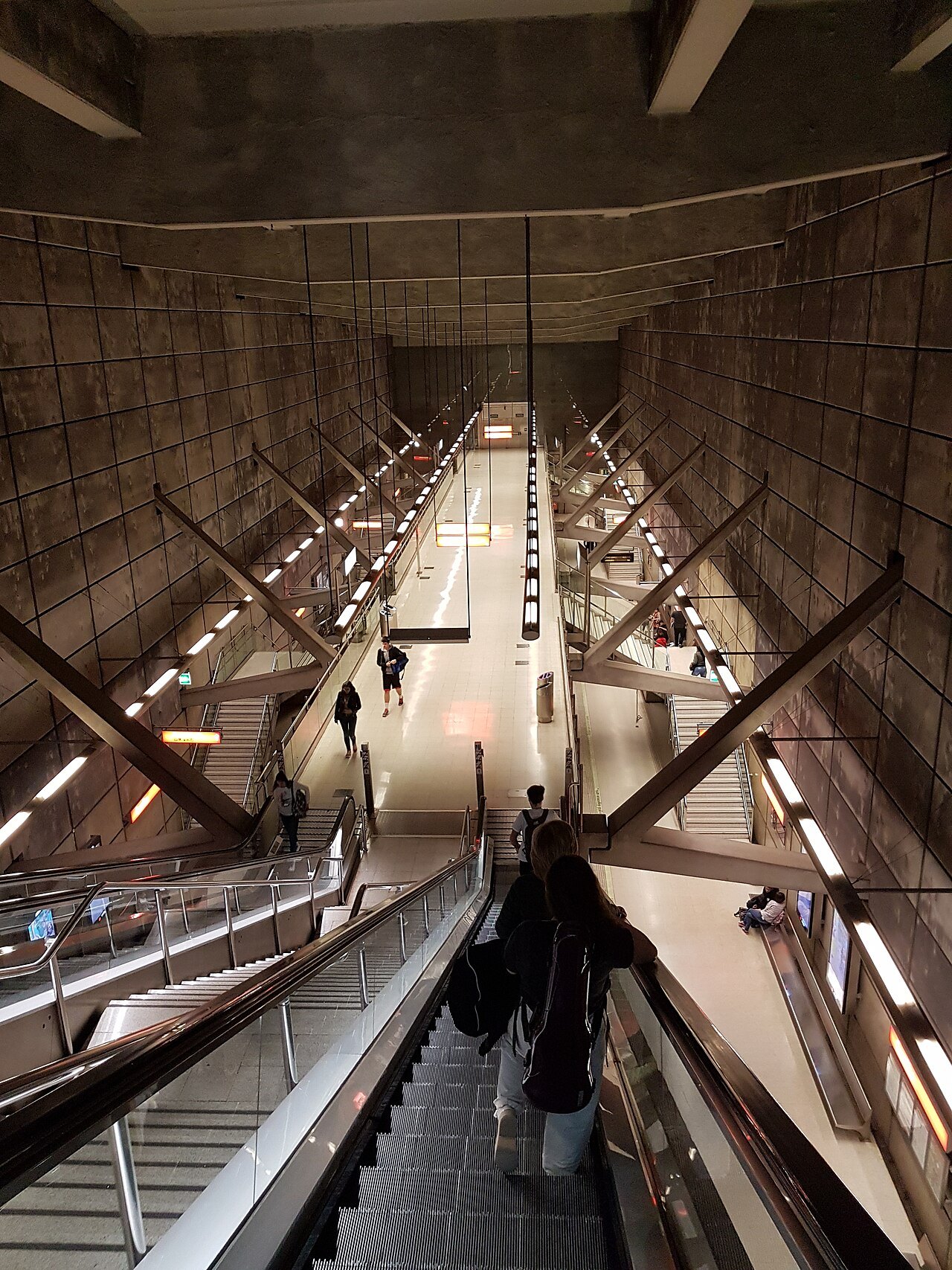
The Metro opened in 1995, partly by converting the old suburban railway from Bilbao to Plentzia, and it is now the third busiest in Spain after Madrid and Barcelona, with 48 stations on 51 kilometers of route. Its stations were designed by Norman Foster's practice after an open competition in 1988: large caverns rather than linked tunnels, so that the ticket hall and the platforms share one space, with steel and concrete throughout.
Lines 1 and 2 share a trunk under the center and then split in a Y down the two banks of the Ría: line 1 down the right bank through Deusto to Getxo and on to Plentzia, line 2 down the left bank through Barakaldo and Sestao to Portugalete and Santurtzi. Line 3, opened on 8 April 2017 and run by Euskotren, connects the higher neighborhoods to the east. All three meet at Zazpikaleak / Casco Viejo, under the old town.
On the street the Metro is easy to find. Most entrances are curved glass canopies over the escalators, called fosteritos after their architect; at Sarriko, which won the Brunel Award for railway design in 1998, a glazed atrium lets daylight down to the platforms.
The tram
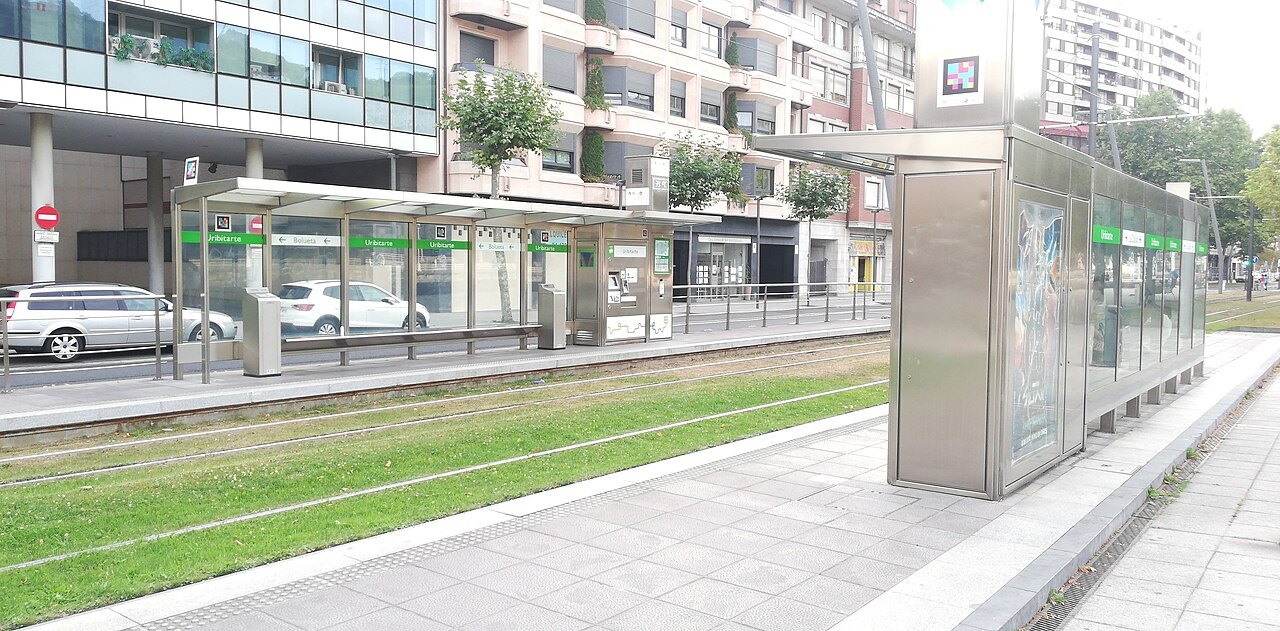
The tram, run by Euskotren, opened in 2002 between Atxuri station and Uribitarte and was later extended past the Guggenheim and Basurto hospital to La Casilla. It follows the river through the center, with stops at the old town, the Arenal, Abando, the Guggenheim, the Euskalduna and San Mamés, and in places it runs on grass.
It has 14 stops, low platforms almost level with the doors, and room for wheelchairs and pushchairs, which makes it the easiest public transport in the city for anyone who struggles with stairs. Buy a ticket from the machine at the stop before boarding, or use the Barik.
Buses
Bilbobus, the city's own service, has run since 1988 and is recognizable by its solid red buses with a B above the doors. It runs 45 lines across the city, among them night lines called Gautxori, and reaches the hillside neighborhoods the Metro does not.
Bizkaibus, with its green buses, runs about 100 lines from Bilbao to almost every town in Biscay, among them the airport bus and seasonal summer lines to the beaches. For day trips by bus, see day trips.
The funicular and the lifts
The Artxanda funicular climbs from the right bank just north of Zubizuri, within walking distance of the Guggenheim, to the park and viewpoint on top of Artxanda. It opened in 1915, rises about 226 meters over a track of 770 meters, at its steepest close to 45 percent, and takes about three minutes; cars leave every quarter of an hour, and the Barik card is accepted.
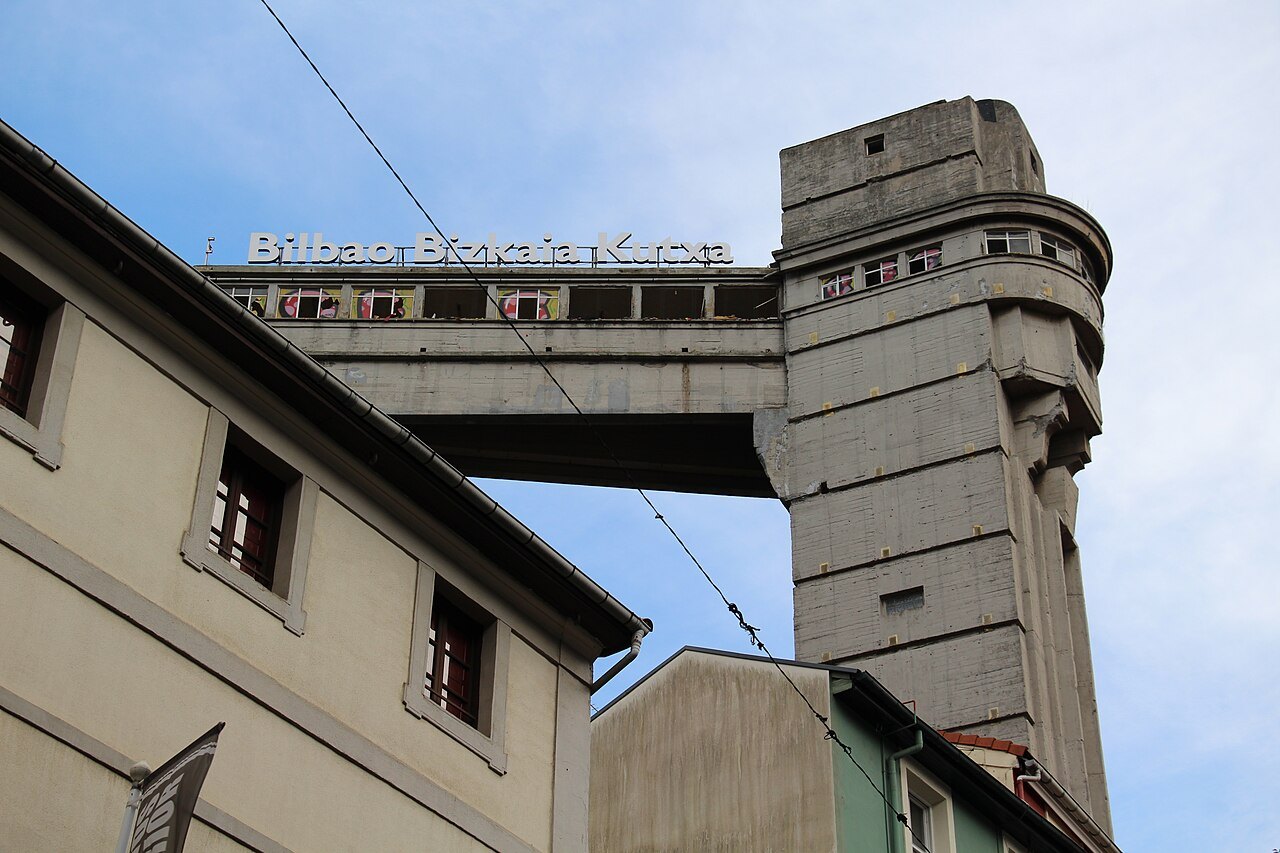
Public lifts and escalators help on the hillsides. The best known, the Begoña lift, a concrete tower of 1943 that rises 45 meters from the old town to Begoña, has been out of service since July 2014, and a court appeal in March 2026 stalled plans to restart it. Its job is done by the lifts inside the Casco Viejo Metro station, which climb from the old town to the Begoña side; ask at the station for the exit to Begoña.
Commuter trains
Two railway networks fill the gaps the Metro leaves. Renfe's commuter trains, Cercanías Bilbao, run five lines: C-1 to Santurtzi and C-2 to Muskiz down the left bank, C-3 up the Nervión valley to Llodio and Orduña, all three from Abando, and C-4 from Concordia to Balmaseda in the west of the province. In 2000 the lines through the city were moved into a new underground branch, with stations at San Mamés, Autonomía, Ametzola and Zabalburu, and the old tracks beside the river were cleared for the new avenues and the tram.
Euskotren, the Basque railway, runs its trains from Zazpikaleak / Casco Viejo: line E1 east through Durango and Eibar to San Sebastián, E3 to Lezama through the Txorierri valley, and E4 to Bermeo on the coast, the train for Gernika and Urdaibai. For a visitor these are the trains for the Basque towns rather than for moving around the city.
Taxis, cars and the river
Taxis are useful with luggage or for the hills, and can be hailed in the street or found at ranks at the stations. Driving in the center is slow and parking scarce; a car is best left in a garage until you leave the city.
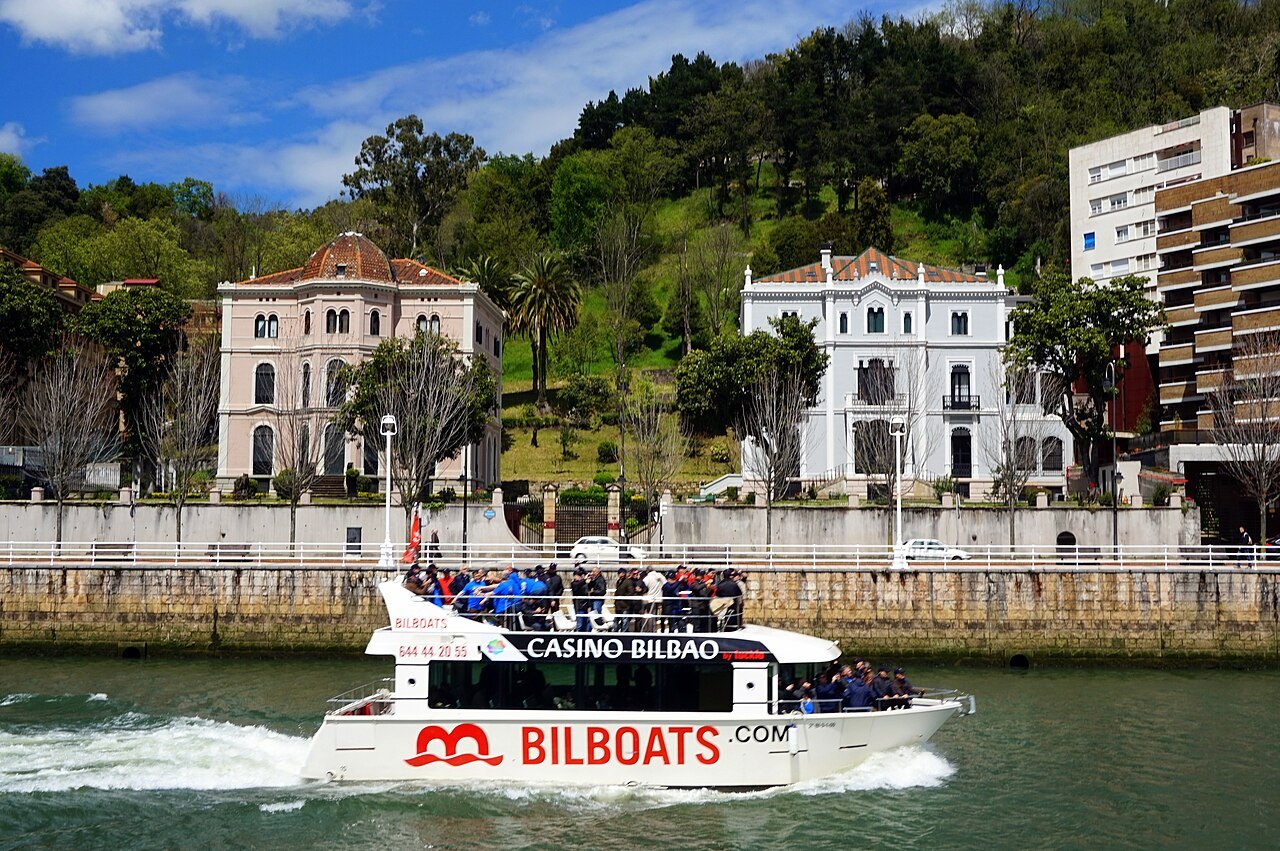
To reach the mouth of the Ría, take Metro line 1 to Areeta for the Bizkaia Bridge, cross on its hanging gondola, and come back on line 2 from Portugalete. The itineraries page builds this into a day.
More photographs
Seen on the way
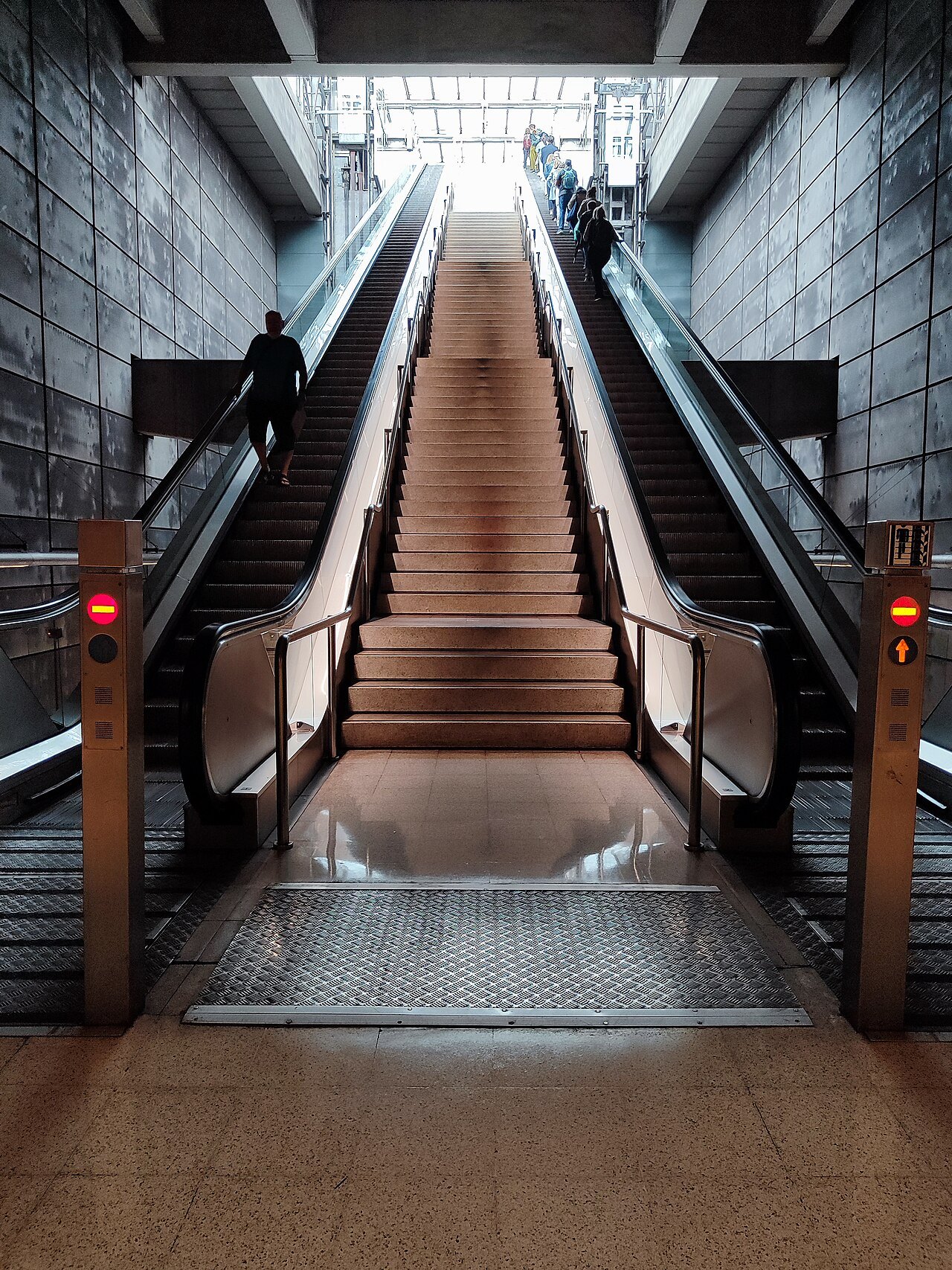
The steep escalators and stairs of Sarriko Metro stationMentxuwiki, Wikimedia Commons, CC BY-SA 4.0 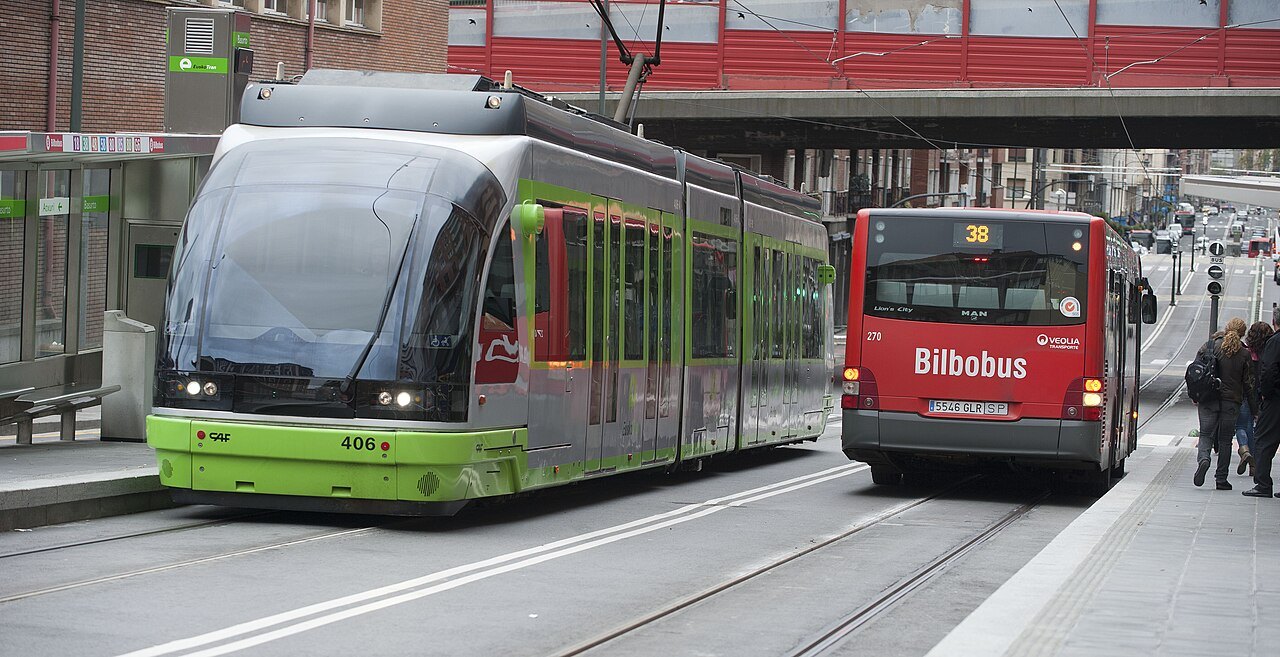
A green tram and a red Bilbobus side by side at BasurtoEusko Jaurlaritza Irekia, Wikimedia Commons, CC BY 3.0 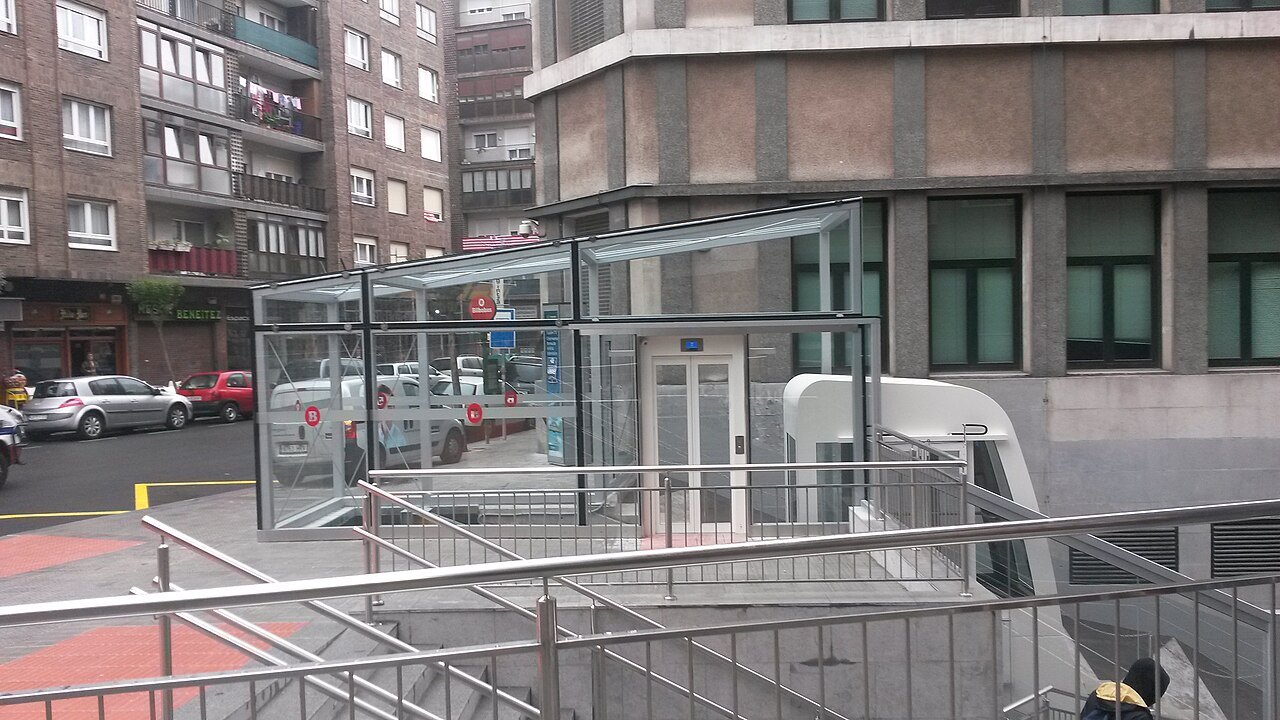
The glass head of the public lift at Iturribide, between apartment blocksXabier, Wikimedia Commons, CC BY-SA 4.0