Home · Sights · The Bizkaia Bridge
The Bizkaia Bridge
What you are looking at
Portugalete · Getxo
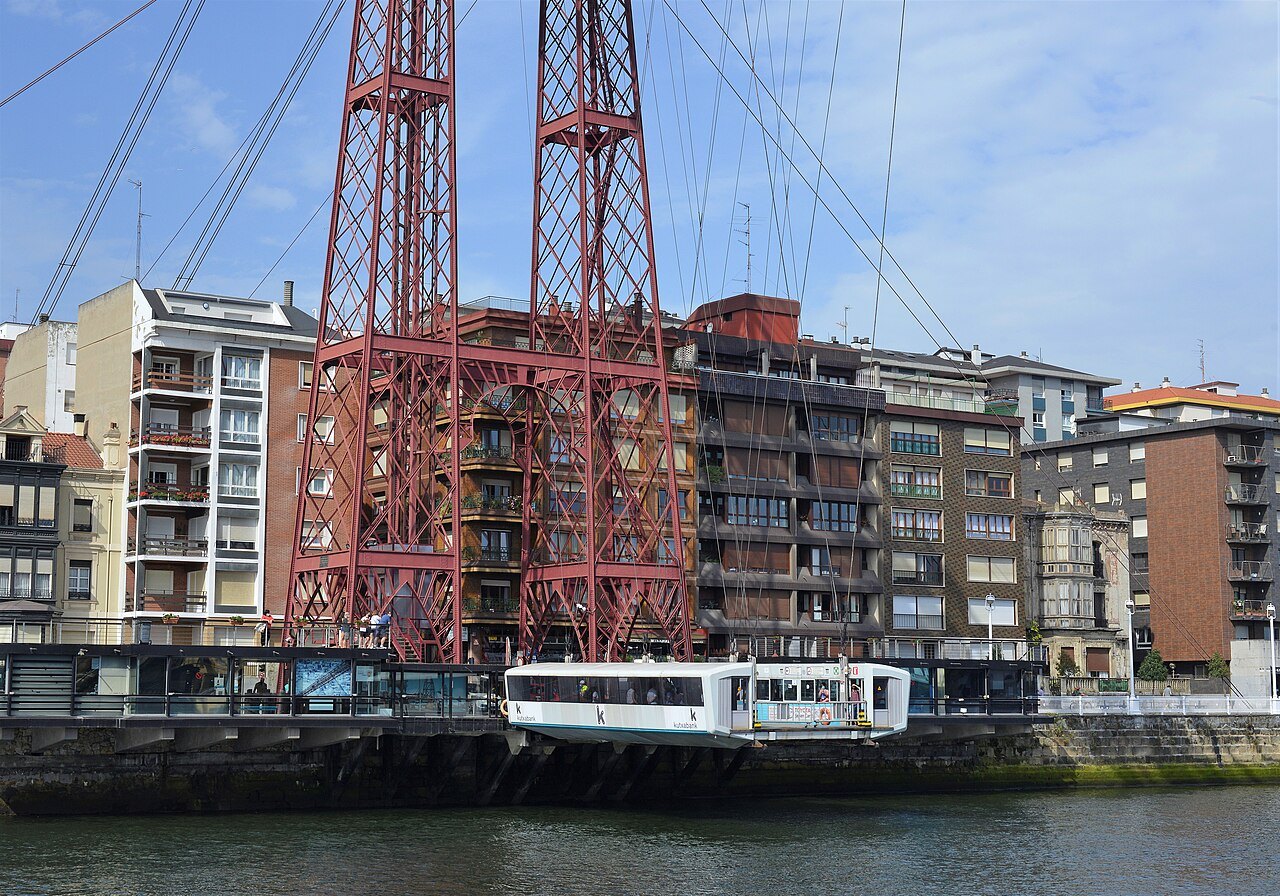
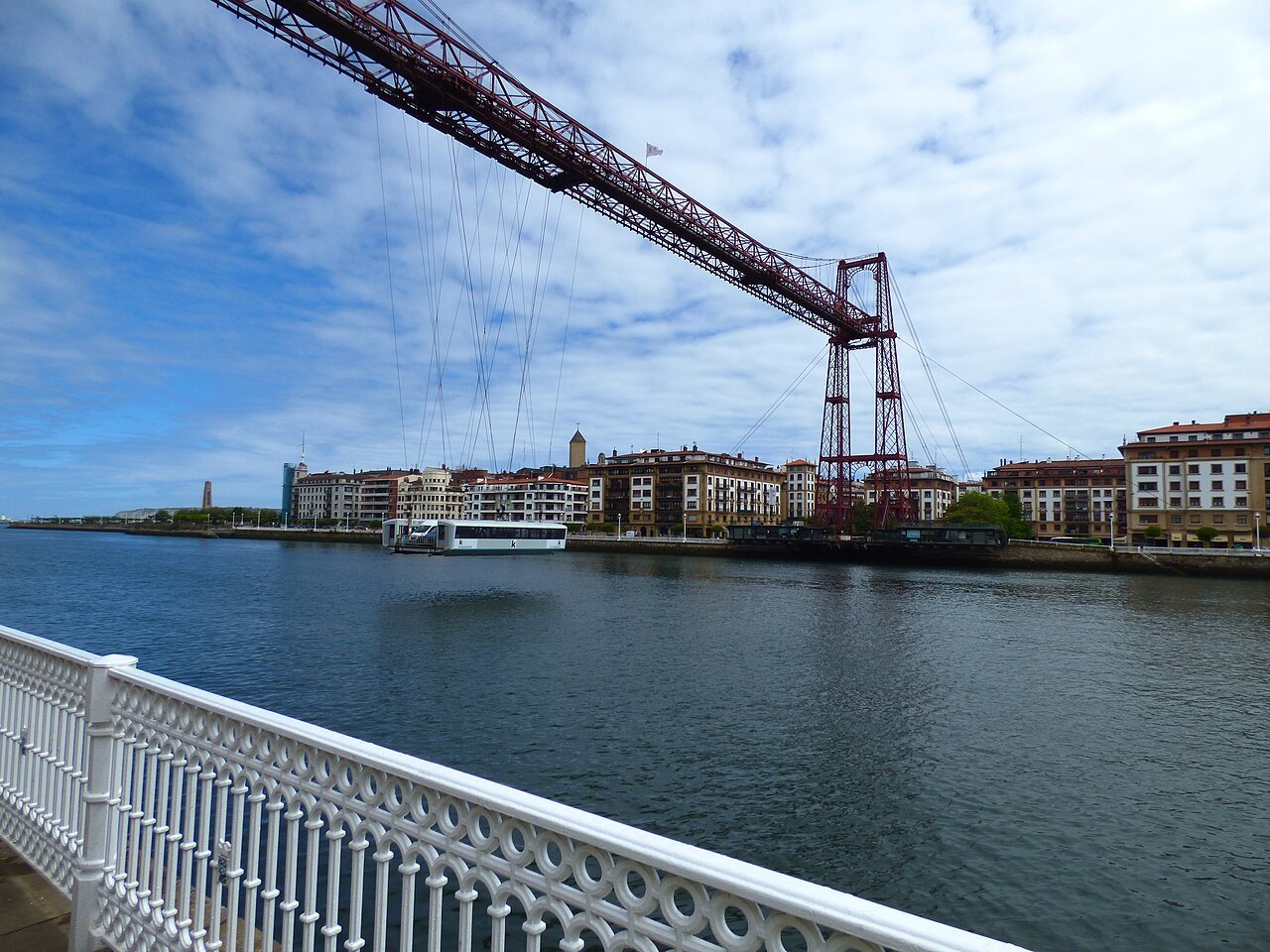
- 1The gondolaA hanging platform that carries cars and passengers across the river, slung from a traveling carriage.
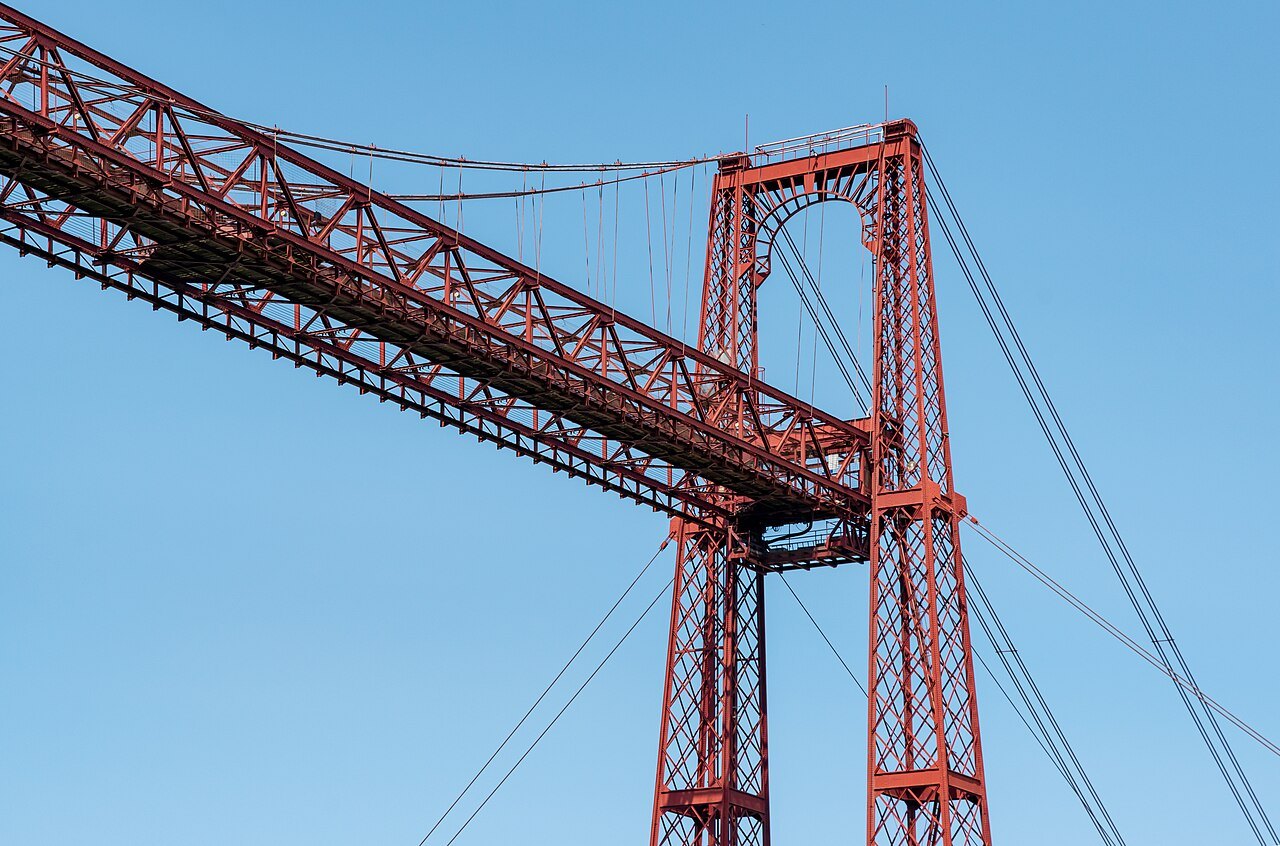
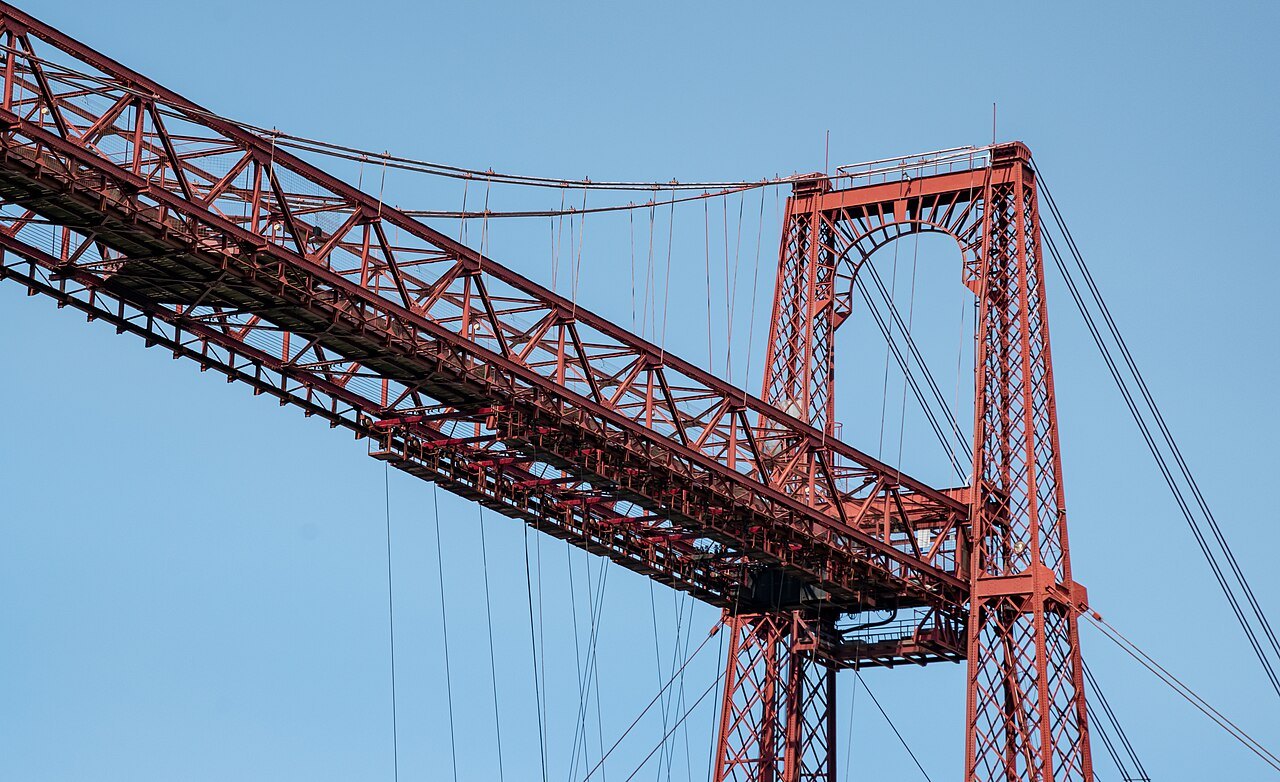
- 2The girderThe horizontal beam high above the water, carrying the rails the gondola's carriage runs along.
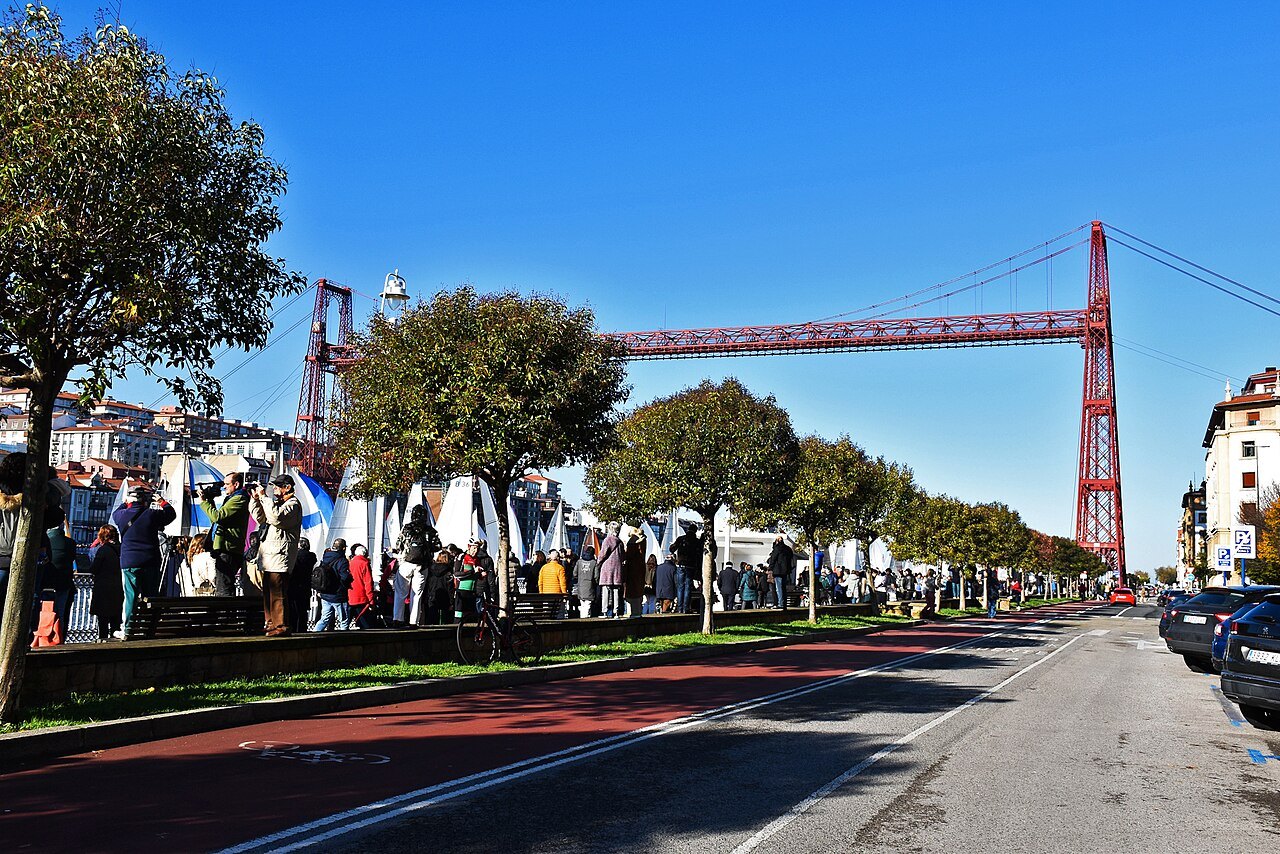
- 3The four towersIron towers about 61 meters high, two on each bank, braced by cables to the hills behind.
- 4The top walkwayA walkway along the upper girder, reached by lifts inside the towers, opened in 1999.
- 5The view of the AbraFrom the top, the port, the mouth of the river and the bay of the Abra.
- 6Portugalete's frontThe old town of Portugalete on the left bank, climbing from the river behind the bridge.
Reading the place
The sight in full
Why it matters
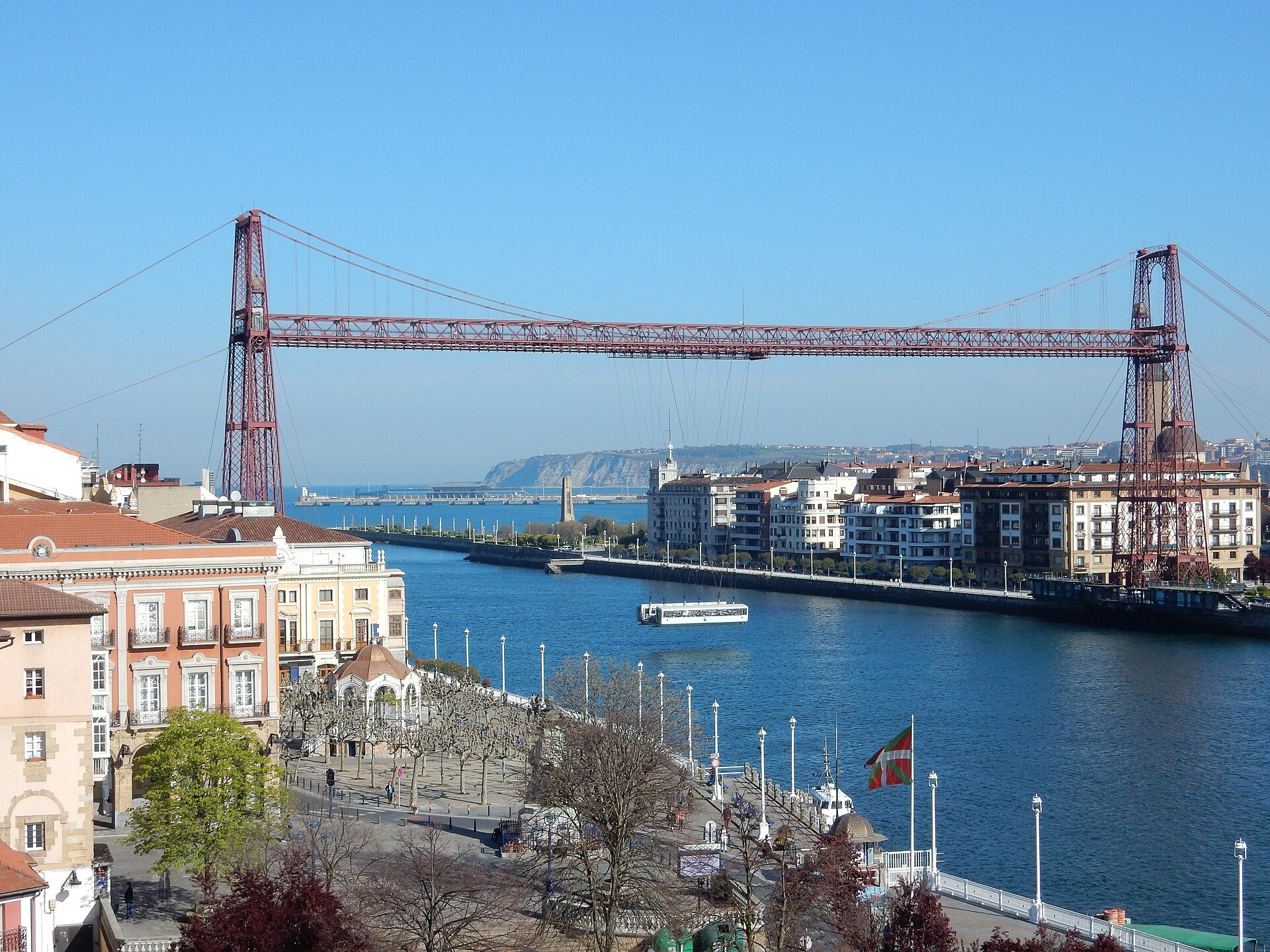
The Bizkaia Bridge, Bizkaiko Zubia in Basque and Puente de Vizcaya in Spanish, links the town of Portugalete on the left bank of the Ría with Las Arenas, a neighborhood of Getxo, on the right. It is a transporter bridge: instead of a deck, a gondola hangs from a carriage running on a high iron girder, and carries vehicles and passengers across just above the water while ships pass freely underneath.
Opened on 28 July 1893, it was the first bridge of its kind in the world, the model for others built in Europe, Africa and the Americas, and it is the oldest transporter bridge still in service. On 13 July 2006 UNESCO declared it a World Heritage Site, chosen from 37 candidates, as one of the outstanding iron structures of the Industrial Revolution and for its innovative use of light twisted steel cables. Locally it is mostly called the Puente Colgante, the hanging bridge.
Why it was built
At the end of the nineteenth century both banks at the mouth of the river held seaside resorts for the new industrial middle class and for tourists, and the two needed a link. Any ordinary bridge low enough to be practical would have blocked the shipping going up to the port of Bilbao, and a high one would have needed long ramps on both banks.
The architect and engineer Alberto de Palacio, a disciple of Gustave Eiffel, designed a bridge that could carry people and goods and still let ships through. The French engineer Ferdinand Arnodin, a specialist in cables and suspension bridges, worked on both the design and the construction, which ran from 1890 to 1893 and was not without quarrels between the two. Much of the iron came from the mines of Biscay, and the bridge became a symbol of that industrial age.
War and rebuilding
In June 1937, during the Civil War, Republican engineers were ordered to destroy every crossing of the Ría to slow the advance of Franco's troops, and on 17 June the upper girder was brought down into the water. From his house in Portugalete, Palacio saw his work partly destroyed shortly before his own death.
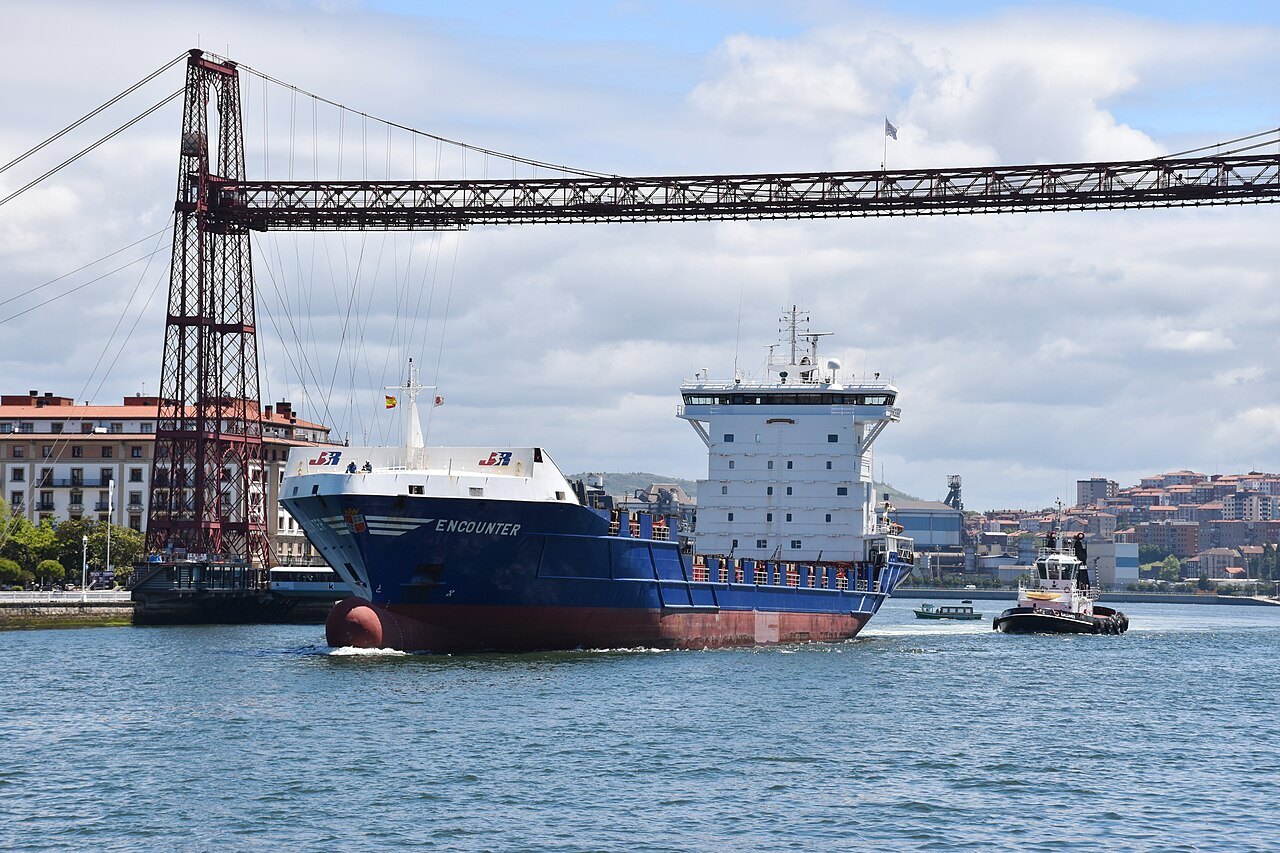
The bridge was rebuilt to a design by the engineer José Juan Aracil, who updated the girder and the cables, and reopened on 19 June 1941. In 1999 the company that runs it added lifts in the towers, a walkway along the upper girder, a new gondola and new access buildings. Five gondolas have hung from the bridge since it opened.
The color
For most of its life the iron was painted black, or at times smoke gray, but dark paint made the structure absorb heat and expand more sharply, which damaged some parts. A restoration approved in 2010 changed its color, choosing from three tones based on iron ores of the nearby Triano hills, and the bridge is now a reddish color that you see in recent photographs.
What you see
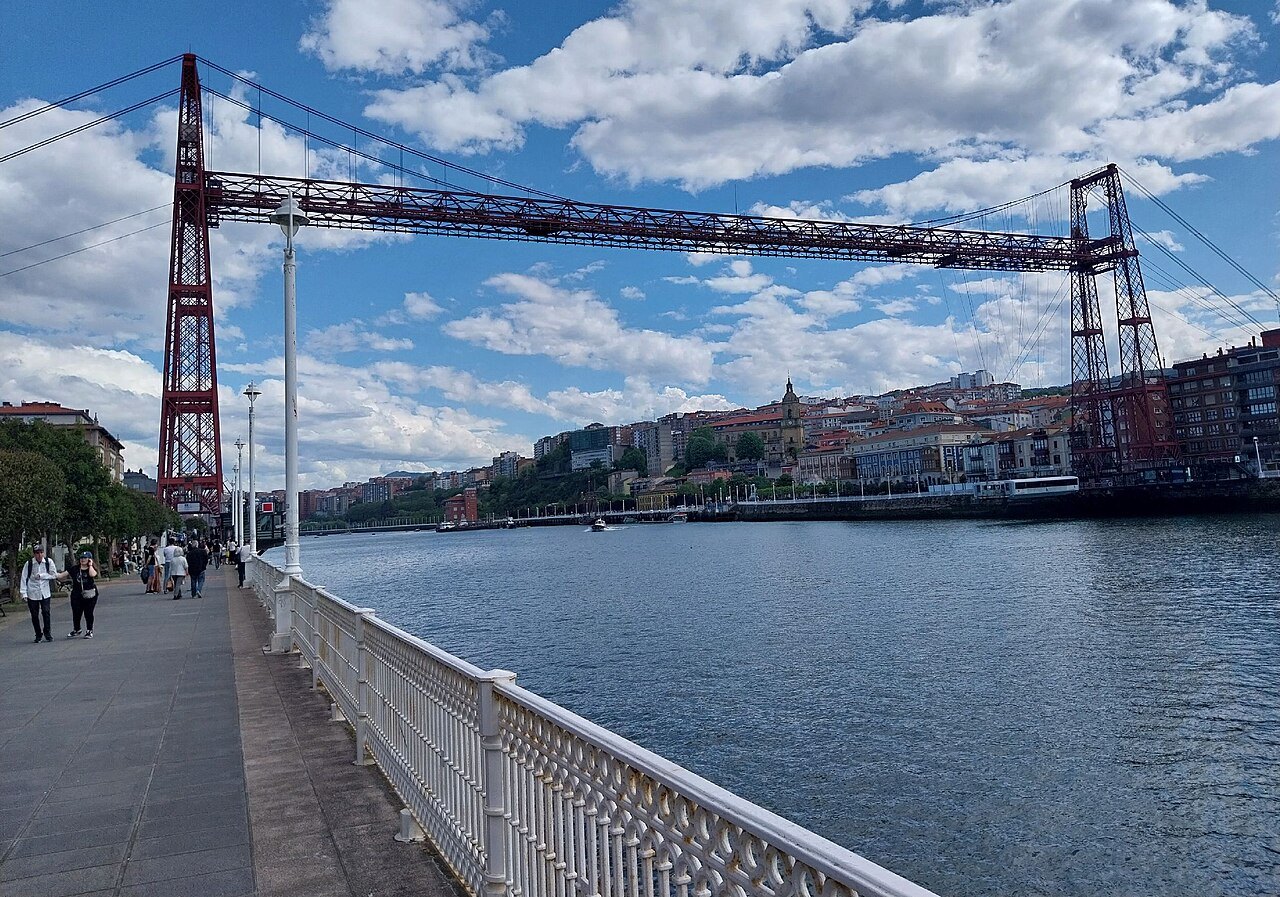
The structure is about 160 meters long, with four iron towers about 61 meters high, two on each bank, braced by cables to the hill behind on the Portugalete side and to the ground on the Las Arenas side. The girder rests between them on suspension cables, and the gondola, about 25 meters long, hangs from a carriage running on its rails.
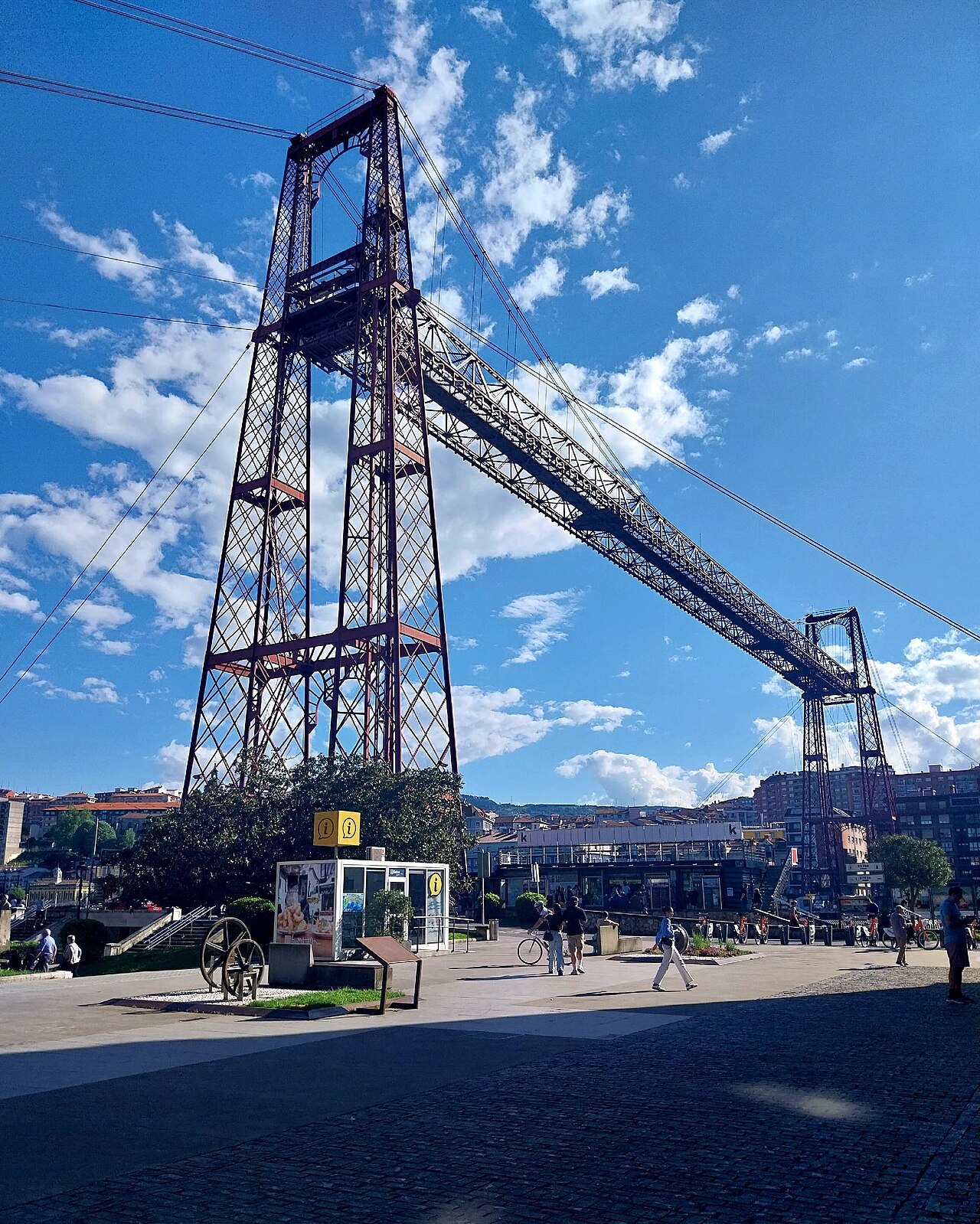
Ride the gondola, which carries six cars and several dozen passengers across in about a minute and a half, and then take the lift up one of the towers to the walkway on top. From there the view takes in the port, the mouth of the river and the bay of the Abra, Portugalete's old town on one side and the villas of Las Arenas and Getxo on the other.
Portugalete and Las Arenas
Portugalete, on the left bank, is an old town in its own right, founded in 1322 by María Díaz de Haro, Lady of Biscay, a generation after Bilbao. Despite the name it has nothing to do with Portugal: the name is a Spanish rendering of the Basque Portu-Ugaldeta, the edges of the port. It is small and one of the most densely populated towns in Spain, its streets climbing steeply from the river behind the bridge.
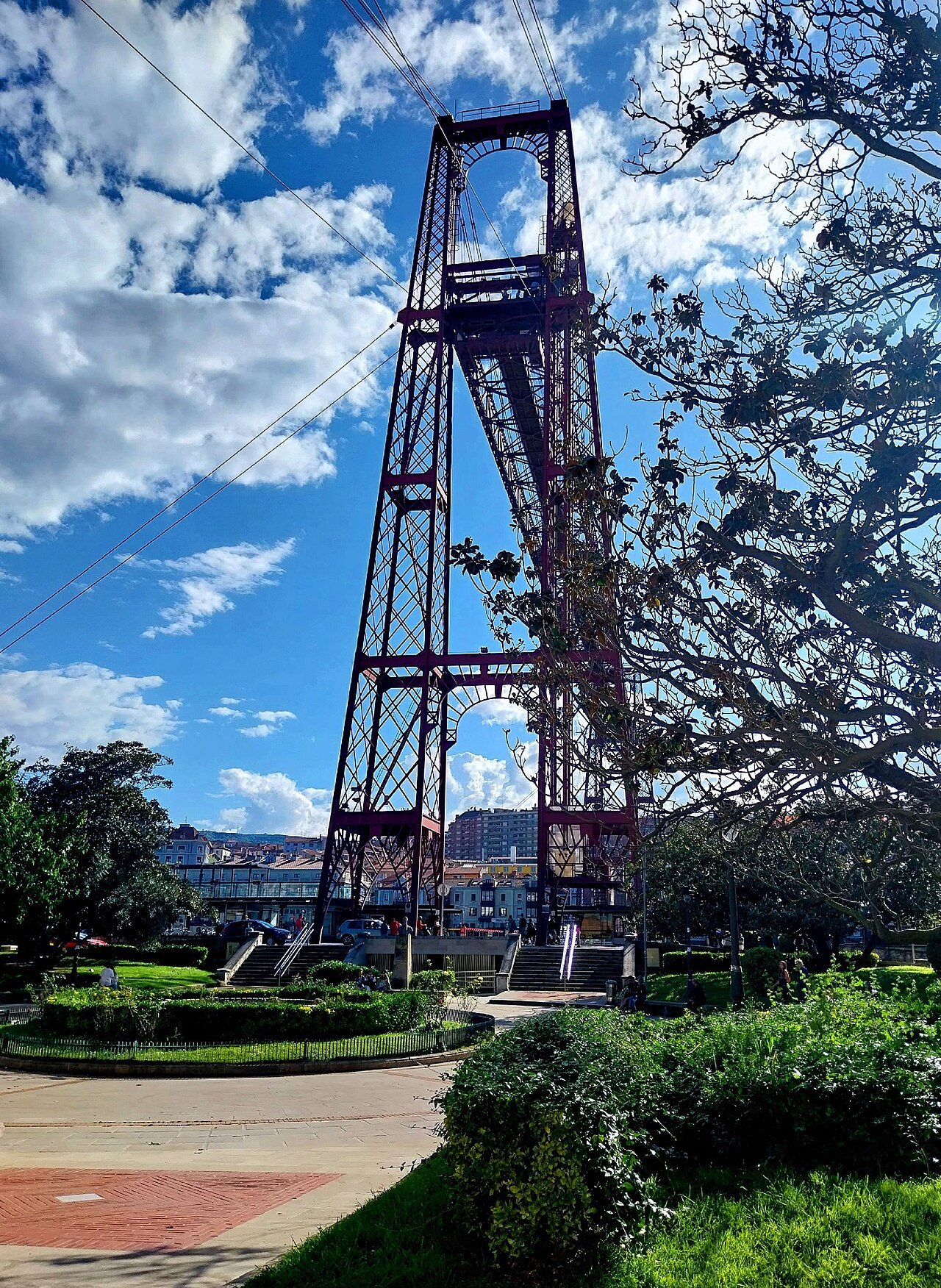
Las Arenas, Areeta in Basque, on the right bank, belongs to Getxo; when the bridge was built both banks counted as one municipality, which is why it was also called the Portugalete bridge, or the Palacio bridge after its designer.
How to visit
The gondola runs day and night all year, and the crossing is paid at the bridge in coins or with a card, including the Barik transport card; the walkway along the top is a separate ticket. Check the bridge's own site for the walkway's opening times, which vary with the season and the weather.
Get there by Metro: line 1 runs along the right bank to Areeta, in Las Arenas, and line 2 runs along the left bank to Portugalete, so you can arrive on one bank, cross by gondola and leave from the other. The Ría page follows the river from the city down to the bridge.
The bridge is still a working crossing: an estimated four million passengers and half a million vehicles use it each year, and it saves a drive of almost 20 kilometers around the estuary. Allow an hour for the crossing, the walkway and a look at Portugalete, more if you go on to the seafront at Getxo.
Honest notes
The walkway on top is high and exposed, and not for anyone uneasy with heights. The gondola ride is short and mostly used by locals going about their day, which is part of its charm.
Nearby
Where to go next
- Nearby · Getxo · right bankGetxoThe town where the Ría meets the sea, a Metro ride from the center: Algorta's old fishing port of steep lanes and painted houses, the mansions of Neguri built for Bilbao's industrial fortunes, a cliff-top windmill and beaches along the bay of the Abra.Read the page →
- Nearby · From the Casco Viejo to the AbraThe RíaThe tidal river that made Bilbao: the waters of the Nervión and the Ibaizabal, joined by the Cadagua, running through the city and on to the sea, once lined with shipyards and furnaces and now with promenades, bridges and the city's new architecture.Read the page →
- Nearby · Indautxu · left bankThe ItsasmuseumBilbao's maritime museum, opened in 2003 on the land of the Euskalduna shipyard: galleries about the Ría and its port inside, and outside the yard's dry docks, its pump house and the red Carola crane, once the most powerful in Spain.Read the page →