Home · Sights · The Basilica of Begoña
The Basilica of Begoña
What you are looking at
Begoña · right bank
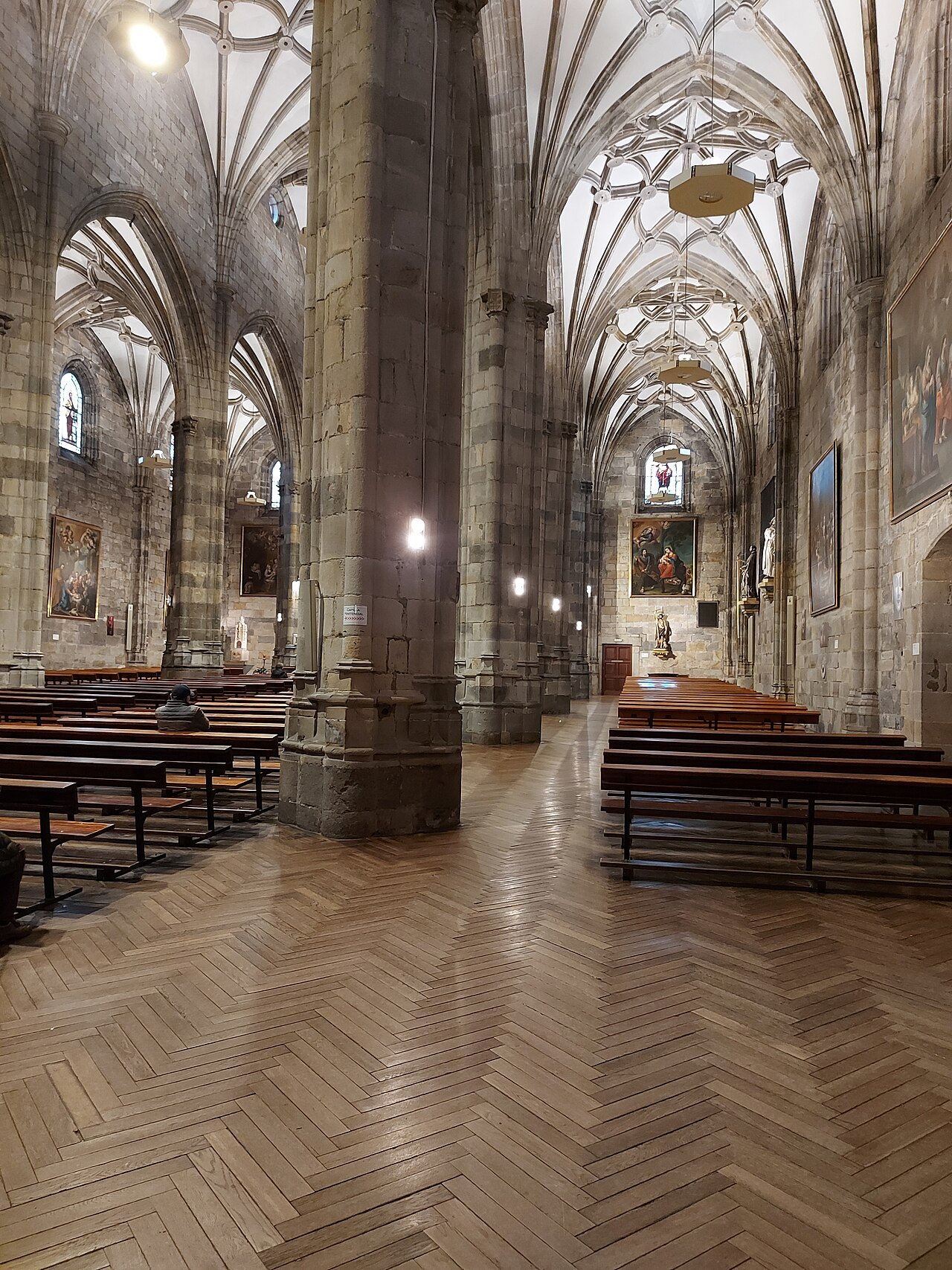
- 1The Gothic navesA wide central nave with a polygonal apse and two slightly lower aisles on ten round piers.
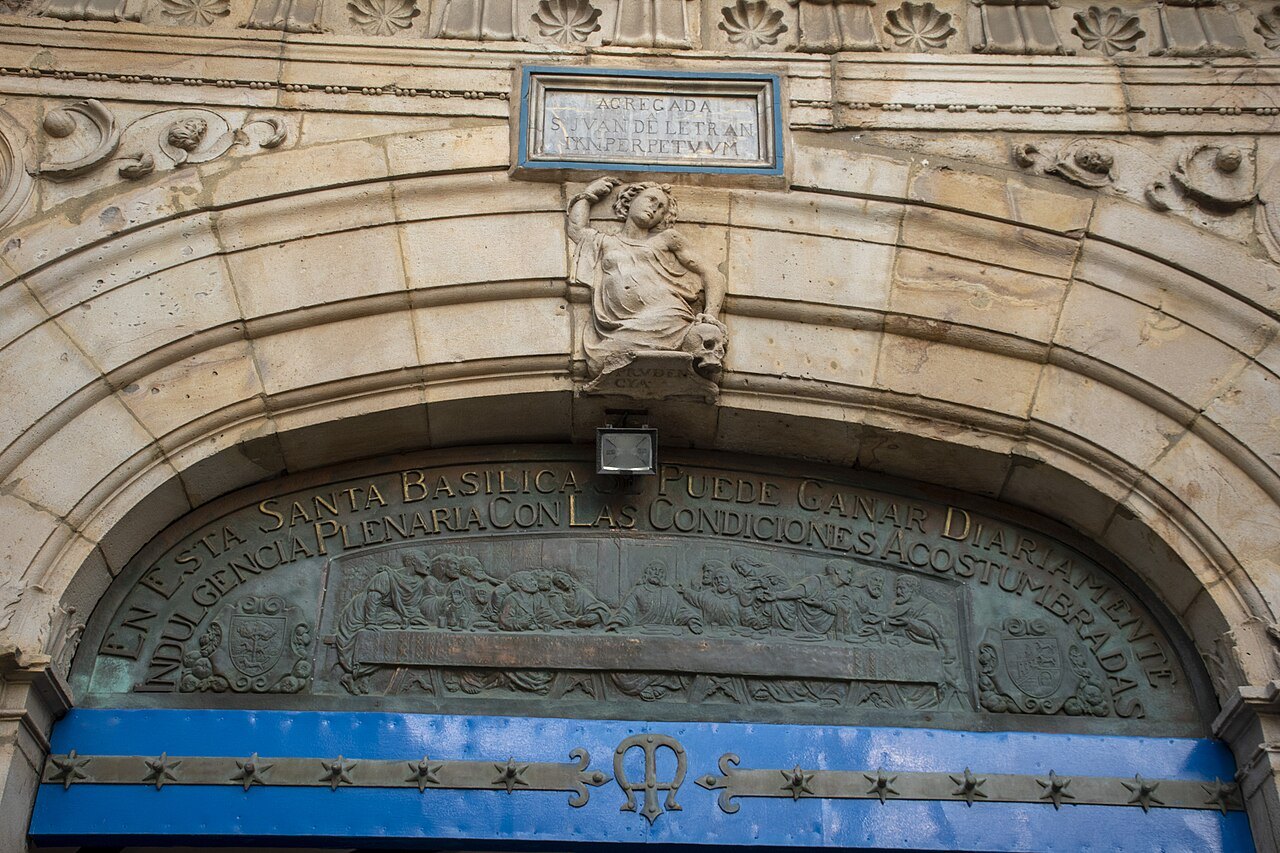
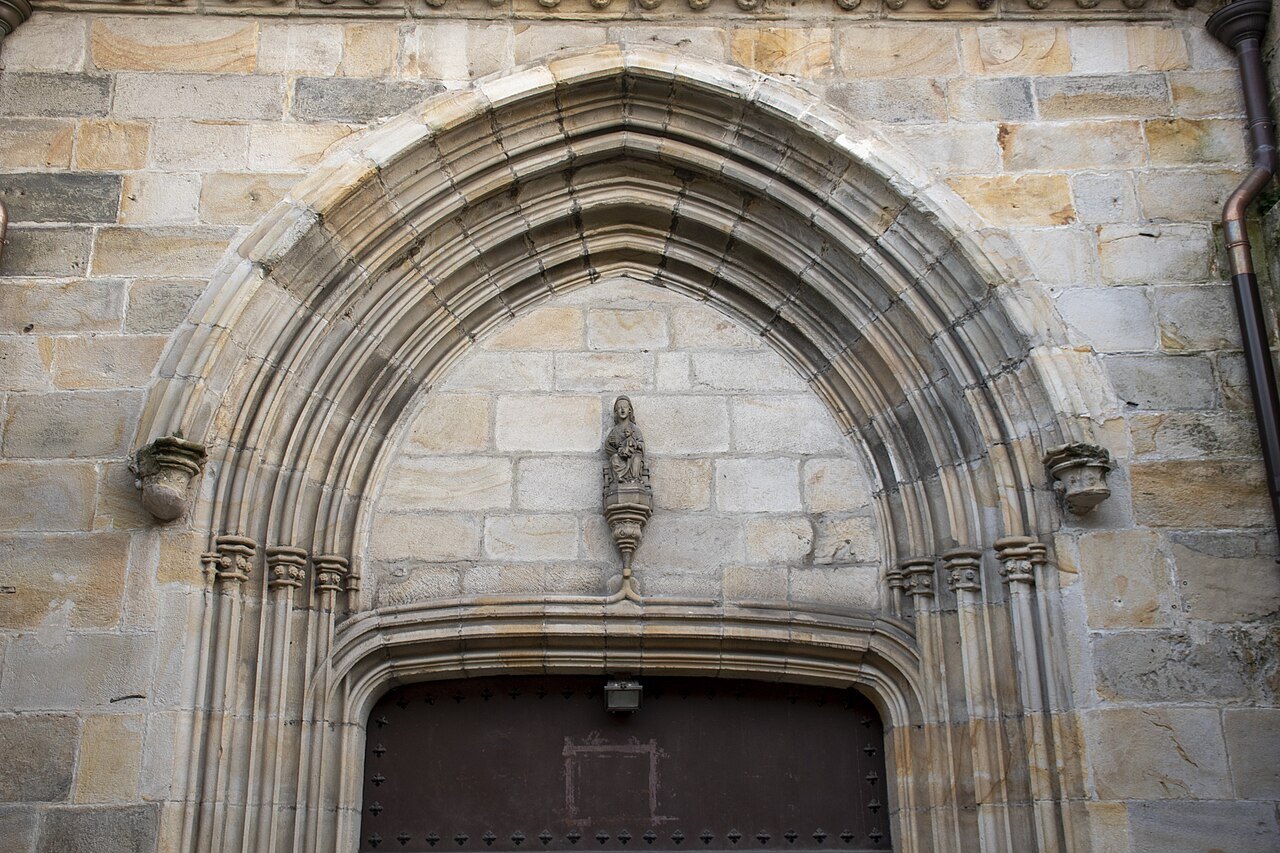
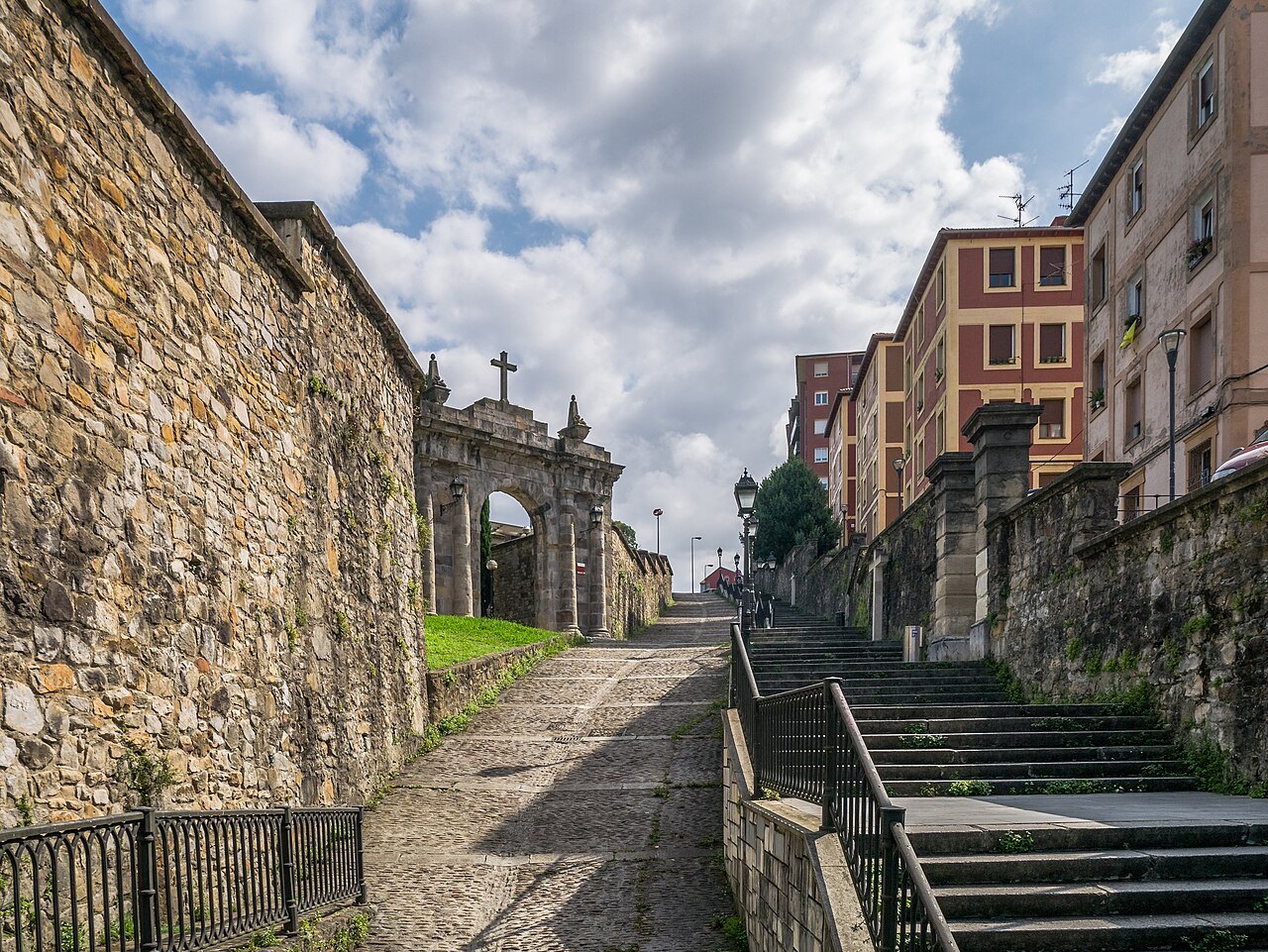
- 2The triumphal-arch doorwayA mid-sixteenth-century Mannerist main portal shaped like a Roman triumphal arch.
- 3The towerThe present tower by José María Basterra, the latest of several rebuilt after wars and lightning.
- 4The altarpieceA Neo-Baroque altarpiece of 1869 by Modesto Echániz, framing the image of the Virgin.
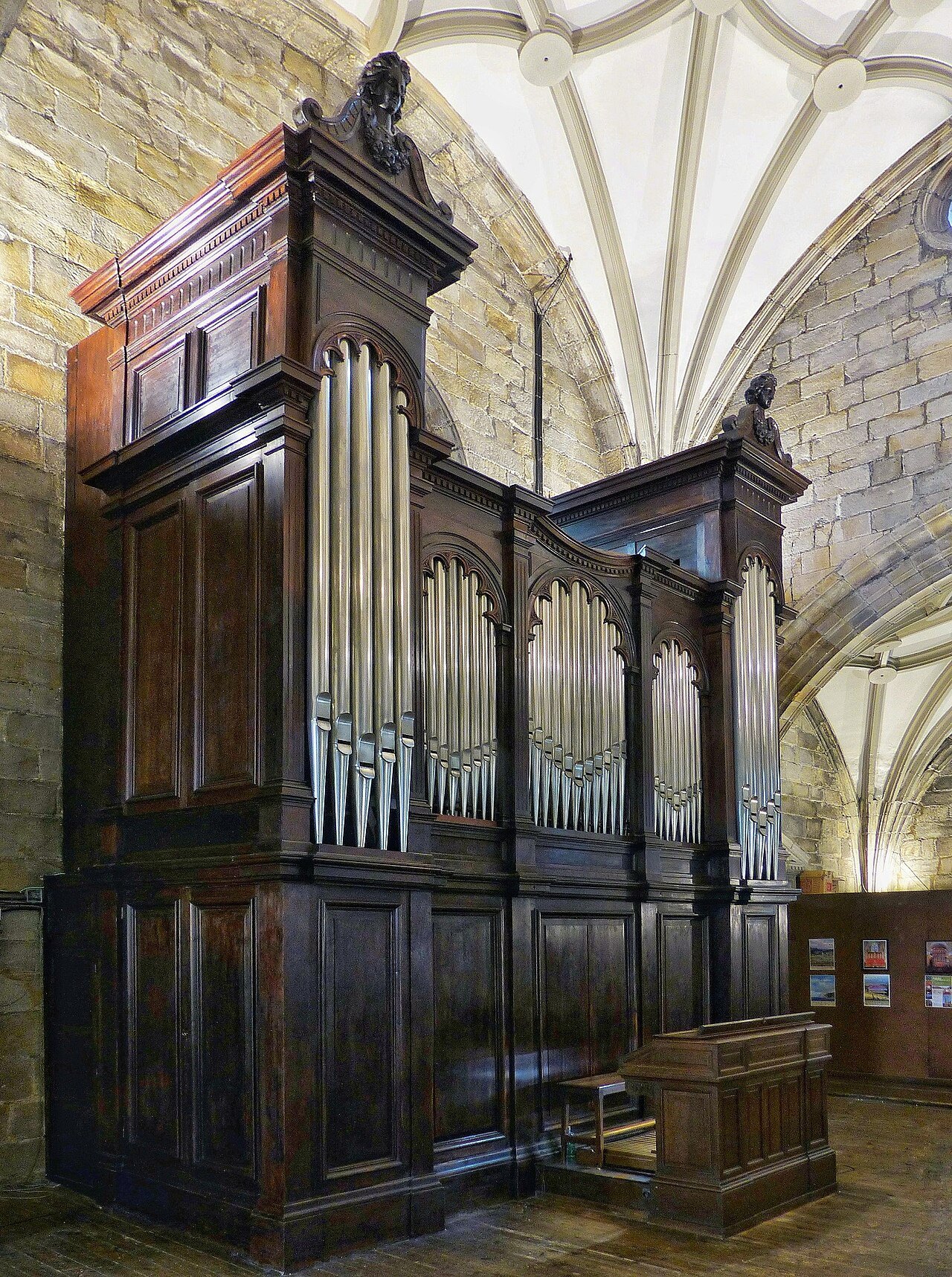
- 5The Cavaillé-Coll organA pipe organ built by the great Parisian maker Aristide Cavaillé-Coll, inaugurated in 1884.
- 6The Mallona stairsThe long stepped path climbing from the Casco Viejo up to the basilica's square.
Reading the place
The sight in full
Why it matters
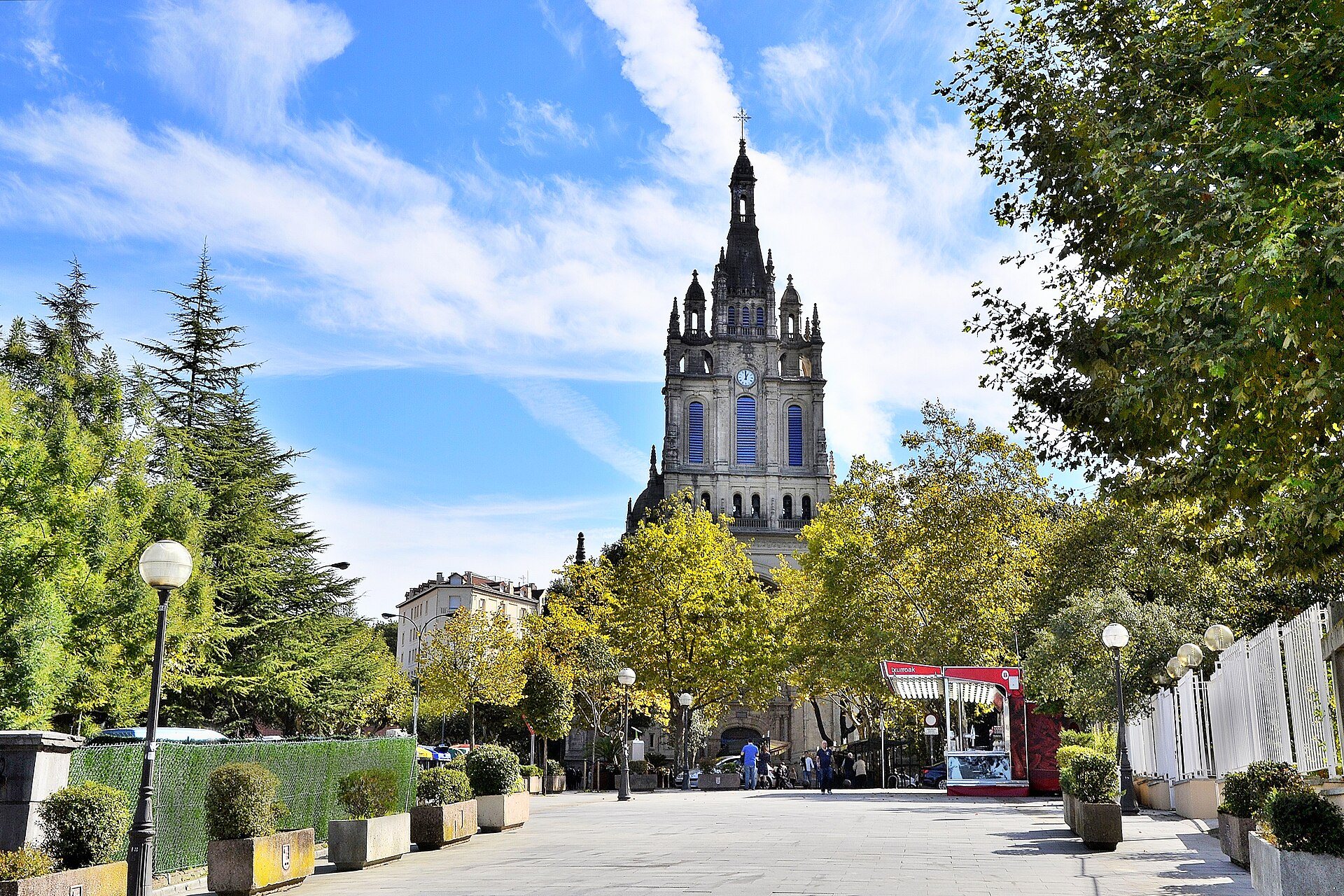
The Basilica of Our Lady of Begoña, Begoñako Basilika in Basque, is the sanctuary of the Virgin of Begoña, patroness of Biscay. It stands on the heights of Begoña, once a separate rural parish, an elizate, that Bilbao annexed in the twentieth century along with Deusto, looking down over the Casco Viejo and the river, and it has been the great devotional church of the province for five centuries.
It is also a landmark from the river. Ships coming up the Ría to Bilbao first saw the shrine at the bend where La Salve Bridge now stands, and their crews sang the Salve to the Virgin in thanks, which is how that bridge got its name. For a visitor, the climb to Begoña gives a view over the old town and a church whose story is a short history of the city's wars.
The church
An inventory of 1503 describes the first church as a single nave under a wooden roof, with a stone chapel holding the Virgin, a choir and a wooden porch, and a large Flemish altarpiece of fourteen panels showing the life of Mary. Work on the present sanctuary began in the first decade of the sixteenth century, from 1511, to a plan by Sancho Martínez de Asego, and the tower was designed by Martín de Garita.
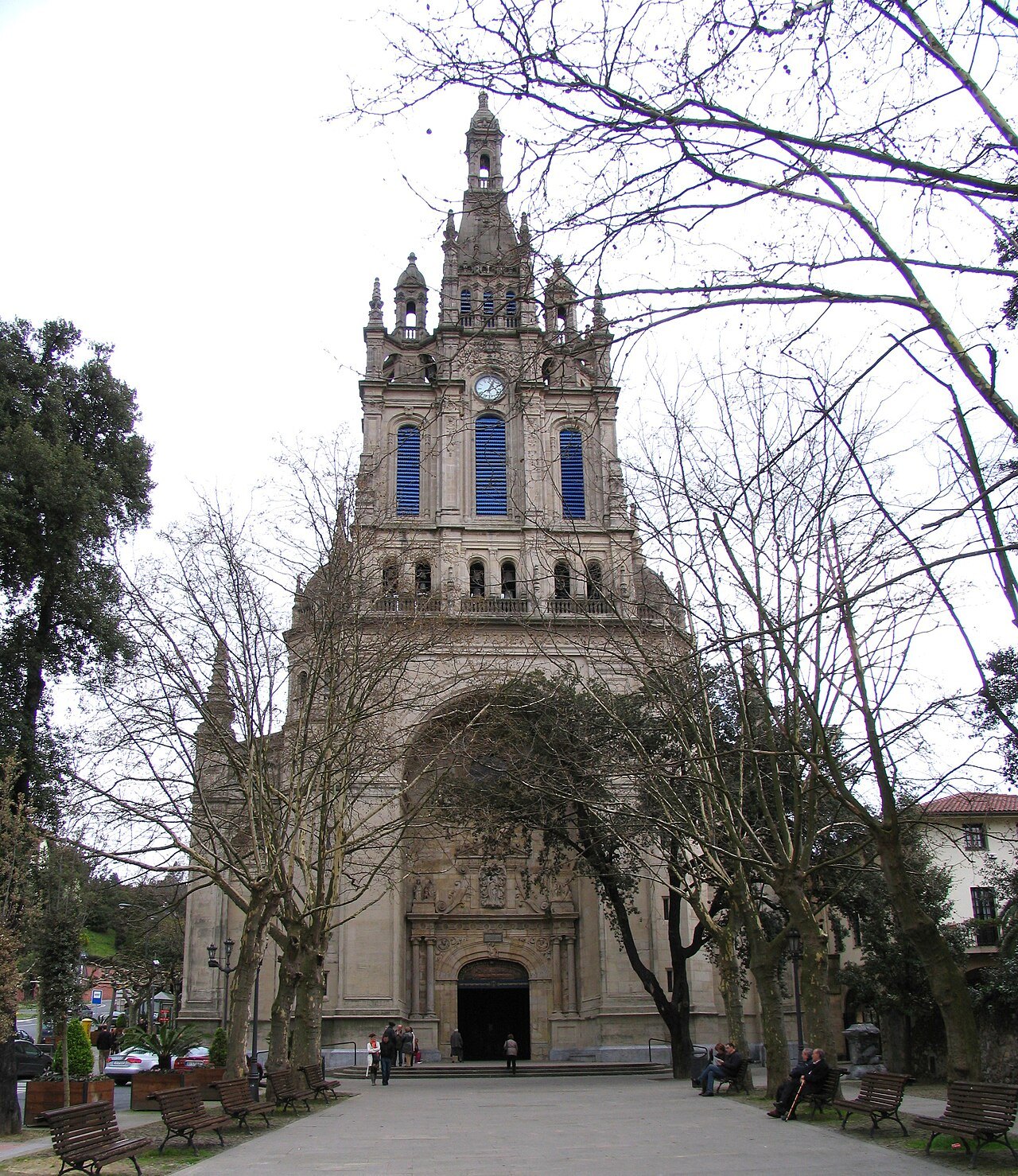
The building has a broad central nave with a polygonal apse and two slightly lower aisles, covered in the seventeenth century with rib vaults on ten sturdy round piers. Over the century the work took, the style shifted: in the middle of the sixteenth century the main doorway was designed as a magnificent Mannerist triumphal arch, close to the work of the Castilian architect Rodrigo Gil de Hontañón, while the rest of the building stayed Gothic.
Three wars and four towers
On 5 August 1808 Napoleon's troops under General Merlin sacked the town and the sanctuary and killed its priest; French troops besieged and sacked Bilbao, Deusto and Begoña again that same month. Begoña's position above the town made it strategic, and in the First Carlist War the Carlist general Tomás de Zumalacárregui placed an artillery battery here during the siege of Bilbao, making the church a prime target for the defenders; he was fatally wounded near it. The church was badly damaged.
It was repaired by the local council and the image of the Virgin returned on 1 August 1841. A new tower was finished in 1850, its top knocked down by lightning in 1862, and the present Neo-Baroque altarpiece by Modesto Echániz dates from 1869. In 1873 war came back: the church became a fortress again, the Carlists carried the image away when they were driven out, and under continuous bombardment the tower fell onto the vault of the nave.
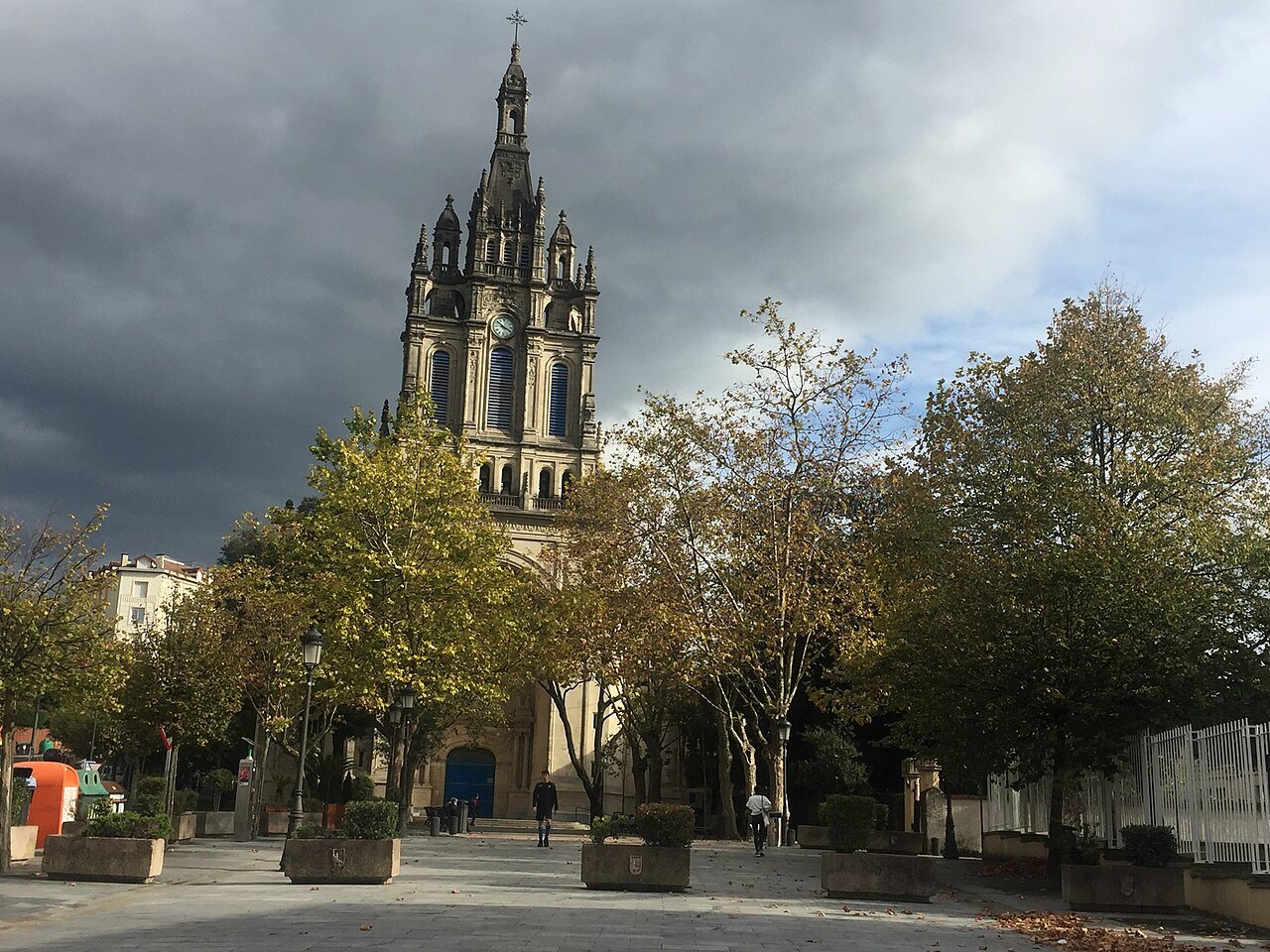
Restoration began in 1876 and a third tower was completed in 1881, only to be pulled down from 1900 after the canonical coronation of the image. The present tower, by the architect José María Basterra, was built between 1902 and 1907. Rome made the church a minor basilica on 27 March 1908, and it was consecrated again in 1928.
The twentieth century
On 16 August 1942 a clash between Falangists and Carlists outside the basilica ended with grenades exploding near the church. Accounts differ on the injuries, but the incident exposed the rifts inside Franco's regime and led to a reshuffle of his government; six Falangists were convicted and one was executed.
After the liturgical reforms of the 1960s the church was simplified: the large display canopy at the feet of the Virgin was removed, along with some statues. What you see is a Gothic building of the sixteenth and seventeenth centuries with a tower of the early twentieth and the furnishings left after those changes.
The organ
The basilica holds a pipe organ built by Aristide Cavaillé-Coll of Paris, one of the great organ makers of the nineteenth century, inaugurated in 1884, with its case made on site by the cabinetmaker Bernabé de Garamendi. The organizt Felipe Gorriti, asked to examine it, praised the harmony of its stops, the beauty of its sound and the admirable working of its mechanism. It was enlarged in 1911, and the composer Jesús Guridi signed his approval of the work.
How to get up there
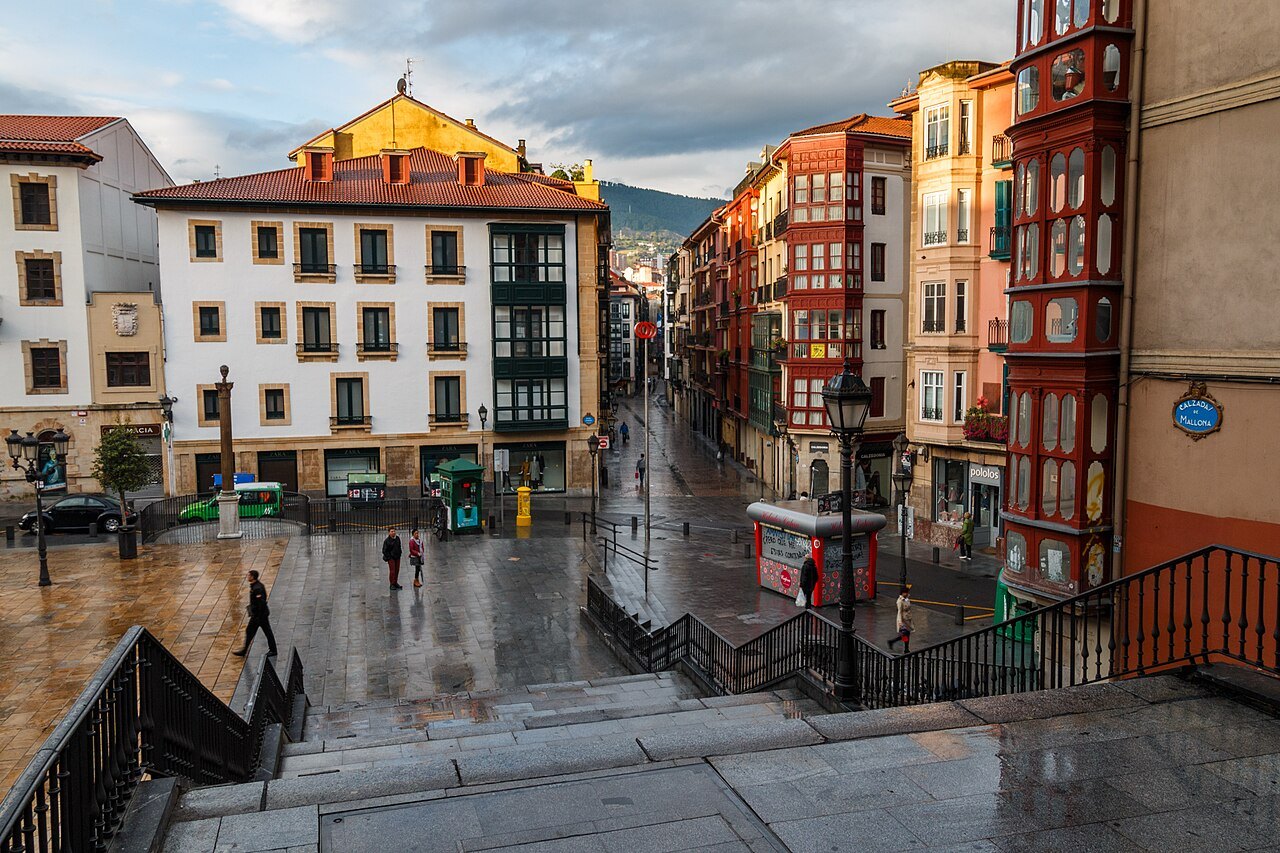
From the Casco Viejo, the classic way up is the long stepped path of the Calzadas de Mallona, which climbs from the top of the old town to the basilica's square; it is steep, with many steps, but short. Allow fifteen minutes and stop on the way for the view back over the roofs.
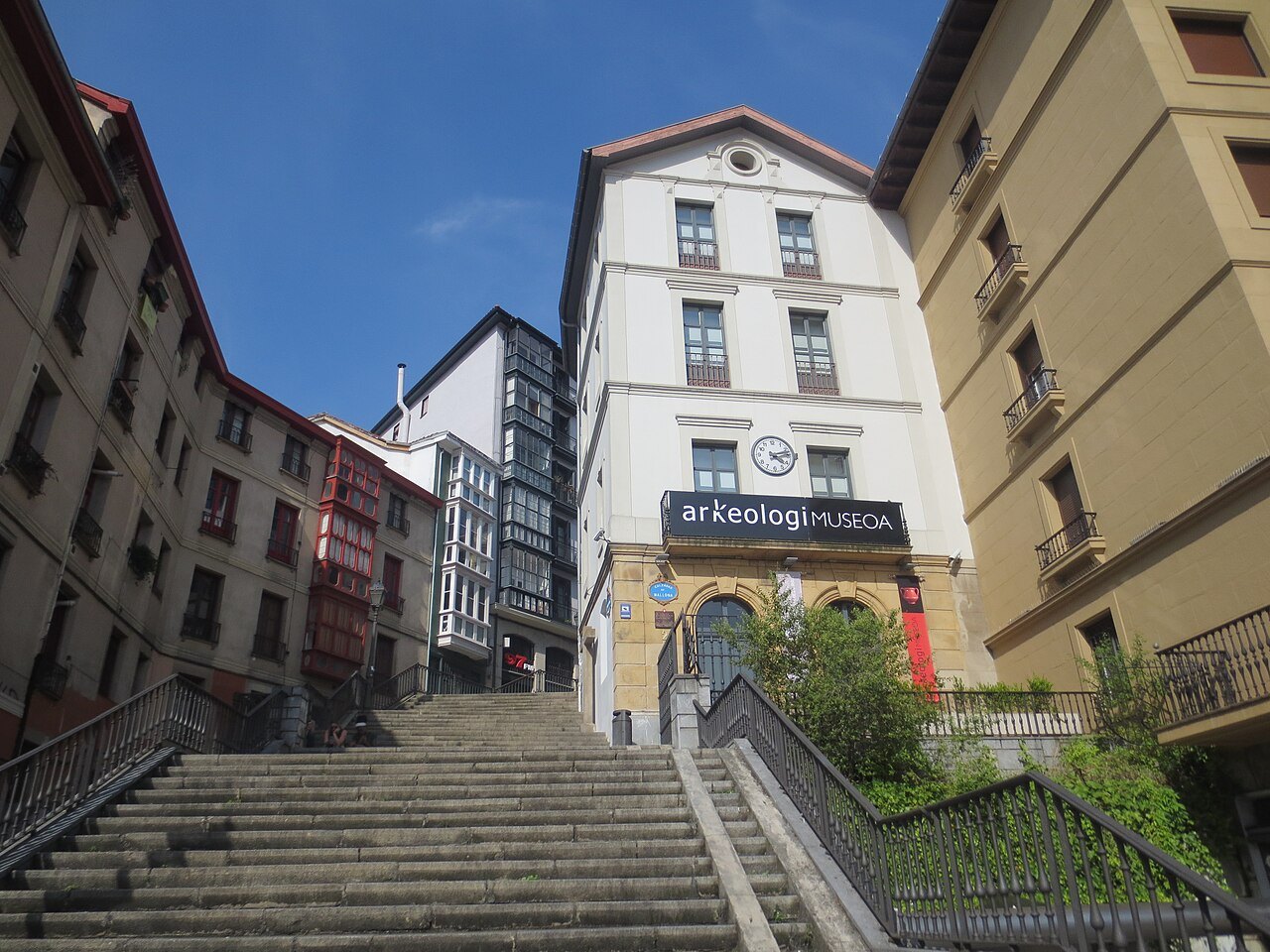
Without the climb, use the lifts inside the Zazpikaleak/Casco Viejo Metro station, which have an exit up on the Begoña side. The old Begoña lift, a concrete tower of 1943 that climbs about 45 meters from Esperanza street and is visible from much of the old town, stopped working in July 2014, and its service has since been provided by the Metro station's lifts. See getting around for the public lifts.
How to visit
Allow half an hour inside and time for the square and the view. The basilica is a working church with services through the day; visit outside mass, dress respectfully, and check its own times before going specially.
Combine it with the cathedral and the Basque Museum below, or with Artxanda across the valley for the other big view of the city.
Nearby
Where to go next
- Nearby · Ibaiondo · right bankThe Casco ViejoThe oldest quarter of Bilbao and the town's original core: seven parallel streets on the right bank of the Ría, with the cathedral, three old churches, the market and the city's busiest bars packed between them.Read the page →
- Nearby · Casco Viejo · right bankSantiago CathedralThe Gothic parish church of the founding town, rebuilt after a fire in 1374 and raised to a cathedral in the twentieth century: a compact church of warm sandstone in the Seven Streets, with a cloister, a great porch and a Gothic Revival front and spire.Read the page →
- Nearby · Casco Viejo · right bankPlaza NuevaA closed neoclassical square of arcades at the edge of the Seven Streets, planned in 1821 and finished in 1851, where the Basque language academy now sits behind the clock and the old town's bars fill the arches.Read the page →