Home · Sights · Santiago Cathedral
Santiago Cathedral
What you are looking at
Casco Viejo · right bank
- 1The spireA Gothic Revival tower and spire of 1891 by Severino de Achúcarro, about 64 meters high.
- 2The Angel DoorA florid Gothic doorway of the early sixteenth century leading from the street into the cloister.
- 3The cloisterThe Gothic cloister beside the church, restored in the early twentieth century.
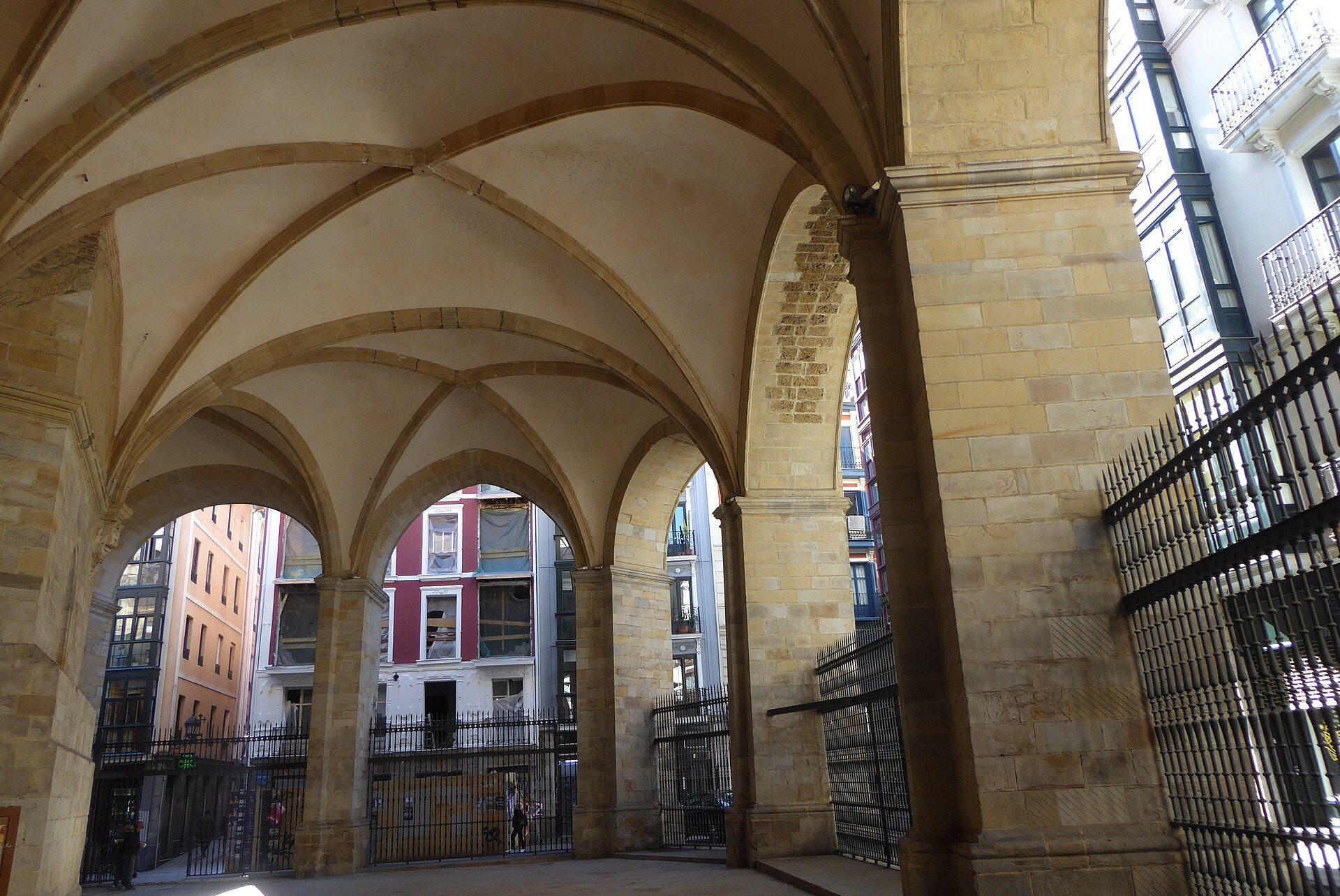
- 4The great porchA huge arcaded porch on the south side, begun in 1580, which also buttresses the nave.
- 5The ambulatoryA walkway behind the high altar ringed by chapels, built with the first part of the church.
- 6The cryptA small chapel under the altar keeping part of the wall of the church that stood before 1300.
Reading the place
The sight in full
Why it matters
The Cathedral-Basilica of Santiago, Done Jakue Katedrala in Basque, is the oldest large building in Bilbao and the heart of the Casco Viejo. It was built as the town's main parish church between the end of the fourteenth century and the early sixteenth, in the Gothic style; its front and tower are a thorough Gothic Revival rebuilding of the nineteenth century. It is the most monumental Gothic church in Biscay.
It is dedicated to Saint James the Greater, the patron of Bilbao, because a coastal branch of the pilgrimage road to Santiago de Compostela, the Northern Way, passes through the city. In 2015 the church was listed by UNESCO as a World Heritage Site together with other buildings along that route. It became a cathedral only in 1949, when the diocese of Bilbao was created, and was consecrated as one on 30 December 1955.
Three churches on one site
The present building is the third church of Saint James on this site. The first stood before 1300, the year the town was founded, and had a cemetery around its east end; the second was an enlargement of it for the growing town. In 1374 that second church was destroyed by a terrible fire, and the pope granted indulgences to those who gave money for a new one.
Work on the new church began around 1397 and went on slowly for more than a century. By the middle of the fifteenth century the triforium and the ambulatory with its five central chapels were finished; the side chapels followed toward 1500. The sacristy, the great outside porch and a Renaissance altarpiece by Guiot de Beaugrant, made between 1533 and 1543 and dismantled in 1805, were added in the sixteenth century. Rome made it a minor basilica, the first in the Basque Country, on 11 June 1819.
The front, the tower and the porch
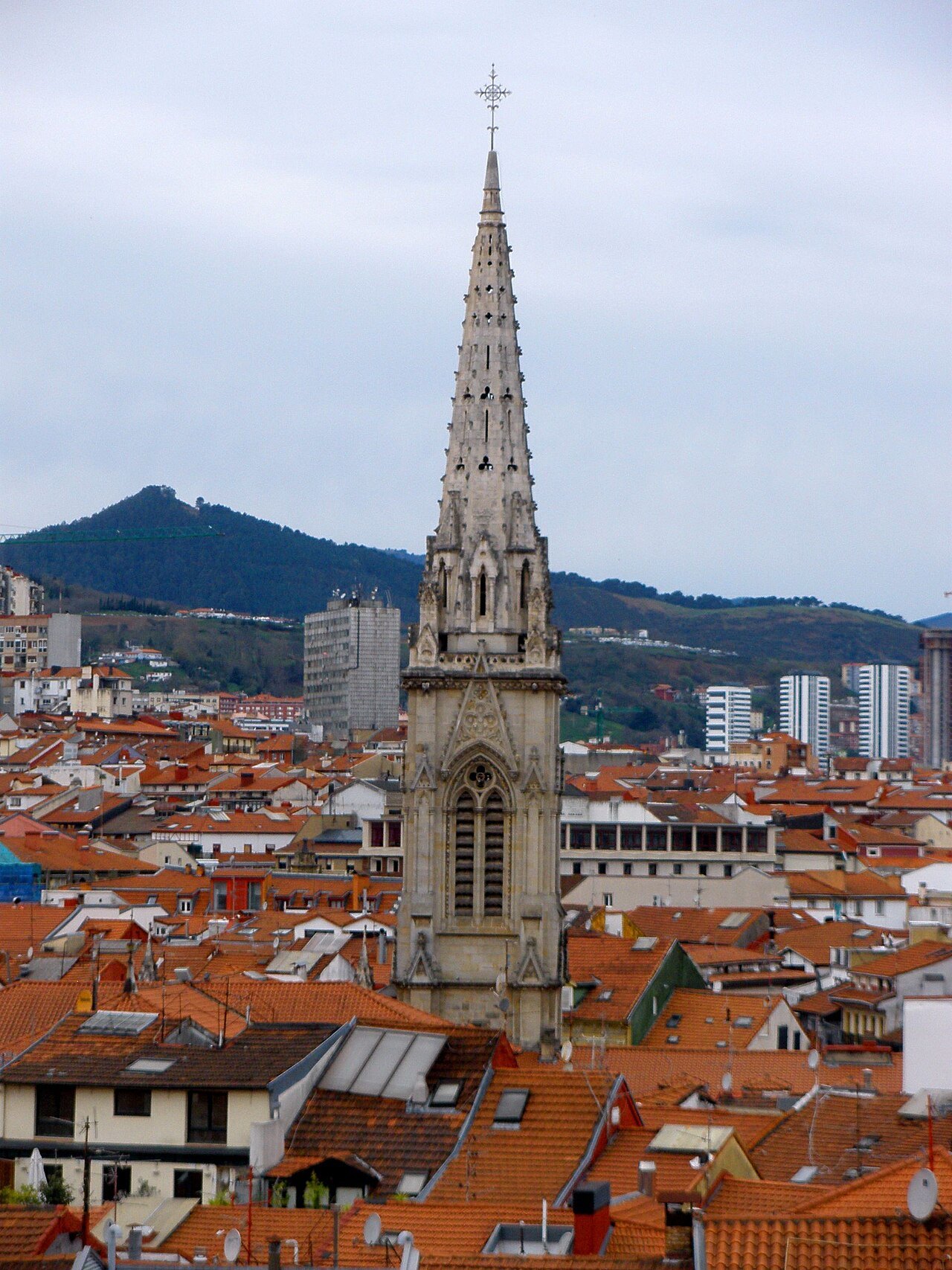
In the 1880s and 1890s the whole west front, with its doorway, rose window, tower and spire, was rebuilt in a Gothic Revival style meant to match the old Gothic forms. It replaced a seventeenth-century Baroque front. The tower is the fourth known on the site; the architect Severino de Achúcarro designed it, and front and tower were finished in 1891. The tower is about 64 meters high.
On the north side, the Angel Door, a florid Gothic doorway of the first years of the sixteenth century, leads into the cloister. On the south side stands the great porch, begun in 1580 on the site of an old cemetery and finished a century later. Its odd, roughly triangular plan has a reason: it acts as a buttress for the south aisle, which had foundation problems because the church stands on marshy ground by the river.
Inside
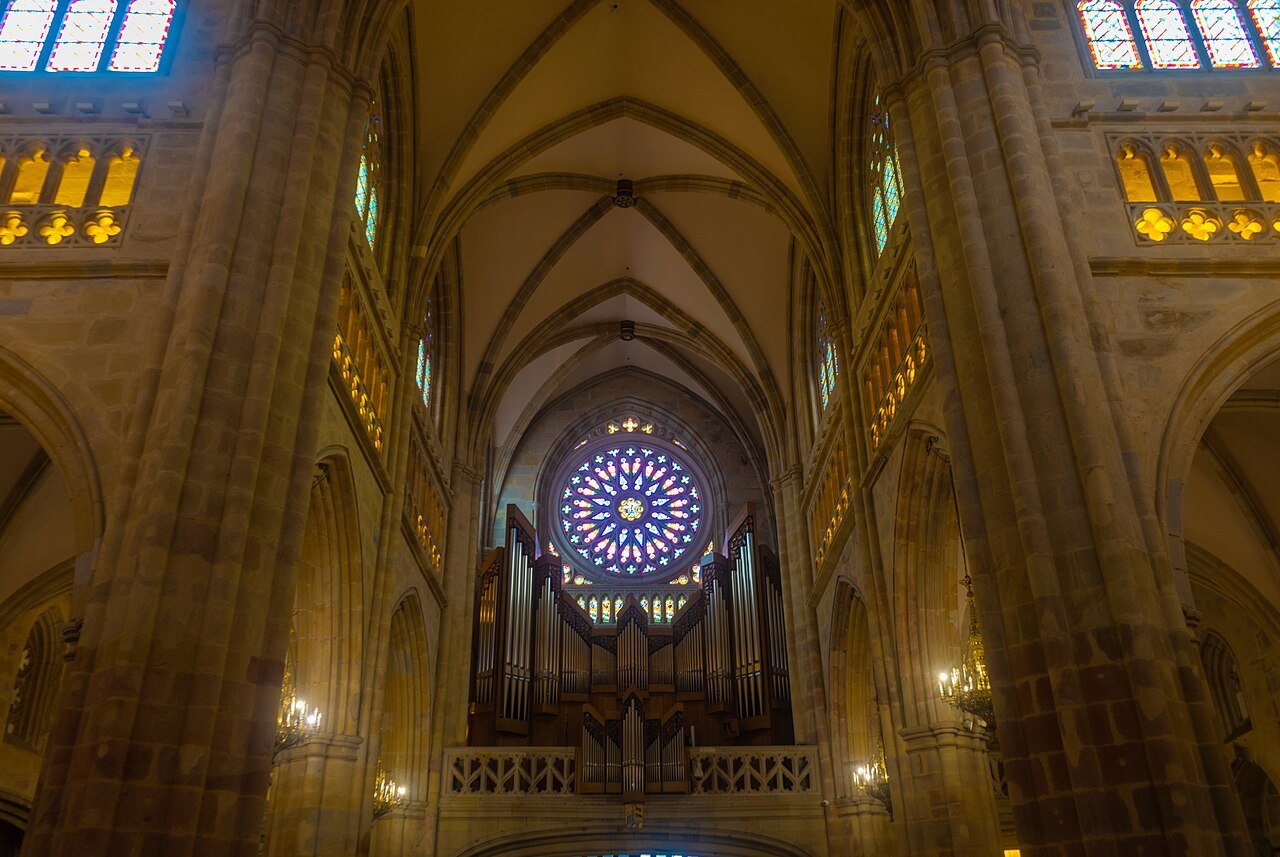
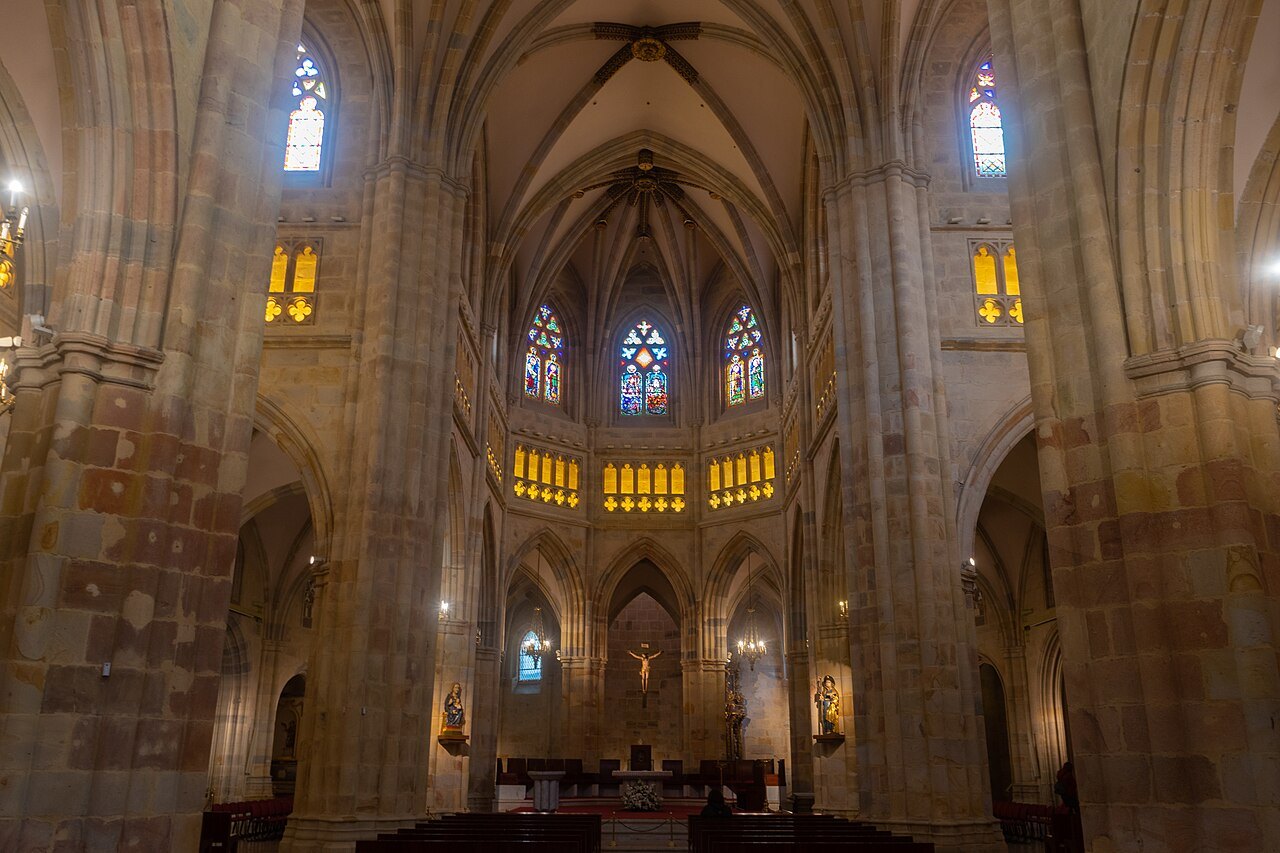
For a cathedral it is small, built as it was for a parish: about 51 meters long and 22 meters wide, with a nave about 22 meters high. The stone is a uniform sandstone, and inside it has a warm, toasted, almost wine-colored tone with veins. Three naves are divided into four bays by round piers with attached columns, under rib vaults.
An ornamental triforium runs round almost the whole church, and above it are seventeen windows and three rose windows of nineteenth-century stained glass; only the windows of the east end show figures, the Trinity with pairs of apostles. Behind the high altar, a wide ambulatory opens into seven radiating chapels in a semicircle, a plan possibly influenced by French Gothic churches. Fifteen chapels in all lie between the buttresses, many paid for by wealthy parishioners as their burial places.
Because it was a parish church, the choir is raised over the first bay of the nave rather than set in the middle of the floor. It holds an organ built in 2001 and named after the composer Jesús Guridi, the cathedral's organizt from 1918 to 1939; the instrument it replaced had been given in 1890 by Casilda Iturrizar, the benefactor whose name is on the city's main park. Under the altar, a crypt keeps part of the east wall of the first church, older than the town itself.
What you see outside
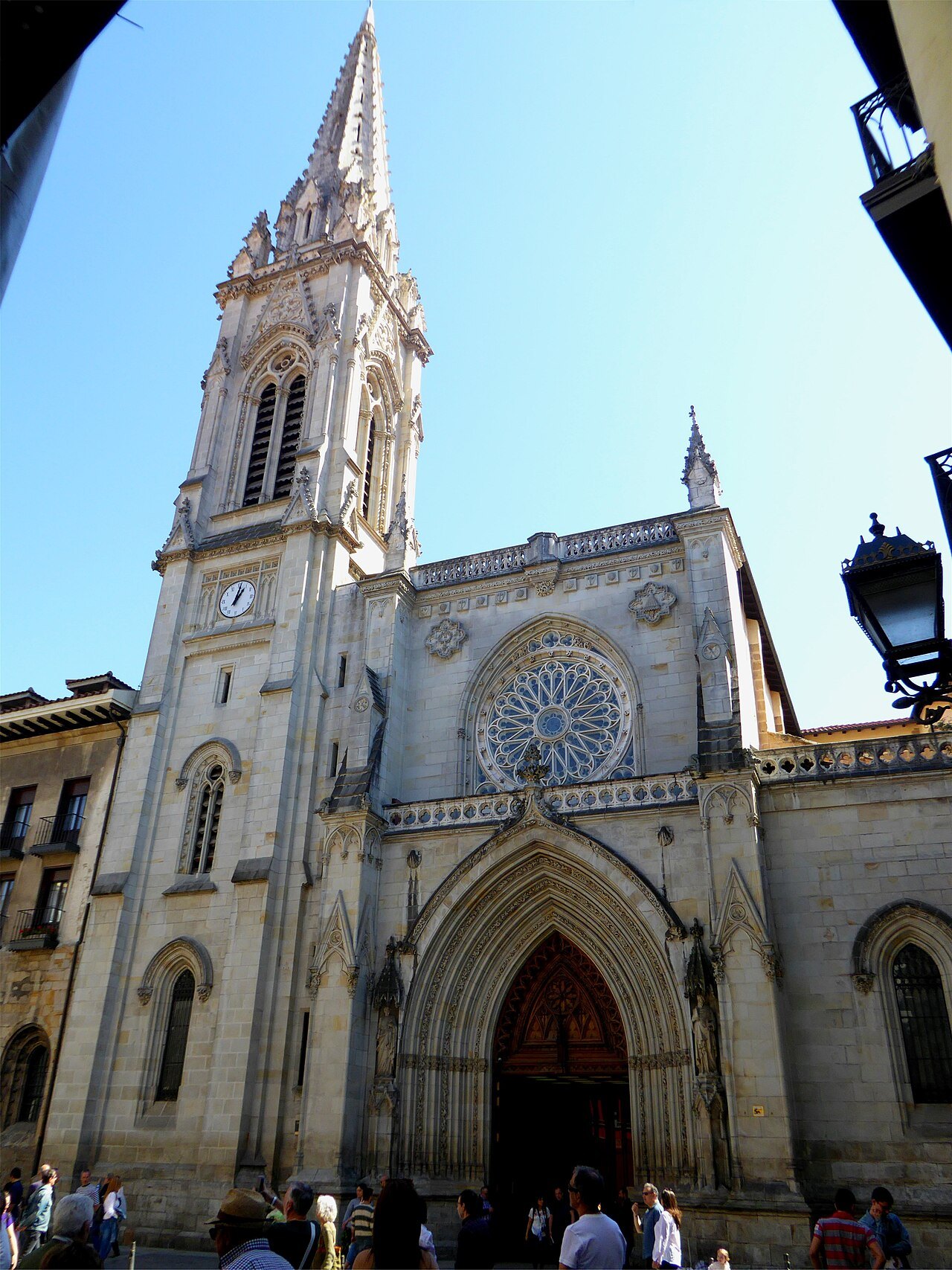
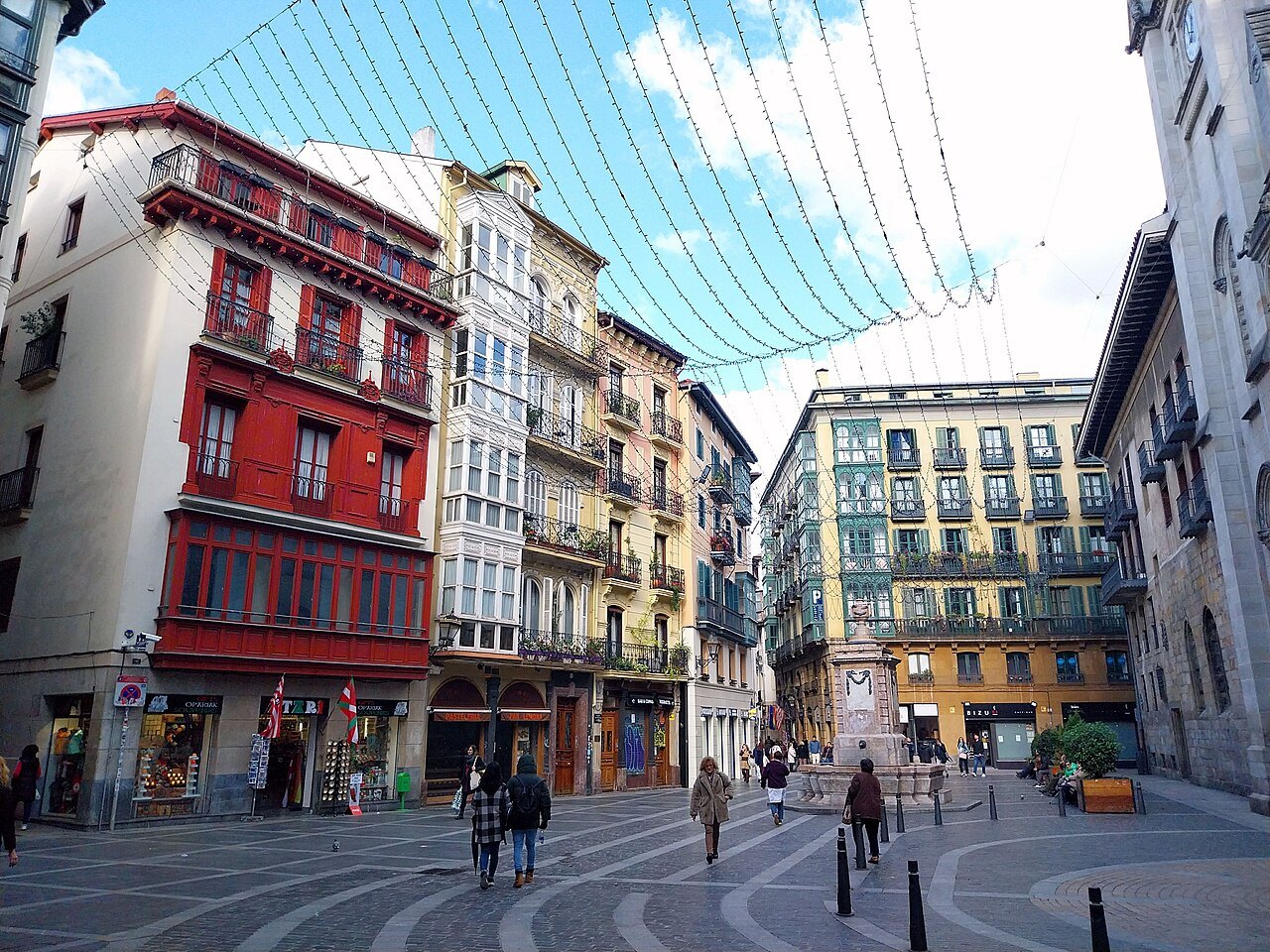
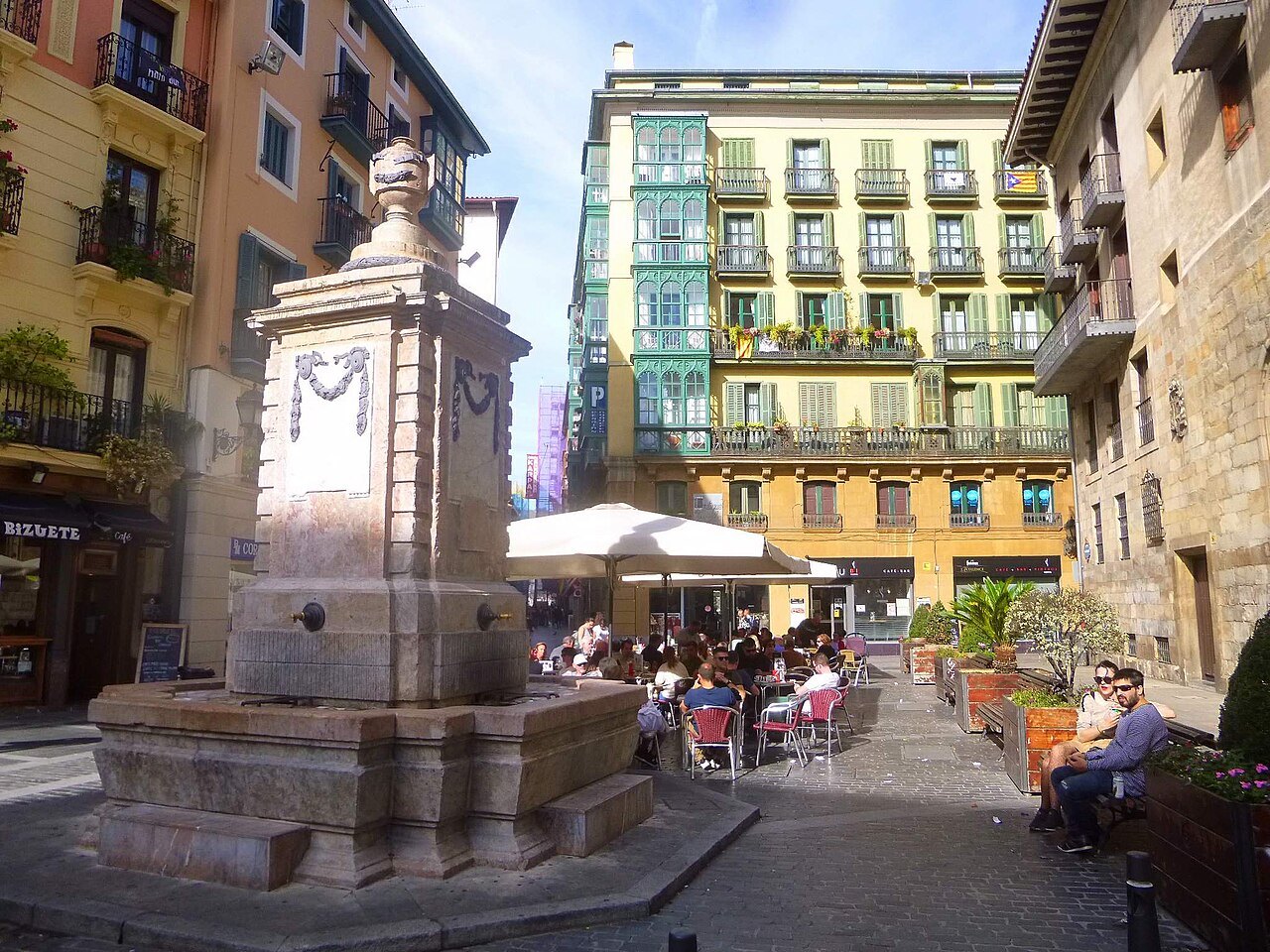
The cathedral stands on the small Plaza de Santiago in the middle of the Seven Streets, with the Paret fountain in front of it. Walk round it: the spire rises above the narrow lanes, and from Tendería you pass under the great porch, where carved figures of seated prophets frame the south doorway. Along the buttresses of the main vault are stone carvings of local merchants, a curious local custom.
How to visit
Allow about half an hour for the church, the cloister and the porch. The cathedral keeps its own visiting hours around services and some parts, such as the cloister, may be open only at certain times; check before going specially, and remember it is a working cathedral.
It is a few minutes' walk from the Zazpikaleak/Casco Viejo Metro station and from the Ribera market. Combine it with the Plaza Nueva and the climb to the Basilica of Begoña, the other great church of the old town. Pilgrims on the Northern Way stop here, and you may see them with their shells and packs.
Honest notes
The front most people photograph is nineteenth-century work. The medieval cathedral is inside, in the cloister, the porch and the Angel Door. The 1983 flood filled the church, and repairs and cleaning went on until 2000; what you see is in very good condition as a result.
Nearby
Where to go next
- Nearby · Ibaiondo · right bankThe Casco ViejoThe oldest quarter of Bilbao and the town's original core: seven parallel streets on the right bank of the Ría, with the cathedral, three old churches, the market and the city's busiest bars packed between them.Read the page →
- Nearby · Casco Viejo · right bankPlaza NuevaA closed neoclassical square of arcades at the edge of the Seven Streets, planned in 1821 and finished in 1851, where the Basque language academy now sits behind the clock and the old town's bars fill the arches.Read the page →
- Nearby · Casco Viejo · right bankThe Ribera MarketBilbao's covered food market, a long Art Deco building on the riverbank beside the church of San Antón, standing on the site where the town has held its market since the fourteenth century.Read the page →