Home · Sights · The Ribera Market
The Ribera Market
What you are looking at
Casco Viejo · right bank
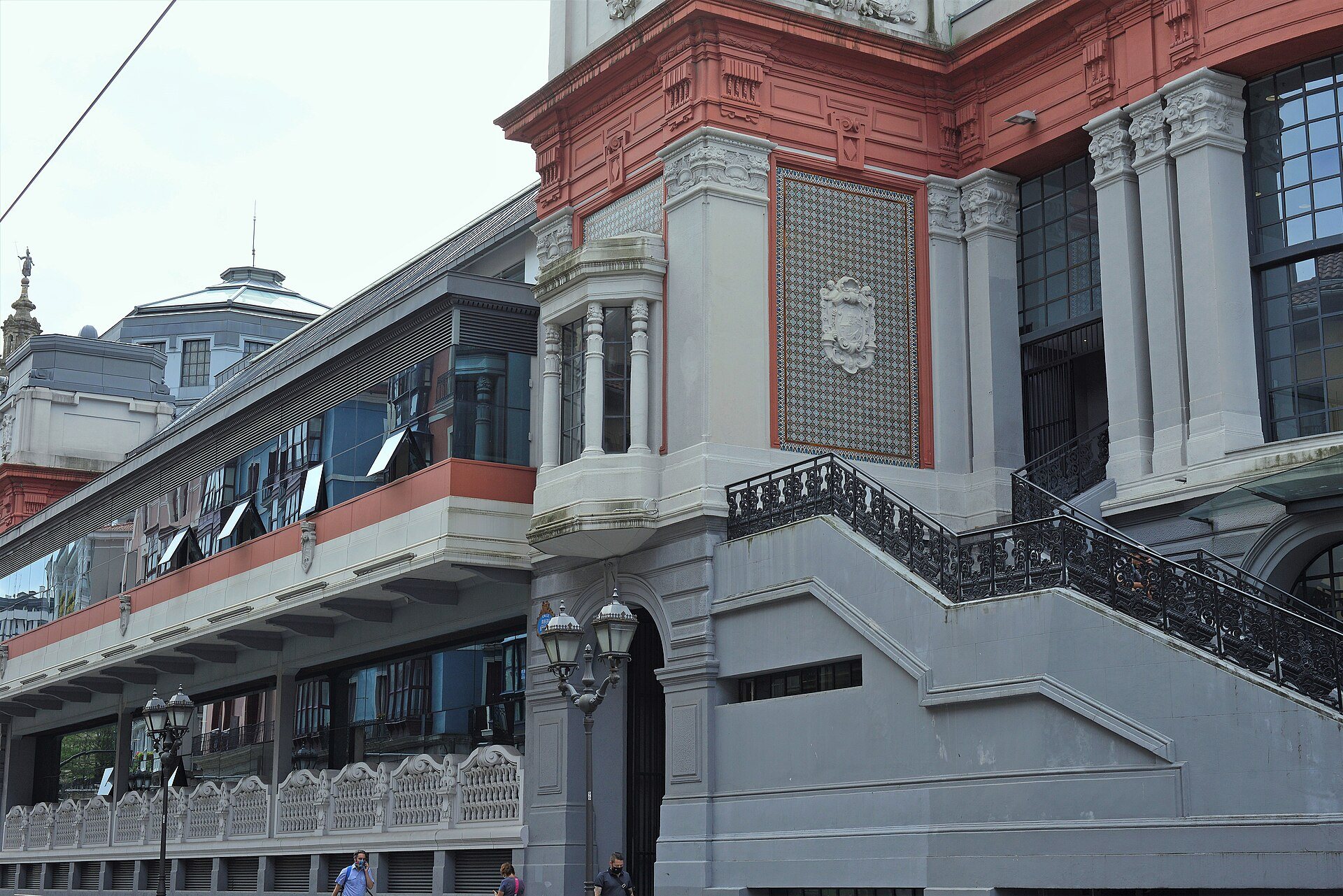
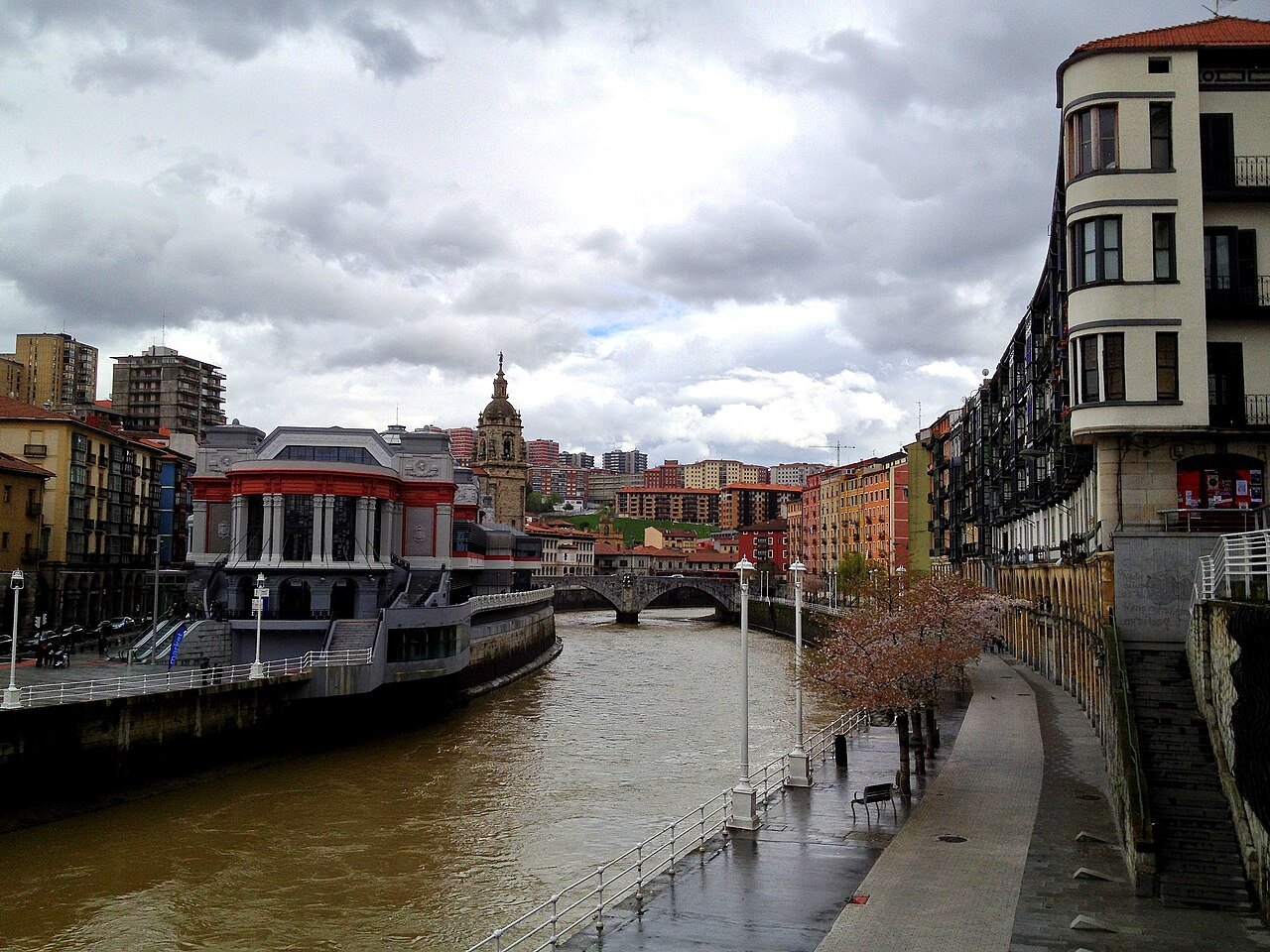
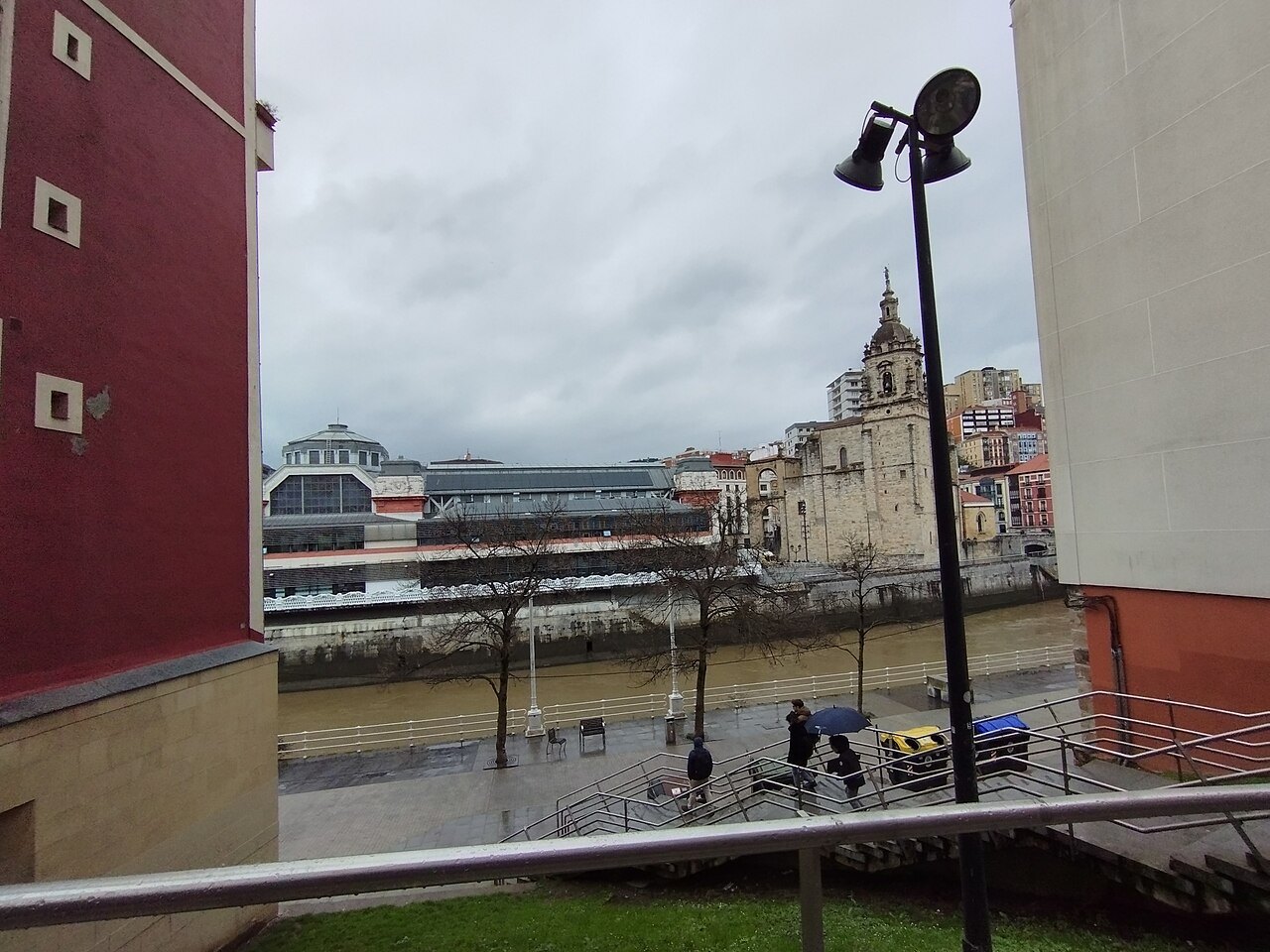
- 1The riverside frontA long, pale front with glazed bays along the quay, best seen from the opposite bank.
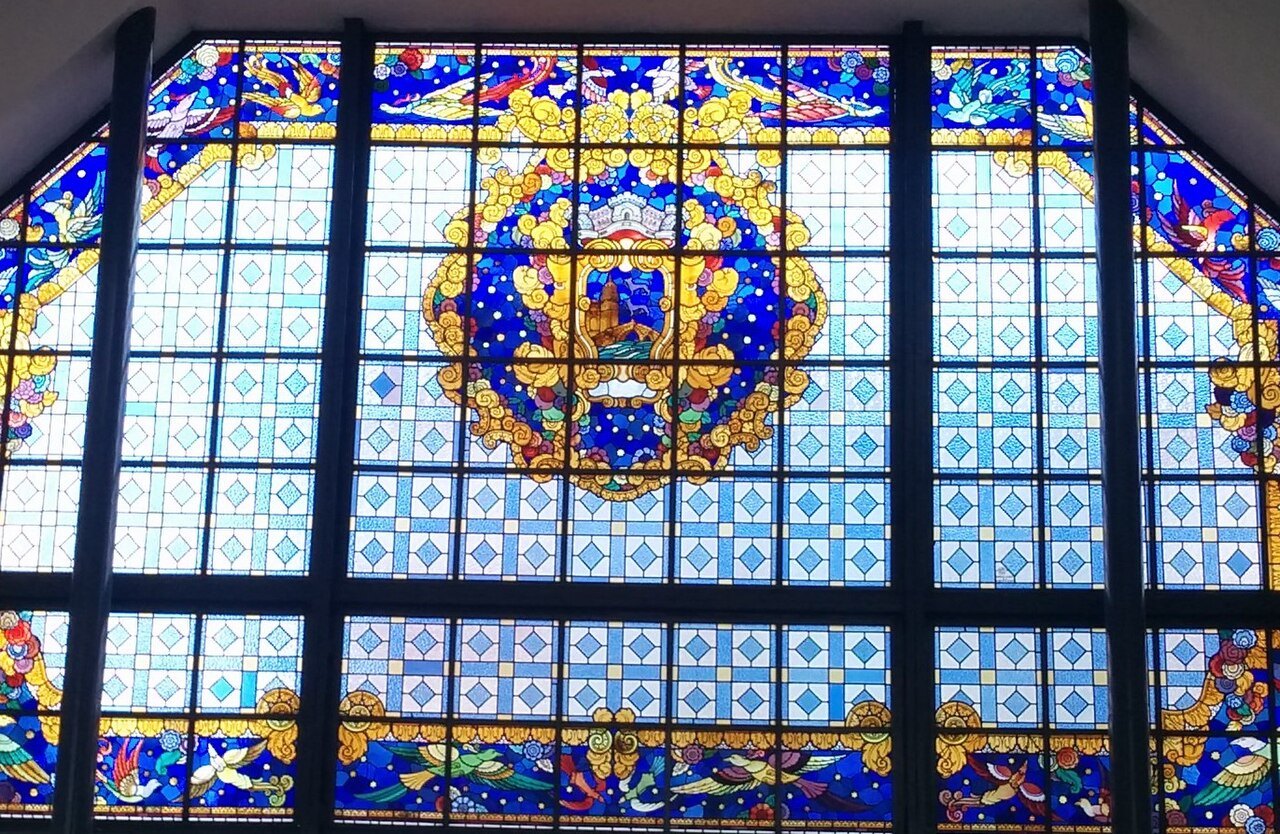
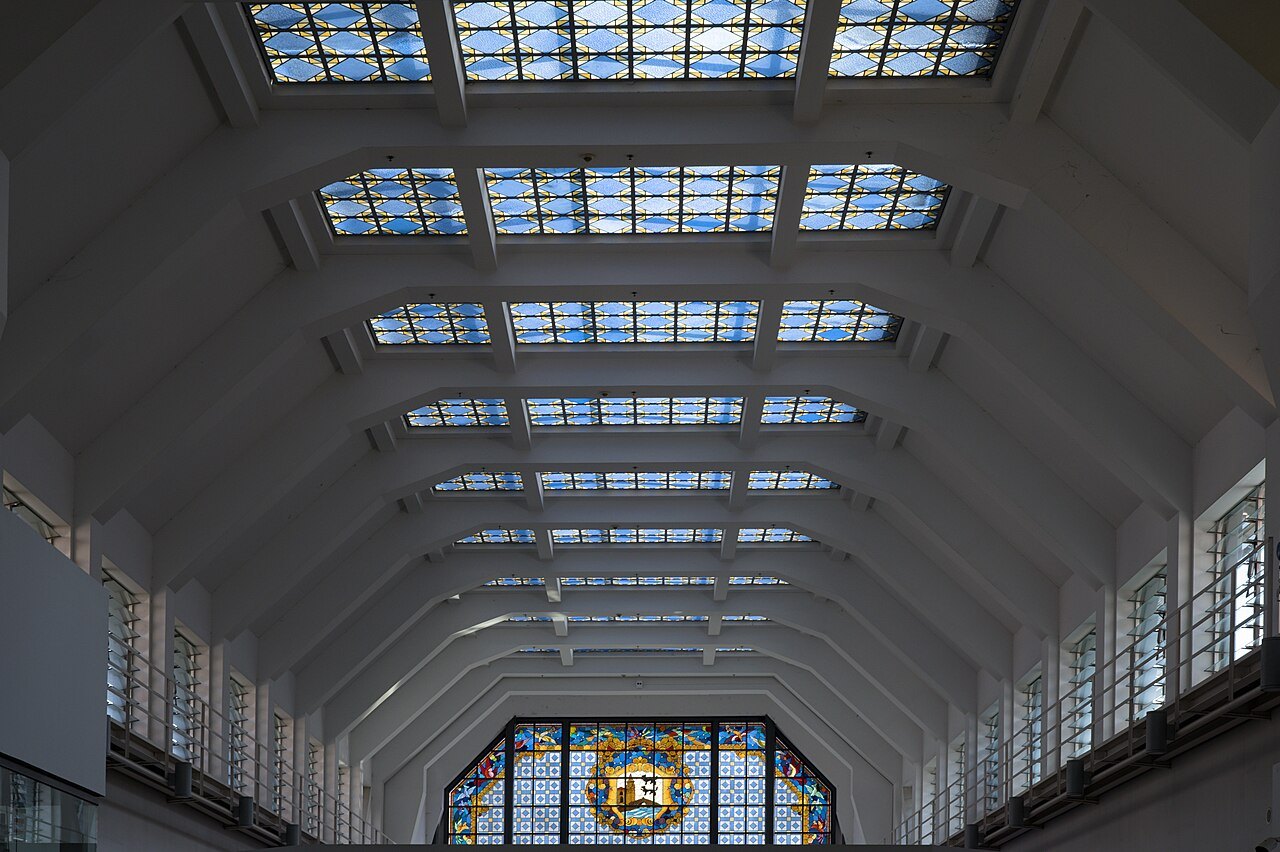
- 2The stained glassLarge colored windows over the halls, kept from Pedro de Ispizua's building of 1929.
- 3The fish stallsCounters of fresh fish, shellfish and salt cod, the core of any Basque market.
- 4The farm stallsA corner set aside for produce sold directly by small Basque farms, the caseríos.
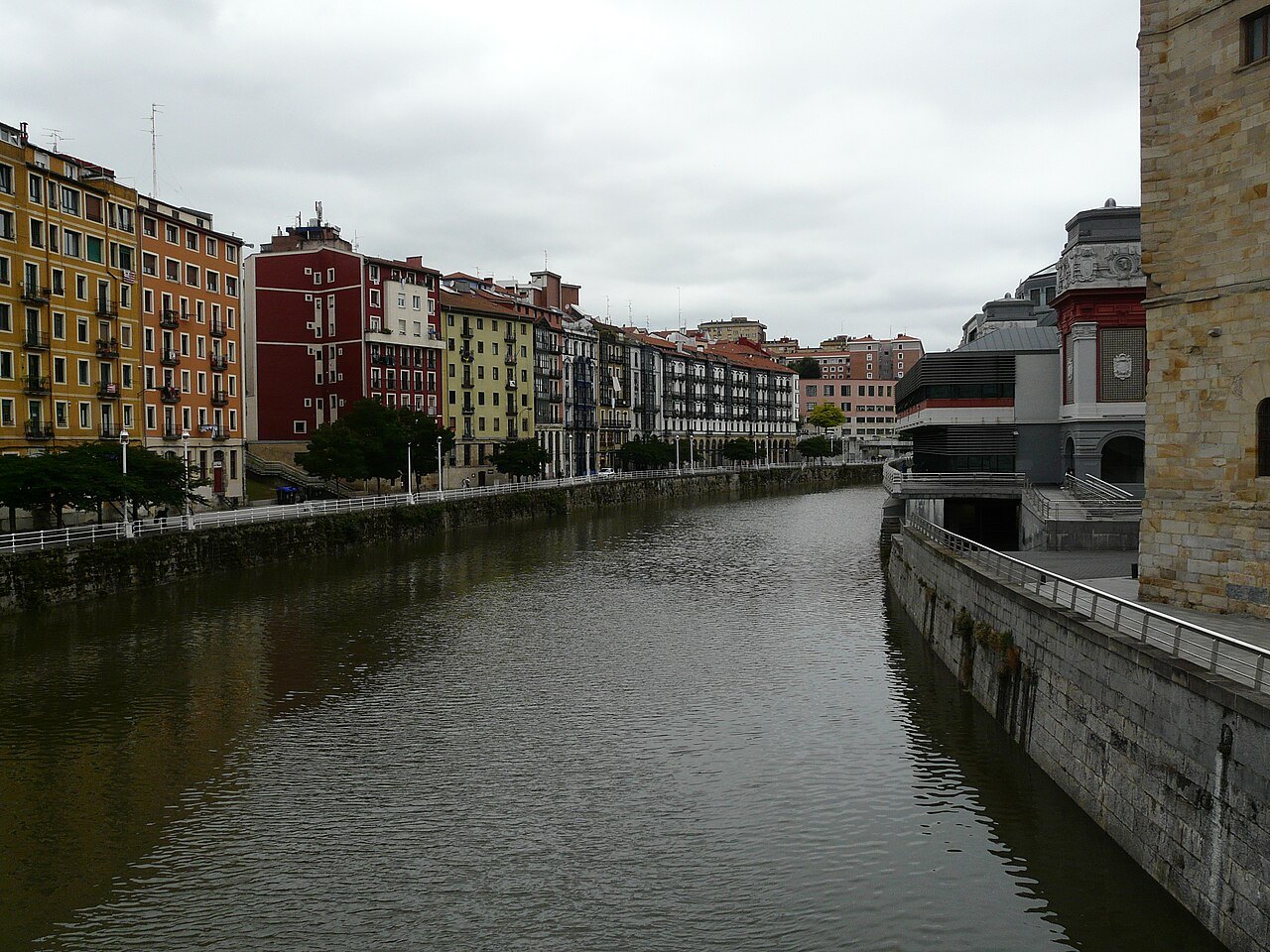
- 5The old towpathThe riverside walk outside, recovered during the reform finished in 2010.
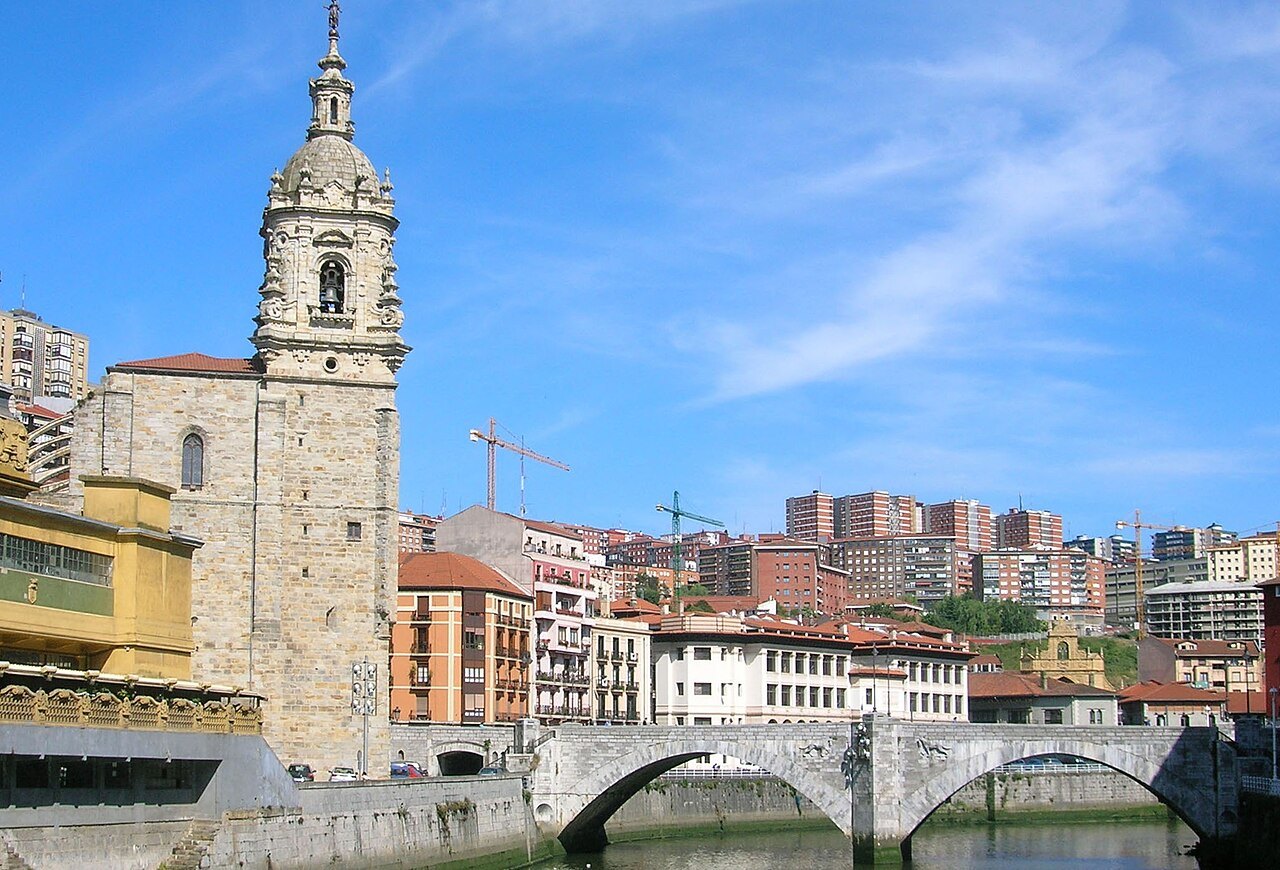
- 6San Antón beside itThe Gothic church and the old bridge at the market's upstream end.
Reading the place
The sight in full
Why it matters
The Mercado de la Ribera, Erriberako Merkatua in Basque, is a covered food market on Ribera Street, on the right bank of the Ría at the edge of the Casco Viejo. With about 10,000 square meters of selling space it is one of the largest covered markets in Europe, and in 1990 the Guinness Book of Records named it the most complete municipal food market and the biggest by number of traders and stalls.
It is also a place with a long memory. The town's market stood here, on the old main square beside the church of San Antón, from the fourteenth century, when this spot was the busiest point of the young town. To walk through it is to see what Bilbao eats, from salt cod to farm cheese, in the building that still feeds the old quarter.
From open square to Art Deco hall
For centuries the market was an open square. Stalls began to be covered around 1840, and by 1870 all of them stood under a roof. A larger hall of cast and wrought iron and glass followed, in the fashion of the time, but it trapped so much heat that a sprinkler system was fitted to the roof to cool it. By 1850 the town already had an inspection service for fish, milk and meat.
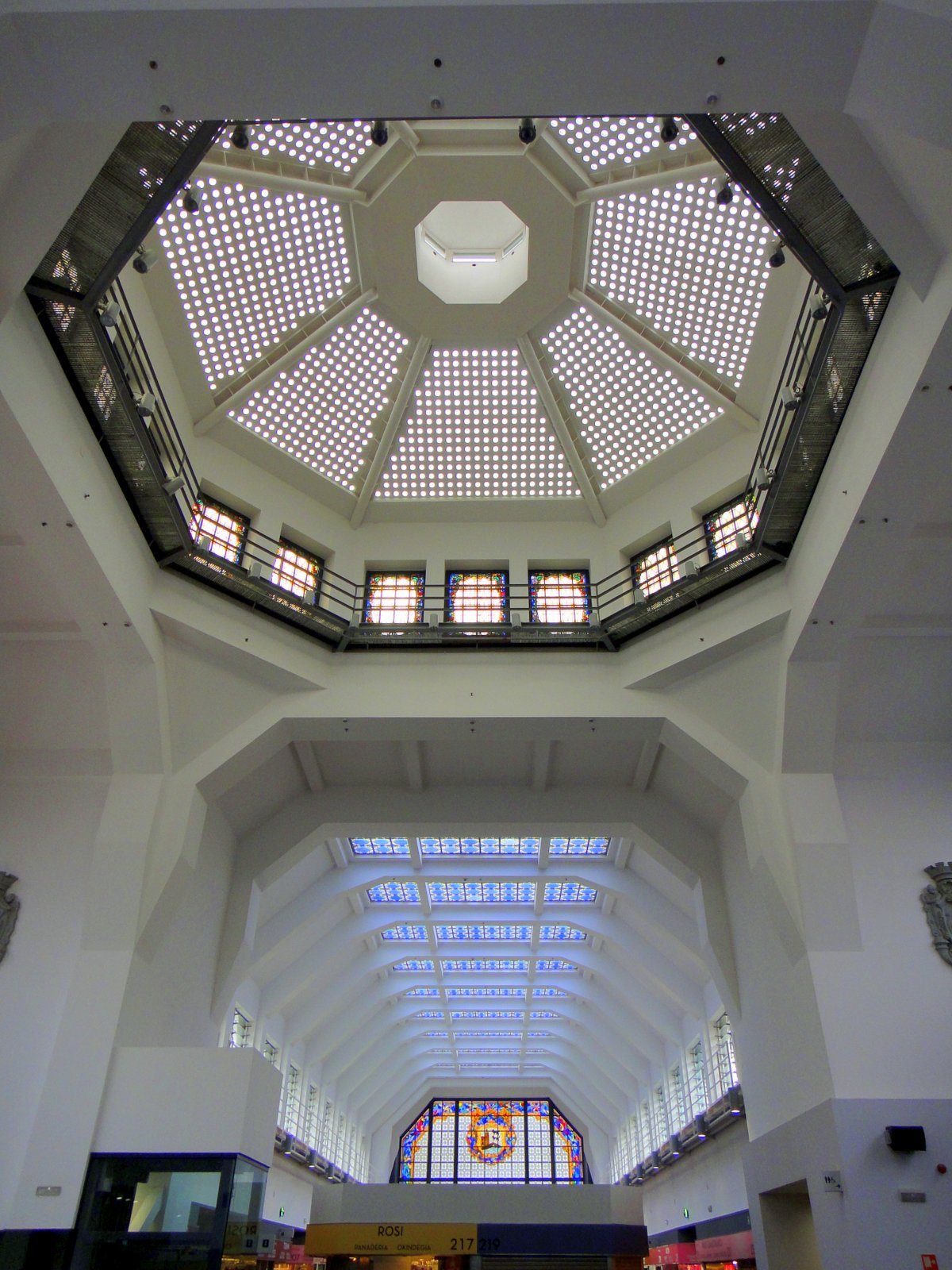
In 1928 the city decided to build a bigger market, and on 22 August 1929, in the middle of the summer festivities, a new reinforced concrete building by the architect Pedro de Ispizua was opened. It was designed for function: open halls without interior columns, good ventilation to keep smells down, translucent floors that let daylight fall from one level to the next, and large stained-glass windows. Together with the decoration of its fronts, it is usually described as an eclectic Art Deco building.
Floods, rebuilding and a reform
In 1971 a new wholesale market opened outside the center, and the Ribera stopped supplying the region's traders and became the neighborhood market of the Casco Viejo and Bilbao La Vieja. In August 1983 the flood that hit the whole city badly damaged the building, and its repair became a chance to modernize it.
A structural survey in 2008 found serious damage in the concrete, traced to the beach sand used to make it, whose salt had rusted the steel inside. A large part of the building was rebuilt from 2009 without the market closing for a single day. The first phase, designed by the architect Emilio Puertas, opened on 9 December 2010; it brought in much more natural light through broad glazing and recovered the old towpath along the river.
What you see
From the outside, the market is a long, low building whose river front is best seen from the left bank, or from the footbridge that crosses to it. At the upstream end stand San Antón and its bridge, the image on the city's coat of arms; at the other end the building reaches toward the Arenal and the Merced bridge.
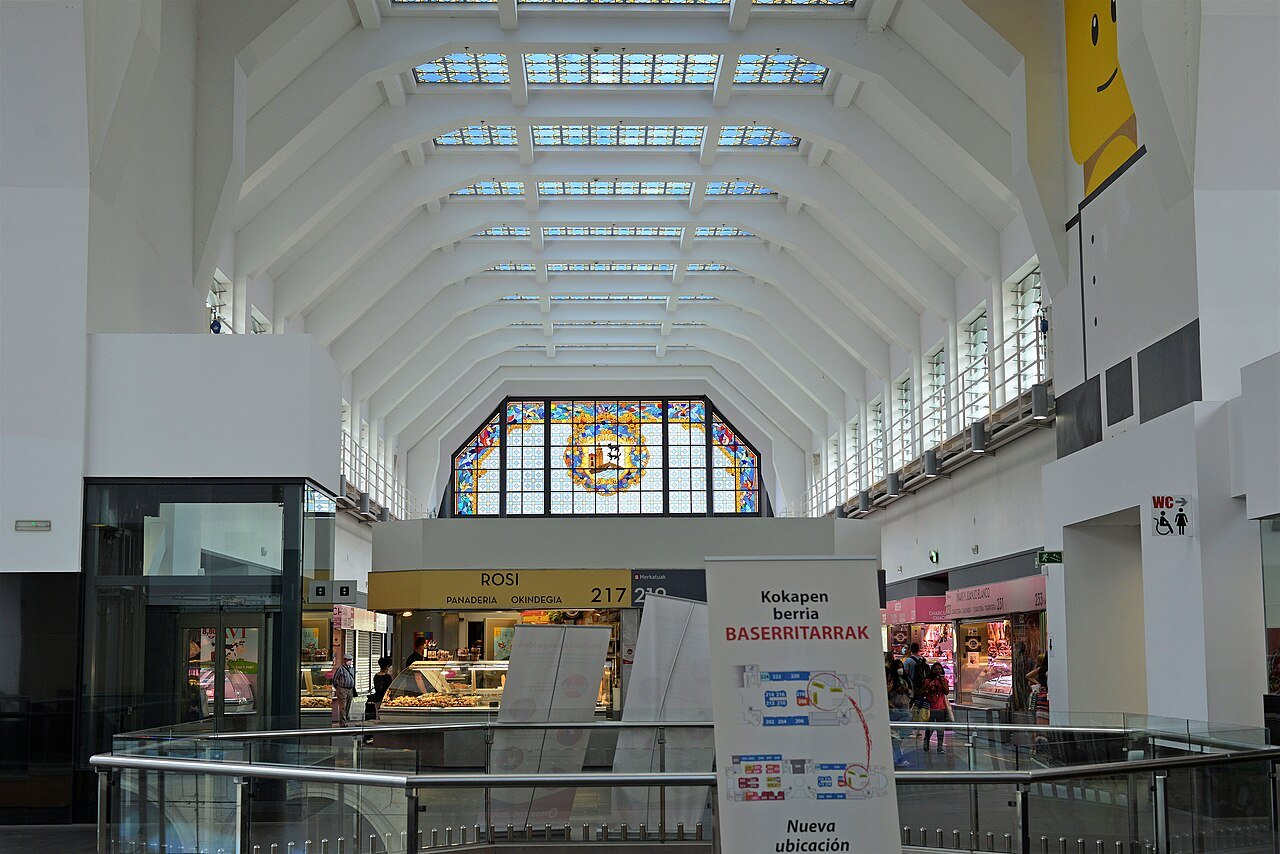
Inside, the stalls are grouped by trade: fish, shellfish and salt cod; meat, charcuterie and poultry; fruit, vegetables, eggs and mushrooms; and an area where small farms sell their own produce directly. Look up at the stained glass and the way light falls through the floors, which is what Ispizua designed the building around.
A section of the market holds bars where you can eat pintxos and drink, and it fills at the end of the morning and in the early evening. It is an easy place to see the city's own foods together before eating them elsewhere; the eating and drinking page explains what the dishes are.
San Antón, next door
The market's upstream neighbor is the church of San Antón, the most popular church in Bilbao and the one shown on its coat of arms. A warehouse for river goods stood on the site almost three hundred years before it; in 1334 a fortress and a wall that doubled as a flood dike were built here, and a first church replaced them, consecrated in 1433.
The present church is late Gothic, from the end of the fifteenth century, with three stepped naves under rib vaults. Its Renaissance porch was designed in 1544 and carved between 1546 and 1548 by a team led by Guiot de Beaugrant, and its bell tower is Baroque. One corner of the south nave is cut off at an angle to let the river's water pass, and the 1983 flood carried away most of its furnishings.
How to visit
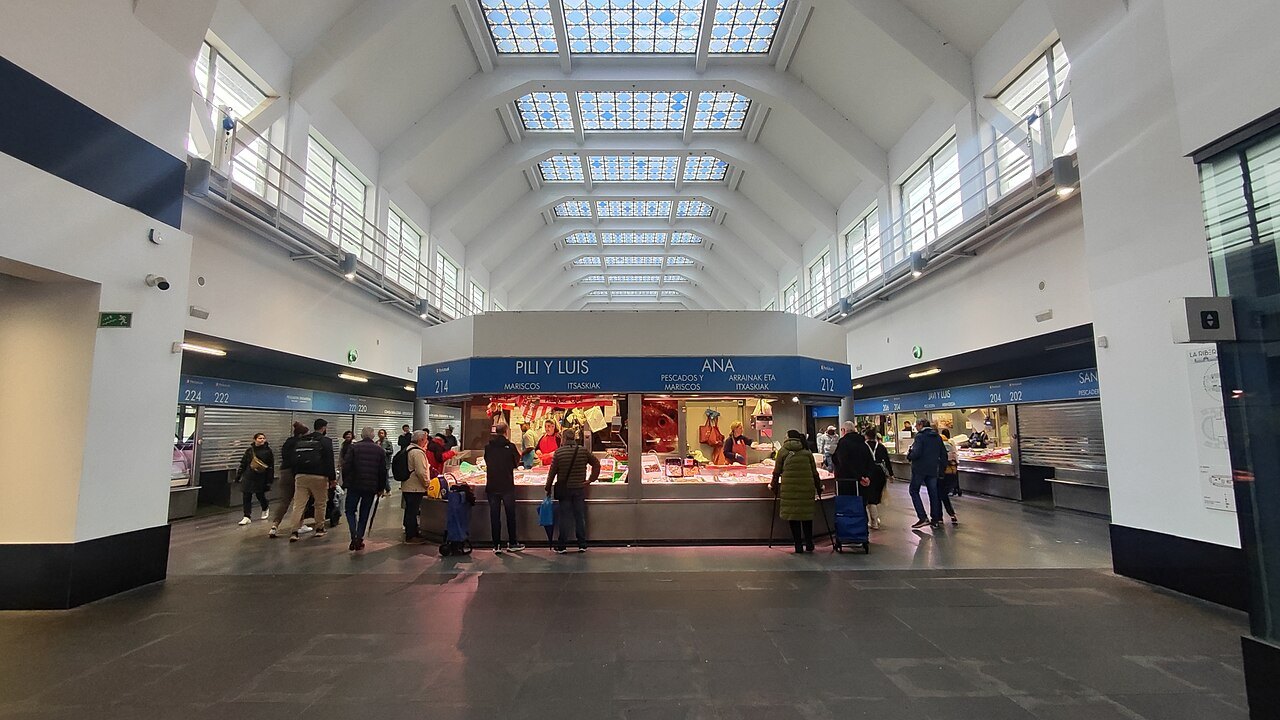
Allow an hour for the stalls and longer if you stop to eat. The market works to traders' hours, busiest in the morning, and many stalls close by early afternoon; check the market's own timetable before going specially, because hours differ between the stalls and the bars.
It is one of the easiest places in the city to reach. The Zazpikaleak/Casco Viejo Metro station is a few minutes away, the riverside tram stops at Ribera, and the Euskotren station at Atxuri is about three minutes' walk. The getting around page explains the lines.
Combine it with a walk through the Seven Streets, a look inside San Antón, and the Plaza Nueva, all within a few minutes on foot. The market sits at the start of the walk down the river on the homepage.
Honest notes
The claim to be the biggest covered market in Europe is often repeated and comes from the 1990 record for the most traders and stalls; other markets claim the title by other measures. It is certainly very large, but much of the building is circulation and light rather than stalls.
This is a working market first. Photographing stalls is common, but traders are serving customers; buy something, keep out of the way at busy times, and ask before photographing people.
Nearby
Where to go next
- Nearby · Ibaiondo · right bankThe Casco ViejoThe oldest quarter of Bilbao and the town's original core: seven parallel streets on the right bank of the Ría, with the cathedral, three old churches, the market and the city's busiest bars packed between them.Read the page →
- Nearby · Casco Viejo · right bankSantiago CathedralThe Gothic parish church of the founding town, rebuilt after a fire in 1374 and raised to a cathedral in the twentieth century: a compact church of warm sandstone in the Seven Streets, with a cloister, a great porch and a Gothic Revival front and spire.Read the page →
- Nearby · El Arenal · right bankTeatro ArriagaBilbao's opera house of 1890 on the bank of the Ría, a Neo-Baroque front modeled on the Paris Opera, rebuilt after a fire in 1914 and again after the flood of 1983, and named after the composer the city calls its Spanish Mozart.Read the page →