Zubizuri
What you are looking at
Campo Volantín · Uribitarte
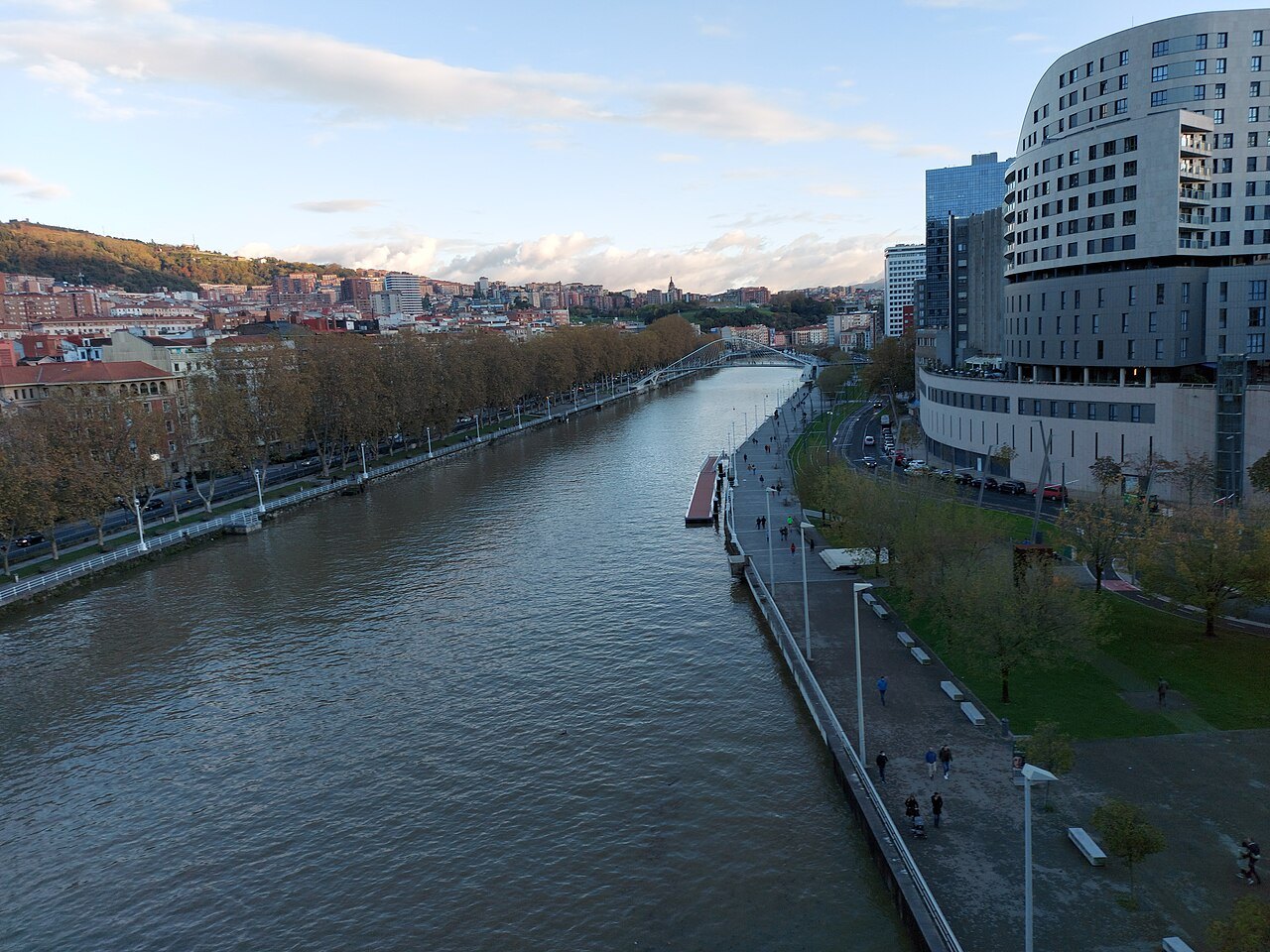
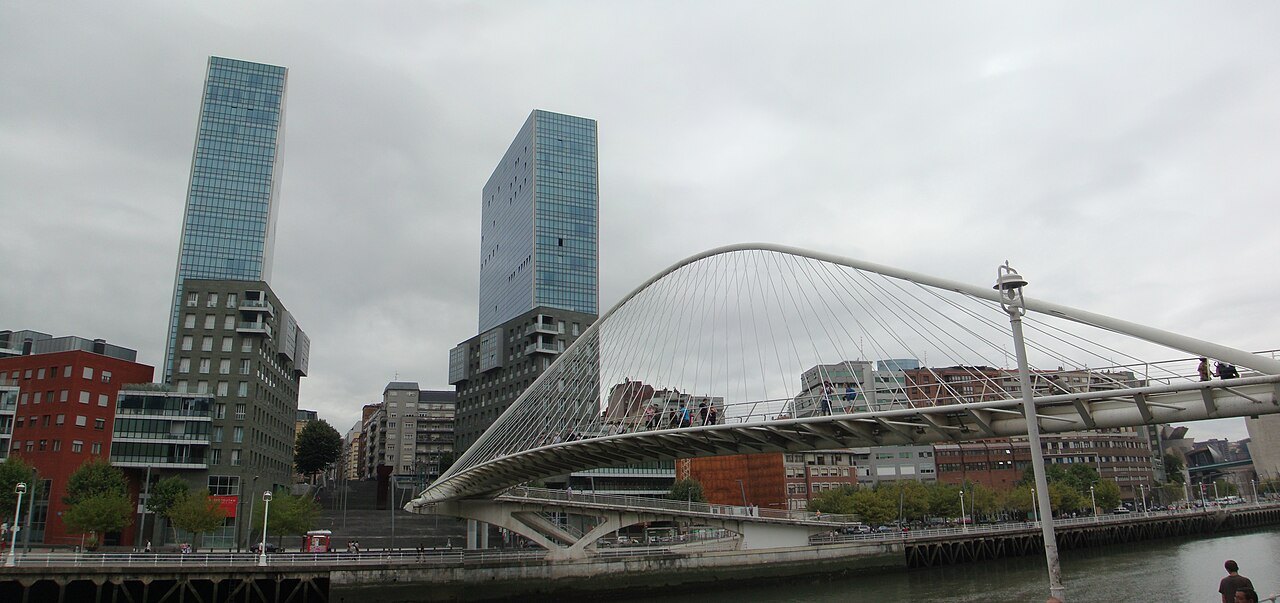
- 1The tilted archA single white steel arch leaning over the river, from which the whole deck hangs on cables.
- 2The curved deckA walkway bent in a gentle curve across the water, first paved with translucent glass bricks.
- 3The ramps and stairsAccess on both banks by long ramps and stairways reaching down to the quays.
- 4The Isozaki linkA later footbridge joining the left-bank end to the twin towers of Isozaki Atea.
- 5The two towersArata Isozaki's twin 82-meter glass towers, framing the bridge from the left bank.
- 6The river walkThe promenades of Campo Volantín and Uribitarte, which the bridge joins at water level.
Reading the place
The sight in full
Why it matters
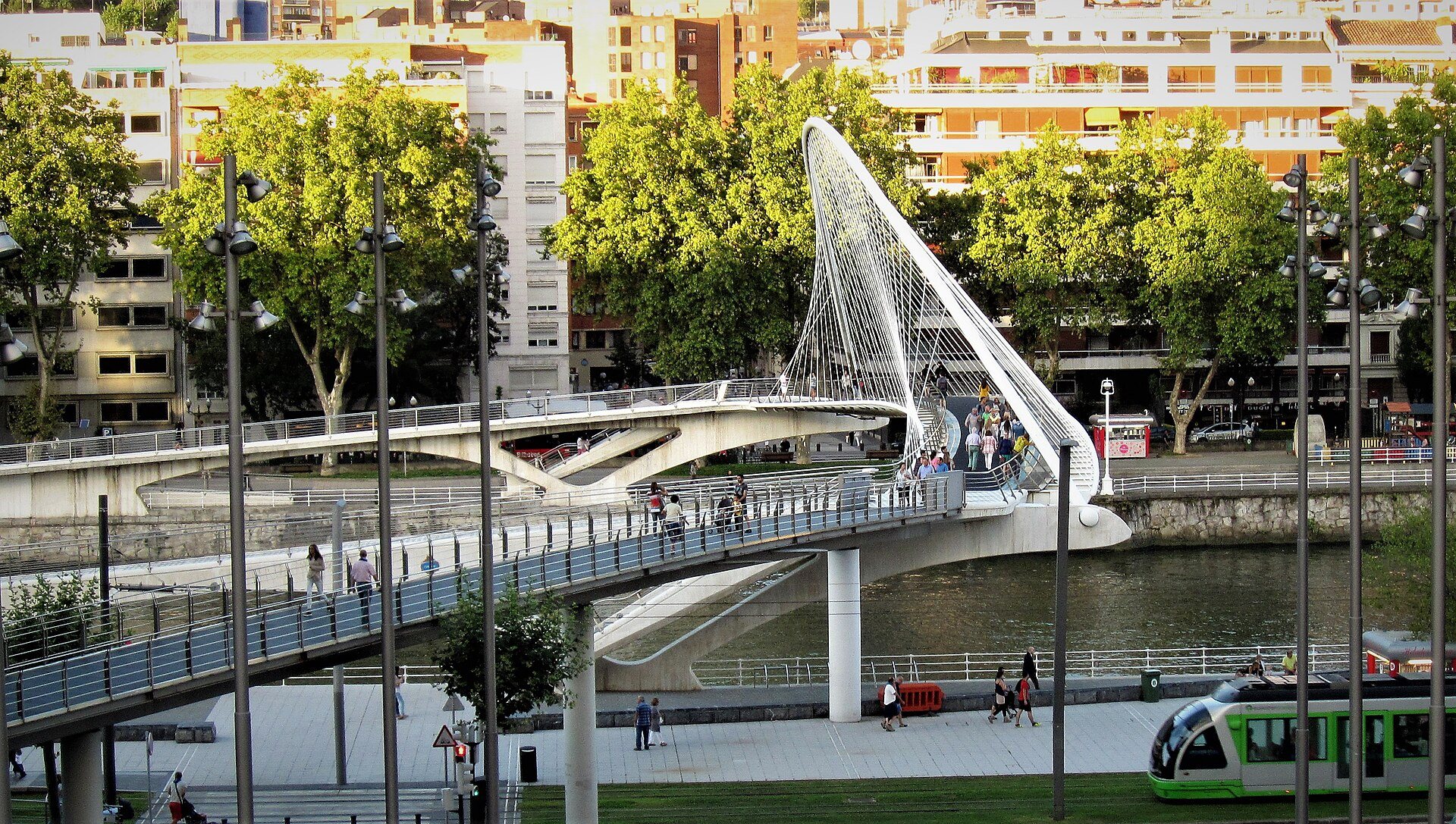
Zubizuri, Basque for white bridge, is the footbridge that crosses the Ría between the Campo Volantín promenade on the right bank and the Uribitarte quay on the left. Officially it is the Campo Volantín footbridge; most people in Bilbao simply call it the Calatrava bridge, after its designer, the Valencian architect Santiago Calatrava, who also designed the city's airport terminal.
Building began in 1990 and the bridge opened on 30 May 1997, a few months before the Guggenheim. The two together became the image of the new Bilbao, and the bridge is still the way many visitors walk from the hotels of the right bank to the museum. It is also a lesson in how a celebrated design can be awkward to live with.
How it is built
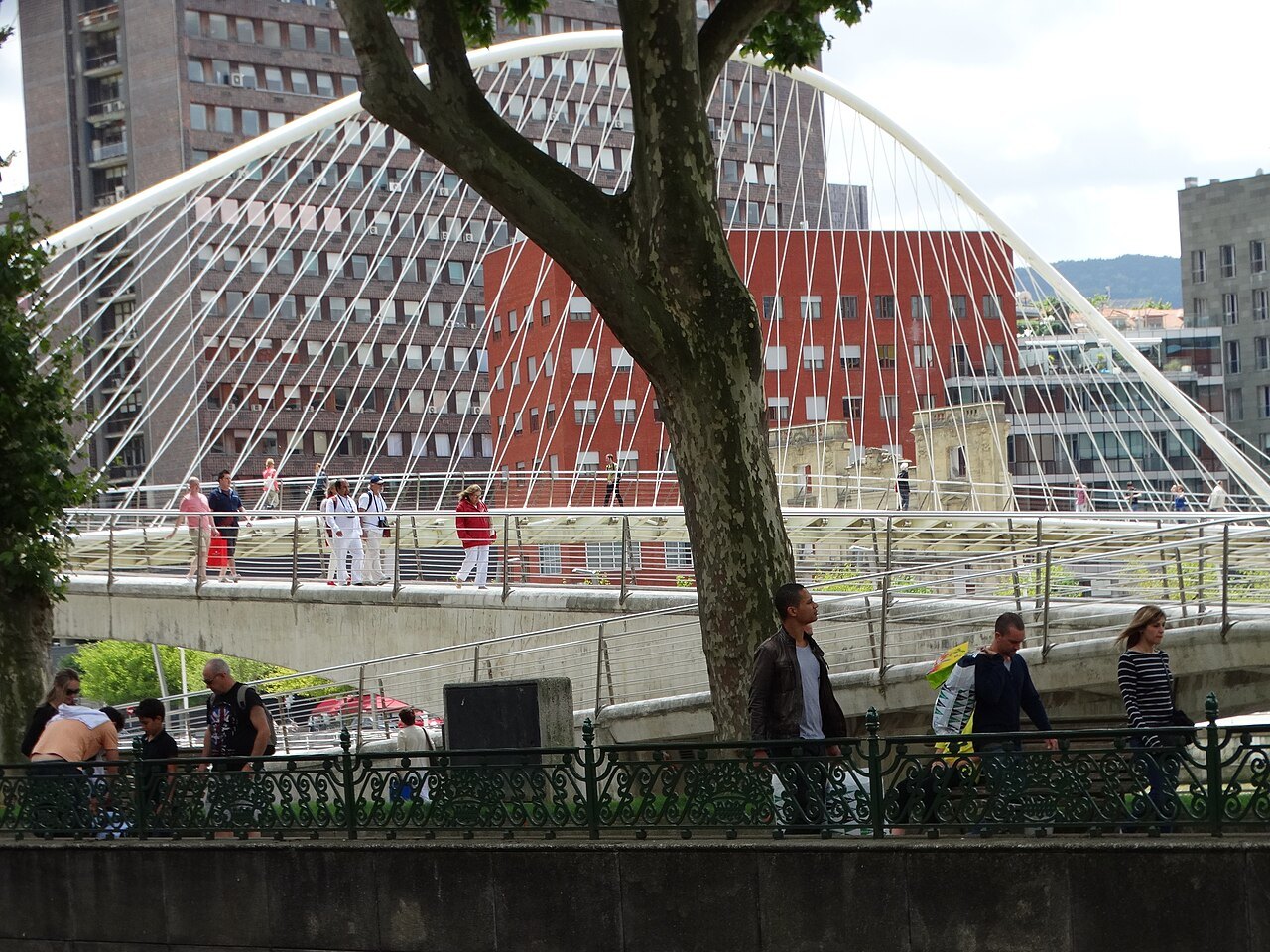
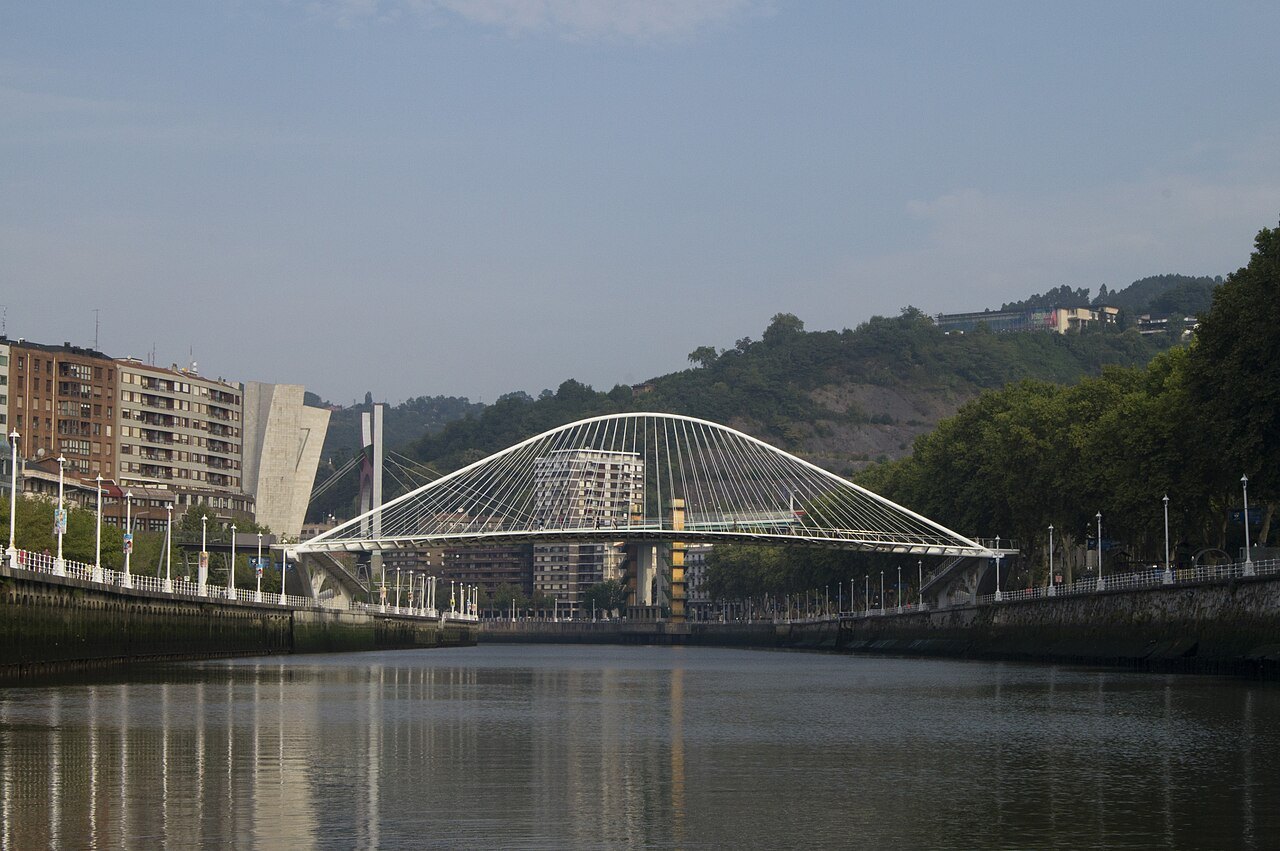
The design is a single steel arch, tilted out over the river, from which the walkway hangs on steel cables. The deck itself curves across the water in plan, so the bridge never looks the same from two places. Ramps and stairways bring you down to it on both banks, and the whole structure is painted white, as Calatrava's structures usually are.
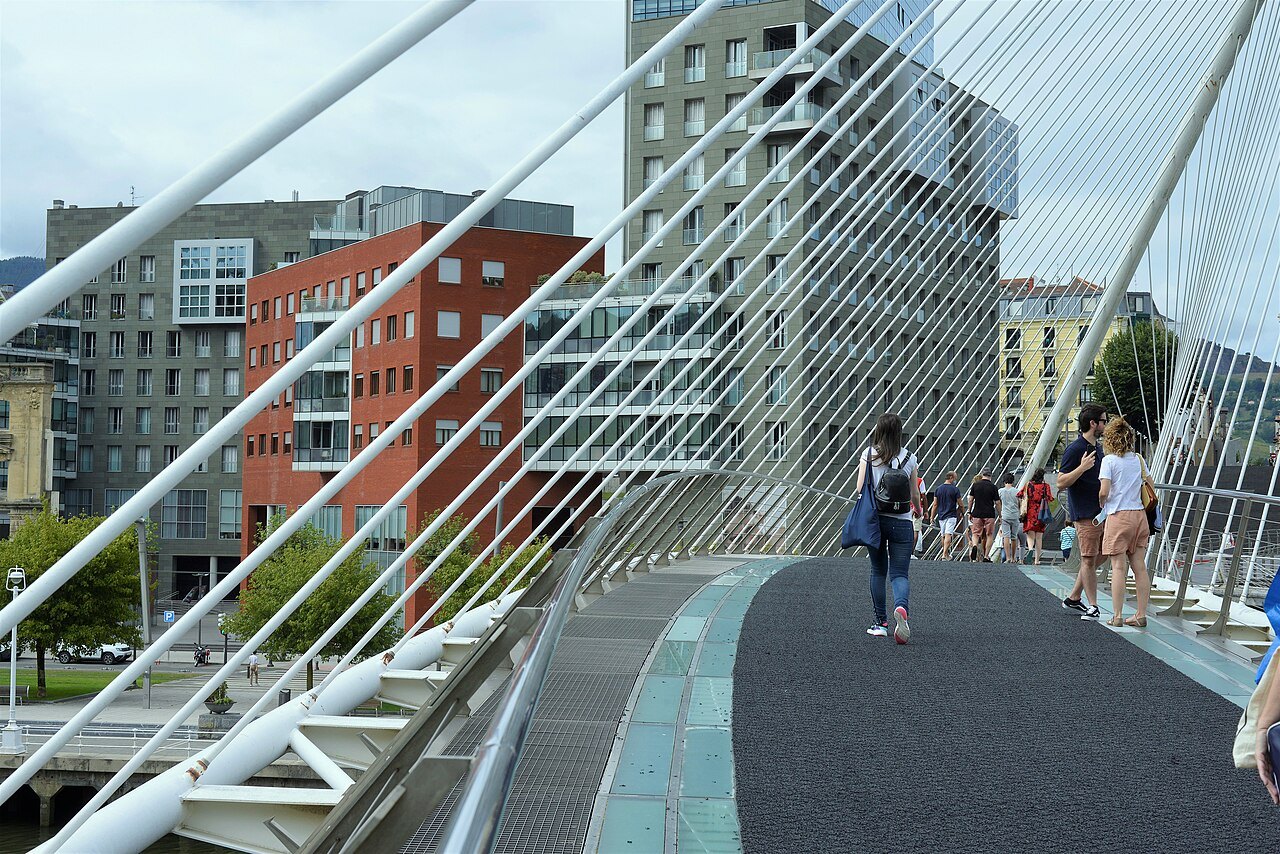
Calatrava paved the deck with translucent glass bricks, lit from below at night. It is the most admired and the most criticized part of the bridge, for reasons described below. From the right bank the arch is seen side-on, a tilted white line against the hills; from downstream, at La Salve, it frames the bend of the river toward the old town.
The slippery glass and the towers
In Bilbao's wet climate the glass bricks proved slippery, and the bridge became known locally for falls. Anti-slip strips were added, then special tiles were tried, and in the end the deck was covered with an anti-slip carpet. Bricks also kept breaking, first blamed on vandalism and later traced mainly to changes in temperature, so they had to be replaced again and again.
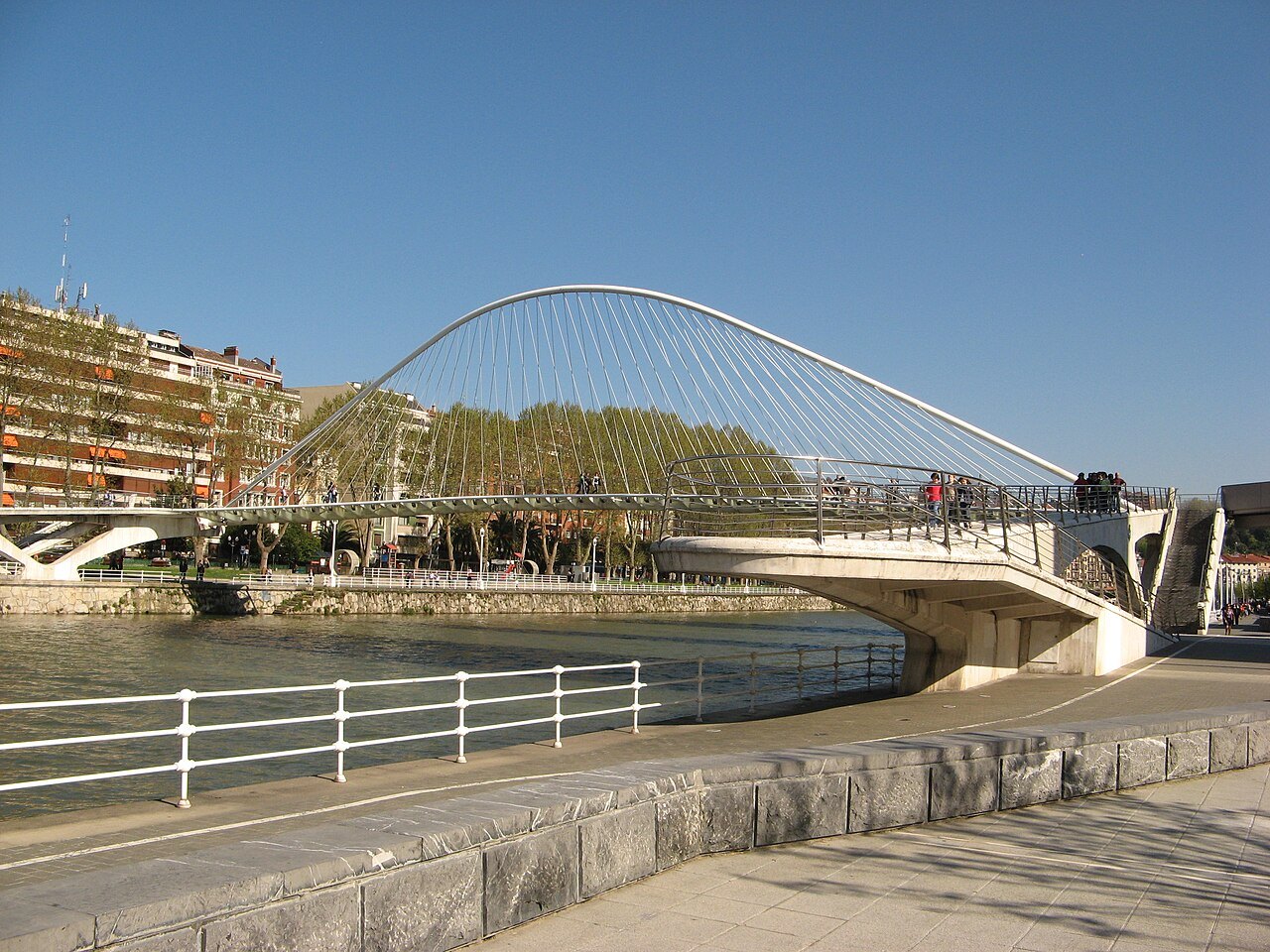
The bridge also lands on the left bank at the level of the quay, not at the higher street of Alameda Mazarredo above it, which left the new bridge cut off from the Ensanche. The city first added a temporary stair of scaffolding and removed it after Calatrava protested. In 2006 it allowed the Japanese architect Arata Isozaki to build his own footbridge from Zubizuri to the towers he was building beside it.
The court case
Calatrava took the city to court in 2007, arguing that cutting into his bridge to attach the new walkway broke his moral right, under Spanish copyright law, to the integrity of his work. The city answered that the needs of the people who use the bridge came first, pointing to the falls on the glass and the cost of repairs.
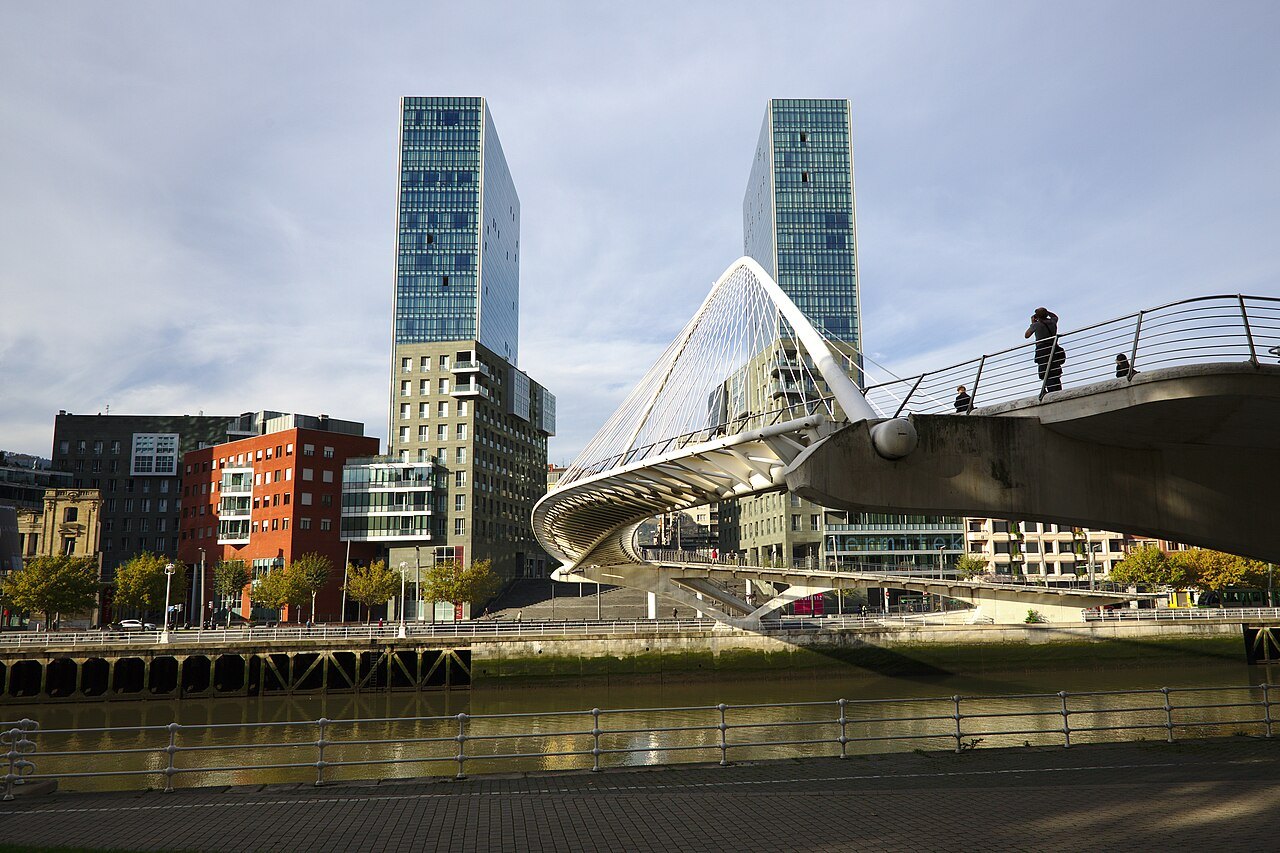
A local judge found in November 2007 that the architect's moral rights had been harmed but ruled for the city and let the link stand. On appeal, the provincial court of Biscay ordered the city in March 2009 to pay the architect compensation, far less than he had asked; Calatrava gave it to a Bilbao charity. The Isozaki link is still there, and you will cross the joint between the two designs on your way to the museum.
A symbol of the new city
When it opened, almost at the same moment as the museum, Zubizuri became a symbol of the new Bilbao and one more attraction on the riverside walk. The architectural historian Alexander Tzonis wrote that its curved form challenged the ordinariness and slow decline of the city around it and carried a message of hope.
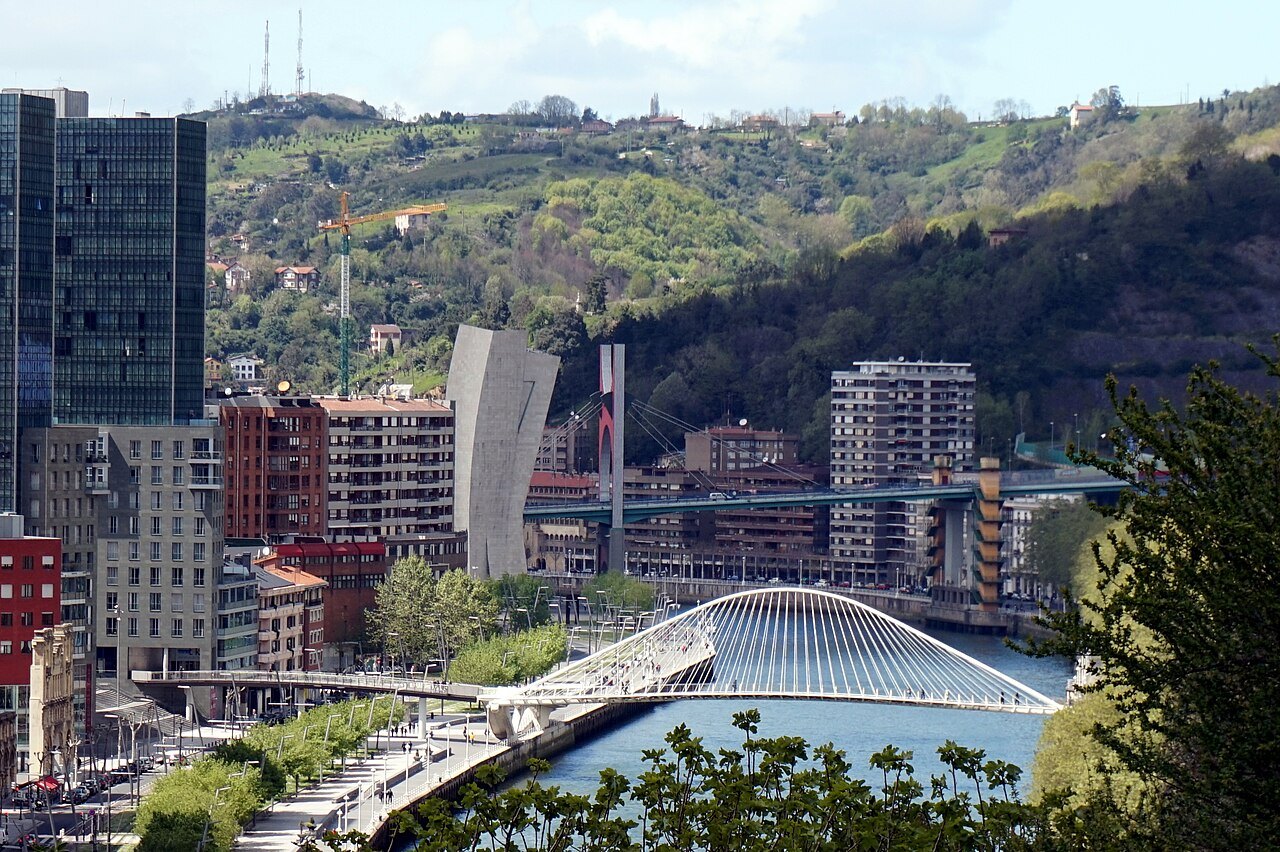
The bridge belongs to the first wave of the riverfront's rebuilding in the 1990s, when the city turned back toward a river it had long lived with its back to. The towers beside it came later, on the site of an old customs warehouse on the Uribitarte quay that several private schemes had failed to reuse.
What you see
Walk the bridge from the right bank toward the towers. On the left bank stand the two glass towers of Isozaki Atea, 82 meters and 23 floors each, and between them a broad flight of steps about 50 meters wide that climbs the 14 meters from the river up to the Ensanche. Isozaki called it a gateway between the city and the river.
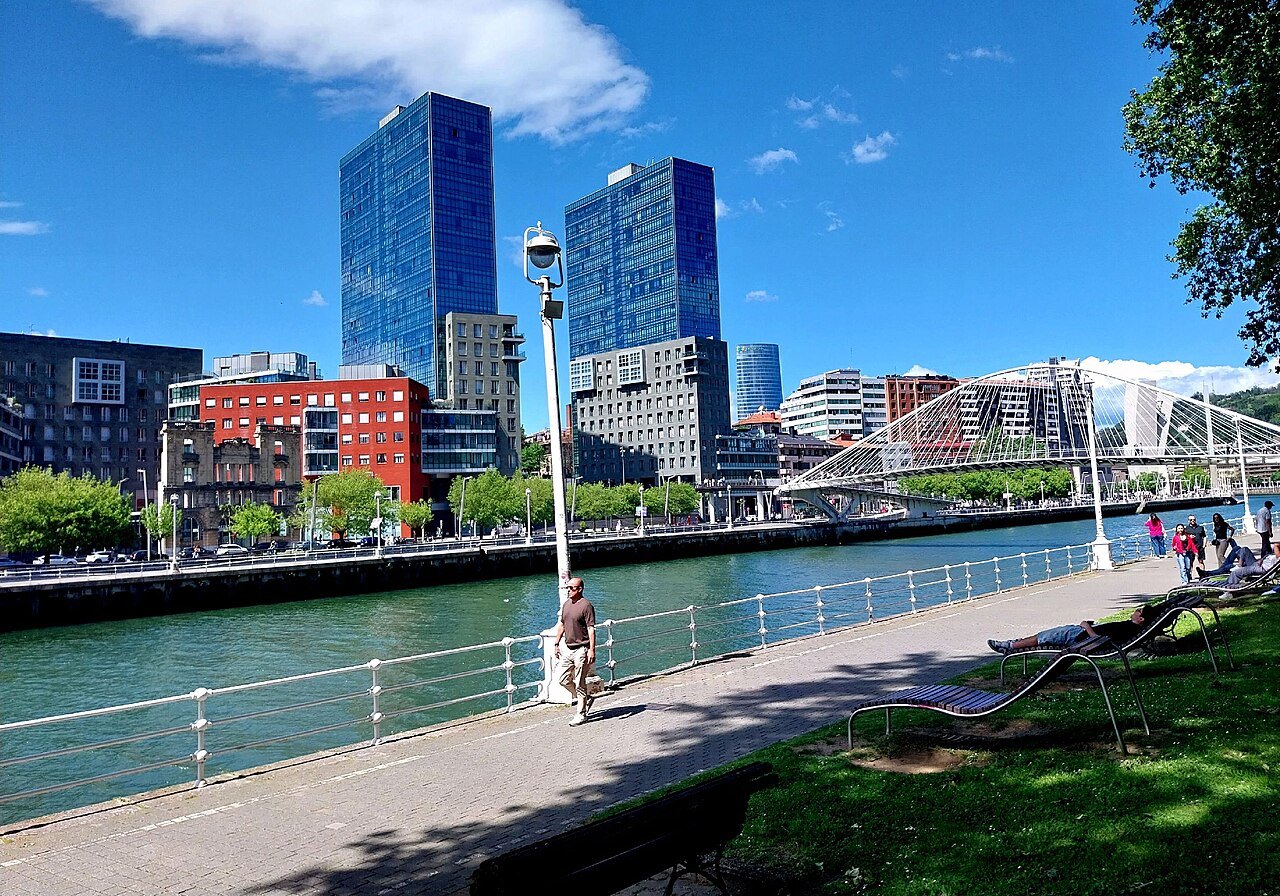
From the middle of the deck the river opens both ways: upstream toward the town hall and the old town, downstream toward La Salve, the Guggenheim and the hills. The best view of the bridge itself is from the riverside walk a little downstream on the right bank, where the arch and the curve of the deck can be seen together.
How to visit
The bridge is a public footway and takes a couple of minutes to cross, longer if you stop for the view. It is on the riverside route between the Casco Viejo and the museum, about a fifteen-minute walk from the Arenal along Campo Volantín.
The riverside tram stops at Uribitarte, at the left-bank end. The Artxanda funicular starts just north of the bridge on the right bank, so the two make an easy pair: cross, then ride up to Artxanda for the view down the river. In wet weather, use the handrails and take the ramps slowly.
At night the bridge is lit, and the reflections of the arch and the towers on the water are one of the best sights on the riverside walk.
Honest notes
Zubizuri is a beautiful object and an imperfect bridge. Critics praised it as a message of hope for a declining city; a bridge engineer called its balance strained, like a sculptural toy. Both are fair, and knowing the story of the glass and the towers makes the crossing more interesting.
Nearby
Where to go next
- Nearby · Abando · left bankThe GuggenheimFrank Gehry's museum of modern and contemporary art, a cluster of titanium curves on the left bank of the Ría, opened in 1997 on what had been the run-down edge of the city's port.Read the page →
- Nearby · Abando · Campo VolantínLa Salve BridgeThe road bridge of 1972 that passes over the edge of the Guggenheim's site, named for the hymn sailors sang when they first saw the shrine of Begoña, and crowned since 2007 by Daniel Buren's red arch.Read the page →
- Nearby · Above the right bankArtxanda and Its FunicularThe low mountain that rises straight above the right bank, reached since 1915 by a funicular from beside Zubizuri, with the whole of Bilbao laid out in its bowl of hills below the lookout at the top.Read the page →