Home · Basque
Sixteen words of Basque
On the signs
- KaixoHello, the everyday greeting.
- AgurGoodbye, and also used as a greeting in passing.
- Eskerrik askoThank you very much; eskerrik asko means many thanks.
- MesedezPlease.
- Bai / EzYes and no.
- Ongi etorriWelcome, seen on signs at the edge of towns and in shops.
- KaleaStreet; written after the name, as in Somera kalea.
- ZubiaBridge, as in Bizkaia zubia, the Bizkaia Bridge.
- GeltokiaStation, as in Abandoko geltokia, Abando station.
- JauregiaPalace or hall, as in Euskalduna Jauregia.
- ItsasadarraEstuary, literally arm of the sea; Bilboko itsasadarra is the Ría.
- ZazpikaleakThe Seven Streets, the old town's Basque name.
- Aste NagusiaThe Great Week, Bilbao's August festival.
- Sarrera / IrteeraEntrance and exit, on doors and in Metro stations.
- HondartzaBeach.
- UdalaTown hall or city council.
Basque
In full
Two languages in one city
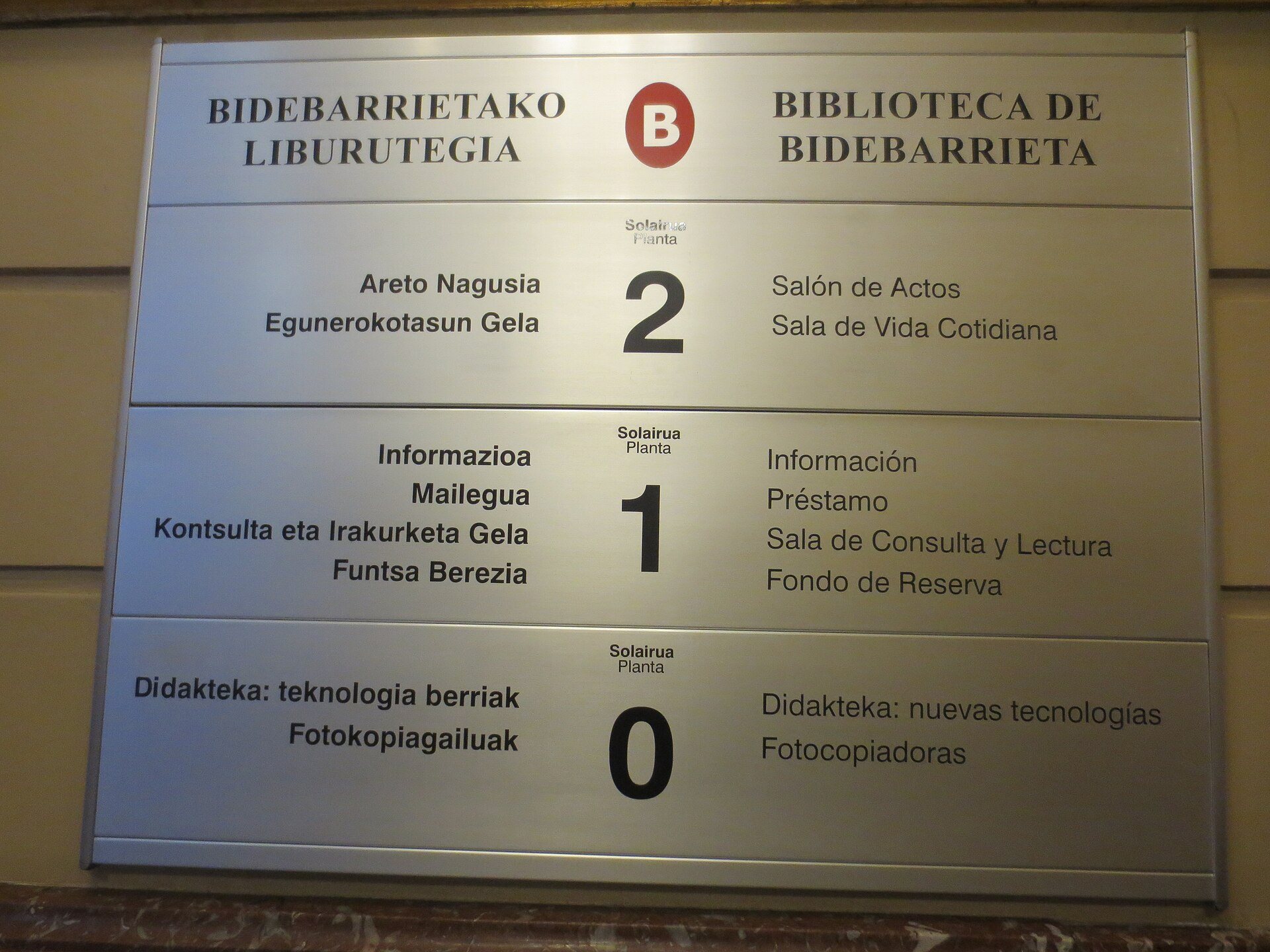
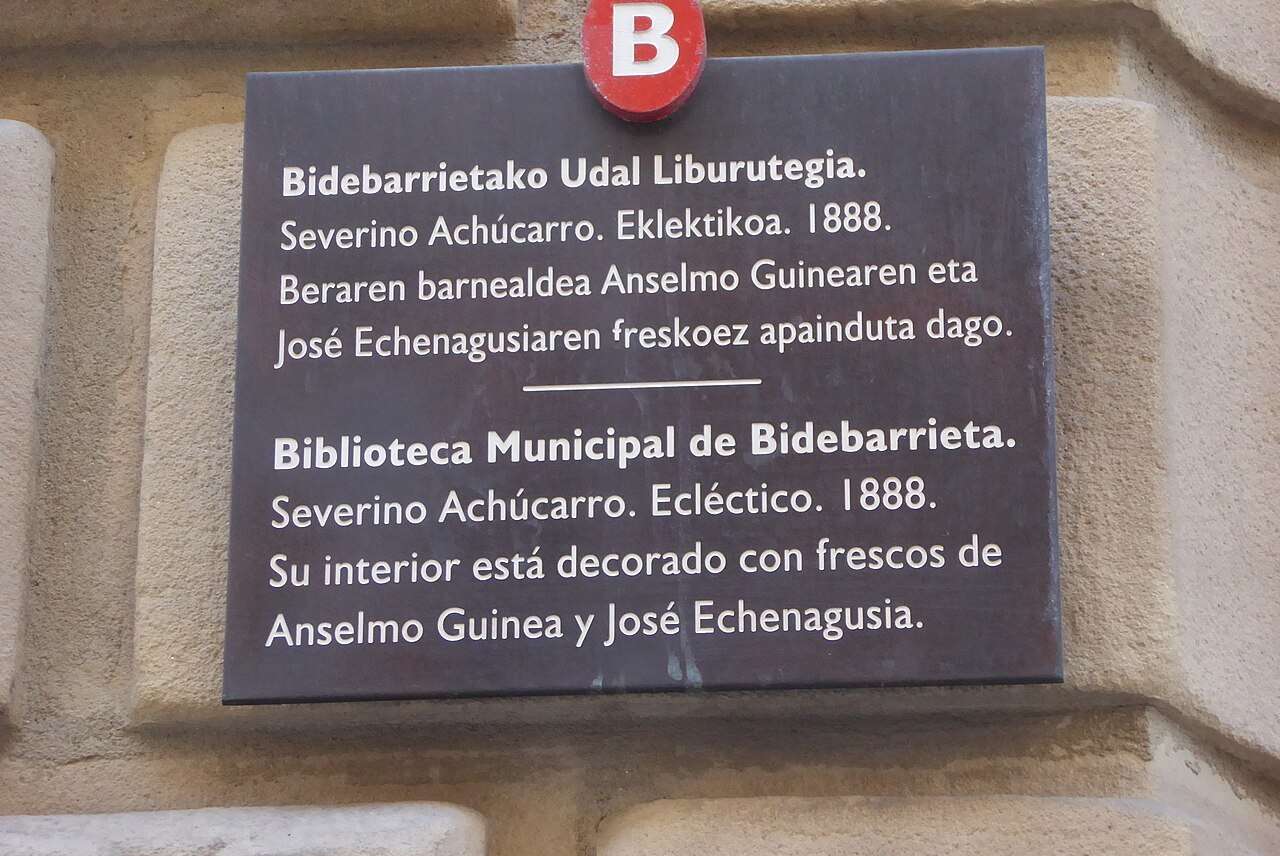
Bilbao is in the Basque Autonomous Community, where the Statute of Autonomy makes Basque co-official with Spanish, as the Spanish Constitution of 1978 allows. That is why almost every public sign you see, from street names to station announcements, appears in both. Basque speakers call their language euskara, or euskera in Spanish, and the city itself has two names in it: Bilbao, the official one, and Bilbo, which the Basque academy recognizes as the historical form.
The name Bilbo has a curious echo in English. Although it does not appear in old documents, Shakespeare's Merry Wives of Windsor mentions bilboes, swords presumably made of Biscayan iron, which suggests the word was in use by the sixteenth century. Historians do not agree on where the name Bilbao itself comes from.
In the street Spanish is the language you will hear most. Bilbao has fewer Basque speakers than the smaller towns of Biscay, but their number has risen steadily: about 28 percent of the city's people were bilingual in 1986 and 37 percent by 2001, more than half of them under 30. In the 2016 census 29 percent spoke Basque fluently and about a fifth with difficulty. Everyone in Bilbao speaks Spanish, and in hotels, museums and many restaurants English is widely understood.
A language with no relatives
Basque is Europe's only known language isolate, related to no other known language, and the only surviving language of the peoples who lived in western Europe before the Indo-European languages arrived. It is spoken by about 806,000 people, most of them in the Spanish part of the Basque Country and the rest across the border in France.
Its grammar works very differently from Spanish or English. It builds words by stringing parts together, so that endings carry much of the meaning, and it marks the subject of a verb in a way that is unusual among European languages. That is why Basque words look long and unfamiliar on signs, and why guessing them from Spanish rarely works: a station is a geltokia, a bridge a zubia, a street a kalea.
Suppression and revival
Under Franco's dictatorship Basque was suppressed: it was removed from official life, schools and publishing, Basque names could not be registered for newborn children, and in some places people were fined for speaking it in public. From the 1960s, still under the regime, education and publishing in Basque began to grow again, and since the return of democracy the language has been taught in schools and used in public life.
To make that possible, a standard form called Euskara Batua, unified Basque, was developed in the late 1960s, so that speakers of the different dialects could share one written language for schools, the media and literature. The Basque spoken around Bilbao belongs to the Biscayan dialect, one of five historic dialects named after the old provinces.
The academy on the Plaza Nueva
The body that watches over the language, Euskaltzaindia, the Royal Academy of the Basque Language, was founded on the initiative of the provincial government of Biscay, joined by the other Basque provinces in 1918, and legally constituted in October 1919. It conducts research, sets the standards of the language and publishes a journal, Euskera, launched a year after its founding. It grew out of the Basque Renaissance of the late nineteenth and early twentieth centuries, when writers and scholars campaigned for the language as a central part of Basque culture, and out of a Congress of Basque Studies held at Oñati in 1918.
Its headquarters are on the arcaded Plaza Nueva in the old town, in the building with the clock, which housed the provincial government of Biscay until 1900. It is a reminder, in the middle of the city's busiest pintxo square, of the language's place in Bilbao's public life, and on the feast of Santo Tomás, 21 December, the square fills with a farmers' market.
Reading the signs
On bilingual signs the Basque and Spanish versions often differ more than you expect. The old town is the Casco Viejo in Spanish and Zazpikaleak, the Seven Streets, in Basque, which is the name on the Metro station. The Ría is Bilbao's itsasadarra, its arm of the sea. Many Basque names put the descriptive word at the end, so Somera kalea is Somera Street and Euskalduna Jauregia is the Euskalduna Palace.
A few spelling habits help with pronunciation. In Basque, tx sounds like the ch in church, as in txakoli and pintxo; x sounds like sh; tz is close to ts; z is pronounced like an English s; and j varies by region. Most place names are stressed gently and evenly, without the strong stress of Spanish.
On the menu and in the bar
Food and drink are where most visitors meet Basque. A pintxo, written with the Basque tx, is the small snack served on a bar counter; txakoli is the light white wine of the coast; a txoko is a private gastronomic society where members cook for each other. The eating and drinking page explains the dishes.
A greeting of kaixo when you walk in and eskerrik asko when you leave is always welcome, even if the rest of the conversation is in Spanish or English. People in Bilbao do not expect visitors to speak Basque, which is exactly why a word or two is noticed.
Names you will see
Many of the city's institutions and places carry Basque names. The Aste Nagusia, the Great Week, is the August festival; Azkuna Zentroa is the cultural center in the old wine warehouse; and Athletic Club's stadium, San Mamés, is surrounded by Basque signs on match days. The Basque word for Biscay is Bizkaia, and for the Basque Country, Euskadi or Euskal Herria.
Euskal Museoa, the Basque Museum, is the place to learn about the people behind the language. It opened on 3 July 1921 in the Baroque cloister of the old Jesuit college of San Andrés in the old town, beside the church of the Santos Juanes, and its collections cover the archaeology of Biscay and the ethnography of the Basque Country. After a complete renovation it reopened to the public on 10 June 2026. In the middle of its cloister stands the Mikeldi idol, a carved stone animal brought from Durango.