Who made Puppy, and how are its flowers kept alive?
THE DOG, THE SPIDER AND THE FLOWERS
Jeff Koons's flower-covered Puppy and Louise Bourgeois's Maman flank the Guggenheim; here is how each one works.
Read on
The answer in full
Who made Puppy
Puppy belongs to the American artist Jeff Koons, who designed it as a West Highland terrier standing about forty-one feet tall. Instead of bronze or steel skin, the surface is a mass of living plants, tens of thousands of flowers set into a frame that outlines the dog's shape. It has stood at the museum's entrance since the building opened in October 1997, making it almost as familiar to visitors as the titanium walls behind it.
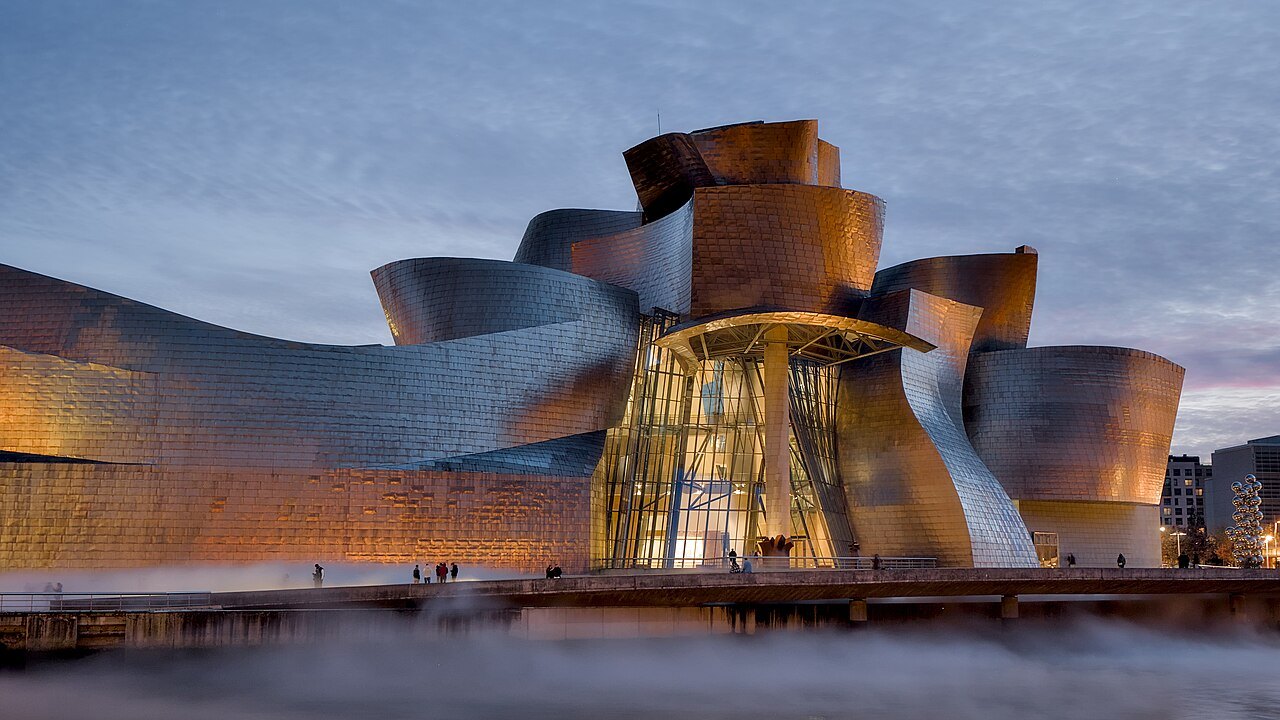
The dog stands at the top of the steps that most visitors use to reach the museum, so arriving guests often meet Puppy before they meet the titanium curves behind it. Many photographs taken outside the Guggenheim are really photographs of this one sculpture, framed against the building rather than the other way around, because its scale and color are hard to look past.
Puppy is part of a small group of outdoor sculptures that now belong to the place as much as the architecture does. It can be seen and walked around at any hour, free of charge, since it stands in public space rather than inside the ticketed galleries. Nothing stops a visitor from returning after dark, when the flowers read as a single block of color rather than a mass of blooms.
Why a flower-covered dog
The choice of flowers rather than metal was deliberate in effect, if not stated as intent: a sculpture this size in bronze would read as heavy and fixed, while the planted surface changes through the seasons and even across a single day as light moves over it. Morning and evening give the flowers a different color than midday does, much as the fact base notes for the titanium plates nearby.
There is a visual echo with the building itself. Seen from above, the museum's plan is shaped like a flower, and the architect nicknamed the great hall inside the Flower for the same reason. Puppy, made entirely of flowers, sits at the point where visitors first notice that shape, though the museum has never presented the pairing as more than a coincidence worth noticing.
Because the sculpture stands outdoors and unticketed, it works well as a stop before or after a museum visit, or as a reason in itself to walk along the riverside. Anyone arriving on foot through Abandoibarra passes close to it without needing a ticket or a reservation, whatever the plan for the rest of the day.
How the flowers are kept alive
The flowers are not planted once and left. The museum replaces the planting twice a year, which is enough to say that Puppy is, in effect, re-grown rather than merely pruned, and that its look in spring will not match its look later on. Which varieties are chosen, and how watering and feeding are managed across a sculpture of this height, are details the museum publishes itself rather than ones a general guide should guess at.
Visitors curious about the current planting, or hoping to catch a particular color scheme, should check the museum's own information rather than judge from photographs taken at a different time of year. Flowering plants follow their own calendar, and the museum sets its twice-yearly replacement well ahead of any single visit, so the look of the moment is simply whatever that cycle has produced.
None of this affects access. Puppy remains outdoors and viewable regardless of which flowers happen to be in bloom, and the change of planting is a matter of horticulture rather than anything a visitor needs to plan around. A traveler who returns to Bilbao after a gap of several months is likely to find the dog wearing a noticeably different coat.
Maman, on the river side
Puppy is not the only sculpture that has become part of the museum's identity. On the river side of the building stands Maman, a bronze spider by the French-American artist Louise Bourgeois, more than thirty feet tall, with a sac of marble eggs carried beneath its body. It has none of Puppy's color, and the effect is deliberately the opposite: spindly, dark and faintly unsettling rather than welcoming.
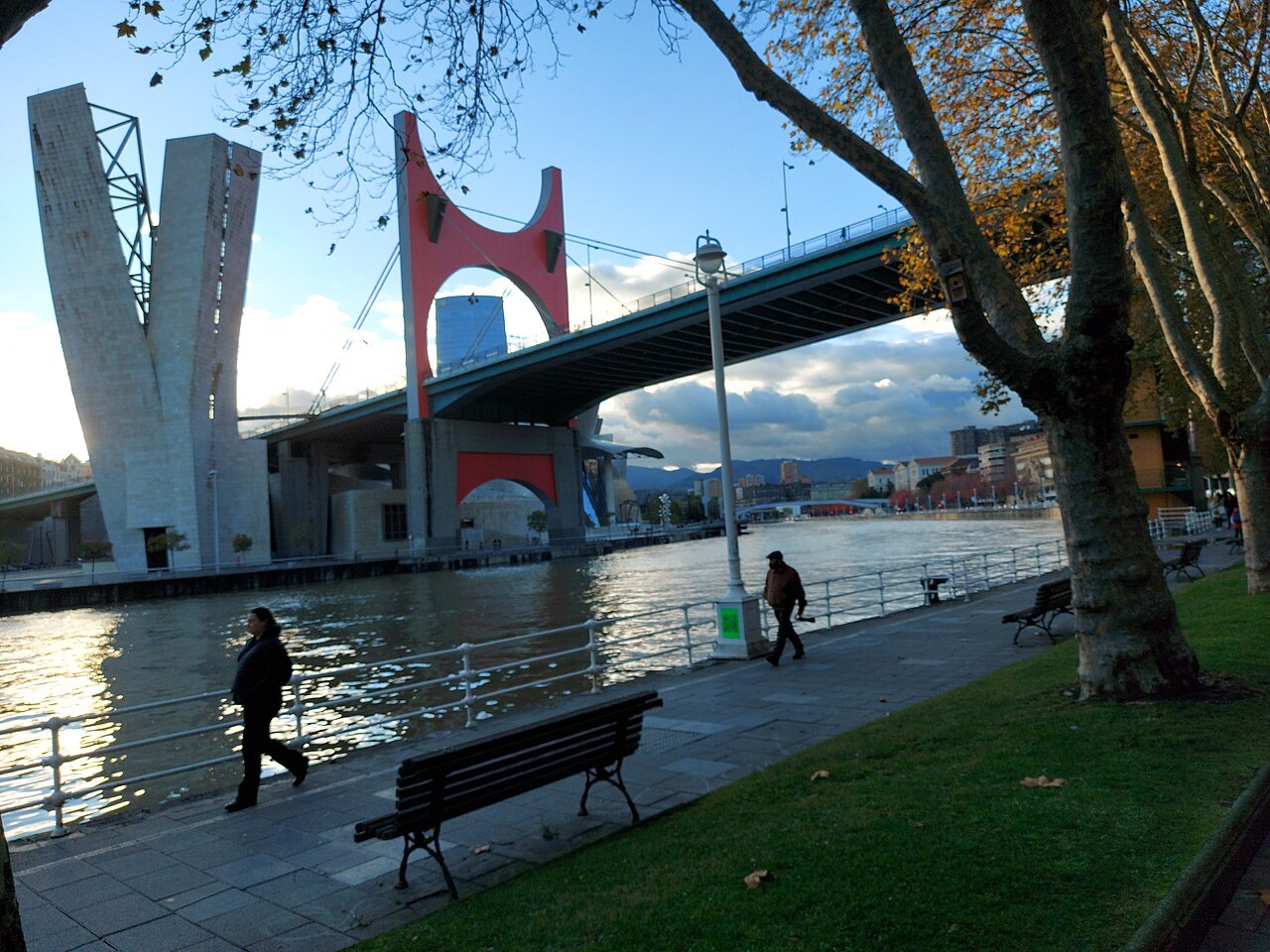
Maman and Puppy sit at opposite ends of the building's character, one soft and floral at the entrance, one angular and strange by the water, and a walk from one to the other is a reasonable way to take in the whole exterior. The route runs along the riverside path and passes beneath the bridge that crosses the edge of the site.
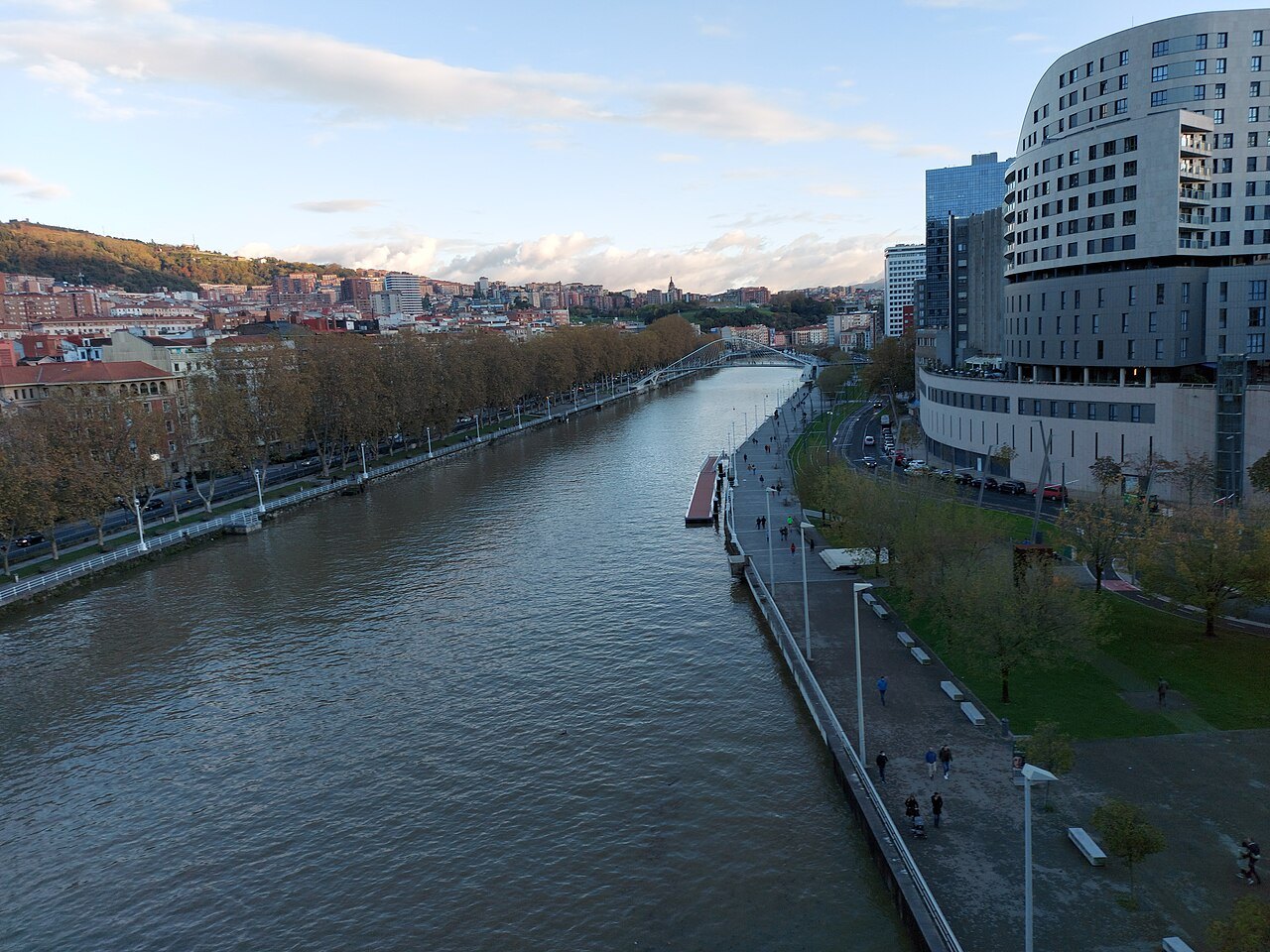
Like Puppy, Maman costs nothing to see and stands in open public space along the river, so it can be visited on a riverside walk that has nothing to do with a museum ticket, whether or not the galleries themselves happen to be open that day. The two sculptures together give a sense of the collection's range before a single gallery door is opened.
The building behind the sculptures
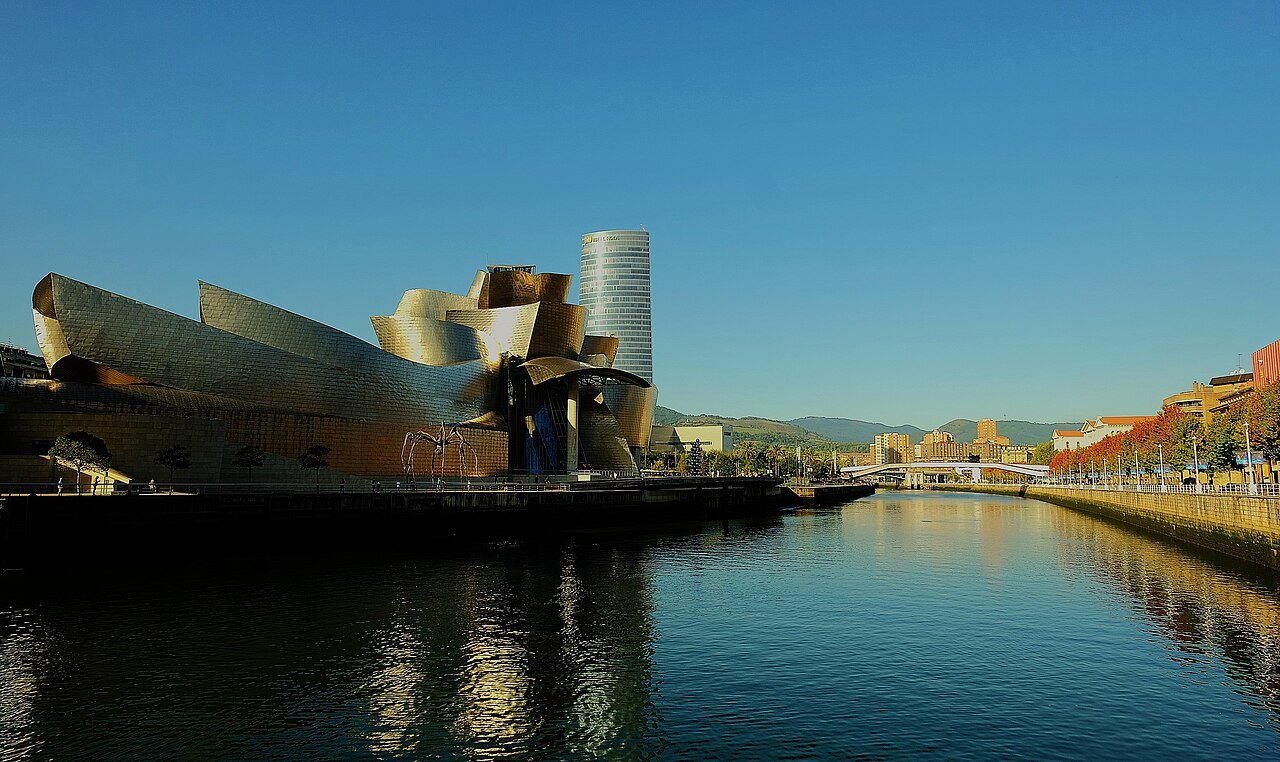
The Guggenheim Museum Bilbao itself opened on the eighteenth of October, 1997, when King Juan Carlos the First presided over its inauguration, and it has drawn more than a million visitors a year on average since. Its architect, Frank Gehry, designed the curving galleries that Puppy and Maman now frame, using aircraft-design software to calculate the stresses in the curves before a single titanium plate was cut.
The museum stands on the left bank of the Ría, in an area that was docks and industry until the nineteen-nineties. Its arrival was the first large piece of the riverfront's rebuilding, a process that continued for twenty years around it and that reshaped the whole district well beyond this one building and its sculptures.
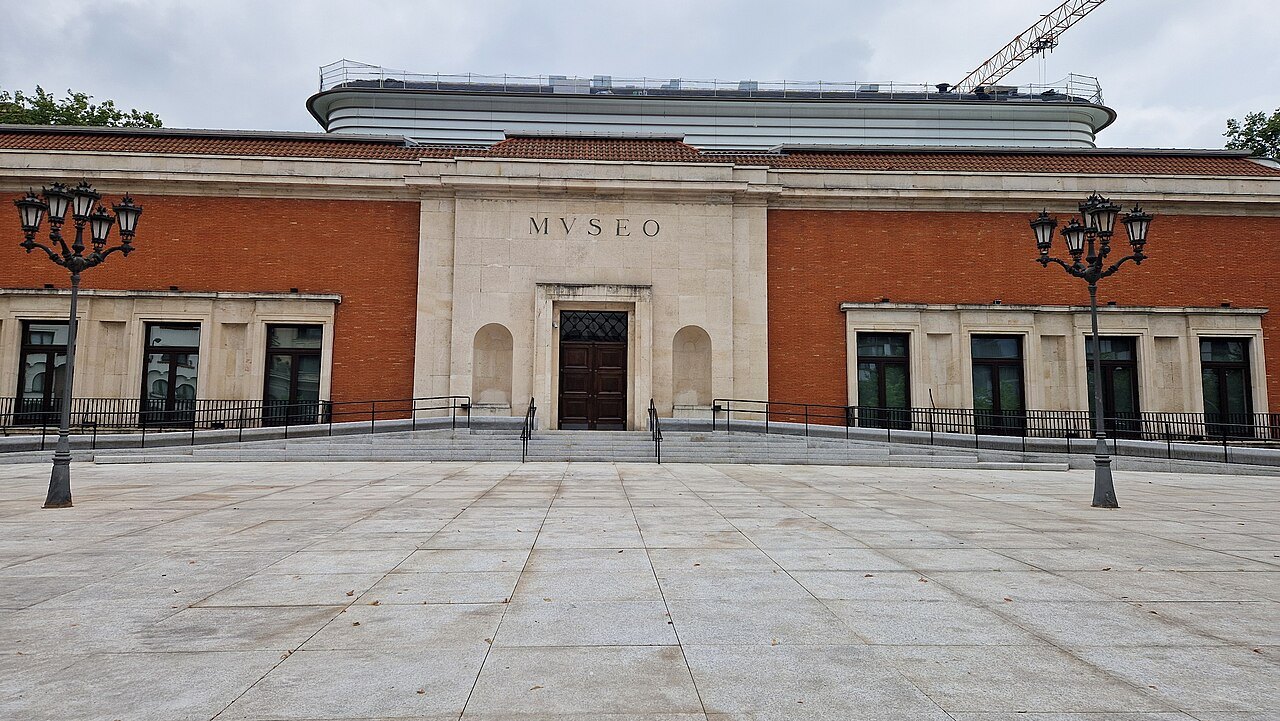
Roughly thirty-three thousand titanium plates cover the swirling galleries, laid in a pattern designed not to vibrate in storms, while the straight-walled galleries are faced in limestone. Puppy and Maman stand against this mixture of stone and metal, which is part of why both sculptures read so clearly: little else nearby competes with them in color or shape.
Visiting Puppy and Maman
Both sculptures sit outside the ticketed part of the museum, so a visitor can see them without buying anything, at any point in a day spent in the area. Tickets are only needed for the galleries themselves, and those should be bought through the museum's official website, which warns against other sellers; booking ahead is worth doing before settling on a day.
The building and its sculptures are a short walk from the Moyúa and Abando areas of the Ensanche, and the riverside tram stops beside the museum, which makes combining an outdoor look with a museum visit straightforward; see getting around for the tram and bus options that serve the area.
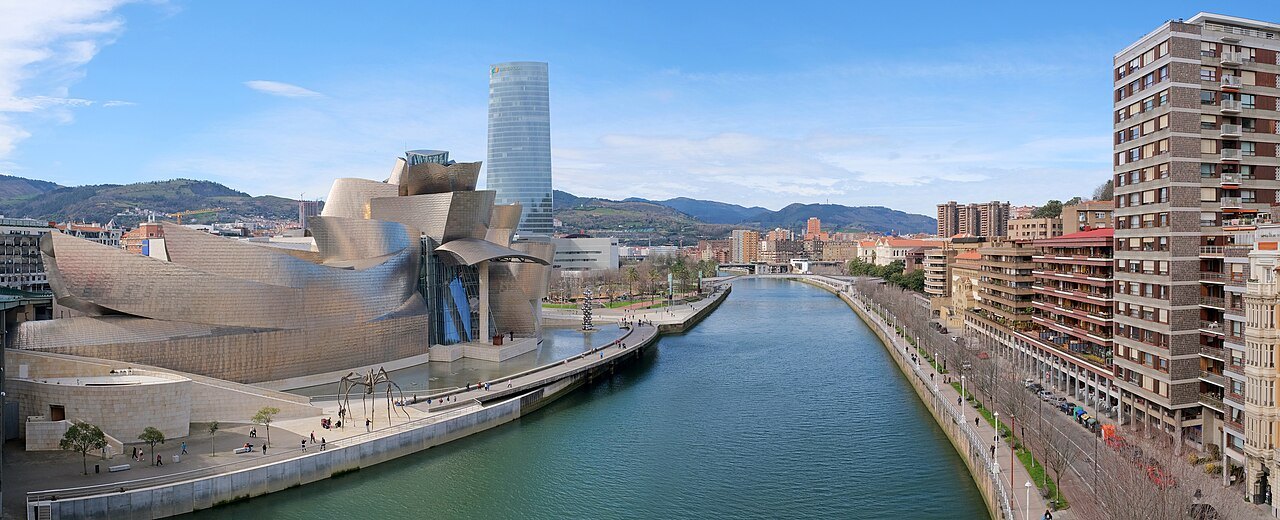
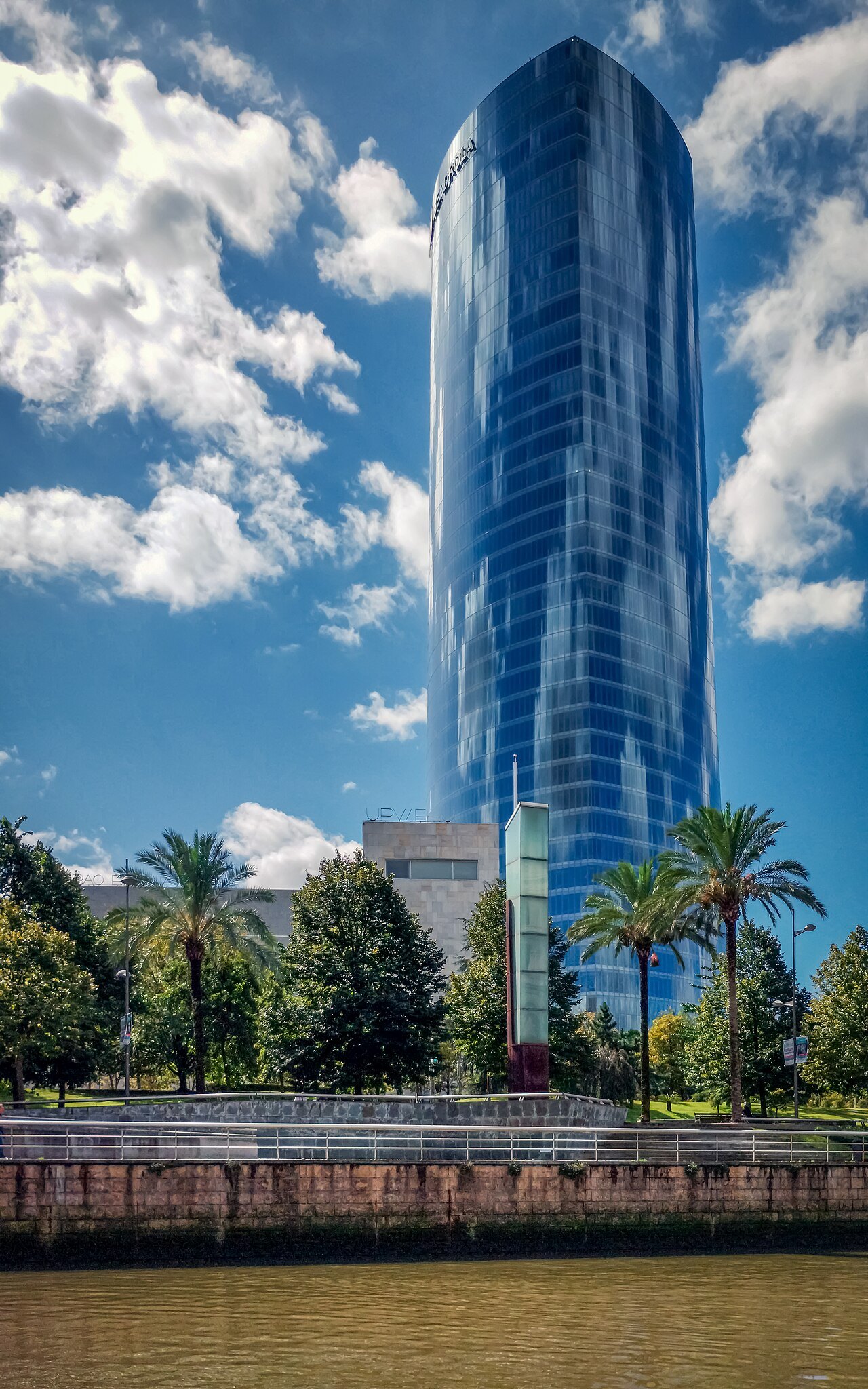
For the fullest view of both sculptures and the building together, cross the river and look back from the right bank, where the whole composition, bridge and tower included, can be seen at once. Morning and evening light change the titanium more than expected, and the same shifting light alters the colors of Puppy's flowers through the day.
More from the journal
Read next
- The GuggenheimHow was the Guggenheim Bilbao built?Frank Gehry's museum looks as if its curves were thrown together at random, but it was built on time and on budget with the help of aerospace software. How it stands on the soft bed of the estuary, why it is clad in titanium scales, how its galleries are arranged, and what to look for when you visit.Read the piece →
- The GuggenheimWhat is Richard Serra's The Matter of Time in the Guggenheim?A guide to Richard Serra's The Matter of Time, the Guggenheim's only permanent installation, and how to see it.Read the piece →
- Eating & DrinkingHow do pintxo bars in Bilbao work?In Bilbao people eat out standing at a bar counter, one or two pintxos and a small drink at a time, then on to the next bar. What a pintxo is, how it differs from a tapa, how to order and pay, what to drink with it, and the local specialities to look for.Read the piece →