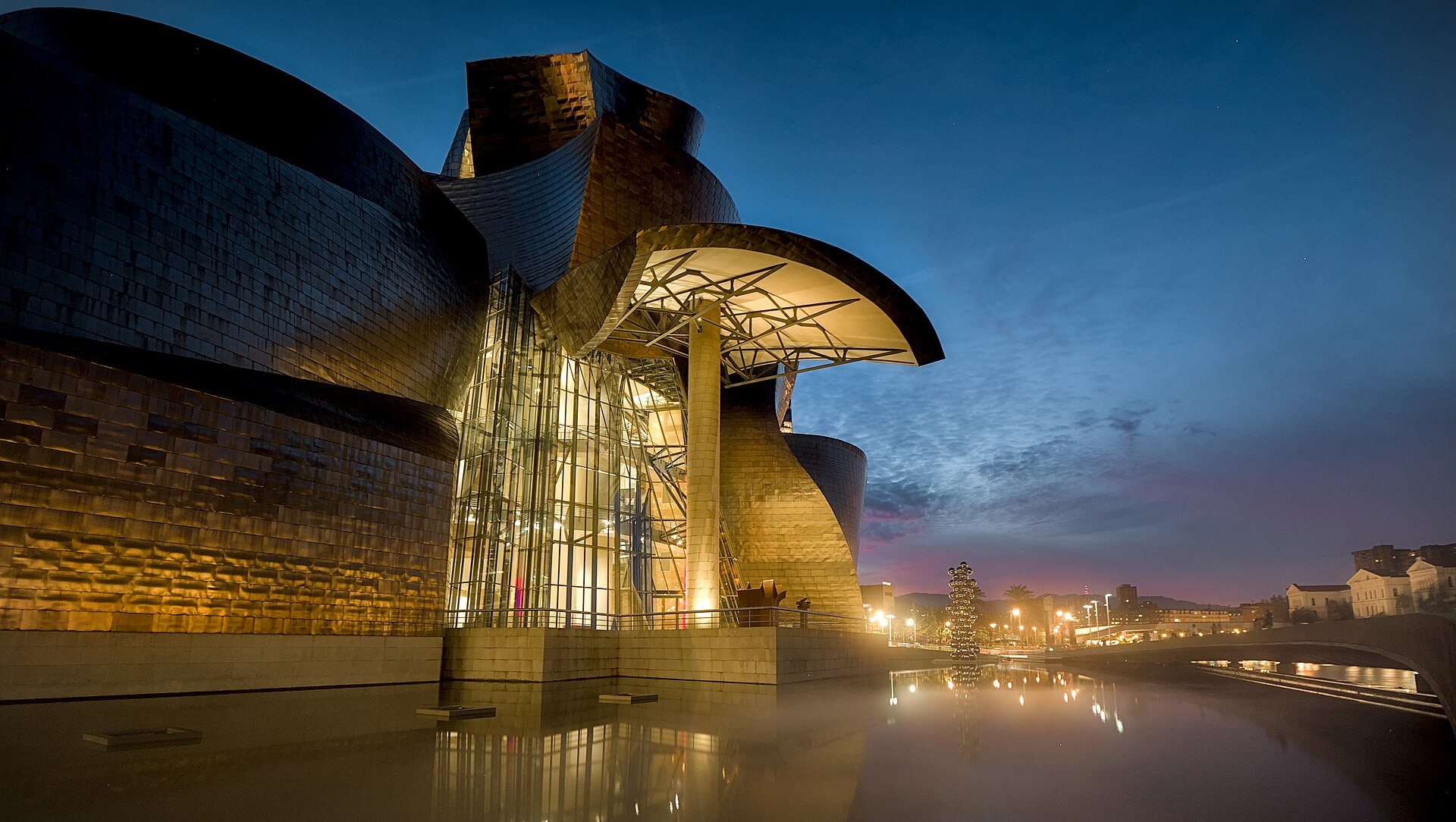
How was the Guggenheim Bilbao built?
PILES, STONE, TITANIUM AND SOFTWARE · GEHRY'S MUSEUM FROM THE GROUND UP
Frank Gehry's museum looks as if its curves were thrown together at random, but it was built on time and on budget with the help of aerospace software. How it stands on the soft bed of the estuary, why it is clad in titanium scales, how its galleries are arranged, and what to look for when you visit.
Read on
The answer in full
The short answer
The Guggenheim Bilbao stands on 665 concrete piles driven through the clay of the old riverbank into the bedrock, carries a galvanized steel frame designed point by point in computer software first developed for aircraft, and is wrapped in 33,000 thin titanium plates over a base of limestone. Frank Gehry's team modeled every curve in three dimensions, which let the builders calculate the structure, cut the stone and metal by machine, and keep the costs under control.
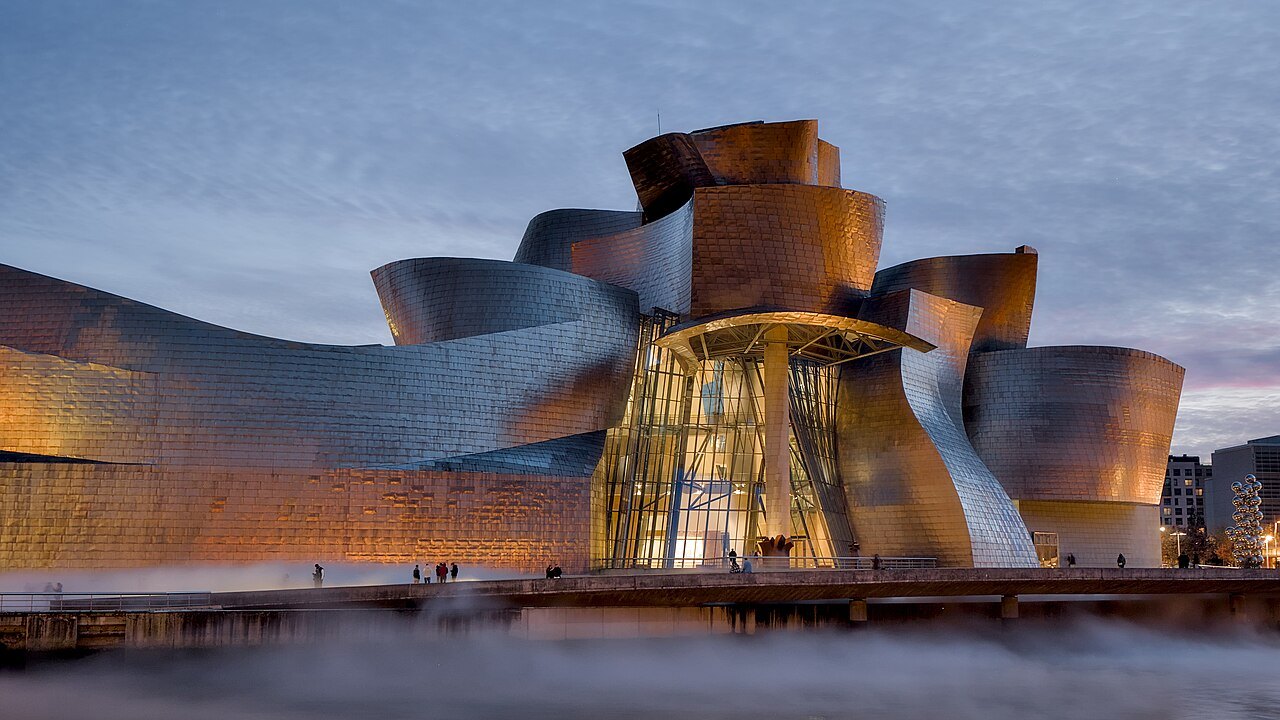
The result, opened on 18 October 1997, was finished on time and on budget, which is rare for a building of this kind, and its success made Bilbao famous.
Its reception was immediate. The building was hailed as one of the most spectacular in the world in the style known as Deconstructivism, a label Gehry himself does not accept, and as a masterpiece of the twentieth century. The architect Philip Johnson called it the greatest building of its age, and critics compared its reflective panels to the scales of a fish and the whole to a dream ship of undulating form.
The commission
In 1991 the Basque Government proposed to the Solomon R. Guggenheim Foundation that it would pay for a Guggenheim museum in Bilbao's run-down port area, once the city's main source of income. The foundation agreed to manage the museum and supply exhibitions and works from its collection, and it chose Frank Gehry as the architect. Its director, Thomas Krens, encouraged him to design something daring and innovative.
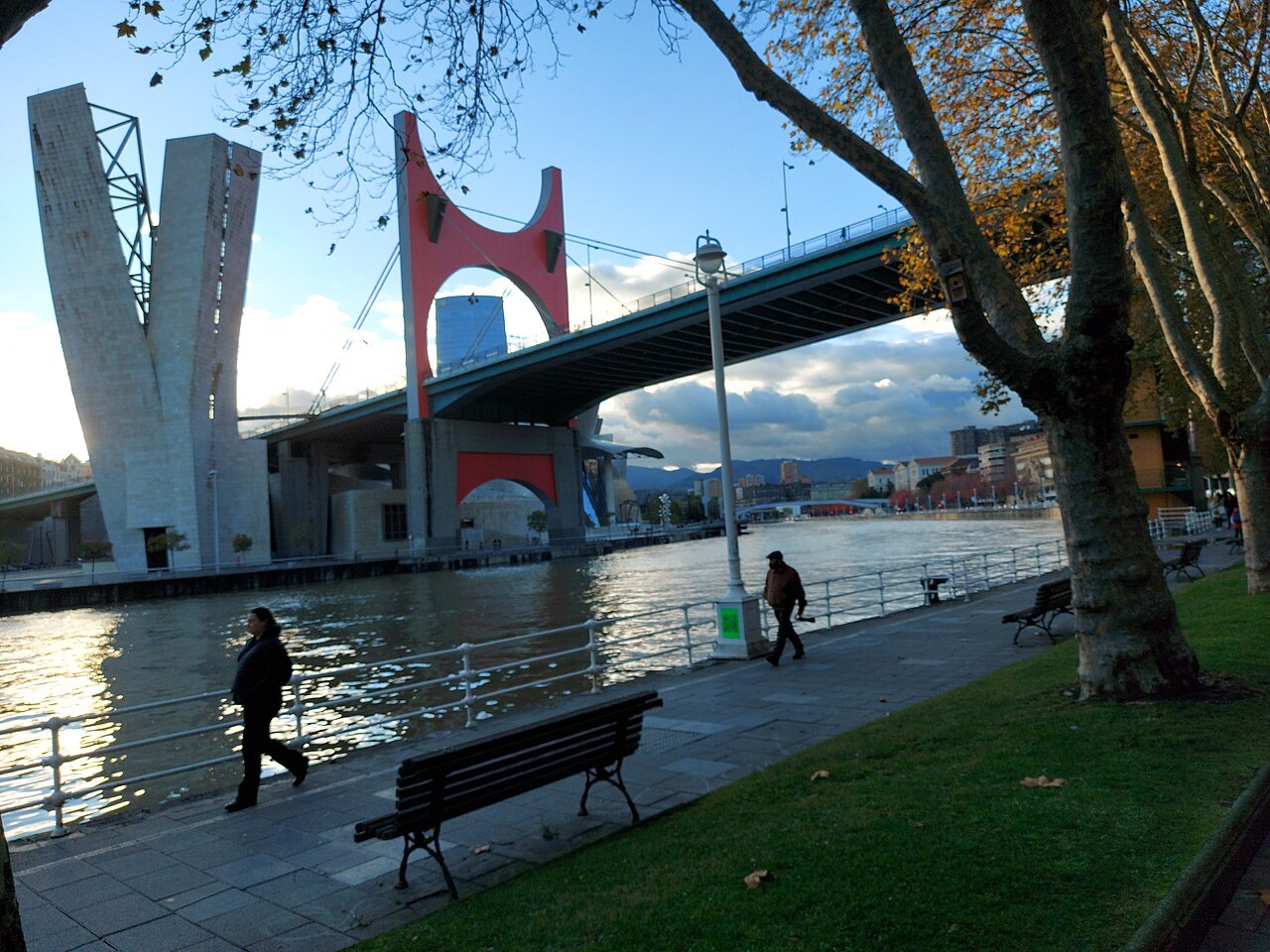
The site was 32,500 square meters of former industrial land on the left bank of the Nervión, beside the La Salve bridge. The museum was built by the Spanish company Ferrovial, and about 5,000 people from Bilbao gathered outside for a light show and concerts on the night before it opened.
The foundations
The ground here is soft: the building sits on a clay base from the bed of the estuary. To carry it, 665 piles were bored into the ground and reinforced concrete piles were driven to the bedrock at an average depth of 14 meters. The foundations used more than 25,000 tons of concrete, about 10,000 cubic meters, a hidden mass under a building that seems almost weightless from the river.
Designing in the computer
From the autumn of 1993 Gehry's architects used CATIA, software made by the French company Dassault Systèmes for aircraft design, to digitize and model the outside of the museum. The software turned the architects' forms into precise three-dimensional surfaces. The software then calculated, point by point, the stresses in each part of the structure, so that the steel frame, the titanium cladding and the foundations could all be sized from the same model.
The same model drove the machines that cut the stone and the titanium, so each piece could be made to fit its exact place on the curves. Gehry later explained that he kept the building on budget by insisting on a detailed, realiztic cost estimate before starting, by keeping political and business interests from interfering with the design, and by working closely with each trade using those computer visualizations. Critics have said the building could not have been built without CATIA, and its success helped launch what is now called building information modeling.
The titanium skin
The curving parts of the museum are clad in 33,000 titanium plates, arranged like scales on the steel frame. Titanium was chosen after many tests on materials that would withstand heat and bad weather while keeping their character, and to avoid the toxicity of copper or lead. The plates were rolled in Pittsburgh, in the United States, to less than half a millimeter thick, much thinner than steel would have to be; titanium weighs about half as much as steel, and the whole coating weighs only about 60 tons.
Each plate is slightly different, shaped for its orientation on the building, and they were given a quilted rather than a smooth surface, to resist the wind and avoid vibrating in storms. That quilting is what makes the surface shimmer and change color with the light and the weather. Gehry said the curves, which look random, are designed to catch the light.
Stone, glass and the atrium
The base of the building and the rectangular blocks are covered in beige limestone from quarries in southern Spain, cut into slabs 50 millimeters thick. The glass walls and windows are treated to protect the interior and the works of art from the sun.
Inside, everything turns around a tall, light-filled atrium, which Gehry nicknamed the Flower because of its shape, with views of the estuary and the hills around the city. The galleries open off it, so that you return to the atrium again and again as you move through the museum.
Nineteen galleries
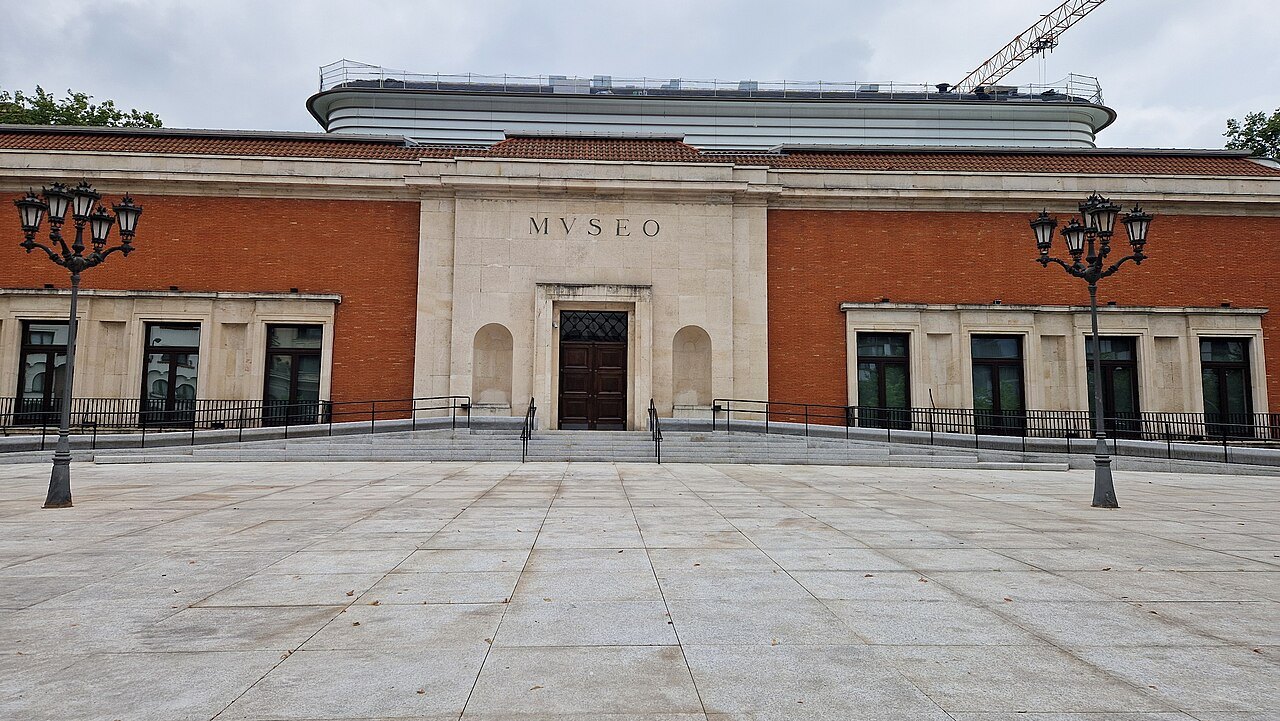
The museum has about 24,000 square meters in all, 11,000 of them for exhibitions, distributed over nineteen galleries. Ten of them follow a classic rectangular plan and can be recognized from outside by their stone finish; the other nine are irregular in shape and can be recognized by their swirling titanium forms.
The largest gallery is about 130 meters long and 30 meters wide. In 2005 it received Richard Serra's monumental steel installation The Matter of Time, a series of huge curved and spiralling walls you walk through. When the museum opened, it had more exhibition space than the foundation's other museums combined.
What to look for when you visit
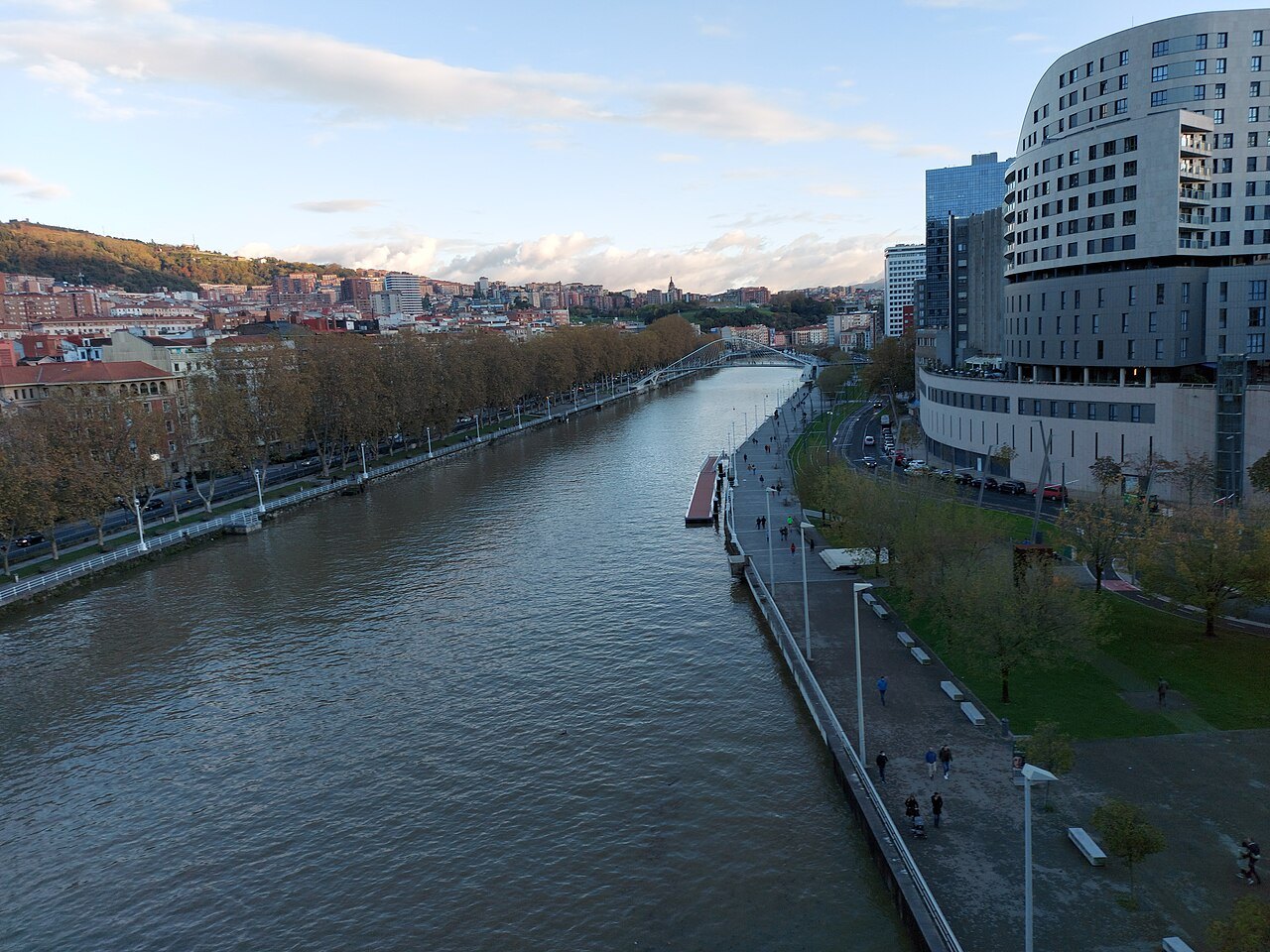
The building is modest from the street but most impressive from the river, so see it first from the water's edge or from the La Salve bridge, then from across the river on the right bank, where the whole length of the titanium curves is reflected in the water. Inside, stand in the atrium and look up, then walk through Serra's spirals in the long gallery.
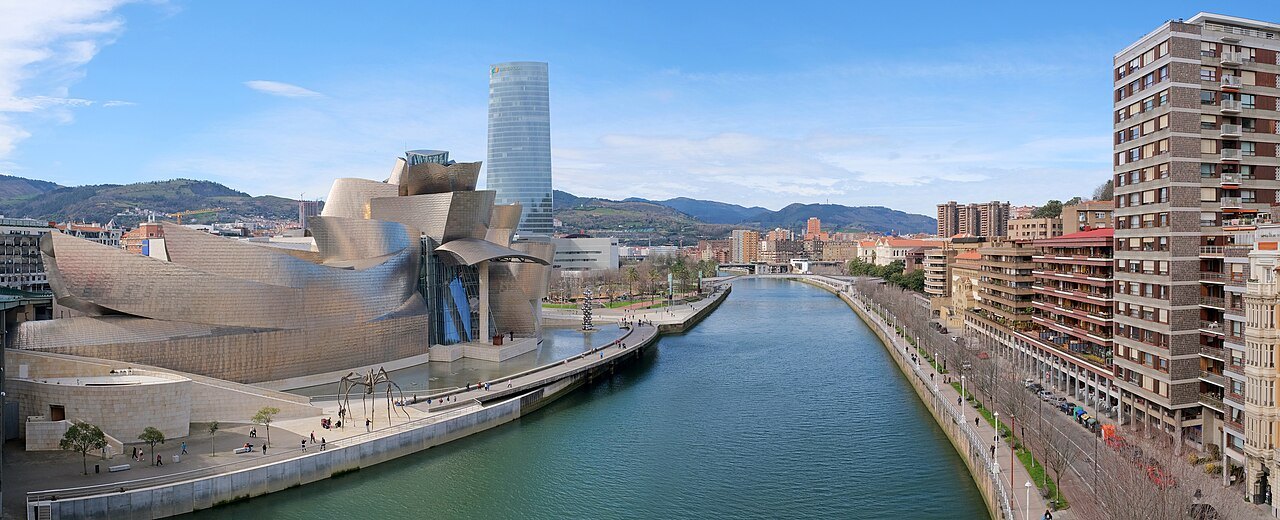
Outside, Jeff Koons's Puppy, covered in flowers, guards the entrance on the city side, and Louise Bourgeois's giant spider Maman stands by the river. The transformation page explains how the museum fitted into the rebuilding of the whole riverfront, and the booking ahead page how to get tickets.
More from the journal
Read next
- The Bizkaia BridgeHow does the Bizkaia Bridge gondola work?The Bizkaia Bridge does not carry traffic over the river: a gondola hanging from a high girder ferries cars and people across the mouth of the Ría. How the transporter bridge works, why it was built that way, what happened to it in the Civil War, and how to ride it and walk across the top.Read the piece →
- Getting HereHow do you get from Bilbao Airport to the city?Bilbao Airport is at Loiu, over the hills north of the city. The airport bus to the Plaza Elíptica and the Intermodal bus station, taxis, and the direct coaches to San Sebastián and Vitoria-Gasteiz, and how to choose between them by where you are staying.Read the piece →
- Eating & DrinkingHow do pintxo bars in Bilbao work?In Bilbao people eat out standing at a bar counter, one or two pintxos and a small drink at a time, then on to the next bar. What a pintxo is, how it differs from a tapa, how to order and pay, what to drink with it, and the local specialities to look for.Read the piece →