What is Aste Nagusia, Bilbao's Great Week?
NINE DAYS IN AUGUST · THE ROCKET, THE KONPARTSAK AND MARIJAIA
Bilbao's main festival fills nine days after mid-August with concerts, fireworks over the river and the festival tents of the konpartsak along the Arenal. When it falls, how it began in 1978, what the txupinazo and Marijaia are, and how to plan a visit around it.
Read on
The answer in full
The short answer
Aste Nagusia, the Great Week, Semana Grande in Spanish, is Bilbao's main festival. It lasts nine days, beginning on the first Saturday after 15 August, the feast of the Assumption, and it fills the old town and the riverside with concerts, fireworks, festival tents and crowds from morning to late at night.
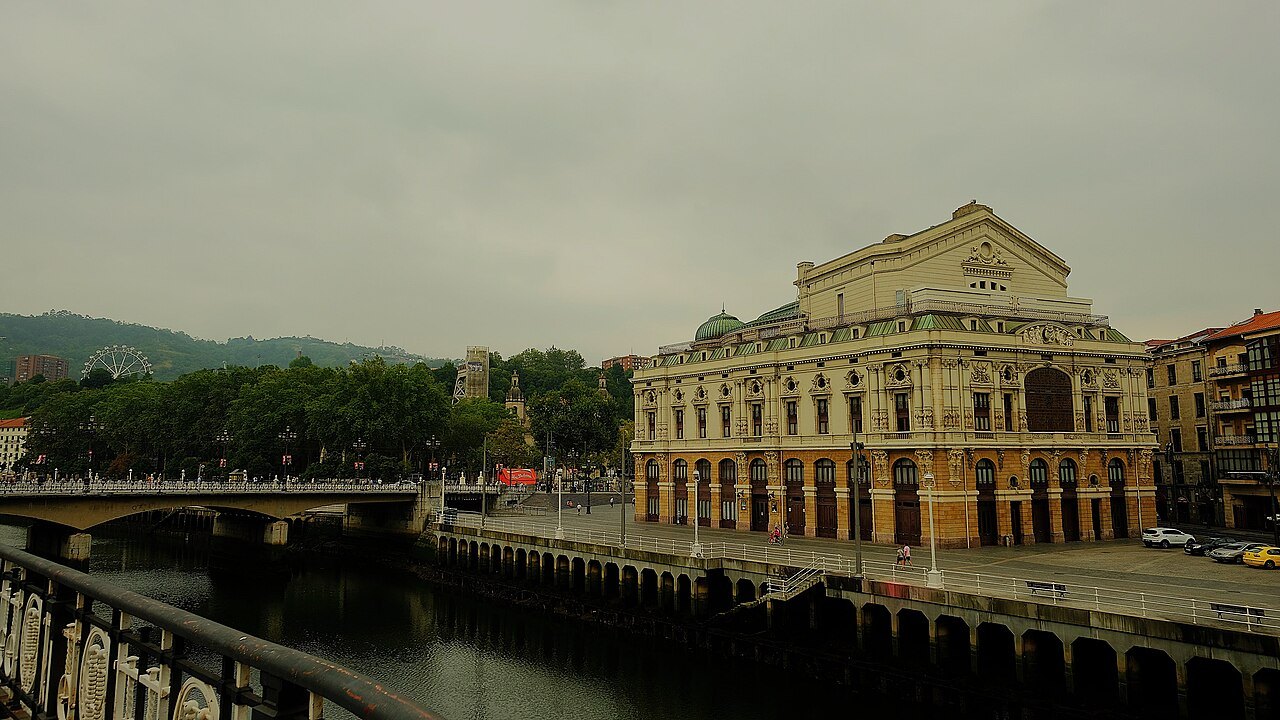
It is organized jointly by the city council and the konpartsak, groups of citizens from the city's districts who run the festival tents and much of the program. Its symbol is Marijaia, a giant figure of a woman with her arms raised in celebration, and it begins with a rocket fired from the balcony of the Teatro Arriaga.
How it began
Bilbao had long held celebrations in August, when the circus, the fairground, bullfights, boxing matches and traditional dances came to town, but under Franco the festival had become stale. In 1978, after the return of democracy, a contest of ideas was organized to revive it, and the winning project, from the group Txomin Barullo, proposed a festival shared between the council and festive troupes from the different districts, each representing different strands of the city's social and political life.
That model has lasted. In 1980 the mayor tried to have the council run the festival alone; the groups boycotted it, refusing to set up their tents or take part, and the following year the shared model returned. Since 2002 the troupes have been coordinated by their own federation, Bilboko Konpartsak.
The konpartsak and the txosnas
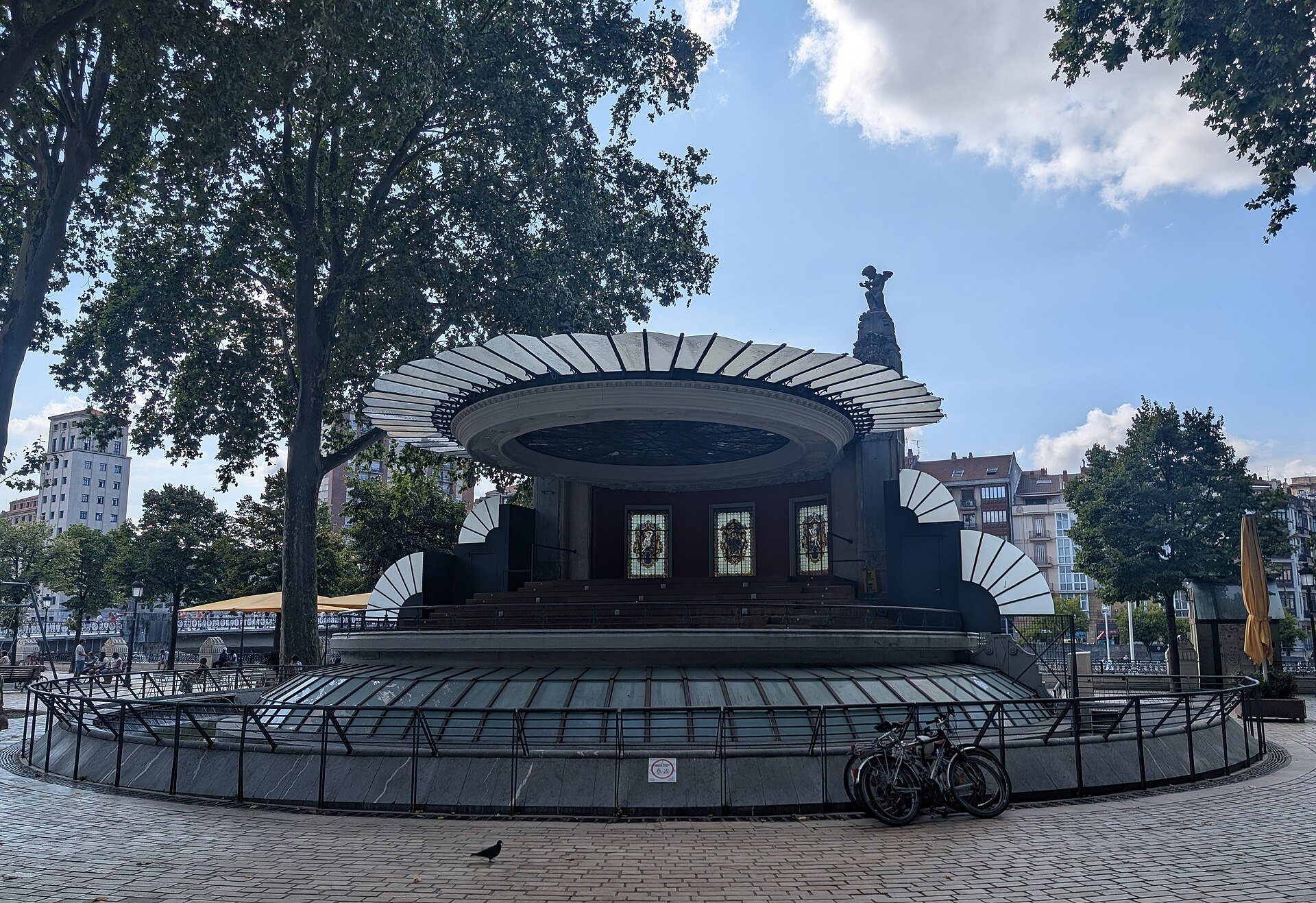
The konpartsak, comparsas in Spanish, are the heart of the festival. Each is associated with a political, social, sporting or neighborhood cause, and each sets up a txosna, a festival tent with a bar, music and its own activities, on the fairground along the Arenal by the river for the nine days. There are 28 troupes, among the oldest Bizizaleak, Hontzak, Pinpilinpauxa, Satorrak and Txomin Barullo itself.
Walking the line of txosnas, with their banners, music and crowds, is the best way to feel the festival. The same groups also lead the city's Carnival in February or March and the Santo Tomás fair in December.
The rocket and the herald
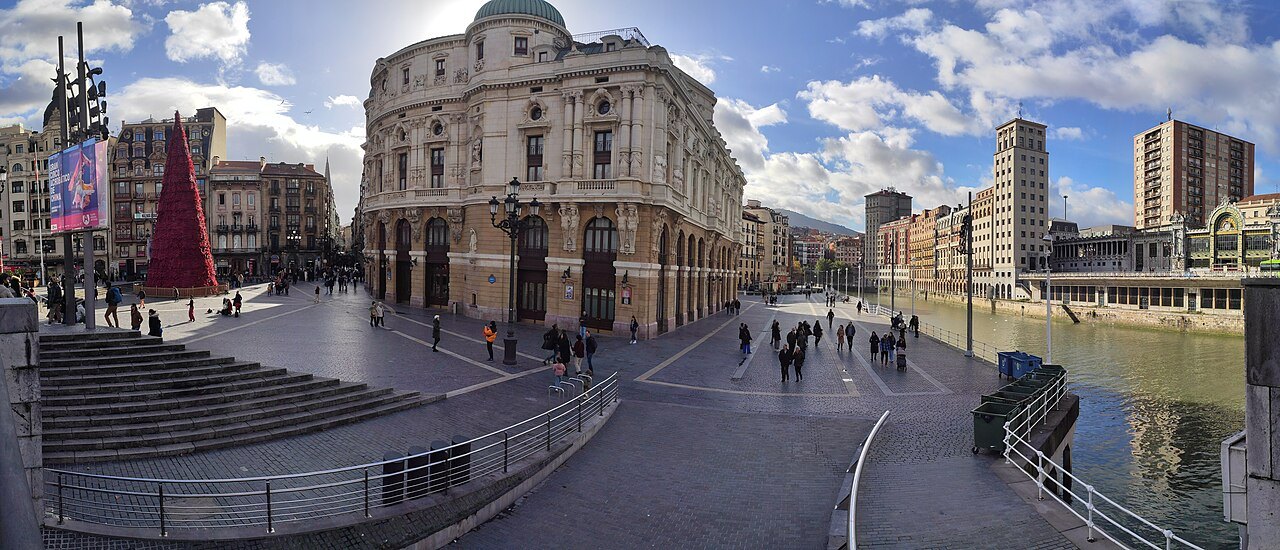
The festival opens with the txupinazo, the first bang: a rocket fired since 2001 from the balcony of the Teatro Arriaga by the txupinera, followed by the reading of the festival proclamation by the herald, a well-known figure from or associated with Bilbao. The txupinera is a woman chosen each year by draw from one of the troupes, avoiding those chosen in earlier years.
Her role has its own regalia. In 1983 the sculptor José Ángel Lasa made an oak holder for the rocket and a makila, a walking stick, as a sign of authority, which are kept at the city hall and handed from each year's txupinera to the next. Her uniform, designed in 1985, is a red tunic with black collar and gold buttons and a red beret embroidered with the city's coat of arms. Curiously, the uniform recalls those of the Carlist troops who besieged and bombarded Bilbao in the nineteenth century, especially in its red beret.
In 1981 the txupinera was also given the task of firing a rocket every morning of the festival, and with so much more work that year a reserve txupinera was chosen, from the group Kezkalariak; the experiment was not repeated, as it was judged unnecessary.
Marijaia
The festival's symbol since 1978 is Marijaia, whose name means something like Mary of the festival: a portable figure of a plump woman with her arms always raised in celebration. She was designed and built in just five days in August 1978 by Mari Puri Herrero at the request of the festival committee. Since 1997 she has had her own song, Badator Marijaia, composed by Kepa Junkera with words by the Basque writer Edorta Jiménez.
Marijaia presides over the week and its end; look for her figure around the old town and the Arenal, and listen for her song.
Concerts and fireworks
Concerts are a central part of the week. The official program has ranged from Basque bands such as Berri Txarrak, Gatibu and Ken Zazpi to international acts including Coldplay, Iggy Pop, the Pet Shop Boys and Simple Minds, and the festival groups and the bars put on their own alternative concerts alongside.
Every night the Villa de Bilbao international fireworks competition lights up the sky, with a different pyrotechnic company each evening and a closing display at the end of the week. The river and the bridges make a natural grandstand.
The flood of 1983, and other breaks
The festival has been interrupted only rarely. In 1983 it had to be suspended when the Nervión and Ibaizabal overflowed during the week and flooded the city, a disaster described on the Ría page. It was canceled in 2020 and 2021 because of the pandemic. In 2009, in a popular vote, it was chosen first among the intangible cultural treasures of Spain.
Planning a visit around it
If you want to experience the festival, come for at least two or three of the nine days, and book your room well ahead, since the city fills and rates rise; the booking ahead page explains. The old town and the Arenal are the center of things and are loud late into the night, so if you need sleep, stay a little further out, in the Ensanche, Indautxu or Deusto, and walk or take the Metro in.
If you are coming for the museums and quiet streets, choose another week, because the old town becomes one long party and the riverside fills with people for the fireworks every night. Either way, check the festival's program on the city's site for the year's dates and events, and see when to come for the rest of the calendar.
The Great Week is not the only summer celebration. In July and August the neighborhoods hold their own fiestas, among them the Carmen in Santutxu and Indautxu, Santiago in Bilbao La Vieja and San Ignacio, and others on Artxanda; they are smaller and more local, and a good way to see the city's districts enjoying themselves.
More from the journal
Read next
- Eating & DrinkingHow do pintxo bars in Bilbao work?In Bilbao people eat out standing at a bar counter, one or two pintxos and a small drink at a time, then on to the next bar. What a pintxo is, how it differs from a tapa, how to order and pay, what to drink with it, and the local specialities to look for.Read the piece →
- The Bizkaia BridgeHow does the Bizkaia Bridge gondola work?The Bizkaia Bridge does not carry traffic over the river: a gondola hanging from a high girder ferries cars and people across the mouth of the Ría. How the transporter bridge works, why it was built that way, what happened to it in the Civil War, and how to ride it and walk across the top.Read the piece →
- Getting HereHow do you get from Bilbao Airport to the city?Bilbao Airport is at Loiu, over the hills north of the city. The airport bus to the Plaza Elíptica and the Intermodal bus station, taxis, and the direct coaches to San Sebastián and Vitoria-Gasteiz, and how to choose between them by where you are staying.Read the piece →