Why does Athletic Club field only Basque players?
THE LIONS OF SAN MAMÉS · A POLICY KEPT SINCE 1911
Since 1911 Bilbao's football club has played only players born or trained in the greater Basque Country, and it has never been relegated from Spain's top division. What the rule says, where it came from, how the club makes it work, and what it means for a visitor at San Mamés.
Read on
The answer in full
The short answer
Athletic Club, the football club that plays at San Mamés, has a long-standing policy of signing only players who were born in, or trained in football in, the greater Basque Country: the Spanish provinces of Biscay, Gipuzkoa, Álava and Navarre, and the French Basque provinces of Labord, Soule and Lower Navarre. Since 1911 it has played exclusively with players who meet its own criteria for being Basque.
The club builds its teams through its cantera, its youth academy, and by recruiting from other Basque clubs. It is a matter of identity rather than law, and it has been praised for promoting home-grown players and loyalty. The rule applies to players only: the club has had many head coaches from elsewhere in Spain and abroad.
A club founded by students and workers
Football reached Bilbao at the end of the nineteenth century through two groups with British connections. The industrial city had a large British colony of shipyard workers and miners from places like Southampton, Portsmouth and Sunderland, who brought the game with them. At the same time, sons of Basque families who had studied in Britain came home with a passion for it and began playing against the British workers at the racecourse of Lamiako.
In 1898 a group of Basque students began practising in Lamiako, and in 1901, at a meeting in the Café García, they founded a club they called Athletic Club, using the English spelling. That English name, and the red and white stripes, are reminders of those origins.
The stripes from England
Athletic first played in a borrowed white kit and then in blue and white halves. The accepted story of the change is that a young student, Juan Elorduy, was sent to buy new shirts while spending Christmas 1909 in London, could not find enough, and on his way home noticed that the colors of Southampton matched those of the city of Bilbao. He bought fifty shirts, and since 1910 the team has played in red and white stripes. A study in 2023 suggested the shirts might instead have come from Sunderland, which also wore those colors and had links with club officials. Half the shirts went to Atlético Madrid, which had begun as a branch of Athletic.
How the rule came about
From 1911 the club fielded only players it regarded as Basque, and it has kept to that ever since, through decades in which football everywhere else became international. Its official policy today is to sign players native to the greater Basque Country or trained in football there, which allows players born elsewhere who learned the game in a Basque club.
Its most famous moment came in 1958, when Athletic beat Real Madrid, champions of Europe, 2–0 in the cup final in Madrid's own stadium, after the federation refused to move the match to a neutral ground. In the celebrations the club president shouted that they had beaten them with eleven villagers, and that team has been remembered ever since as the team of the eleven villagers, a proud allusion to the club's tradition of playing only men from its homeland.
How it works
The heart of the system is Lezama, the club's training complex in the Txorierri valley about 13 kilometers from Bilbao, opened in the 1971–72 season, with grass pitches, a gymnasium, a medical center and a residence for young players. Every Athletic team, from the youngest boys and girls to the first team, trains there. The club also works closely with other Basque clubs, and Basque players often move to Athletic after developing elsewhere in the region.
The club is also unusual in how it is owned. Along with Real Madrid, Barcelona and Osasuna, it is one of only four professional clubs in Spain that are not sports corporations: it belongs to its members, who elect its president.
Does it work?
By most measures, remarkably well. Athletic has won eight league titles, the fourth highest number in Spain, and 24 Copa del Rey titles, second only to Barcelona. It is one of only three founding members of the top division, with Real Madrid and Barcelona, never to have been relegated since the league began in 1929. Its women's team has won five league championships.
There have been lean years too: the club narrowly avoided relegation in the mid-2000s, and it has lost several finals. But it has reached European finals, in 1977 and 2012, and remains the most successful Basque club in league and cup.
Rivals and relatives
Athletic's main rival is Real Sociedad of San Sebastián, against whom it plays the Basque derby; the two were long unequal, but since the 1980s the gap between them has narrowed. Real Madrid is the other great rival, for sporting and political reasons, and there is a lesser rivalry with Barcelona.
One of the rivals is also a relative. After watching Athletic win its first Copa del Rey final in Madrid in 1903, Basque students in the capital formed an affiliated team, Athletic Club Madrid, which grew into Atlético Madrid. Despite its English name, Athletic is a football club only, although it had cycling and other sections before the Civil War.
The Lions and the Cathedral
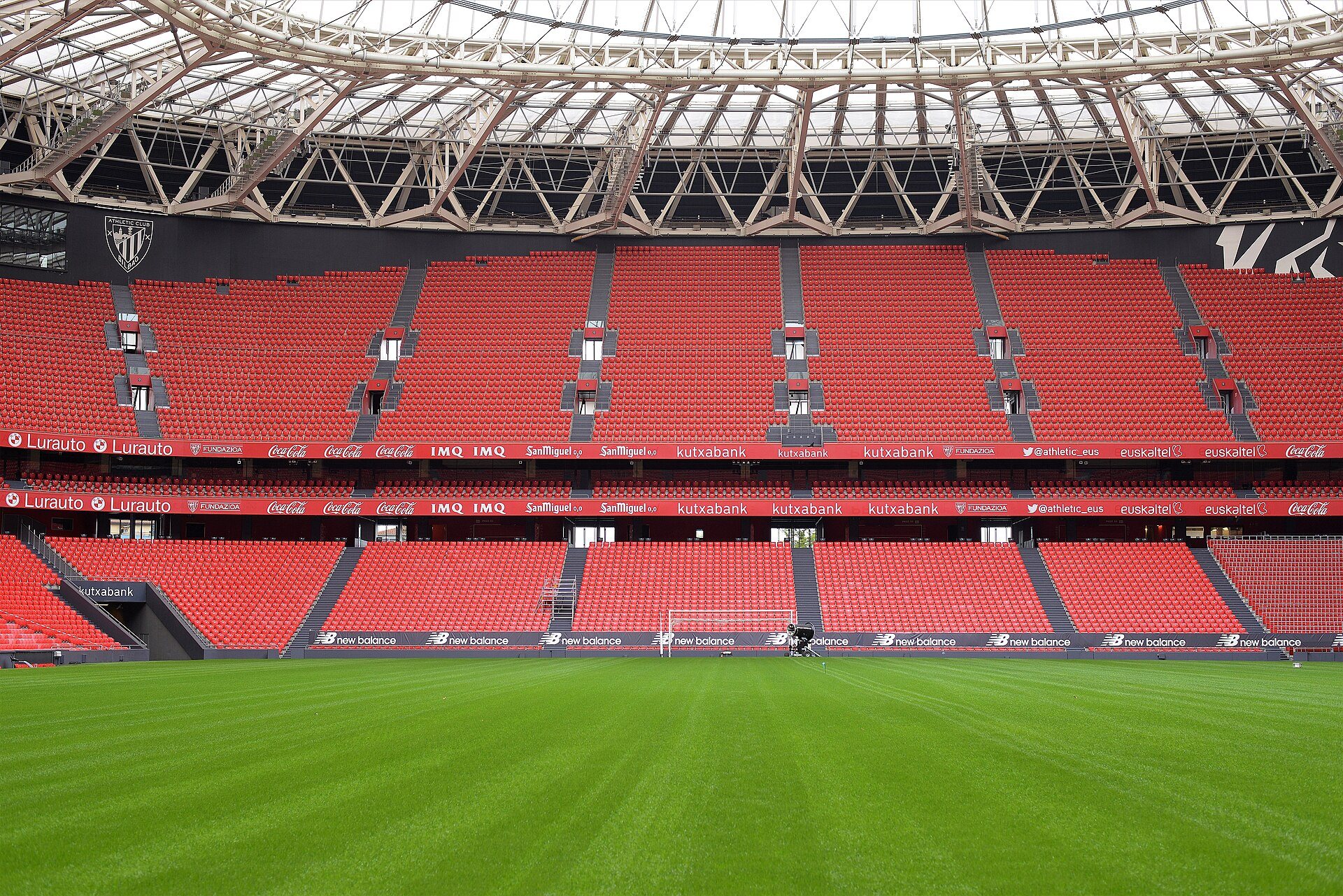
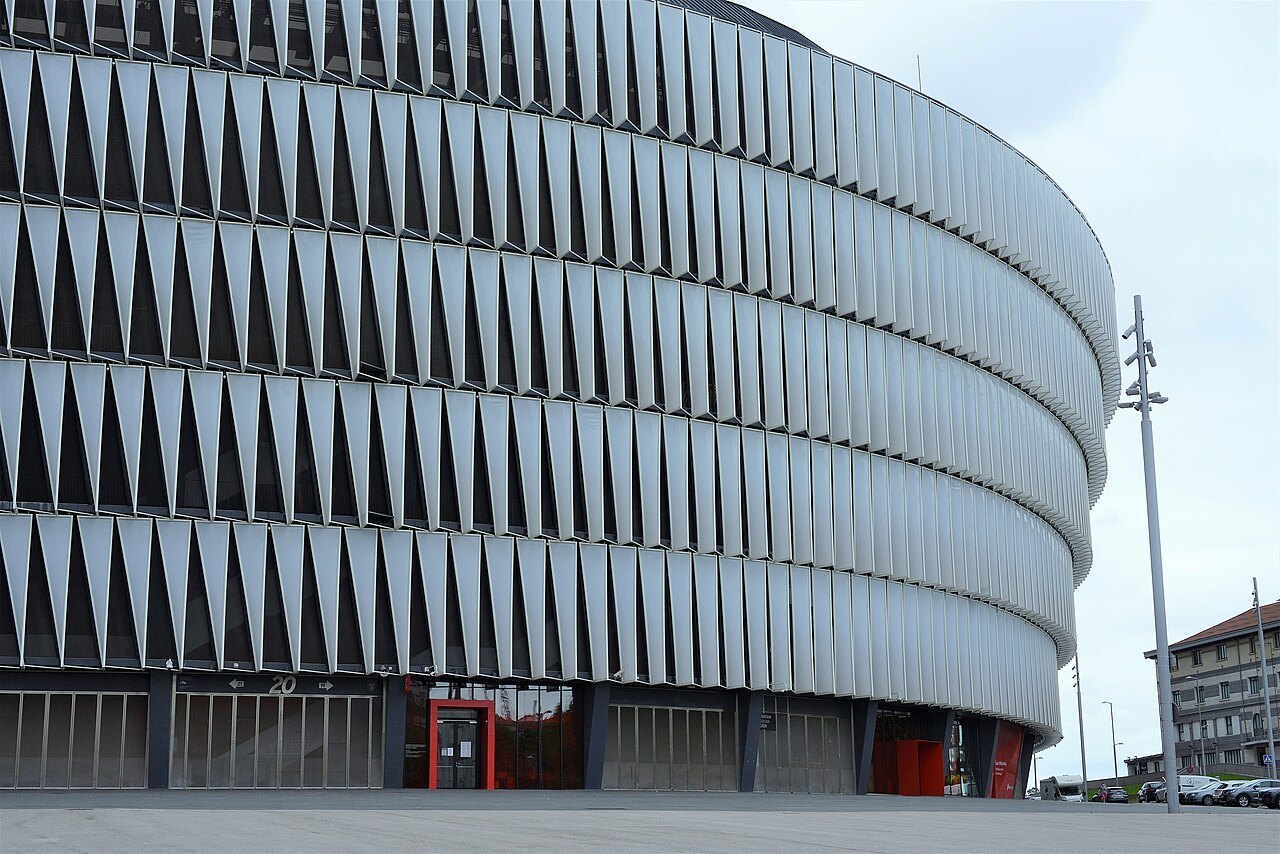
Athletic's players are known as the Lions, Lehoiak in Basque, because the first stadium was built near a church dedicated to Saint Mammes, an early Christian said to have been thrown to the lions by the Romans. That stadium, opened in 1913 and nicknamed the Cathedral, was replaced in 2013 by the new San Mamés next door, whose white panels glow at night. The club's first star, Pichichi, scored the first goal at the old ground on 21 August 1913; the top scorer in Spain's league is still called the Pichichi in his honor.
Seeing it for yourself
A home match is one of the great experiences of the city: the stadium fills with red and white and the streets around it with supporters. Tickets are sold on Athletic's official site, and big matches go quickly to members, so plan ahead; the booking ahead page explains. On days without a match, the club museum at the stadium, opened in 2017, tells the story of the club and its policy, with its trophies and a stuffed lion won from the president of Alavés in a bet in 1984.
More from the journal
Read next
- When to ComeWhat is Aste Nagusia, Bilbao's Great Week?Bilbao's main festival fills nine days after mid-August with concerts, fireworks over the river and the festival tents of the konpartsak along the Arenal. When it falls, how it began in 1978, what the txupinazo and Marijaia are, and how to plan a visit around it.Read the piece →
- Eating & DrinkingHow do pintxo bars in Bilbao work?In Bilbao people eat out standing at a bar counter, one or two pintxos and a small drink at a time, then on to the next bar. What a pintxo is, how it differs from a tapa, how to order and pay, what to drink with it, and the local specialities to look for.Read the piece →
- Getting HereHow do you get from Bilbao Airport to the city?Bilbao Airport is at Loiu, over the hills north of the city. The airport bus to the Plaza Elíptica and the Intermodal bus station, taxis, and the direct coaches to San Sebastián and Vitoria-Gasteiz, and how to choose between them by where you are staying.Read the piece →